
Key Takeaways:
- A 2023 Volvo V90 plug-in hybrid achieved a significantly improved fuel economy of 50 mpg (4.5 l/100 km) on a 250-mile journey.
- This notable gain from a previous 42.7 mpg (5.5 l/100 km) was attributed to a conscious strategy of actively managing driving modes and battery settings.
- The core tactic involved utilising the “Hold” battery setting during higher-speed segments to conserve electric charge, deploying electric-only driving (via “Auto” mode) for urban environments.
- While requiring driver engagement, this method maximises the inherent strengths of both electric and internal combustion powertrains in a plug-in hybrid vehicle.
- Consistent charging and understanding your vehicle’s specific modes are crucial for unlocking optimal plug-in hybrid fuel economy and significant cost savings over time.
As the automotive landscape continues its shift towards electrification, plug-in hybrids (PHEVs) are emerging as a pragmatic solution for consumers seeking reduced fuel bills and lower emissions without full reliance on charging infrastructure. While electric vehicle sales in the United States have not entirely met initial projections, the appeal of hybrid and plug-in hybrid models remains strong, attracting a growing number of buyers.

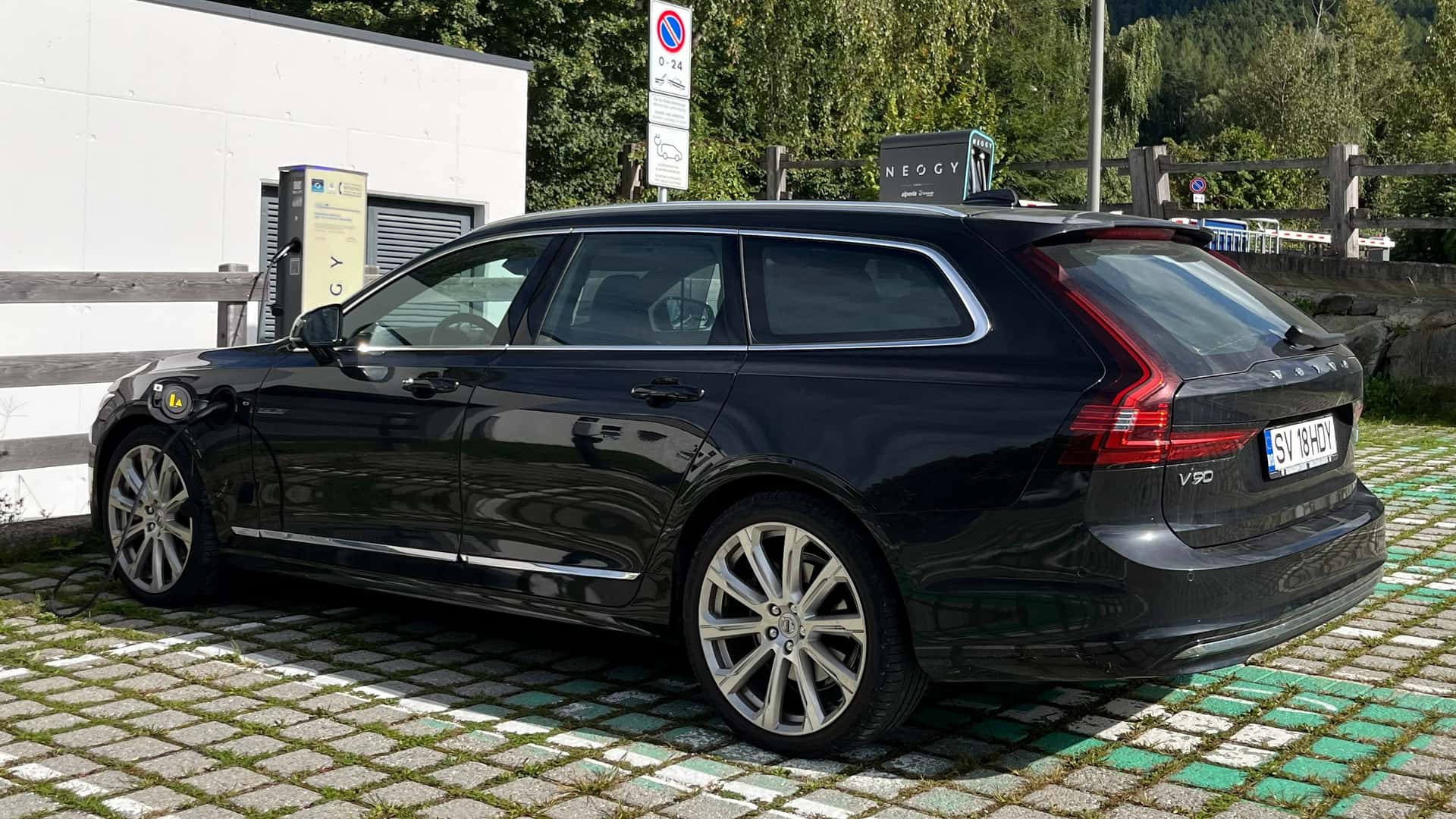
One such owner, Iulian Dnistran, embarked on a personal journey to rigorously test the real-world efficiency of his 2023 Volvo V90 plug-in hybrid wagon. Over 14 months of ownership, Dnistran conducted several experiments, including assessing battery degradation. His latest endeavour focused on deciphering the precise impact of different driving modes on the vehicle’s overall plug-in hybrid’s fuel economy.
Unlocking Enhanced Efficiency: A Strategic Driving Approach
Dnistran’s recent findings reveal a substantial improvement in his Volvo’s fuel efficiency, achieving an average of 50 mpg US (approximately 4.5 l/100 km) on a 250-mile (400-kilometer) trip. This remarkable figure, which commenced with a fully charged battery, represents a significant jump from the 42.7 mpg (5.5 l/100 km) recorded on a similar journey last year.
The previous trip, conducted under comparable weather conditions and with identical cargo, saw a less engaged approach to driving. The key difference, as Dnistran succinctly put it, was that he “was lazy the first time, and the last time was a lot more involved.” This active engagement with the vehicle’s settings proved to be the catalyst for the enhanced plug-in hybrid’s fuel economy.

Deconstructing the Driving Mode Strategy
Modern Volvo plug-in hybrids are equipped with at least four distinct driving modes and three battery management settings, offering drivers considerable flexibility. The V90, like many other Volvo PHEVs, defaults to Hybrid mode upon startup. This mode intelligently combines electric and gasoline power, operating as an electric vehicle until higher power demands or depleted battery necessitate the activation of the internal combustion engine.
For his initial, less efficient journey, Dnistran relied exclusively on this default Hybrid mode without adjusting the battery management settings. This approach meant the vehicle would deplete its battery as needed, then seamlessly transition to a traditional hybrid operation.
The “Hold” and “Auto” Tactical Application
In contrast, the strategy that yielded 50 mpg involved a more nuanced manipulation of these settings. Dnistran chose to initiate the gasoline engine at the outset of his journey, even with a fully charged battery. Concurrently, he set the battery management to “Hold.” This critical setting prevents the high-voltage battery from depleting, effectively preserving its charge for later use.
Under this “Hold” setting, the Volvo V90 primarily functions as a traditional hybrid without plug-in capability; the gasoline engine handles most propulsion, while the electric motor assists during deceleration and at very low speeds. Subsequently, upon entering cities and other low-speed zones, Dnistran manually switched the battery setting from “Hold” to “Auto,” allowing the car to operate purely on electricity. This judicious use of the electric powertrain in low-speed, stop-and-go conditions maximises the electric motor’s efficiency where it performs best.
Applicability and Considerations for PHEV Owners
This strategic approach to driving is not exclusive to Volvo owners; most plug-in hybrids offer similar driving modes and battery management options. Therefore, the core principles of Dnistran’s method can be widely applied to optimise various PHEV models’ plug-in hybrid’s fuel economy.
However, this method is not without its practical considerations. Dnistran noted the slight inconvenience of constantly switching between modes, especially given Volvo’s decision to replace the physical rotary dial with a screen-only interface for driving mode selection in 2022 and newer models. This digital interface can make on-the-fly adjustments slightly less intuitive.
While the immediate fuel efficiency gain on a single trip might not appear “huge,” as Dnistran observed, these improvements accumulate significantly over numerous journeys. For drivers undertaking frequent trips that exceed the vehicle’s electric range but do not necessitate refueling stops, this active management can lead to substantial long-term savings.
Highway Driving vs. Urban Environments
The strategy also highlights the importance of matching the powertrain to the driving environment. For highway segments, where electric motors are generally less efficient at sustained high speeds, utilising the “Hold” function to conserve battery charge makes eminent sense. The saved electricity can then be strategically deployed for electric-only driving in subsequent urban or low-speed sections, where electric propulsion is most efficient.
Conversely, if a journey consists solely of highway driving with no anticipated low-speed segments, saving electricity would be counterproductive. In such scenarios, it is more efficient to use the battery whenever possible until it depletes. For context, Dnistran reported seeing between 30 and 35 mpg when driving exclusively on the highway at 80 mph (130 kph) with a depleted battery.
On longer trips, significantly exceeding the vehicle’s electric range, the high-voltage battery’s contribution will naturally diminish over time. Eventually, the gasoline engine will assume primary responsibility for propulsion, underscoring the importance of strategic deployment of electric power early in the journey.
The Indispensable Role of Regular Charging
Perhaps the most critical factor in maximising a plug-in hybrid’s fuel economy is consistent charging. As Dnistran unequivocally states, “The most important thing of all, however, is to charge every time you get the chance.” Failing to charge regularly means effectively carrying a heavy battery without leveraging its benefits, thereby negating the core advantage of a PHEV.
Volvo PHEVs, particularly 2022 and newer models, have a charging limitation: they can only accept 3.7 kW. This means a full charge typically takes approximately five hours. Therefore, overnight charging or charging during extended stops becomes the most practical and efficient approach to ensure the battery is always ready for use.
Dnistran’s personal experience further underscores the financial advantages. Daily home charging, facilitated by recently installed solar panels, has resulted in substantial savings. Compared to his previous vehicle, a 20-year-old Land Rover LR3, he estimates saving at least $2,000 in fuel alone within one year. These savings are complemented by reduced maintenance costs associated with a newer, more advanced vehicle.
Beyond the economic benefits, the Volvo V90 offers superior performance characteristics, being significantly more powerful, quieter, and more comfortable than his previous car. While acknowledging its limitations for off-road use, Dnistran’s journey highlights that understanding and engaging with a PHEV’s capabilities can profoundly enhance the driving experience and reduce operational costs.
Expert Recommendations for Maximising PHEV Efficiency
This case study from a dedicated Volvo V90 owner provides valuable insights for all plug-in hybrid drivers. By actively experimenting with the various driving modes and battery management settings, owners can fine-tune their vehicles for optimal plug-in hybrid’s fuel economy across different driving conditions. While some advanced PHEVs may autonomously attempt to choose the most efficient modes, Dnistran’s experience suggests that manual intervention can often yield superior results, truly customising the vehicle’s performance to individual driving patterns.
Frequently Asked Questions (FAQ)
Q1: What is a plug-in hybrid (PHEV)?
A plug-in hybrid combines a gasoline engine with an electric motor and a larger battery than a traditional hybrid. It can be charged from an external source, allowing for significant all-electric driving range before the gasoline engine activates, offering a blend of electric and conventional power.
Q2: How was the Volvo V90’s fuel economy improved?
The fuel economy of the 2023 Volvo V90 PHEV improved from 42.7 mpg to 50 mpg by strategically managing its driving modes. The owner used the “Hold” battery setting on highways to conserve electric charge and then switched to “Auto” mode for electric-only driving in urban areas.
Q3: What are the key driving modes and battery settings in a Volvo PHEV?
Volvo PHEVs typically feature multiple driving modes, including Hybrid (default), Pure (electric-only), and Power. Battery management settings often include “Hold” (maintains current charge level) and “Charge” (uses the gasoline engine to charge the battery), alongside the default automatic management.
Q4: Why is it more efficient to use electric power in cities and gasoline on highways for a PHEV?
Electric motors are highly efficient in stop-and-go traffic and at lower speeds, where internal combustion engines are least efficient. Conversely, gasoline engines are generally more efficient at sustained higher speeds, making them better suited for highway driving where electric range can deplete quickly.
Q5: Is it worth the effort to constantly switch driving modes in a PHEV?
While requiring more driver engagement, actively switching modes can significantly enhance a plug-in hybrid’s fuel economy, especially on mixed-condition long trips. The cumulative savings in fuel costs over time can be substantial, making the effort worthwhile for efficiency-conscious drivers.
Q6: How important is regular charging for a plug-in hybrid?
Regular charging is paramount for a PHEV. Without it, the vehicle operates primarily as a conventional hybrid, carrying the extra weight of an unused battery. Consistent charging ensures you maximise the electric range and associated fuel savings, making the most of your PHEV investment.
Q7: What are the charging limitations for Volvo PHEVs?
Volvo PHEVs, particularly models from 2022 onwards, typically have a maximum charging rate of 3.7 kW. This slower charging speed means that a full battery charge can take approximately five hours, making overnight charging or charging during longer stops the most practical options.