
General Motors (GM), long recognized as America’s largest automaker by sales, is embarking on an ambitious transformation, repositioning itself as a significant force within the burgeoning energy sector. This strategic pivot, unveiled during a recent event in San Francisco, signals the company’s intent to extend its growth ambitions well beyond the conventional boundaries of vehicle manufacturing.
At the core of GM’s expansive energy strategy are three key initiatives: the development of next-generation sodium-ion batteries for energy storage systems (ESS), a commitment to connect 52,000 electric vehicles (EVs) to the grid by the end of the decade, and the introduction of Energy Pass, an innovative tool designed to dramatically simplify the EV charging experience for consumers.
This bold diversification comes at a crucial juncture, as the automotive industry navigates evolving market dynamics, including the recent cooling of EV sales in the U.S. and the expiry of certain federal tax credits. By investing heavily in energy solutions, GM is not only seeking new revenue streams but also strategically hedging against market fluctuations while addressing pressing global energy challenges, particularly the immense demand from power-hungry AI data centers.
Key Takeaways
General Motors is making a significant push into the energy sector, extending its business beyond car manufacturing to become a comprehensive energy solutions provider.
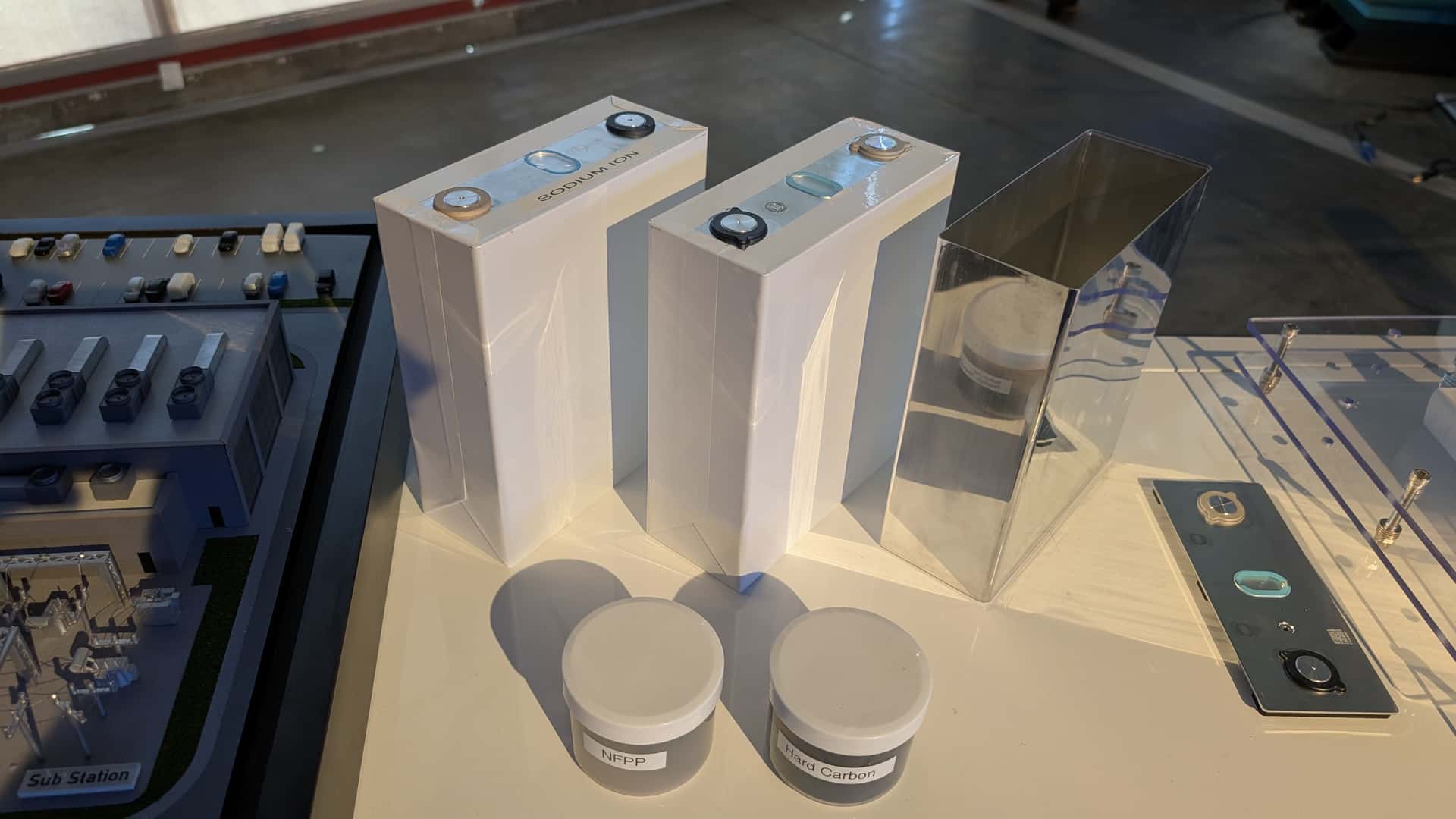
The company is developing advanced sodium-ion batteries for grid-scale energy storage, collaborating with U.S. startup Peak Energy, aiming for 20% lower lifespan costs than LFP batteries and promoting North American supply chain independence.

GM plans to connect 52,000 EVs to the grid by the decade’s end, enabling vehicle-to-grid (V2G) and vehicle-to-home (V2H) capabilities, turning parked EVs into valuable assets for grid stability and homeowner energy management.
To simplify EV charging, GM introduced Energy Pass, consolidating charging and payments across major networks into a single app, and will equip 2027 models with native NACS ports and Plug & Charge functionality.
This strategic diversification addresses cooling EV sales, leverages battery production investments, and meets rising energy demands, particularly from AI data centers, positioning GM as a key player in the evolving energy landscape.
Unveiling Sodium-Ion Battery Technology
A cornerstone of GM’s comprehensive energy strategy is its foray into sodium-ion battery technology. This initiative falls under the broader battery development strategy spearheaded by Kurt Kelty, a veteran from Tesla who now serves as GM’s vice president of battery and sustainability. Kelty’s leadership has seen GM’s battery roadmap evolve to encompass a diverse range of chemistries tailored for specific applications.
A Diversified Battery Portfolio
Currently, GM’s battery portfolio includes lithium iron phosphate (LFP) cells, primarily designated for affordable EV models such as the Chevy Bolt and for immediate energy storage projects. The company also utilizes traditional high-nickel (NMC) cells, which power most of its current EV offerings. Looking ahead, GM is developing lithium-manganese-rich (LMR) chemistry, intended to reduce costs for its larger electric trucks and SUVs. The recent addition of sodium-ion battery technology marks a significant expansion of this already diversified lineup.
Highlighting the rationale behind this multi-chemistry approach, Kurt Kelty stated in an interview, “We believe that you have to have the right battery for the right application.” This philosophy underscores GM’s commitment to optimizing battery performance and cost-efficiency across its various product lines and emerging energy ventures.
Collaborative Development and Key Advantages
GM’s sodium-ion initiative involves a strategic co-development partnership with U.S. startup Peak Energy. This collaboration leverages Peak Energy’s existing expertise, as the company has already conducted pilot programs with multiple U.S. firms. The choice of sodium-ion prismatic cells for ESS applications brings several distinct advantages, critical for grid-scale deployments.
These batteries are designed to operate without requiring active cooling, a feature that significantly reduces pack complexity and overall manufacturing costs. Furthermore, they are engineered to withstand extreme temperatures without any compromise in performance, a crucial attribute for diverse environmental conditions. Economically, GM projects that these sodium-ion batteries will offer a 20% cost reduction over their lifespan compared to lithium iron phosphate (LFP) batteries, which currently dominate the energy storage system market.
Building North American Supply Chain Resilience
Beyond the technical and economic benefits, GM’s pursuit of sodium-ion technology is underpinned by a profound strategic objective: reducing North America’s reliance on external battery supply chains, particularly those originating from China. This goal aligns with broader national interests in securing critical mineral supplies and fostering domestic manufacturing capabilities.
Kurt Kelty emphasized the geopolitical and economic imperative, stating, “We happen to have fabulous reserves here,” referring to the raw materials abundant within North America necessary for sodium-ion production. He further asserted, “Ultimately, this should be a North American battery.” Research consistently demonstrates that sodium is approximately 1,000 times more abundant than lithium, presenting a significantly smaller environmental footprint for extraction and processing.
GM has committed a substantial $900 million to battery research alone, underscoring its long-term investment in this field. Kelty reiterated the strategic importance of this endeavor: “We’ve got to bring that supply chain back to North America,” arguing that it serves as both a critical safeguard against geopolitical disruptions and a sound long-term investment in the company’s own resilience and profitability.
Integrating Electric Vehicles with the Power Grid
Beyond stationary energy storage, GM’s energy strategy envisions its electric vehicles playing a dynamic role in supporting grid stability and energy management. The automaker aims for its EVs to function as mobile power banks, capable of both drawing energy from and supplying energy back to the grid.
Vehicle-to-Grid (V2G) Potential
GM currently has approximately a quarter-million EVs on U.S. roads. The collective energy capacity of this fleet is substantial; if all these vehicles were connected to the grid, they could theoretically power an estimated 120,000 homes for up to a week. This immense, often idle, energy reserve represents a significant opportunity for enhancing grid resilience and efficiency.
GM EVs already come equipped with vehicle-to-home (V2H) bidirectional charging capabilities, allowing owners to power their homes directly from their EV battery during outages. This feature requires specialized equipment, which GM offers for installation at an additional cost. The company is now poised to expand this functionality with an upcoming firmware update, enabling these EVs to send power directly back to the main electrical grid, facilitating true vehicle-to-grid (V2G) interaction.
The automaker recently demonstrated this capability, showcasing a Cadillac Lyriq efficiently powering a small home entirely off-grid using its integrated Home Energy setup. This practical demonstration highlights the immediate benefits of V2H for homeowners and previews the larger potential of V2G in supporting widespread energy infrastructure.
Pilot Programs and Future Prospects
To realize its V2G ambitions, GM is actively collaborating with utility providers. A notable partnership is underway with Pacific Gas & Electric, focusing on integrating 52,000 GM EVs into the grid for precisely this purpose. This initiative aims to harness the latent energy capacity of parked vehicles, transforming them into valuable assets for energy management.
The benefits of V2G are multifaceted. For EV owners, it presents an opportunity to potentially lower energy bills by selling excess stored power back to the grid during peak demand or by participating in demand-response programs. For utilities, V2G offers a powerful new tool to mitigate power outages, balance load fluctuations, and address the escalating electricity demands from emerging sectors like AI data centers, which are placing unprecedented strain on existing infrastructure.
Simplifying the EV Charging Ecosystem
Recognizing that the widespread adoption of EVs hinges on a seamless and convenient charging experience, GM is also investing in solutions to alleviate common pain points associated with public charging. The company introduced “Energy Pass” as a pivotal part of its integrated approach to electric mobility and energy management.
Energy Pass: A Unified Charging Solution
Energy Pass is designed to streamline the charging process by integrating all charging functions directly into GM’s existing suite of vehicle-specific applications, including myChevrolet, myCadillac, and myGMC apps. This innovative solution allows owners to charge their EVs seamlessly across multiple major charging networks, including Electrify America, ChargePoint, Ionna, EVgo, and crucially, the Tesla Supercharger networks.
This integration aims to eliminate the need for multiple apps and payment accounts, simplifying billing and network access for drivers. Furthermore, starting with model year 2027, all GM EVs will feature a native North American Charging Standard (NACS) charging port, enhancing interoperability and access to a broader charging infrastructure. These vehicles will also incorporate Plug & Charge capability at compatible stations, further automating the charging and payment process for enhanced user convenience.
The Broader Landscape of Automakers in Energy
GM’s aggressive push into the energy sector is not an isolated phenomenon but rather a reflection of a broader trend among leading automakers. Companies like Tesla have long diversified their offerings, selling Powerwall batteries to residential customers and Megapack batteries for commercial and grid-scale applications. Similarly, Ford is actively developing its own energy storage business, recognizing the immense potential beyond vehicle manufacturing.
This convergence of the automotive and energy industries signifies a fundamental shift in how vehicle manufacturers perceive their role in a rapidly electrifying world. As transportation transitions to electric, the underlying energy infrastructure becomes increasingly critical, creating new opportunities and necessitating innovative solutions from traditional automotive players.
Future Outlook and Strategic Implications
General Motors recorded $7.1 billion in charges last year, directly linked to a recalibration of its initial aggressive EV production targets. Against this backdrop of a “down year” for EV sales, particularly in certain segments, GM’s bold move to position itself as a comprehensive energy company carries significant strategic weight.
This ambitious energy strategy represents more than just a hedging mechanism against a potentially slowing EV market; it signifies a calculated long-term investment in global electrification and grid stability. Whether these ventures into sodium-ion batteries, vehicle-to-grid technology, and simplified charging infrastructure will evolve into substantial new revenue streams or primarily serve as a strategic safeguard remains a key question that will unfold over time.
Nevertheless, GM’s proactive engagement in these critical energy domains underscores a clear vision: to not only manufacture the vehicles of the future but also to help power the sustainable world in which they operate. The success of this multifaceted energy push will be a pivotal determinant of GM’s trajectory in the coming decade, solidifying its role as an innovator in both automotive and energy solutions.
FAQ Section
What is GM’s overall energy strategy?
GM’s energy strategy is a multifaceted approach to diversify beyond vehicle manufacturing. It focuses on developing advanced battery technologies like sodium-ion for grid storage, integrating electric vehicles with the power grid through vehicle-to-grid (V2G) solutions, and enhancing the EV charging experience for consumers with tools like Energy Pass.
Why is GM investing in sodium-ion batteries?
GM is investing in sodium-ion batteries due to their potential for lower cost, enhanced temperature resilience, and suitability for grid-scale energy storage systems (ESS). Crucially, sodium is far more abundant than lithium, enabling GM to build a more resilient North American supply chain and reduce dependence on foreign raw material sources.
How will GM electric vehicles interact with the power grid?
GM EVs will interact with the grid through vehicle-to-grid (V2G) technology. An upcoming firmware update will enable these vehicles to send power back to the grid, supplementing existing vehicle-to-home (V2H) capabilities. This allows parked EVs to serve as mobile power banks, helping stabilize the grid and potentially lowering owners’ energy bills.
What is Energy Pass and how does it simplify EV charging?
Energy Pass is a new tool that consolidates EV charging functions and payments into a single app (myChevrolet, myCadillac, myGMC). It allows owners to seamlessly charge across multiple major networks, including Electrify America, ChargePoint, Ionna, EVgo, and Tesla Superchargers, eliminating the need for multiple accounts and apps.
What are the benefits of vehicle-to-grid (V2G) technology for homeowners and utilities?
For homeowners, V2G (and V2H) can provide backup power during outages and potentially lower electricity bills through participation in grid services. For utilities, V2G helps manage peak demand, enhances grid stability, and offers a flexible energy resource to combat increasing power consumption, particularly from facilities like AI data centers.
How does GM’s energy strategy address global supply chain concerns?
GM’s focus on sodium-ion batteries, which rely on abundant North American raw materials, directly addresses global supply chain concerns. By co-developing these batteries with U.S. partners and investing significantly in domestic research, GM aims to establish a robust, localized supply chain, thereby reducing geopolitical risks and fostering economic independence.