
General Motors (GM), widely recognized as America’s largest automaker by sales, is now strategically repositioning itself as a formidable player in the burgeoning energy sector. This ambitious transformation extends its traditional automotive focus into comprehensive energy solutions, encompassing advanced battery technologies and sophisticated grid integration.
Key Takeaways (TL;DR)
- GM is developing sodium-ion batteries for energy storage systems (ESS), aiming for 20% lower lifespan costs than LFP batteries and promoting North American supply chain independence.
- The company plans to connect 52,000 electric vehicles (EVs) to the electricity grid by 2030, leveraging vehicle-to-grid (V2G) technology to support energy demand and mitigate outages.
- GM introduced Energy Pass, a new tool designed to simplify EV charging and payments across major networks, integrating seamlessly into existing owner apps.
- This strategic pivot into energy storage and grid services is a response to cooling EV sales and increasing demand for grid-scale solutions, especially from power-hungry AI data centers.
- With a $900 million commitment to battery research, GM aims to establish a robust, diversified General Motors energy strategy, moving beyond its core automotive business.
General Motors’ Strategic Shift into Energy
At a recent event in San Francisco, General Motors unveiled a multi-faceted initiative that signals a profound shift in its corporate identity. The company, traditionally a titan of vehicle manufacturing, is now aggressively expanding its footprint into the energy domain. This move is underpinned by significant investments in battery innovation and smart grid technologies.
Diversifying Beyond Automotive
This strategic pivot sees GM venturing into areas that promise to redefine its role in the global economy. The objective is to capitalize on the increasing demand for sustainable energy solutions and grid resilience, effectively transforming from an automaker into an integrated energy provider.
GM’s comprehensive General Motors energy strategy involves the development of new battery chemistries, the integration of electric vehicles with national power grids, and the enhancement of public charging infrastructure. This holistic approach aims to address critical energy challenges while creating new revenue streams for the company.
The Dual Pillars: Batteries and Grid Integration
The core of GM’s expanded vision rests on two foundational pillars: pioneering advanced battery technologies for energy storage systems (ESS) and enabling widespread vehicle-to-grid (V2G) connectivity for its growing fleet of electric vehicles. These initiatives are not merely supplementary but are intended to become central to the company’s long-term growth trajectory.

Overseeing this ambitious battery strategy is Kurt Kelty, a veteran from Tesla, now serving as GM’s vice president of battery and sustainability. His leadership is pivotal in diversifying GM’s battery portfolio to suit various applications and market demands, moving beyond a singular focus on automotive propulsion.
Pioneering Sodium-Ion Battery Technology
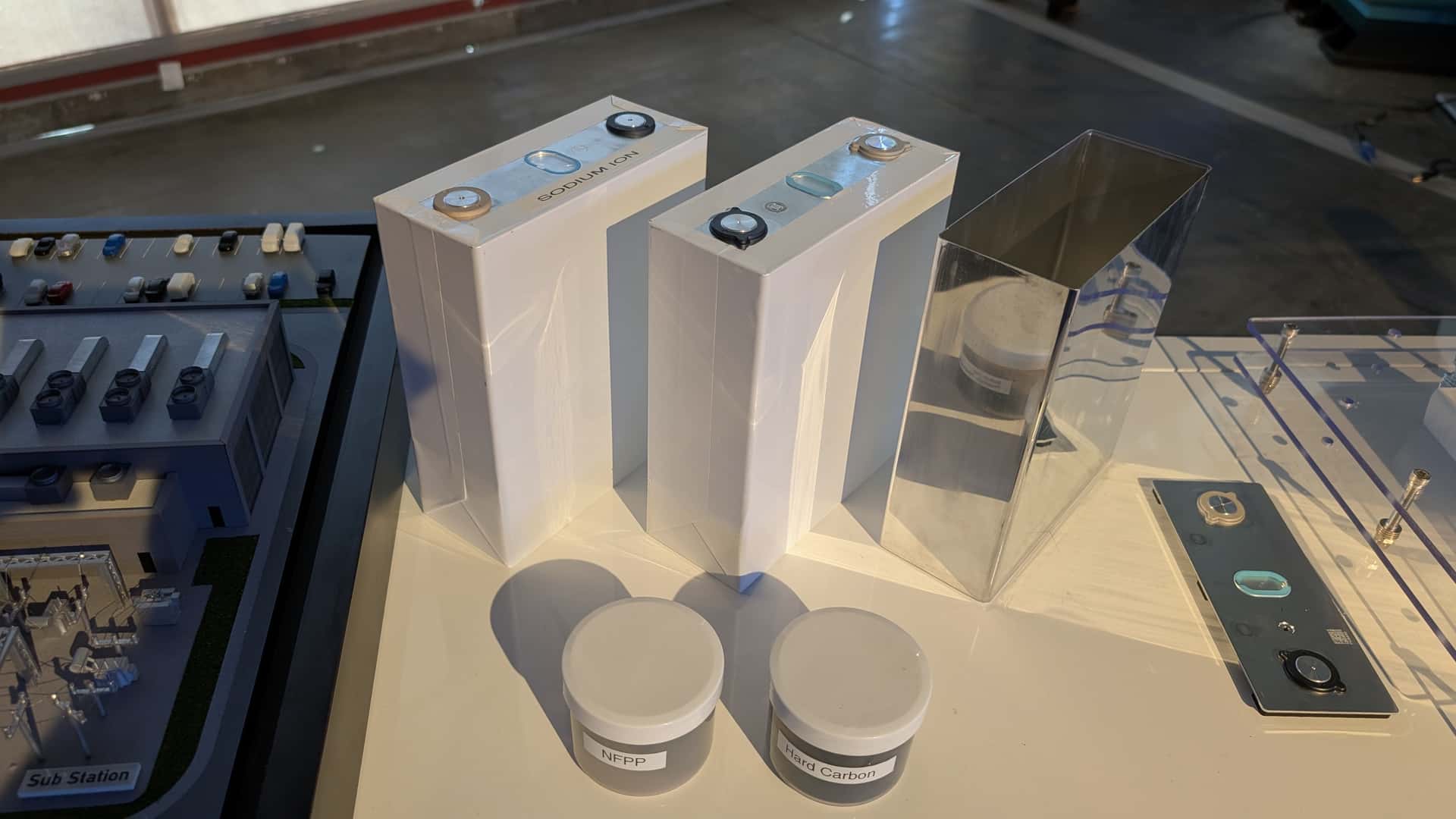
A key announcement from GM centers on its commitment to developing sodium-ion batteries specifically for stationary energy storage systems. This represents a significant addition to its already diverse battery chemistry lineup, which includes lithium iron phosphate (LFP) for affordable EVs and near-term ESS projects, traditional high-nickel (NMC) cells for most current models, and the forthcoming lithium-manganese-rich (LMR) chemistry for larger electric trucks and SUVs.
The Chemistry of Tomorrow: Sodium-Ion Basics
Sodium-ion technology is heralded as a promising alternative to traditional lithium-ion batteries due to its inherent advantages. GM’s strategic embrace of this chemistry underscores a belief in a tailored approach to energy storage, recognizing that different applications require different battery solutions. As Kelty articulated, “We believe that you have to have the right battery for the right application.”
These prismatic sodium-ion cells are designed to operate without active cooling, contributing to a simpler, less complex, and ultimately lower-cost battery pack. Their robust design also ensures consistent performance even under extreme temperature conditions, making them ideal for diverse geographical deployments.
Partnership with Peak Energy
To accelerate the development and deployment of this innovative technology, GM is co-developing the sodium-ion cells with Peak Energy, a U.S. startup. Peak Energy has already demonstrated its capabilities through successful pilot programs with several American companies, bringing valuable real-world experience to the collaboration.
The projected cost-efficiency of these sodium-ion batteries is noteworthy. They are expected to cost 20% less over their lifespan compared to lithium iron phosphate (LFP) batteries, which currently dominate the ESS market. This cost advantage is critical for mass adoption and economic viability in large-scale energy storage projects.
Addressing Supply Chain Vulnerabilities
Beyond cost and performance, a significant driver behind GM’s investment in sodium-ion technology is the quest for supply chain resilience and independence. The raw materials required for sodium-ion batteries, particularly sodium, are abundantly available. Research indicates that sodium is 1,000 times more abundant than lithium, presenting a sustainable and geographically diverse sourcing opportunity.
This geological advantage minimizes reliance on volatile global supply chains, often concentrated in specific regions. “We happen to have fabulous reserves here,” Kelty stated, referring to North America’s rich deposits of these materials. He emphasized the goal: “Ultimately, this should be a North American battery,” underscoring the strategic imperative to localize production and bolster economic security against geopolitical shocks.
General Motors has dedicated a substantial $900 million to battery research alone, a testament to its commitment to pioneering new chemistries and securing future energy independence. Kelty reinforced this vision, stating, “We’ve got to bring that supply chain back to North America,” framing it as both a hedge against global instability and a sound long-term investment.
Empowering the Grid with Electric Vehicles
GM’s energy ambitions extend beyond stationary storage to leveraging its growing fleet of electric vehicles as dynamic components of the power grid. The automaker envisions its EVs serving as mobile power banks, capable of supporting energy infrastructure and providing critical backup during peak demand or outages.
EVs as Mobile Power Banks
With approximately a quarter million GM EVs already on U.S. roads, the collective potential for grid support is substantial. If all these vehicles were interconnected, they could theoretically supply enough power to approximately 120,000 homes for up to a week. This immense, currently untapped capacity represents a valuable resource for enhancing grid stability and reliability.
GM EVs are already equipped with vehicle-to-home (V2H) bidirectional charging capabilities, allowing owners to power their homes with their vehicle’s battery using specialized GM-installed equipment. An upcoming firmware update will further enable these EVs to send power directly back to the main grid, expanding their utility beyond personal transport.
Collaborations with Utility Providers
Demonstrating this capability, GM recently showcased a Cadillac Lyriq powering a small home entirely off-grid using its Home Energy setup. This practical demonstration highlights the feasibility and immediate benefits of integrating EVs into residential power solutions.
To scale this vision, General Motors is actively collaborating with utility providers such as Pacific Gas & Electric. The objective is to bring 52,000 GM EVs online for vehicle-to-grid purposes. This initiative will enable owners to potentially lower their energy bills by selling surplus power back to the grid, while simultaneously providing utilities with a novel resource to combat power outages and meet the escalating energy demands driven by phenomena like AI data centers.
Real-World Applications and Future Potential
The concept of EVs doubling as rolling power banks leverages the fact that most cars remain parked and idle for significant portions of the day. This idle energy capacity can be harnessed to bolster the grid, offering a flexible and distributed energy resource. This component of the General Motors energy strategy has far-reaching implications for energy management and sustainable living.
Streamlining the EV Charging Experience
Recognizing that a robust energy ecosystem requires seamless user experience, GM is also dedicated to alleviating common pain points associated with EV ownership, particularly charging. This week, the company introduced ‘Energy Pass’, a comprehensive solution designed to simplify the charging process.
Introducing Energy Pass for Seamless Charging
Energy Pass integrates all essential charging functions directly into GM’s existing suite of owner applications, including myChevrolet, myCadillac, and myGMC. This integration aims to create a unified and intuitive platform, eliminating the need for multiple apps and accounts to manage charging across different networks.
This consolidation will enable owners to charge their EVs seamlessly across major charging networks, including Electrify America, ChargePoint, Ionna, EVgo, and the Tesla Supercharger networks. The goal is to provide a hassle-free experience, making public charging as straightforward as refueling a gasoline vehicle.
Expanding Charging Network Accessibility
Further enhancing accessibility, all General Motors EVs from the 2027 model year onwards will come equipped with a native North American Charging Standard (NACS) port. This move ensures broader compatibility with the widely adopted Tesla Supercharger network, significantly expanding charging options for GM EV owners.
Additionally, these future models will feature Plug & Charge capability at compatible stations. This technology streamlines the charging process even further, allowing vehicles to automatically communicate with charging stations for authentication and payment, removing the need for cards or apps at the charger itself.
Industry Context and Competitive Landscape
GM’s comprehensive General Motors energy strategy unfolds within a dynamic industry landscape marked by evolving market demands and intensifying competition. The broader shift towards electrification and sustainable energy has compelled automakers to rethink their core business models.
The Growing Energy Storage Market
The demand for grid-scale energy storage is experiencing exponential growth, driven by the increasing integration of intermittent renewable energy sources like solar and wind, and the relentless expansion of power-hungry AI data centers. This massive market opportunity provides a compelling impetus for companies with battery manufacturing capabilities to diversify.
In this burgeoning market, the race is on to deliver energy storage solutions that combine superior performance with the lowest possible cost, minimal maintenance requirements, and an extended service life. GM’s sodium-ion battery initiative is a direct play to capture a significant share of this high-stakes segment.
Automakers Entering the Energy Sector
General Motors is not alone in recognizing the strategic value of an integrated energy strategy. Competitors like Tesla have long diversified their offerings to include residential and commercial energy storage solutions with products like Powerwall and Megapack batteries. Ford is also actively establishing its own energy storage business, indicating a broader industry trend.
This convergence of the automotive and energy sectors highlights a future where vehicles are not just modes of transport but also integral components of a smart, resilient energy grid. Automakers, with their expertise in manufacturing, supply chains, and battery technology, are uniquely positioned to lead this transformation.
Financial Implications and Future Outlook
The current market conditions for electric vehicle sales present both challenges and opportunities for General Motors’ energy strategy. While EV adoption rates have cooled in the U.S. following the expiration of certain federal tax credits, the underlying demand for sustainable energy solutions remains robust.
Strategic Investments and Market Challenges
Last year, GM incurred $7.1 billion in charges linked to the recalibration of its EV ambitions, reflecting the complexities and investment intensity of the transition to electric. This financial reality underscores the importance of diversifying revenue streams and leveraging existing battery production capacities beyond purely automotive applications.
The company’s substantial investments in battery research and grid integration are strategic moves to mitigate risks associated with fluctuating EV sales cycles. By positioning itself as a comprehensive energy company, GM aims to create a more resilient business model, capable of navigating market dynamics effectively.
A Vision for Long-Term Growth and Sustainability
Whether this bold expansion into energy storage and grid services evolves into a substantial new revenue stream or primarily serves as a strategic hedge against a potentially slowing EV market remains to be seen. However, the overarching General Motors energy strategy aligns with global trends towards electrification, sustainability, and distributed energy resources.
This multi-pronged approach, encompassing advanced battery technologies, grid integration, and enhanced charging solutions, positions General Motors not just as a leader in automotive innovation but as a key enabler of the future energy landscape. It reflects a forward-thinking vision to drive both economic growth and environmental stewardship.
Frequently Asked Questions (FAQ)
What is General Motors’ new energy strategy focused on?
GM’s new energy strategy primarily focuses on developing advanced battery technologies, specifically sodium-ion batteries for energy storage, and integrating electric vehicles with the power grid through vehicle-to-grid (V2G) capabilities. It also aims to simplify EV charging for owners.
Why is GM investing in sodium-ion batteries?
GM is investing in sodium-ion batteries because they offer a more cost-effective and resilient solution for energy storage systems (ESS), with an estimated 20% lower lifespan cost than LFP batteries. They also leverage North America’s abundant raw material reserves, reducing supply chain dependence.
How will GM electric vehicles connect to the grid?
GM EVs will connect to the grid using vehicle-to-grid (V2G) bidirectional charging technology. This allows them to send power back to the grid when parked, augmenting energy supply, supporting grid stability, and potentially lowering owners’ electricity bills, especially during peak demand or outages.
What is Energy Pass and how does it benefit EV owners?
Energy Pass is a new tool that integrates all EV charging functions and payments into a single app (myChevrolet, myCadillac, myGMC). It simplifies charging across multiple major networks like Electrify America and Tesla Superchargers, making the experience more seamless and convenient for owners.
What are the financial implications of GM’s energy push?
GM has committed $900 million to battery research as part of this initiative. While EV sales have seen fluctuations, this energy strategy is a diversification effort to create new revenue streams and leverage battery production capacity, potentially offsetting challenges in the pure EV market.
How does GM’s energy strategy contribute to sustainability?
By developing sodium-ion batteries from abundant North American materials and enabling EVs to support renewable energy integration via V2G, GM’s strategy aims to reduce reliance on critical minerals and fossil fuels. This fosters a more sustainable and resilient energy ecosystem for the future.