
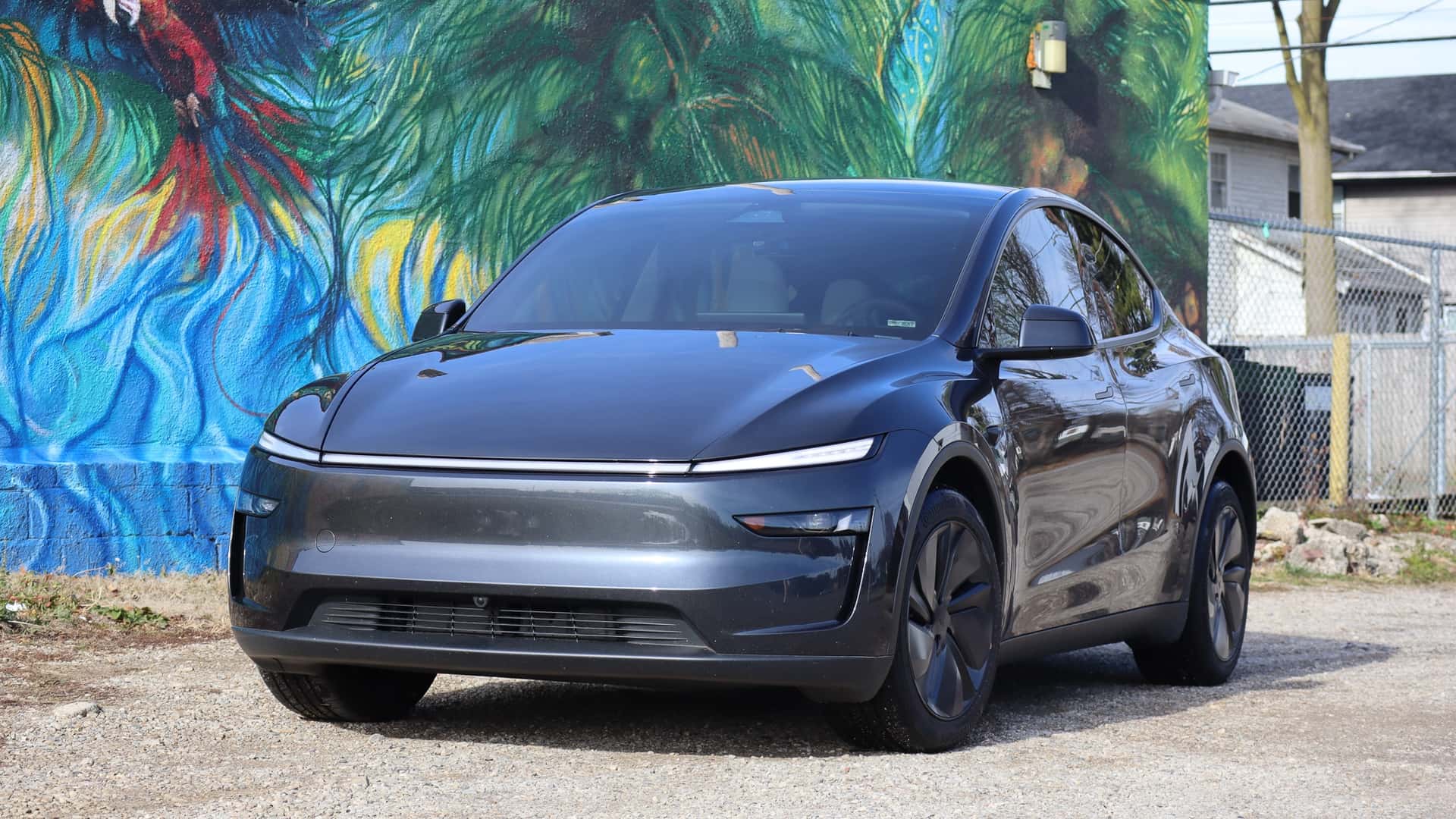
New Delhi: In a world increasingly focused on autonomous driving and futuristic mobility solutions, Tesla CEO Elon Musk has repeatedly hinted at a future where traditional car ownership might become a relic of the past. This vision, while exciting for some, has led to concerns that the electric vehicle pioneer might be losing its passion for building cars. The recently updated 2026 Tesla Model Y, however, serves as a powerful reminder of what Tesla does best and why abandoning its automotive roots would be a significant loss.
A Shift in Focus: From Cars to Robots?
Musk’s comments on a recent earnings call, suggesting that “most people are not going to buy cars” in the future, underscore a clear strategic pivot. While such pronouncements often fuel Tesla’s stock, they also signal a company seemingly less interested in the conventional automotive market. This shift in priorities is palpable in Tesla’s product development, leading to a growing sentiment that the company is prioritizing robots and robotaxis over the vehicles that cemented its reputation.
The Enduring Brilliance of the Model Y
Despite this apparent shift, a closer look at the 2026 Tesla Model Y reveals a vehicle that excels in numerous areas, proving that Tesla’s engineering and design prowess remain top-tier. The updated Model Y continues to set benchmarks, particularly in its user experience, which is largely driven by its advanced and intuitive touchscreen interface. While a few more physical buttons might be welcome, Tesla’s software is so cohesive and well-designed that their absence is rarely felt.
Technological Innovation at its Core
The Model Y’s cabin is a testament to Tesla’s innovative spirit. Features like ‘Dog Mode,’ ‘Sentry Mode,’ and ‘Camp Mode’ showcase a level of thoughtful integration that remains unmatched in the industry. Beyond these unique offerings, the core functionalities – navigation, voice commands, and locating Superchargers – are executed flawlessly. The Tesla mobile app offers a seamless remote control experience, far surpassing the offerings from many competitors.
Tesla’s approach to the car’s interior can be seen as bringing the familiar, user-friendly experience of smartphones and tablets into a four-wheeled package. This integration of sophisticated software into a vehicle’s hardware is a key strength, executed better by Tesla than almost anyone else.
Advanced Driver Assistance and Refined Design
The ‘Full Self-Driving (Supervised)’ system, while still under development, has shown remarkable improvements, capably handling complex urban and highway driving scenarios under supervision. Even in its current iteration, it represents a significant leap forward in driver-assistance technology. Furthermore, the 2026 Model Y boasts a more refined interior, featuring enhanced build quality, premium materials, and ambient lighting, contributing to an airy and distinct cabin feel.
Tesla’s long-standing expertise in electric vehicle packaging is evident in the Model Y’s efficient use of space. It offers a spacious interior, a practical ‘frunk’ (front trunk), and ample storage in the rear. This level of packaging efficiency is something many established automakers still struggle to achieve in their EV offerings.
Driving Dynamics and Market Dominance
The driving experience of the 2026 Model Y has also seen notable improvements, with a more compliant ride and responsive steering making it an enjoyable car to drive. Its efficiency has also been boosted, with the rear-wheel-drive variant achieving an impressive 357 miles of range and the all-wheel-drive model offering 337 miles – excellent figures for a vehicle priced below the average new car.
The Model Y’s success is undeniable. With over a million units sold globally last year, it stands as one of the world’s best-selling vehicles. Even with a rapidly expanding EV market offering dozens of choices, the Model Y continues to capture a significant portion of EV buyers, highlighting its broad appeal.
Where Does Tesla Go From Here?
The success of the Model Y and Model 3, which together account for the vast majority of Tesla’s sales, raises a crucial question: why isn’t Tesla applying this winning formula to a wider range of vehicles? The automotive landscape is ripe for innovation, with demands for everything from mid-size pickup trucks to affordable compact SUVs and rugged off-roaders.
While Tesla has spoken of new, more affordable models, recent updates to the Model Y and Model 3 have been underwhelming, offering little more than minor cosmetic changes like cloth seats and the removal of features like FM radio and basic Autopilot. The company also shelved plans for a truly new $25,000 EV, reportedly redirecting resources toward the steering-wheel-free Cybercab robotaxi, a move that suggests a disinterest in mass-market, driver-operated vehicles.
The polarizing Cybertruck, Tesla’s first new model in years, has yet to achieve significant commercial success. Looking ahead, Tesla’s product roadmap seems dominated by high-end halo products like the long-delayed Roadster and the Cybercab, with little focus on broadening its appeal to a wider customer base.
The Competition Heats Up
This lack of new, accessible models from Tesla comes at a time when competitors are accelerating their EV development. The upcoming Rivian R2, Lucid’s midsize crossover, and potentially a $25,000 compact pickup from Slate are poised to offer compelling alternatives. Traditional automakers are also stepping up, with new EVs from BMW, Mercedes, Chevrolet, and Nissan offering competitive range and value.
It’s a missed opportunity. Tesla, with its profitability and established EV expertise, is uniquely positioned to lead the charge in making EVs more accessible and diverse. Instead, the company appears to be stagnating, focusing on futuristic concepts rather than refining and expanding the product line that has brought it so much success. The continued excellence of the Model Y serves as a poignant reminder of what Tesla could achieve if it recommitted to making cars for the masses.