
Key Takeaways
- German specialist chargebyte has launched the Charge Control V (CCV), the world’s first ready-to-deploy high-power charging controller built on the open-source EVerest firmware stack.
- The CCV offers dual-port CCS support, an integrated safety co-processor, and robust processing power, aiming to reduce vendor lock-in for charging station operators.
- The adoption of EVerest, an LF Energy community project, allows for software independence, enabling free modification and extension of firmware.
- chargebyte also introduced two Megawatt Charging System (MCS) controllers, CCL MCS and CCY MCS, designed specifically for e-trucks and heavy-duty commercial vehicles.
- These MCS solutions provide an end-to-end communication and safety logic framework, supporting the burgeoning heavy-duty electric vehicle sector.
FRANKFURT, GERMANY – June 23, 2026 – The landscape of electric vehicle (EV) charging infrastructure is set for a significant evolution with the introduction of groundbreaking technology designed to enhance efficiency, flexibility, and software independence. German charging communication specialist chargebyte has announced the launch of its Charge Control V (CCV), heralded as the world’s first ready-to-deploy high-power charging controller founded on the EVerest open-source firmware stack.
This development marks a pivotal moment for electric mobility, offering a robust and adaptable solution for charging station manufacturers and operators. The CCV is currently in its pre-series phase, with samples readily available for pre-order, signaling its imminent impact on the global charging ecosystem.

Revolutionising High-Power Charging with Open Source
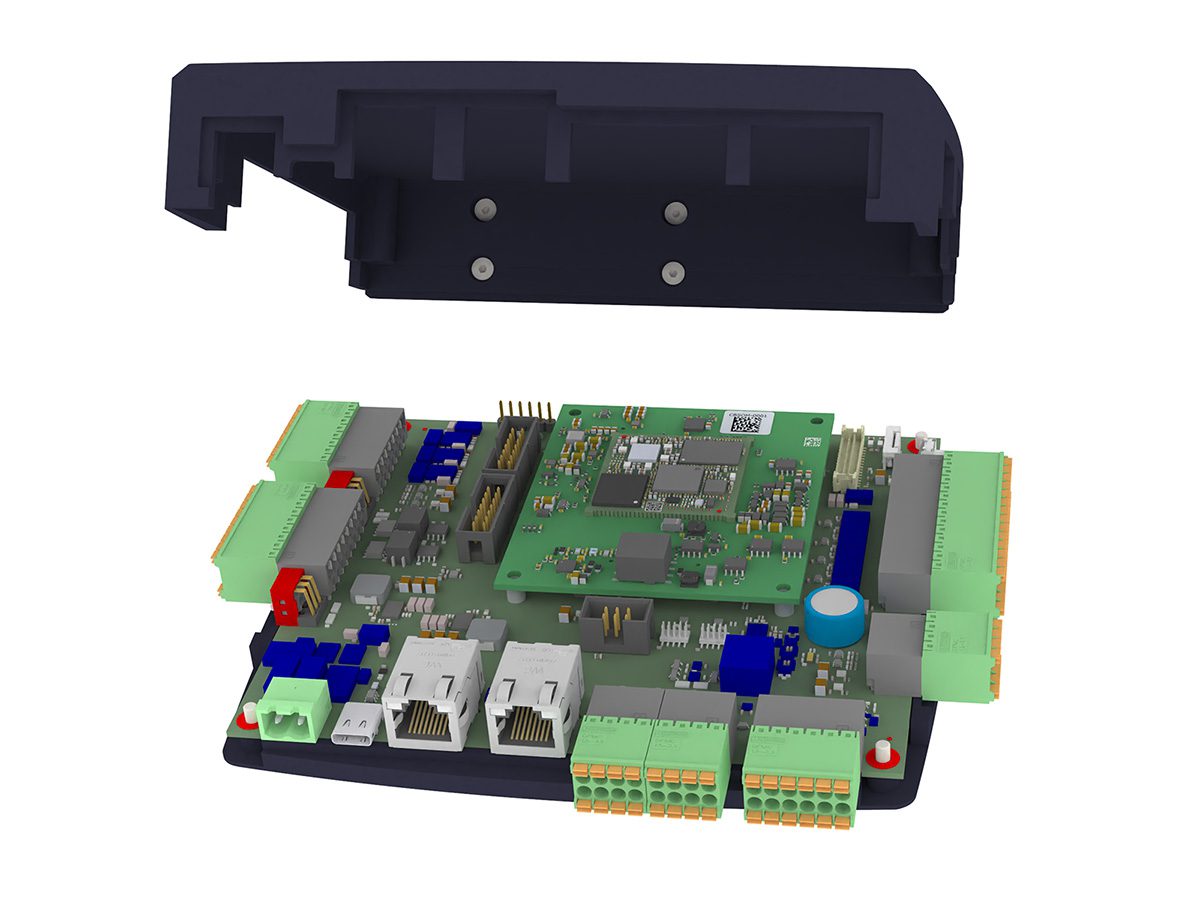
At the heart of chargebyte’s innovation is the Charge Control V (CCV), a sophisticated 2-port charging controller engineered for modern CCS-based charging stations. This device is designed to manage two charging ports concurrently, streamlining operations and improving user experience at public and private charging hubs.
A critical feature of the CCV is its integrated dedicated safety co-processor, ensuring secure and reliable charging operations—a paramount concern in high-power environments. Furthermore, the controller boasts sufficient processing power to directly drive a high-resolution display, eliminating the need for additional computing units and simplifying charger design.
Beyond its core capabilities, the CCV includes extensive input/output (I/O) options, facilitating seamless integration with a wide array of peripheral devices commonly found in advanced charging stations. This versatility positions the CCV as both an ideal platform for developing new charger designs and a straightforward drop-in replacement for existing, legacy charging controllers, offering a clear upgrade path for infrastructure providers.
Unlocking Software Independence with EVerest
The distinctive advantage of chargebyte’s new high-power charging controller lies in its foundation: the EVerest open-source firmware. The CCV runs EVerest with comprehensive support for key industry standards, including ISO 15118-20 and OCPP 2.1.0. These protocols are crucial for advanced charging functionalities, such as Plug & Charge, smart charging, and bidirectional power flow (V2G).
Typically, commercial high-power charging controllers are equipped with proprietary firmware. This model often leads to an ongoing dependency on the vendor for essential protocol updates, the introduction of new features, and the maintenance of critical certifications. Such dependencies can stifle innovation and limit the operational flexibility of charging network providers.
By building on EVerest, which is actively maintained as a community project under LF Energy, chargebyte offers integrators an unprecedented pathway to genuine software independence at the controller level. This open-source approach means that firmware maintenance is included in the product price, yet operators retain the freedom to modify or extend the software without being tethered to chargebyte for future updates or customisations. This empowers operators to adapt their charging infrastructure to evolving market demands and technological advancements more rapidly and cost-effectively.
Pioneering Megawatt Charging for Heavy-Duty Vehicles
In addition to the CCV, chargebyte is significantly advancing the electrification of commercial transport with the debut of two new Megawatt Charging System (MCS) controllers. These controllers are specifically engineered to meet the demanding requirements of e-trucks and other heavy-duty commercial vehicles, which necessitate substantially higher power transfer capacities than passenger cars.
The MCS standard is critical for enabling the rapid charging of large battery packs found in commercial vehicles, which is essential for minimising downtime and ensuring operational efficiency for logistics and transportation fleets. Recognising this urgent need, chargebyte’s new offerings comprise two distinct units designed for different ends of the charging interaction.
The Dual-Component MCS Solution
The CCL MCS controller is designed to reside on the vehicle side. Its primary function is to manage charging communication and safety logic between the charging inlet of the heavy-duty vehicle and its internal electronic systems. This ensures secure and compliant power transfer according to the rigorous specifications of ISO 15118-20.
Mirroring this capability on the infrastructure side is the CCY MCS controller. This unit handles the communication and safety protocols at the charging station, facilitating the seamless and safe delivery of megawatt-level power to commercial EVs. Together, the CCL MCS and CCY MCS form a comprehensive, end-to-end MCS solution, covering both vehicle and charger integration. This integrated approach is vital for ensuring interoperability and reliability across the diverse heavy-duty EV ecosystem.
chargebyte chose Power2Drive, a leading international exhibition for charging infrastructure and electric mobility, as the platform for debuting these crucial MCS controllers. This strategic launch underscores the company’s commitment to addressing the specific challenges and opportunities within the burgeoning e-truck and heavy-duty electric vehicle markets, paving the way for a more electrified future in commercial logistics.
Boosting Interoperability and Future-Proofing EV Infrastructure
The strategic move by chargebyte to champion open-source solutions for its high-power charging controller and develop specialized MCS units signals a broader industry shift towards more collaborative and flexible electric vehicle infrastructure. Open-source firmware, such as EVerest, promotes greater interoperability among different charging stations and vehicles, a factor critical for widespread EV adoption.
By standardizing communication protocols and enabling independent software development, chargebyte is helping to dismantle proprietary barriers that can hinder market growth and technological advancement. This approach not only enhances the adaptability of charging systems but also fosters a more competitive and innovative environment where developers can contribute to and improve the charging experience.
The introduction of robust MCS controllers simultaneously addresses the escalating energy demands of heavy-duty electric fleets. As more companies transition their commercial vehicles to electric power, the ability to charge quickly and efficiently becomes a significant determinant of operational success. chargebyte’s comprehensive MCS solution provides the necessary technological backbone to support this transition, ensuring that powerful e-trucks can integrate seamlessly into existing and future energy grids. These advancements collectively contribute to a more resilient, scalable, and user-friendly electric vehicle charging network, essential for accelerating the global shift towards sustainable transportation.
Frequently Asked Questions (FAQ)
What is the Charge Control V (CCV)?
The Charge Control V (CCV) is chargebyte’s new high-power charging controller, designed for CCS-based charging stations. It is notable for being the first ready-to-deploy controller built on the open-source EVerest firmware stack, offering dual charging ports, an integrated safety co-processor, and support for high-resolution displays.
How does open-source firmware benefit charging station operators?
Open-source firmware, like EVerest, provides charging station operators with genuine software independence. It eliminates vendor lock-in, allowing operators to freely modify, extend, and update their charging controller’s software without relying solely on the original manufacturer, fostering greater flexibility and innovation.
What are ISO 15118-20 and OCPP 2.1.0?
ISO 15118-20 is an international standard defining communication between electric vehicles and charging stations, enabling advanced features like Plug & Charge and bidirectional power flow. OCPP 2.1.0 (Open Charge Point Protocol) is a global standard for communication between charging stations and central management systems, facilitating smart charging and network management.
What is the Megawatt Charging System (MCS)?
The Megawatt Charging System (MCS) is a high-power charging standard specifically developed for large-battery electric vehicles, such as e-trucks and heavy-duty commercial vehicles. It enables much faster charging rates than conventional EV chargers, crucial for minimizing downtime in commercial operations.
What role do the CCL MCS and CCY MCS play?
The CCL MCS is the vehicle-side controller, handling charging communication and safety logic between the vehicle’s inlet and electronics. The CCY MCS is its infrastructure-side counterpart, managing these functions at the charging station. Together, they form an end-to-end solution for safe and efficient megawatt-level charging for heavy-duty EVs.
Why is chargebyte’s approach significant for the EV industry?
chargebyte’s approach is significant as it addresses key industry challenges: promoting software independence and flexibility through open-source solutions and providing critical infrastructure for heavy-duty EV charging. These innovations are vital for accelerating EV adoption, enhancing interoperability, and future-proofing charging networks.