
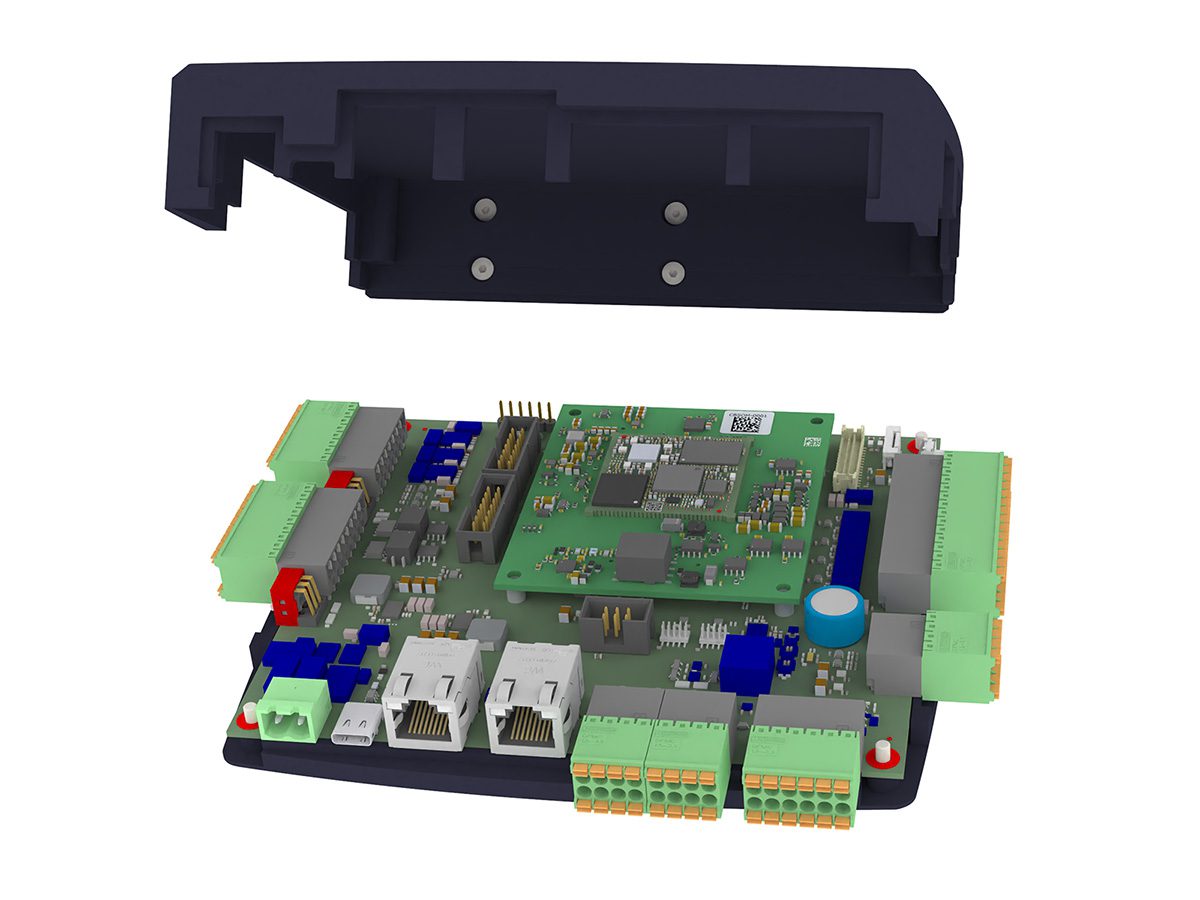
Key Takeaways:
- German specialist chargebyte has launched the Charge Control V (CCV), described as the world’s first ready-to-deploy high-power charging controller built on the open-source EVerest firmware stack.
- The CCV is a versatile 2-port controller designed for CCS-based charging stations, offering robust processing power, integrated safety features, and extensive connectivity.
- This innovative approach promises to grant integrators and operators genuine software independence, moving away from traditional proprietary firmware models.
- In a significant development for heavy-duty electrification, chargebyte also debuted two Megawatt Charging System (MCS) controllers, the CCL MCS and CCY MCS, targeting e-trucks and commercial vehicles.
- These launches underscore a pivotal shift towards more open, interoperable, and scalable solutions essential for the accelerating global adoption of electric vehicles and their supporting infrastructure.
Berlin, Germany — chargebyte, a leading German specialist in electric vehicle (EV) charging communication, has introduced a groundbreaking innovation poised to reshape the landscape of EV charging infrastructure. The company officially launched its Charge Control V (CCV), heralded as the world’s first ready-to-deploy high-power charging controller built upon the EVerest open-source firmware stack. This strategic move marks a significant departure from prevalent proprietary solutions, offering unprecedented flexibility and independence to charge point operators and integrators.

Currently in its pre-series status, samples of the CCV are now available for pre-order, signaling its imminent entry into the global market. The introduction of such an advanced open-source high-power charging controller is expected to catalyze innovation and accelerate the deployment of more robust and adaptable EV charging networks worldwide.
Introducing the Charge Control V: A New Paradigm in Charging
The Charge Control V (CCV) is engineered as a sophisticated 2-port charging controller specifically designed for CCS-based charging stations. Its architecture allows it to efficiently manage two distinct charging ports concurrently, optimizing the utilization of charging infrastructure. This capability is crucial for public and commercial charging hubs where multiple vehicles need to charge simultaneously.
Beyond its multi-port functionality, the CCV integrates a dedicated safety co-processor, a critical feature that enhances the reliability and security of high-power charging operations. This ensures that charging processes adhere to stringent safety standards, providing peace of mind for both operators and EV users. Furthermore, the controller boasts sufficient processing power to directly drive a high-resolution display, enabling intuitive user interfaces and real-time information delivery at the charging station.
Versatility and Advanced Connectivity
The CCV is equipped with extensive input/output (I/O) capabilities, facilitating seamless integration with a wide array of peripheral devices commonly found in modern charging stations. This robust connectivity positions the CCV as a versatile platform not only for the development of entirely new charger designs but also as a straightforward, drop-in replacement for legacy controllers currently in operation. Its adaptability ensures a smoother transition for existing infrastructure providers looking to upgrade their systems.
A core strength of the CCV lies in its software foundation. The board runs on EVerest, an advanced open-source firmware, offering comprehensive support for both ISO 15118-20 and OCPP 2.1.0. These standards are pivotal for smart charging, enabling advanced communication between the EV and the charging station, facilitating features like Plug & Charge, bidirectional power flow, and enhanced grid integration capabilities.
The Promise of Software Independence
One of the most compelling aspects of chargebyte’s new high-power charging controller is its commitment to software independence. Unlike most commercial High-Power Charging (HPC) controllers, which typically come bundled with proprietary firmware, the CCV liberates operators from vendor lock-in. Proprietary systems often create an ongoing dependency on a single vendor for critical updates, feature additions, and certification maintenance, leading to potential delays and increased costs.
By building on EVerest, which is actively maintained as a community project under LF Energy, integrators gain a clear and sustainable path to genuine software independence at the controller level. This means that while firmware maintenance is included in the product price, operators retain the freedom to modify or extend the underlying open-source stack without being inextricably tied to chargebyte for future software updates or customization needs. This level of autonomy is invaluable for tailoring charging solutions to specific market demands and fostering rapid innovation within the EV ecosystem.
Pioneering Megawatt Charging for Heavy-Duty Vehicles
In addition to the CCV, chargebyte also unveiled two innovative Megawatt Charging System (MCS) controllers at Power2Drive, a significant event in the e-mobility industry. These controllers are specifically engineered to address the demanding charging requirements of e-trucks and other heavy-duty commercial vehicles, a segment critical for decarbonizing freight and logistics.
The first of these, the CCL MCS, is designed to be installed on the vehicle side. It manages the intricate charging communication and safety logic between the charging inlet and the vehicle’s electronic systems, strictly adhering to the ISO 15118-20 standard. This ensures secure, efficient, and standardized communication protocols are maintained throughout the charging process, crucial for the enormous power transfers involved in megawatt charging.
Complementing the CCL MCS is the CCY MCS, which mirrors its capabilities on the infrastructure side. This controller handles the corresponding communication and safety protocols at the charging station itself. Together, the CCL MCS and CCY MCS form a comprehensive end-to-end MCS solution, covering both vehicle and charger integration. This integrated approach is essential for the seamless deployment and operation of MCS technology, which is fundamental for enabling long-haul electric trucking with minimal downtime.
Advancing EV Charging Standards and Interoperability
The strategic decision by chargebyte to champion open-source solutions and adhere to advanced communication standards like ISO 15118-20 and OCPP 2.1.0 is a significant step towards a more unified and efficient global EV charging landscape. These standards are not merely technical specifications; they are foundational pillars for the future of smart charging, ensuring interoperability between diverse charging stations and electric vehicles.
The EVerest open-source project, supported by LF Energy, plays a crucial role in this evolution. Its collaborative development model fosters transparency, accelerates bug fixes, and encourages the rapid integration of new features and protocols. This collective intelligence strengthens the entire EV charging ecosystem, ensuring that controllers like the CCV remain future-proof and adaptable to evolving technological demands and regulatory changes.
The Broader Impact on EV Infrastructure Development
The introduction of an open-source high-power charging controller like the CCV, alongside specialized MCS controllers, carries profound implications for the expansion of EV charging infrastructure. For commercial fleet operators, the ability to deploy MCS solutions means faster turnaround times for heavy-duty EVs, making electric options more viable for demanding logistics operations. This directly addresses one of the primary hurdles to commercial EV adoption: the speed and availability of charging.
For the broader EV market, the emphasis on open standards and software independence can lead to a more competitive and innovative environment. It reduces the barriers to entry for new players, encourages diversified solutions, and ultimately benefits the end-user through more reliable, accessible, and user-friendly charging options. As electric vehicle adoption continues its rapid ascent, the underlying infrastructure must evolve to support diverse charging needs, from residential to ultra-fast public and commercial charging.
Looking Ahead: A Future of Open and Interoperable EV Charging
chargebyte’s latest offerings represent a significant stride towards an EV charging future characterized by openness, interoperability, and user empowerment. By providing foundational hardware with an open-source software core, the company is not just selling products; it is contributing to a paradigm shift in how EV charging infrastructure is conceived, deployed, and maintained. The focus on high-power charging controllers and Megawatt Charging Systems underscores the industry’s commitment to supporting all segments of electric mobility, from passenger cars to the heaviest commercial vehicles.
As the EV market matures, the demand for scalable, efficient, and cost-effective charging solutions will only intensify. Innovations like the Charge Control V and the MCS controllers from chargebyte are critical enablers for this growth, laying the groundwork for a seamlessly connected and genuinely sustainable electric transportation ecosystem.
FAQ Section
What is the Charge Control V (CCV)?
The Charge Control V (CCV) is chargebyte’s new 2-port high-power charging controller for CCS-based stations. It is significant as the world’s first ready-to-deploy controller built on the open-source EVerest firmware stack, providing advanced features like integrated safety and high-resolution display capabilities, designed for both new and existing charger infrastructures.
How does open-source firmware benefit EV charging operators?
Open-source firmware, like EVerest, offers EV charging operators genuine software independence. It liberates them from proprietary vendor lock-in, allowing free modification and extension of the software. This reduces ongoing dependency for updates, enables faster customization, fosters innovation, and potentially lowers operational costs over the long term, promoting greater flexibility in charging solutions.
What industry standards does the CCV support?
The Charge Control V (CCV) provides full support for ISO 15118-20 and OCPP 2.1.0. These standards are crucial for enabling advanced smart charging functionalities, including Plug & Charge, bidirectional power flow (V2G/V2X), and enhanced communication between electric vehicles and charging stations, ensuring future-proof and interoperable charging solutions.
What are the new MCS controllers from chargebyte?
chargebyte has introduced the CCL MCS and CCY MCS, which are Megawatt Charging System controllers. The CCL MCS operates on the vehicle side, handling charging communication and safety, while the CCY MCS functions on the infrastructure side. Together, they form an end-to-end MCS solution, specifically designed to meet the high-power charging needs of e-trucks and heavy-duty commercial vehicles.
Why is the Megawatt Charging System important for heavy-duty vehicles?
The Megawatt Charging System (MCS) is critical for heavy-duty vehicles because it enables extremely fast charging, significantly reducing downtime for e-trucks and commercial fleets. This rapid charging capability makes electric heavy-duty transport more practical and economically viable, accelerating the transition to sustainable logistics and contributing substantially to decarbonization efforts in the freight sector.
What is EVerest and its role in the CCV?
EVerest is an open-source firmware stack maintained as a community project under LF Energy. In the Charge Control V (CCV), EVerest serves as the foundational software platform. Its open-source nature allows for transparency, community-driven development, and ensures that the CCV can be freely modified and extended, promoting interoperability and reducing reliance on proprietary solutions in EV charging infrastructure.
How does the CCV ensure safety in high-power charging?
The Charge Control V (CCV) ensures safety in high-power charging through the integration of a dedicated safety co-processor. This specialized component is designed to monitor and manage critical safety parameters throughout the charging process, ensuring compliance with rigorous safety standards and providing a robust layer of protection for both the electric vehicle and the charging infrastructure, safeguarding against potential hazards.