
Key Takeaways:
- chargebyte has launched the Charge Control V (CCV), described as the world’s first ready-to-deploy high-power charging controller based on the open-source EVerest firmware.
- The CCV offers unprecedented software independence, addressing vendor lock-in issues common with proprietary charging solutions, and supports advanced standards like ISO 15118-20 and OCPP 2.1.0.
- Simultaneously, chargebyte introduced new Megawatt Charging System (MCS) controllers, the CCL MCS and CCY MCS, designed specifically for the demanding needs of e-trucks and heavy-duty commercial vehicles.
- These innovations aim to accelerate the development and deployment of robust, interoperable, and scalable EV charging infrastructure globally.
Revolutionising EV Charging: Open-Source at the Core
In a significant stride towards democratising electric vehicle (EV) charging technology, German specialist chargebyte has unveiled a suite of innovative charging controllers poised to reshape global EV infrastructure. At the forefront is the Charge Control V (CCV), which the company touts as the world’s inaugural ready-to-deploy high-power charging controller leveraging the EVerest open-source firmware stack.

This development marks a pivotal moment for an industry often constrained by proprietary systems. By embracing open-source principles, chargebyte is empowering integrators and operators with greater flexibility and control over their charging solutions, fostering an ecosystem built on collaboration and continuous improvement.
The Charge Control V: A Game-Changer for High-Power Charging
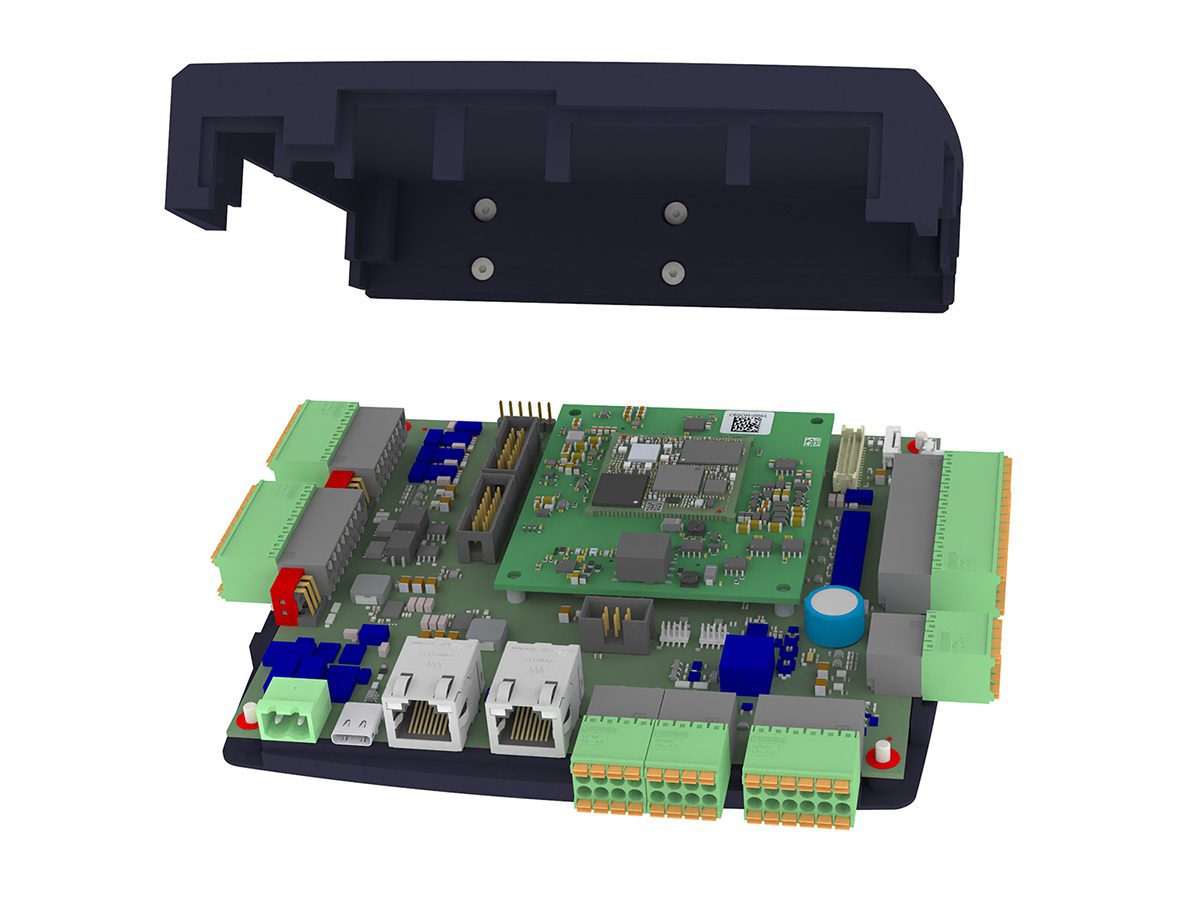
The Charge Control V (CCV) stands out as a sophisticated 2-port charging controller engineered for modern CCS-based charging stations. This device is designed not only to manage two charging ports efficiently but also to integrate a dedicated safety co-processor, ensuring robust and secure operations crucial for high-power charging environments.
Beyond its core charging capabilities, the CCV boasts substantial processing power. This allows it to directly drive high-resolution displays, offering an enhanced user experience without requiring additional external hardware. Its extensive input/output (I/O) capabilities further facilitate seamless integration with a wide array of peripheral devices commonly found in advanced charging setups.

The strategic positioning of the CCV as both a foundational platform for novel charger designs and a direct replacement for existing, legacy controllers underscores its versatility. This dual functionality is vital for expediting the upgrade of older infrastructure while simultaneously stimulating the creation of next-generation charging stations.
EVerest and the Promise of Software Independence
Central to the CCV’s groundbreaking nature is its foundation on EVerest, an open-source firmware stack maintained as a community project under LF Energy. This strategic choice directly addresses a pervasive challenge within the EV charging industry: the reliance on proprietary firmware solutions.
Traditionally, commercial high-power charging controller vendors ship their products with closed-source firmware, creating an ongoing dependency for protocol updates, new feature additions, and essential certification maintenance. This vendor lock-in can stifle innovation and increase operational costs for charging station owners and operators.
By building on EVerest, chargebyte offers a clear pathway to genuine software independence at the controller level. The open-source nature means that operators are free to modify or extend the firmware stack without being tethered to chargebyte for every software update or customisation requirement. This model promotes a more agile and adaptable charging infrastructure.
Adherence to Global Standards: ISO 15118-20 and OCPP 2.1.0
Ensuring future-proof compatibility and seamless interoperability is paramount for the expanding EV charging landscape. The Charge Control V runs EVerest with comprehensive support for ISO 15118-20 and OCPP 2.1.0, two critical global standards that define the future of EV charging communication.
ISO 15118-20, often referred to as ‘Plug & Charge,’ is a crucial international standard for vehicle-to-grid communication, enabling advanced features like automatic authentication and smart charging. Its full implementation in the CCV ensures secure, convenient, and intelligent charging sessions.
Similarly, OCPP 2.1.0 (Open Charge Point Protocol) represents the latest iteration of the communication protocol between charging stations and central management systems. Supporting this standard guarantees robust control, monitoring, and billing functionalities, essential for large-scale charging networks.
chargebyte has affirmed that firmware maintenance is included in the product price, further solidifying the long-term viability and operational ease of the CCV for integrators.
Powering the Future of Commercial Transport: Megawatt Charging for Heavy-Duty EVs
Recognising the unique and immense power requirements of heavy-duty electric vehicles, chargebyte has also introduced two new Megawatt Charging System (MCS) controllers. These controllers, unveiled at the prestigious Power2Drive exhibition, are specifically engineered to meet the demanding charging needs of e-trucks and other heavy commercial vehicles.
The electrification of heavy transport presents distinct challenges, primarily due to the sheer size of their battery packs and the need for rapid turnaround times. Standard high-power charging infrastructure, while adequate for passenger cars, falls short of the megawatt-level energy transfer required by these vehicles.
End-to-End MCS Solution: CCL MCS and CCY MCS
To address this, chargebyte has developed a sophisticated two-part solution. The CCL MCS controller is designed to reside on the vehicle side, acting as the critical interface between the charging inlet and the vehicle’s internal electronics. It meticulously handles the complex charging communication and safety logic, adhering strictly to ISO 15118-20, which is foundational for advanced and high-power charging protocols.
Mirroring its capabilities on the infrastructure side is the CCY MCS. This controller integrates into the charging station, facilitating seamless communication and power delivery to the heavy-duty EV. Together, the CCL MCS and CCY MCS form a comprehensive, end-to-end Megawatt Charging System solution, covering both the vehicle integration and the charger infrastructure requirements.
This integrated approach is vital for ensuring not only efficient and reliable charging but also the critical safety protocols necessary when handling such immense power levels. The debut of these controllers signifies a major step forward in building out the necessary charging backbone for the global transition to electric heavy-duty transport.
Driving Interoperability and Innovation in EV Infrastructure
The introduction of chargebyte’s new controllers, particularly the open-source high-power charging controller, underscores a significant industry trend towards greater interoperability, flexibility, and accelerated innovation. By championing open standards and open-source software, chargebyte is contributing to a more cohesive and less fragmented EV charging ecosystem.
This approach benefits not only charger manufacturers and operators but also, crucially, the end-users of electric vehicles. A more standardised and open environment reduces complexities, enhances reliability, and ultimately improves the overall charging experience, encouraging wider EV adoption.
The commitment to supporting advanced communication standards like ISO 15118-20 and OCPP 2.1.0 ensures that these controllers are future-proof. This means they are ready for upcoming innovations such as vehicle-to-grid (V2G) capabilities and sophisticated energy management systems, which are vital for integrating EVs into future smart grids.
The Road Ahead: Scaling Sustainable Electric Mobility
chargebyte’s latest product launches are more than just new hardware; they represent a strategic push towards building a more resilient and adaptable charging infrastructure. The emphasis on open-source solutions is particularly impactful, as it empowers a broader community of developers and manufacturers to innovate without proprietary constraints.
As the global fleet of electric vehicles continues to grow rapidly, especially in the commercial and heavy-duty sectors, the demand for robust, high-power charging controllers and megawatt charging solutions will only intensify. Innovations like the Charge Control V and the MCS controllers are critical enablers for this transition.
These advancements from chargebyte are set to play a pivotal role in accelerating the deployment of next-generation EV charging networks. They promise to make electric mobility more accessible, efficient, and sustainable for both passenger vehicles and the crucial heavy-duty transport sector, paving the way for a greener future.
Frequently Asked Questions (FAQ)
What is the Charge Control V (CCV)?
The Charge Control V (CCV) is chargebyte’s new 2-port high-power charging controller for CCS-based charging stations. It uniquely operates on the EVerest open-source firmware, offering unprecedented software independence, and includes features like a safety co-processor and high-resolution display support.
Why is open-source firmware significant for EV charging controllers?
Open-source firmware, like EVerest, provides genuine software independence for operators and integrators. It eliminates vendor lock-in, allowing free modification and extension of the software stack, thus accelerating innovation, reducing long-term costs, and ensuring adaptability to evolving standards without reliance on a single vendor.
What standards does the CCV support?
The Charge Control V offers full support for ISO 15118-20 and OCPP 2.1.0. These standards are crucial for advanced charging functionalities such as Plug & Charge for automatic authentication and comprehensive communication between charging stations and central management systems, ensuring future-proof interoperability.
What are the MCS controllers and who are they for?
The MCS (Megawatt Charging System) controllers, CCL MCS and CCY MCS, are designed specifically for e-trucks and heavy-duty commercial vehicles. They provide an end-to-end solution for megawatt-level charging, with CCL MCS on the vehicle side and CCY MCS on the infrastructure side, facilitating ultra-fast charging for large fleets.
What is the role of ISO 15118-20 in these new products?
ISO 15118-20 is a key international standard for advanced EV charging communication, including Plug & Charge and smart charging functionalities. Its full support in both the CCV and the MCS controllers ensures secure, efficient, and future-ready communication protocols essential for the next generation of electric vehicle charging.
How do these innovations improve the EV charging ecosystem?
By offering open-source solutions and supporting critical industry standards, chargebyte is enhancing interoperability, reducing vendor dependency, and accelerating the development of robust charging infrastructure. This flexibility enables easier upgrades, faster innovation, and a more seamless charging experience for all types of electric vehicles.