
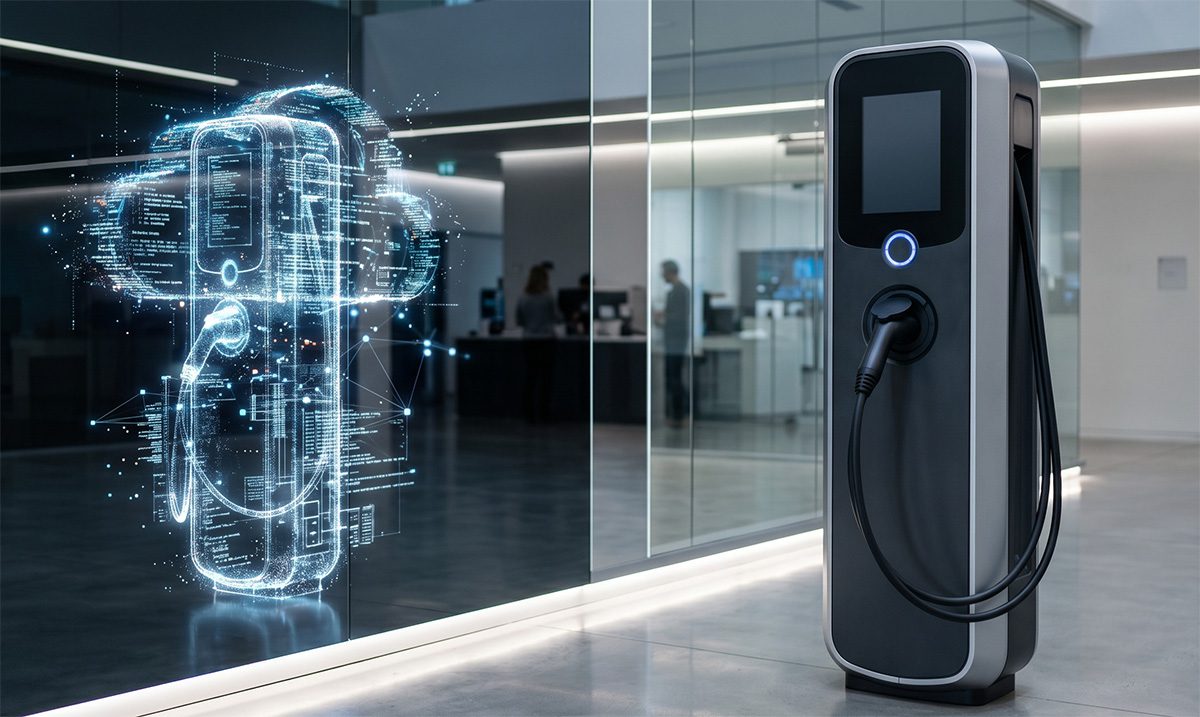
In a significant development for the electric vehicle (EV) charging sector, Pionix, the German innovator behind the widely acclaimed open-source EVerest charging stack, has introduced Pionix Cloud. This new white-label device backend is specifically engineered to empower EV charger manufacturers with unparalleled oversight and control over their deployed charging infrastructure.
The launch of Pionix Cloud addresses a critical industry challenge: the ongoing responsibility of engineering teams for Electric Vehicle Supply Equipment (EVSE) hardware long after production. It provides a robust solution for managing complex support cases that inevitably arise once chargers are operational in diverse field environments.

Key Takeaways
- Pionix Cloud: A white-label device backend for EV charger manufacturers.
- Core Function: Provides engineering teams with crucial visibility and control over deployed charger fleets.
- Dual Components: Features Charger Device Cloud (CDC) for development and Charger Maintenance Cloud (CMC) for active fleet diagnostics.
- Versatility: Built for the EVerest open-source platform but compatible with non-EVerest chargers.
- Complementary Role: Works alongside existing Charge Point Management Systems (CPMS), focusing on device-level technical support.
Addressing Critical Industry Challenges for EVSE Manufacturers
The journey from designing an EV charger to its successful operation in the field is fraught with complexities. Manufacturers often grapple with a lack of real-time data and remote diagnostic capabilities for their charging infrastructure once units leave the factory floor. This gap can lead to significant delays and costs in troubleshooting issues.
Traditional methods of resolving field issues frequently involve dispatching technicians, a resource-intensive process that can be both time-consuming and expensive. The absence of comprehensive backend tools means engineering teams often operate in a reactive mode, struggling to pinpoint the root cause of problems without direct, granular access to device data.
Bridging the Gap Between Bench and Field Operations
Pionix Cloud is meticulously designed to close this critical operational gap. It aims to provide engineers with the same level of insight and control over a globally dispersed charger fleet that they typically enjoy during bench testing in a controlled lab environment. This unprecedented visibility is fundamental for proactive maintenance and efficient issue resolution.

By centralizing data and providing remote access, Pionix Cloud transforms how manufacturers approach post-production support. It enables teams to diagnose and often resolve issues remotely, minimizing downtime for charging stations and enhancing the overall reliability of the EV charging infrastructure.
Unpacking the Dual Components of Pionix Cloud
The innovative Pionix Cloud platform is structured around two distinct yet integrated views, each tailored to specific stages of an EV charger’s lifecycle: the Charger Device Cloud (CDC) and the Charger Maintenance Cloud (CMC).
Charger Device Cloud (CDC): Empowering Development and Testing
The CDC component of Pionix Cloud is engineered for the developmental phase of EV chargers. It acts as a central hub for engineering teams, allowing them to effectively manage and monitor test hardware, regardless of its physical location. This is particularly beneficial for manufacturers with globally distributed R&D teams or testing facilities.
Key functionalities of the CDC include pooling globally scattered test hardware into a single, cohesive cloud inventory. This central repository streamlines the management of prototypes and pre-production units. Furthermore, the CDC automates firmware distribution, ensuring that all test devices are running the latest software versions consistently and efficiently.
For deep-level debugging and configuration, Pionix Cloud provides secure SSH access to test units, enabling engineers to perform detailed diagnostics remotely. Real-time telemetry data offers continuous performance monitoring, while remote configuration capabilities allow for quick adjustments and optimizations during the crucial testing phase. These features collectively accelerate the development cycle and enhance product quality.
Charger Maintenance Cloud (CMC): Ensuring Post-Production Fleet Health
Once EV chargers transition from development to active production and deployment, the Charger Maintenance Cloud (CMC) takes over. This component is dedicated to providing comprehensive diagnostic information from the live, operational fleet. The CMC ensures that manufacturers retain a deep understanding of their product’s performance and health after it is in the hands of operators and end-users.
The CMC delivers granular diagnostics, offering detailed insights into the operational status and any potential issues within the active fleet. It facilitates remote configuration and Over-The-Air (OTA) updates, crucial for deploying software enhancements, security patches, or bug fixes without physical intervention. A significant advantage is that these updates and configurations are delivered over a manufacturer-owned channel. This channel remains consistently connected, irrespective of which Charge Point Management System (CPMS) an operator might be utilising.
This independence from the CPMS is vital, as it ensures manufacturers always have a direct line to their devices, guaranteeing continuous support and the ability to maintain their product’s integrity and functionality throughout its lifespan in diverse EV charging infrastructure environments.
Advanced Capabilities for Enhanced Charger Management
Beyond its core CDC and CMC components, Pionix Cloud integrates several advanced capabilities designed to optimize the management, maintenance, and reliability of EV charging infrastructure.
One such feature is its sophisticated firmware rollout mechanism, which includes crucial one-click rollback functionality. This provides manufacturers with the confidence to deploy updates knowing that, in the rare event of an issue, they can instantly revert to a stable previous version. This capability is paramount for minimizing service interruptions and maintaining user trust in the EV charging ecosystem.
Pionix Cloud also boasts robust role-based and asset-level access controls. These controls allow for precise management of user permissions, ensuring that only authorized personnel can access or modify specific chargers or functionalities. The provision for temporary privilege escalation further enhances operational flexibility, allowing specific tasks to be performed by designated teams or individuals when required, without compromising overall system security.
Crucially, the platform offers diagnostics that delve beneath the standard Open Charge Point Protocol (OCPP) layer. This deeper level of insight provides critical information about the underlying hardware and firmware, enabling engineers to clear errors that might otherwise be invisible or inexplicable through OCPP alone. By facilitating such in-depth troubleshooting, Pionix Cloud significantly reduces the necessity of dispatching technicians into the field, leading to substantial savings in operational costs and response times for the EV charging infrastructure.
Pionix Cloud’s Role in the Broader EV Charging Ecosystem
Pionix Cloud is explicitly designed not as a replacement for existing Charge Point Management Systems (CPMS), but as a vital complement. This distinction is crucial for understanding its value proposition within the expanding landscape of EV charging infrastructure.
A CPMS primarily handles the commercial aspects of EV charging – managing tariffs, processing billing, and facilitating roaming agreements between different charging networks. It focuses on the customer and revenue-generating side of the operation. Pionix Cloud, conversely, operates in parallel, serving as a dedicated device-level channel for the manufacturer’s engineering and support teams.
This parallel operation ensures that while the CPMS manages the commercial relationship with the end-user and operator, Pionix Cloud provides the manufacturer with continuous, direct technical oversight of their hardware. This separation of concerns allows each system to perform its specialized functions optimally, enhancing the overall efficiency and reliability of the EV charging network.
Moreover, the product’s flexibility extends to its compatibility. While built to seamlessly integrate with Pionix’s EVerest open-source platform, Pionix Cloud can also function effectively on non-EVerest chargers. This broad compatibility makes it a versatile solution for a wide array of EVSE manufacturers, regardless of their foundational software stack.
Vision Behind the Innovation
The impetus behind Pionix Cloud stems from a clear understanding of the challenges faced by manufacturers in the rapidly evolving EV charging market. Marco Möller, CEO of Pionix, articulated this vision succinctly, stating, “Manufacturers shouldn’t have to fly blind or spend years building a non-core backend.”
This statement underscores the critical need for a streamlined, ready-to-use solution that allows manufacturers to focus on their core competency: designing and producing high-quality EV chargers. Developing a proprietary device backend from scratch is a massive undertaking, often requiring significant time, resources, and specialized expertise that many hardware manufacturers might not possess or wish to divert from their primary mission.
Pionix Cloud effectively removes this burden, offering a purpose-built, mature solution that accelerates market readiness and enhances operational efficiency for manufacturers. By providing a reliable and comprehensive backend, Pionix empowers companies to deploy their EV charging infrastructure with confidence, knowing they have a robust system for ongoing management and support.
Accessibility and Commercial Deployment
Pionix is committed to supporting the broader EV community, reflected in its tiered access model for Pionix Cloud. For members of the EVerest community, the platform is available free of charge for up to 10 chargers in a lab environment. This offering significantly benefits developers and small-scale integrators working with the EVerest open-source stack, fostering innovation and collaboration within the ecosystem.
For larger-scale operations and commercial deployments, Pionix offers paid commercial tiers. These structured plans cater to varying needs, ensuring that manufacturers of all sizes can leverage the full capabilities of Pionix Cloud to manage their expansive EV charging infrastructure fleets. Interested parties will have an opportunity to delve deeper into the platform’s functionalities, as EVerest is scheduled to conduct a live walkthrough of Pionix Cloud on July 9, providing a direct demonstration of its features and benefits.
The Future of EV Charger Device Management
The introduction of Pionix Cloud represents a significant step forward in the professionalization of EV charger device management. As the global push towards electric mobility accelerates, the demand for reliable, efficient, and easily maintainable EV charging infrastructure will only intensify.
Robust backend solutions like Pionix Cloud are fundamental to scaling the EV charging network effectively. They ensure that manufacturers can not only produce innovative hardware but also provide sustained operational excellence throughout the lifecycle of their products. This focus on long-term support and remote diagnostics will be critical for building trust, reducing operational costs, and ultimately facilitating a smoother transition to an electric future.
FAQ Section
What is Pionix Cloud?
Pionix Cloud is a white-label device backend solution designed for EV charger manufacturers. It provides engineering and support teams with comprehensive tools for monitoring, diagnosing, and managing their deployed EV charging infrastructure remotely, ensuring efficient post-production support.
How does Pionix Cloud differ from a Charge Point Management System (CPMS)?
Pionix Cloud is complementary to a CPMS, not a replacement. While a CPMS handles commercial aspects like billing and tariffs, Pionix Cloud focuses on the device-level technical management, diagnostics, and maintenance for the manufacturer’s engineering teams.
Can Pionix Cloud be used with non-EVerest chargers?
Yes, while Pionix Cloud is built for the EVerest open-source platform, it is designed to be versatile and can also run on EV chargers that do not utilize the EVerest stack, offering broad compatibility for manufacturers.
What are the main components of Pionix Cloud?
Pionix Cloud consists of two primary views: the Charger Device Cloud (CDC) for managing test hardware during development, and the Charger Maintenance Cloud (CMC) for providing diagnostics and updates for active, deployed charger fleets.
What benefits does Pionix Cloud offer manufacturers?
Manufacturers benefit from enhanced visibility into deployed chargers, automated firmware distribution, secure remote access, granular diagnostics, and the ability to perform OTA updates. This reduces field service costs, improves operational efficiency, and accelerates issue resolution.
Is there a free version of Pionix Cloud available?
Yes, Pionix Cloud is offered free of charge for the EVerest community, supporting up to 10 chargers in a lab environment. Commercial tiers are available for larger deployments and full-scale operational needs.
What kind of diagnostics does Pionix Cloud provide?
Pionix Cloud offers granular diagnostics that extend beyond the standard OCPP layer, providing deep insights into the hardware and firmware beneath. This allows engineers to troubleshoot complex errors remotely and effectively, reducing the need for on-site interventions.
How does Pionix Cloud ensure data security and access control?
The platform includes robust role-based and asset-level access controls, ensuring that only authorized personnel can access or modify specific chargers. Temporary privilege escalation features further enhance secure operational flexibility for specific tasks.