
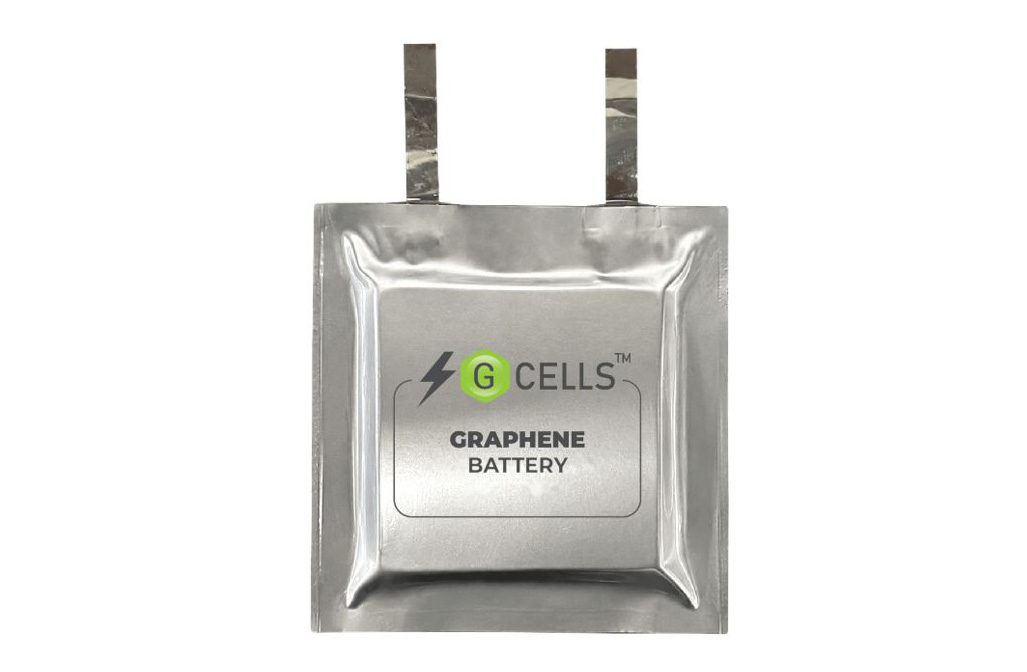
Key Takeaways
- Graphene Manufacturing Group (GMG)’s G CELLS completed 1,000 six-minute charge and discharge cycles by October 7, 2026, with no performance reduction.
- The G CELLS, which are graphene aluminum-ion, contain no lithium or rare earth materials.
- In direct comparison, a lithium titanate oxide (LTO) cell charged and discharged in the same six minutes reached its end-of-life (80% capacity) within 82 cycles.
- G CELLS demonstrated a specific energy of 58 Wh/kg and 94% energy efficiency at a six-minute charge, significantly outperforming the LTO cell’s 64% efficiency.
- This breakthrough addresses a major barrier to wider electric vehicle (EV) adoption: fast charging and battery longevity.
BRISBANE, AUSTRALIA – Graphene Manufacturing Group (GMG) has announced groundbreaking test data for its innovative fast-charging G CELLS, revealing that the graphene aluminum-ion battery technology successfully completed 1,000 charge and discharge cycles, each lasting just six minutes, with no discernible reduction in performance.
This significant development, reported as of October 7, 2026, underscores a potential paradigm shift in electric vehicle (EV) and energy storage solutions, addressing critical industry challenges related to charging speed and battery longevity.
Pioneering Graphene Aluminum-Ion Technology
The advanced G CELLS represent a distinct departure from conventional battery chemistries. Developed by GMG, these graphene aluminum-ion cells are notable for their composition, which entirely excludes lithium and rare earth materials. This characteristic positions them as a more sustainable and potentially less resource-intensive alternative in the rapidly expanding battery market.
The underlying technology for these cells is being developed under a strategic joint development agreement between GMG and global mining giant Rio Tinto, highlighting a collaborative effort to bring this innovative solution to commercial viability.
Rigorous Testing and Unprecedented Durability
The extensive testing was conducted on 1.5 Ah pouch cells by Indiana’s Battery Innovation Center, a reputable independent facility known for its expertise in battery development and evaluation. GMG’s Brisbane Battery Development Centre was responsible for the development, manufacturing, and supply of the specialized graphene materials integrated into these cells.

The test protocol involved charging and discharging the G CELLS at a 7 C rate. This ‘C-rate’ signifies how quickly a battery can be charged or discharged relative to its total capacity, with a higher C-rate indicating faster energy transfer. The successful completion of 1,000 cycles at this rapid rate, without any performance degradation, marks a substantial achievement in battery endurance.
Setting New Benchmarks: G CELLS Versus LTO
The latest results build upon previous updates, effectively doubling the reported cycle count for cells tested at a 10 C rate. A direct comparison was made with a lithium titanate oxide (LTO) cell, a commonly used chemistry known for its fast-charging capabilities, albeit with certain limitations.
When subjected to the same six-minute charge and discharge cycles at a 10 C rate, the LTO cell exhibited a rapid decline in performance. It fell to 80% of its original capacity within just 82 cycles. This 80% threshold is widely considered the ‘end of life’ for a battery cell in many applications, including electric vehicles.
In stark contrast, a second G CELL, also charged and discharged in six minutes at 10 C, demonstrated remarkable resilience, showing only a 10% performance reduction after 393 cycles. This highlights the superior longevity and stability of GMG’s graphene aluminum-ion technology.
Enhanced Energy Efficiency and Density
Beyond durability, the G CELLS also exhibited significant improvements in energy density and efficiency. The specific energy achieved 58 Wh/kg during a six-minute (10 C) charge, marking a substantial 48% increase over the 39 Wh/kg reported in GMG’s prior update. This higher energy density implies more power can be packed into a smaller, lighter battery unit.
Furthermore, the G CELLS demonstrated an impressive 94% energy efficiency at the six-minute charge and discharge rate. This level of efficiency is critical, as it minimizes energy loss during operation. For comparison, the LTO cell managed only 64% energy efficiency under identical rapid charge and discharge conditions.
Commenting on the efficiency figures, Bob Galyen, a GMG Director and former Chief Technology Officer of CATL, one of the world’s largest battery manufacturers, stated: “Energy that isn’t lost as heat is what makes fast charging practical at the system level.” This emphasizes the practical implications of high efficiency for real-world applications, preventing excessive heat generation which can degrade battery performance and safety.
Addressing Key Barriers to EV Adoption
The advancements demonstrated by GMG’s G CELLS directly tackle two of the most significant hurdles currently impeding broader electric vehicle and energy storage adoption: the need for faster charging and the desire for longer-lasting batteries.
Craig Nicol, Chief Executive Officer and Managing Director of GMG, articulated this vision: “Fast charging is one of the biggest barriers to broader electric vehicle and energy storage adoption.” He further highlighted the comparative advantage, stating, “These results show G CELLS lasting around ten times longer than a comparable LTO cell charged and discharged in the same time.” This longevity, combined with rapid charging capabilities, could significantly enhance the user experience for EV owners and improve the economic viability of energy storage systems.
The Road Ahead: Scaling and Optimization
With these compelling test results, GMG’s immediate focus is clear. The company aims to continue enhancing the energy density of its G CELLS, further improve the 10 C cycle life, and, crucially, scale the technology to larger cell formats suitable for commercial applications in electric vehicles and grid-scale energy storage.
This ongoing development underscores the potential for graphene aluminum-ion technology to play a pivotal role in the future of energy, offering a sustainable, high-performance solution that moves beyond the limitations of current battery chemistries.
FAQs About Graphene G CELLS
What are GMG’s G CELLS?
GMG’s G CELLS are advanced graphene aluminum-ion battery cells developed by Graphene Manufacturing Group. They are designed for fast charging and high cycle life, uniquely featuring no lithium or rare earth materials, making them a more sustainable alternative to traditional batteries.
How do G CELLS compare to lithium-ion batteries?
G CELLS have demonstrated superior performance in fast-charging scenarios compared to lithium titanate oxide (LTO) cells, a type of lithium-ion. While an LTO cell degraded to 80% capacity within 82 six-minute cycles, G CELLS completed 1,000 such cycles with no performance reduction, showcasing far greater longevity.
What is the significance of 1,000 six-minute charge cycles?
Completing 1,000 six-minute charge and discharge cycles without performance degradation indicates exceptional durability and rapid charging capability. This level of performance could significantly reduce EV charging times and extend battery lifespan, addressing key consumer concerns for electric vehicles.
Do G CELLS use lithium or rare earth materials?
No, one of the key features of GMG’s G CELLS is that they are manufactured without the use of lithium or rare earth materials. This contributes to their sustainability profile and reduces reliance on supply chains associated with these often-contentious resources.
What is the energy efficiency of G CELLS?
G CELLS exhibit a high energy efficiency of 94% at a six-minute charge and discharge rate. This efficiency is crucial for fast charging, as it minimizes energy loss as heat, making the charging process more practical, safer, and less taxing on the battery system.
Who is involved in the development of G CELLS?
Graphene Manufacturing Group (GMG) developed and supplied the graphene materials. The Battery Innovation Center in Indiana built the pouch cells and collected the test data. GMG is also developing the technology under a joint development agreement with Rio Tinto.
What are the future plans for G CELLS?
GMG is focused on continuously improving the energy density and 10C cycle life of its G CELLS. The company also aims to scale the technology to larger cell formats, making them suitable for broader commercial applications, particularly within the electric vehicle and energy storage sectors.