
Key Takeaways (TL;DR):
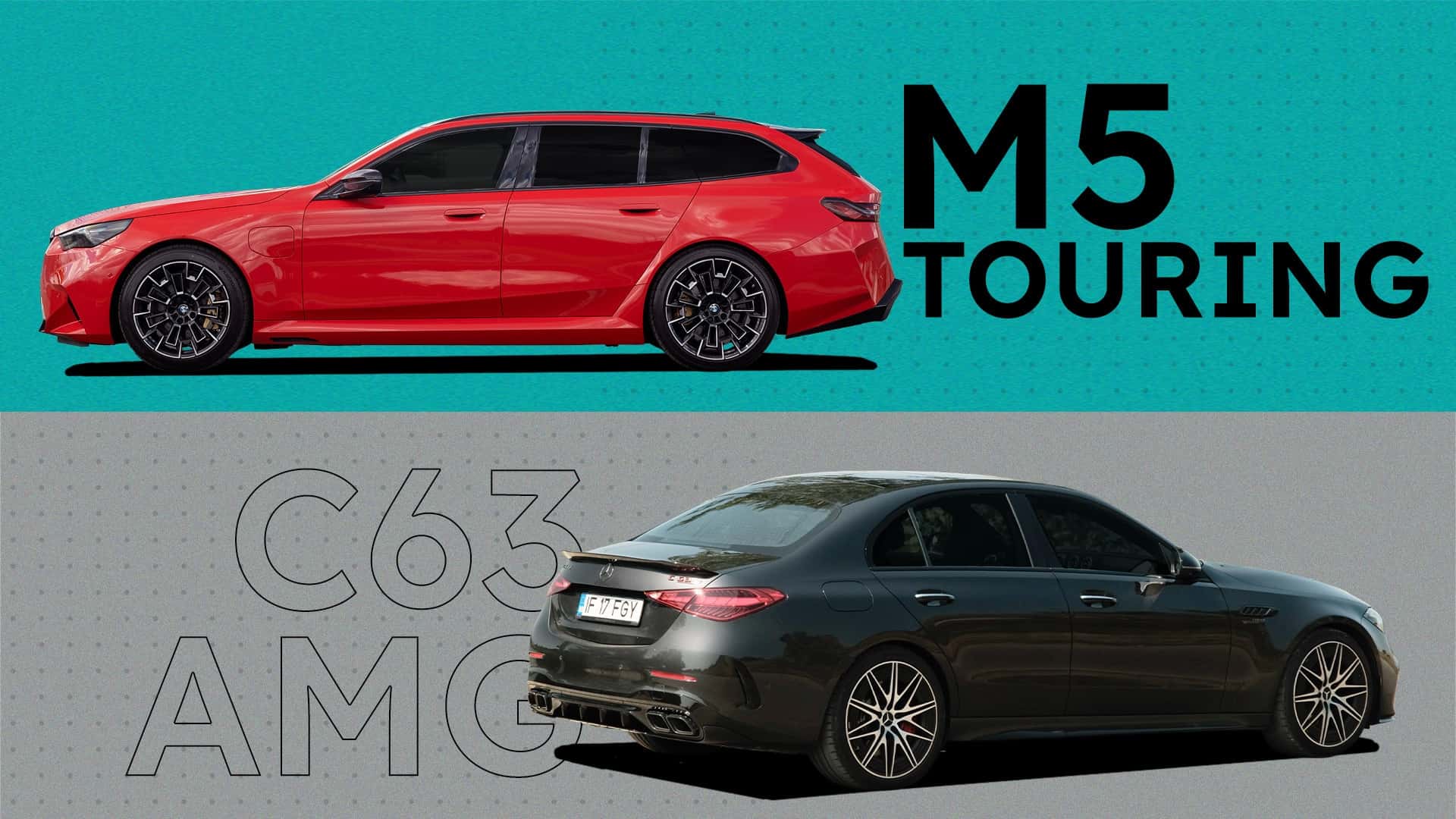
- The article compares the BMW M5 Touring and Mercedes-AMG C63s E-Performance, both prominent performance hybrid vehicles.
- It highlights two distinct approaches to electrification: BMW prioritizes substantial electric range with a larger battery, while Mercedes-AMG focuses on pure performance enhancement with a smaller, lighter battery.
- The 5,456-pound BMW M5 Touring, despite its formidable 717 horsepower, experiences compromised handling and an inconsistent ride due to the significant weight added by its 22.1 kWh battery.
- In contrast, the Mercedes-AMG C63s E-Performance, weighing 880 pounds less and featuring a 6.1 kWh battery, offers superior agility and a more engaging driving experience, despite its four-cylinder engine.
- The review suggests that for a truly enjoyable driving experience in performance hybrid vehicles, a judicious balance of power and weight, often favoring a smaller battery for performance rather than extensive electric range, is paramount.
The Electrification Conundrum in High-Performance Vehicles
The automotive landscape is undergoing a significant transformation, with manufacturers increasingly integrating large batteries into their most potent performance flagships. This shift aims to reduce emissions but often introduces a paradoxical outcome: a new generation of high-performance vehicles that are exceptionally quick in a straight line yet struggle to maintain the dynamic prowess of their non-electrified predecessors when cornering.

This evolving challenge was brought sharply into focus during a recent review comparing the new G99 BMW M5 Touring and the Mercedes-AMG C63s E-Performance. These two distinct performance hybrid vehicles exemplify differing philosophies in integrating electrification, leading to varied driving experiences and drawing considerable critique from enthusiasts at their respective launches.
BMW M5 Touring: Raw Power Meets Significant Mass
Powertrain and Initial Impressions
The new BMW M5 Touring makes an immediate impression with its substantial power. The vehicle, according to one reviewer, feels even more gutsy than its stated 717 horsepower output would suggest. A dyno test reportedly indicated almost 700 hp delivered to the wheels, implying a real output potentially closer to 800 hp.
This raw power translates into alarming acceleration, pinning occupants to their seats whether from a standstill or during rolling starts. The formidable shove is generated by a 4.4-liter twin-turbocharged V-8 engine, complemented by 737 pound-feet (1,000 Nm) of torque, creating an undeniably potent powertrain.

Electric Driving Experience
Beyond its V-8 performance, the M5’s hybrid system offers a surprisingly capable electric-only driving mode. With a 197 hp electric motor integrated into the eight-speed automatic gearbox, the M5 can achieve approximately 35 miles of pure electric driving. This motor also provides 206 lb-ft (280 Nm) of torque.
Despite the Touring model’s considerable 5,456-pound (2,475 kg) weight, the reviewer found the M5 brisk in EV mode. The electric mode also includes a subtle, engaging acceleration sound piped through the speakers and simulates gear shifts, enhancing the driver’s connection. Power is sent to all four wheels, ensuring reliable traction even in challenging conditions, making it a capable around-town electric vehicle.
The Weight Penalty and Handling Compromises
Despite the M5’s impressive straight-line speed and electric versatility, the reviewer noted a surprising sentiment: a preference for the pure electric i5 Touring M60 after extensive driving. This unexpected conclusion stems from the M5’s substantial weight, which necessitates a specific suspension tune to manage its mass.
The result is an inconsistent ride quality described as oscillating between a Maybach-like comfort and a pogo stick, leaving the driver uncertain of the vehicle’s response. Mid-corner bumps were observed to unsettlingly disrupt the car, causing noticeable force transfers. This mass makes the M5 feel like “an athlete trying to run with ankle weights on,” with an uncomfortable amount of inertia leading to understeer during spirited driving.
Mercedes-AMG C63s E-Performance: Agile Power with a Focused Hybrid Approach
Engine and Hybrid System Philosophy
Transitioning from the M5 to the Mercedes-AMG C63 PHEV revealed a stark contrast in driving dynamics. While still heavy, the C63 felt significantly more agile, bringing the M5’s weight into sharp perspective. The C63 employs a smaller, bespoke hybrid setup, deviating from the larger battery and motor configurations found in lesser PHEV versions of its platform.
Its electric motor is uniquely integrated into the rear axle, not the gearbox, and its primary purpose is performance augmentation rather than extensive EV range. The vehicle is powered by a 2.0-liter four-cylinder M139 engine, hand-assembled by AMG, producing over 400 horsepower independently. Combined with the electric motor, the C63 delivers 670 hp and 752 lb-ft (1,020 Nm) of torque. This torque figure surpasses that of the BMW, all within a car approximately 880 pounds (400 kg) lighter.
Unleashing Torque and Responsiveness
The C63’s performance off the line is described as shockingly quick, with a force during a Race Start unlike anything the reviewer had experienced in a combustion car. The all-wheel drive system effectively channels the immense torque to the ground, contributing to its rapid acceleration. An electric supercharger further enhances responsiveness by quickly building boost and minimizing turbo lag.
The powertrain’s combined torque from the electric motor and gas engine delivers a powerful surge. Despite some criticisms regarding its sound, the reviewer noted that even with the piped-in engine sound disabled, the exhaust retains a characterful note, and the audible turbo pressure adds to the engaging driving experience.
Cornering Prowess and Track Focus
Crucially, the C63 offered a far more enjoyable experience through corners compared to the M5. It departs from the rear-tire-shredding nature of older C63s, feeling more like a track-focused car designed for optimal corner exits with minimal drama. This enhanced agility is partly attributed to its smaller size and lighter weight compared to the BMW, though it is important to note that a direct, E-Class-based competitor to the M5 Touring is not yet available.
The Weight Difference: A Critical Factor in Performance Hybrid Vehicles
Mercedes-AMG’s strategic decision to equip the C63 with a smaller battery is a key differentiator. The M5 utilizes a 22.1-kilowatt-hour battery, a primary contributor to its substantial heft. In contrast, the C63’s battery has a capacity of only 6.1 kWh. This smaller capacity, while modest by PHEV standards, is sufficient for its intended regulatory compliance in European emissions testing and for providing performance boosts.
This design philosophy mirrors that of high-performance plug-in hybrids from manufacturers like Ferrari, where the battery is kept compact (e.g., under 8 kWh in the SF90 and 296 GTB) to avoid compromising chassis dynamics and handling purity. While offering a few miles of electric driving is a secondary benefit, the core purpose of electrification in such vehicles remains performance enhancement.
Efficiency Metrics: Reality Versus Lab Numbers
The efficiency ratings of these performance hybrid vehicles present a complex picture. The heavier BMW M5 Touring boasts a WLTP efficiency rating of 1.6 to 1.7 liters/100 km (nearly 150 mpg). However, this figure is highly dependent on keeping the battery constantly topped up, a practice not always followed by PHEV drivers. The M5’s EPA combined rating of 13 mpg (18 l/100 km) offers a more realistic reflection of its fuel consumption in typical driving scenarios.
The C63, while not having a directly comparable WLTP rating in Europe, claims an average of 6.9 l/100 km (34 mpg). Achieving this requires extremely gentle throttle input. During spirited driving, similar to how the BMW was tested, the C63 returned around 15 mpg, a commendable figure given its prodigious acceleration. The EPA rates the C63 at 20 mpg with a depleted battery, a target deemed achievable without conscious effort toward efficiency.
The Verdict: A Surprising Preference for Driving Engagement
The review underscores a fundamental insight: in performance hybrid vehicles, simply adding more battery capacity does not automatically equate to a better driving experience. The substantial weight of a large battery, even when paired with immense power, can detract from the agility and responsiveness crucial for an engaging drive.
Ultimately, the reviewer expressed a clear preference for the Mercedes-AMG C63. Despite having half the cylinders and slightly less peak horsepower than the M5, the C63’s more agile nature, focused hybrid approach, and superior cornering feel made it the more special and enjoyable car to drive. It proved that a well-executed, lighter hybrid system, even with a smaller engine, can deliver a more compelling performance experience.
Redefining Performance Hybrids: Purpose-Driven Electrification
The comparison between the M5 Touring and C63s E-Performance highlights a crucial distinction in the design philosophy of performance hybrid vehicles. Electrification can serve two primary purposes: enhancing efficiency or boosting performance. While efficiency gains are inherent to some degree in any hybrid application, an overly large battery can lead to a vehicle being less efficient than its purely combustion-engined counterpart due to increased weight.
True performance PHEVs, such as the second-generation Acura NSX, Corvette E-Ray, Ferrari 296 GTB, or Lamborghini Temerario, exemplify this performance-first approach. Their batteries are typically modest in size, designed to augment power without overburdening the chassis, thus preserving pure handling characteristics. The ability to drive a few miles on electric power is a welcome bonus, but the main goal is sustained, exhilarating performance.
The C63’s approach aligns with this philosophy. While a depleted battery might theoretically lead to power saps in extreme, sustained track conditions, the reviewer’s experience showed no performance loss during over half an hour of hard driving on a twisty road, with 33% battery remaining. This demonstrates that for real-world spirited driving, a well-engineered, performance-oriented hybrid system, even with a smaller battery, can maintain its dynamic edge.
FAQ Section
Q1: What is the main difference in the hybrid philosophy of the BMW M5 Touring and Mercedes-AMG C63s E-Performance?
The BMW M5 Touring integrates a larger 22.1 kWh battery primarily for extended electric range and regulatory compliance. In contrast, the Mercedes-AMG C63s E-Performance uses a smaller 6.1 kWh battery specifically to boost performance and agility, with electric range being a secondary benefit.
Q2: How does the weight of each vehicle impact its driving dynamics?
The BMW M5 Touring weighs 5,456 pounds (2,475 kg), largely due to its battery, which reportedly leads to compromised handling, an inconsistent ride, and inertia during spirited cornering. The C63 is approximately 880 pounds (400 kg) lighter, contributing to its superior agility and more engaging cornering feel.
Q3: What are the power outputs for the BMW M5 Touring and Mercedes-AMG C63s E-Performance?
The BMW M5 Touring is officially rated at 717 horsepower and 737 lb-ft (1,000 Nm) of torque. The Mercedes-AMG C63s E-Performance delivers 670 horsepower and 752 lb-ft (1,020 Nm) of torque from its combined engine and electric motor system.
Q4: Which vehicle offers better fuel efficiency in real-world driving conditions?
The M5 Touring’s EPA combined rating is 13 mpg (18 l/100 km) with a depleted battery. The C63, with a depleted battery, is rated by the EPA at 20 mpg, suggesting it can be more efficient in normal driving without relying on a charged battery.
Q5: Is a larger battery always better for performance hybrid vehicles?
According to the review, a larger battery is not always better for performance hybrid vehicles. While it offers more electric range, the added weight can negatively impact driving dynamics, handling, and overall engagement, as observed in the M5 Touring compared to the more agile C63.
Q6: Does the C63’s four-cylinder engine feel underpowered compared to the M5’s V-8?
Despite having a smaller four-cylinder engine, the C63’s integrated electric motor and electric supercharger provide exceptional responsiveness and torque delivery, making it feel surprisingly quick off the line and through corners, even surpassing the perceived speed of the M5 in the reviewer’s experience.