
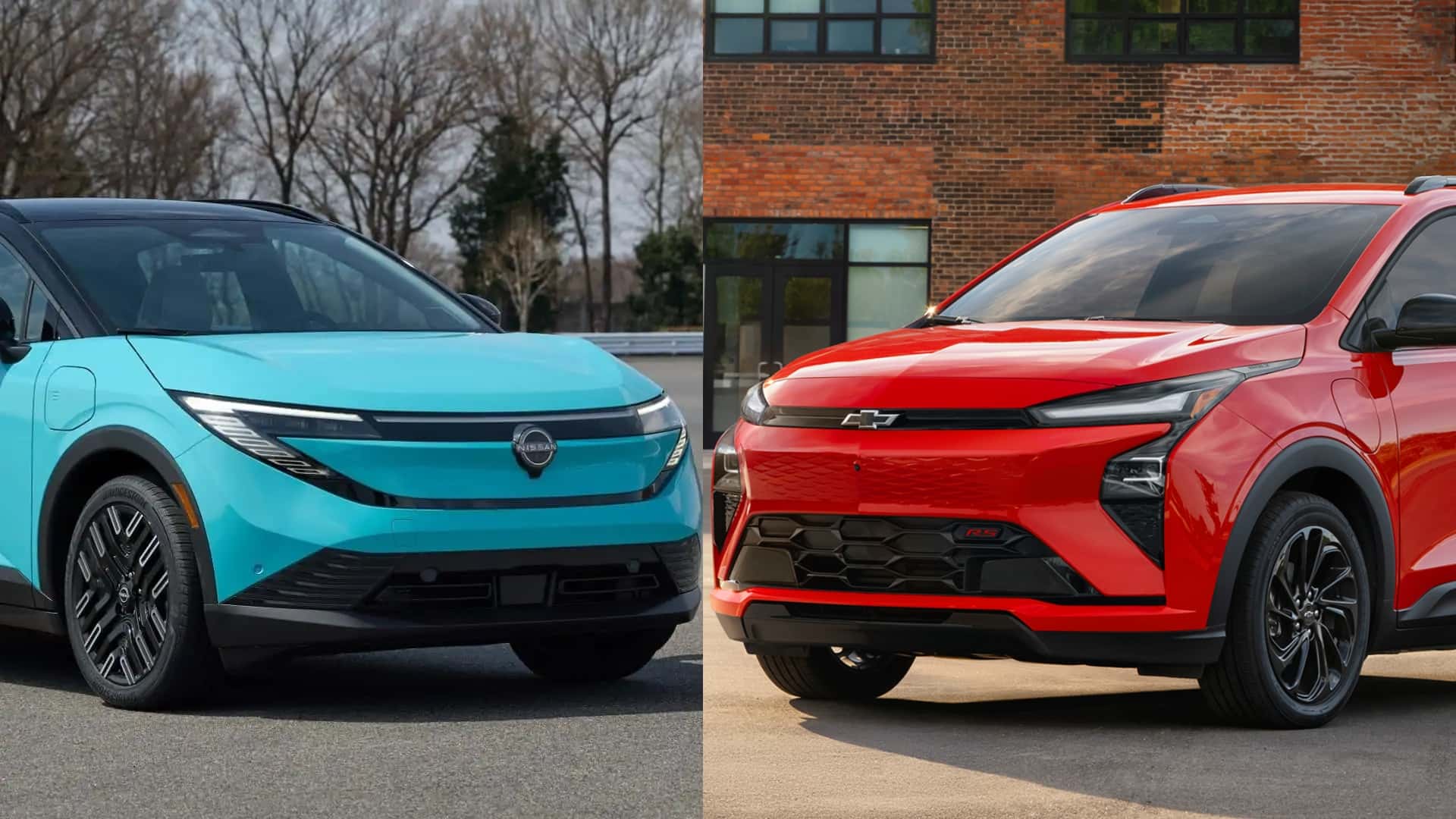
In a burgeoning electric vehicle (EV) market often perceived for its premium offerings, two familiar names are re-establishing the benchmark for affordability: the 2027 Chevrolet Bolt and the 2026 Nissan Leaf. Both models return with compelling propositions, aiming to democratize EV ownership for a wider segment of consumers. As America’s cheapest EVs, their specifications and features warrant a detailed examination.
Key Takeaways (TL;DR)
- The 2027 Chevrolet Bolt and 2026 Nissan Leaf are positioned as America’s most affordable new electric vehicles, both starting around the $30,000 mark.
- The Nissan Leaf (S+ trim) offers a longer EPA-estimated range of 303 miles and greater torque, alongside wireless Apple CarPlay and Android Auto.
- The Chevrolet Bolt features a slightly lower starting price for its base LT model, faster AC charging, Vehicle-to-Home (V2H) capability, and slightly more passenger room.
- Both vehicles incorporate the new North American Charging Standard (NACS) port and offer competitive DC fast-charging speeds.
- Ultimately, the choice between these two budget-friendly EVs hinges on individual priorities regarding range, specific features, and overall driving preference.
The Resurgence of Affordability: Chevy Bolt and Nissan Leaf Lead the Charge
The landscape of electric mobility is rapidly evolving, with a growing demand for accessible and cost-effective options. For years, the entry barrier to EV ownership has been a significant concern for many potential buyers. This challenge is particularly relevant now, especially with shifts in EV tax credit policies that impact purchasing decisions.

Against this backdrop, the return of the Chevrolet Bolt for 2027, following a two-year hiatus, and the launch of the third-generation Nissan Leaf for 2026 are significant developments. These models are not just competing; they are collectively addressing a critical gap in the market by offering robust electric vehicle technology at a price point that undercuts most rivals.
With starting prices hovering around $30,000, these two electric cars are at least $3,000 more affordable than the next closest competitor, the Chevrolet Equinox EV. This competitive pricing strategy signals a renewed focus on making electric driving a realistic option for a broader audience, emphasizing value without compromising on core EV capabilities.
Competitive Pricing and Market Positioning
Pricing remains a pivotal factor for consumers considering a transition to electric vehicles. Both the 2027 Chevrolet Bolt and the 2026 Nissan Leaf are strategically priced to appeal to budget-conscious buyers, establishing themselves as key players in the segment of America’s cheapest EVs.

The 2027 Bolt is set to launch at a compelling price of $29,990, inclusive of fees, in early 2026. A subsequent base LT model is anticipated to reach dealerships a few months later, further reducing the entry point to $28,995, potentially making it the most affordable new EV in the United States.
Mirroring this aggressive pricing, the 2026 Nissan Leaf S+, currently the base trim, starts at $31,485. The Leaf is readily available at dealerships nationwide, offering immediate access to electric mobility. Nissan has also announced plans for an even more affordable Leaf S version, which will feature a smaller battery and a reduced driving range.
When the Leaf S debuts, it is projected to offer an even lower price point, potentially challenging the base Bolt for the title of the cheapest battery-powered car. Until then, the reintroduced Chevrolet Bolt currently holds the edge in upfront cost, presenting an attractive option for those prioritizing initial expenditure.
Design Philosophy: Evolution vs. Revolution
The design approaches taken by Chevrolet and Nissan for their respective electric vehicles highlight differing philosophies towards product development and market appeal. These choices significantly influence each model’s features, performance, and overall user experience.
Nissan Leaf: A Ground-Up Reinvention
Nissan has invested considerable effort in a comprehensive redesign for the third-generation Leaf. This iteration is built from scratch on a completely new platform, signaling a revolutionary approach. This fundamental architectural change has enabled substantial improvements across critical metrics, including an increased driving range, enhanced power output, and faster charging capabilities.
The new platform also underpins a more contemporary and appealing body design, aiming to refresh the Leaf’s image and attract a broader customer base. This ground-up reinvention underscores Nissan’s commitment to advancing its electric vehicle offerings and staying competitive in a rapidly evolving market.
Chevrolet Bolt: Under-the-Skin Enhancements
In contrast, the 2027 Chevrolet Bolt adopts a more evolutionary strategy. Outwardly, the new Bolt is largely indistinguishable from the discontinued Bolt EUV (Electric Utility Vehicle) model from late 2023, retaining many of its body panels. This continuity in exterior design suggests a focus on refining existing successful elements while minimizing external aesthetic changes.
However, General Motors has implemented substantial improvements beneath the surface. Key upgrades include a new battery system that facilitates much faster charging speeds, a more powerful electric motor for enhanced performance, and a revised interior for improved comfort and functionality. This approach leverages the familiarity of the previous model while integrating crucial technological advancements.
Advanced Charging Capabilities and Energy Management
Charging infrastructure and energy management features are increasingly vital considerations for prospective EV owners. Both America’s cheapest EVs incorporate modern charging standards and innovative functionalities designed to enhance convenience and utility.
The NACS Standard and Dual-Port Flexibility
Both the 2027 Bolt and the 2026 Leaf come factory-equipped with the Tesla-style North American Charging Standard (NACS) port. This adoption is a significant step towards greater interoperability within the rapidly expanding EV charging ecosystem, allowing owners seamless access to Tesla Superchargers without the need for an adapter. However, charging at stations that exclusively utilize older charging standards will still require an adapter.
The Leaf distinguishes itself with an additional and somewhat unique charging feature: it includes both a NACS port and a separate J1772 port. The J1772 port is specifically dedicated to Level 1 (standard household outlet) and Level 2 (240V residential or public AC) charging. This dual-port configuration offers enhanced flexibility, ensuring compatibility with a wider array of AC charging stations without relying solely on the NACS connection for slower charging needs.
Vehicle-to-Home and Vehicle-to-Load Functionality
Beyond traditional charging, these EVs offer advanced energy management capabilities. The 2027 Bolt features vehicle-to-home (V2H) technology, an advanced system that allows the EV to power an entire house during outages or peak demand, provided the necessary bidirectional charging hardware is installed. This functionality positions the Bolt not just as transport but as a potential energy storage solution for residential use.
The Leaf, on the other hand, offers vehicle-to-load (V2L) capability. This feature enables the car to act as a mobile power source, supplying electricity to external tools and appliances through an adapter that plugs into the AC port. While not as comprehensive as V2H, V2L is highly practical for outdoor activities, job sites, or emergency power for smaller devices.
Charging Efficiency: DC Fast Charging and AC Rates
Both the Leaf and Bolt advertise a peak DC fast-charging rate of 150 kilowatts (kW). While this represents a substantial improvement over their previous generations and is competitive for their price point, it still lags behind some of today’s fastest-charging premium EVs. Nevertheless, a 150 kW rate ensures relatively swift top-ups for daily use.
Regarding AC charging, the Bolt holds a slight advantage with an onboard charger accepting up to 11.5 kW. The Leaf, by comparison, can take in up to 7.2 kW from an AC charger. This difference means the Bolt can achieve a full charge more quickly when connected to a Level 2 charging station, which is often the primary charging method for home users.
Driving Range and Battery Technology
Driving range and battery technology are critical differentiators that directly impact the practicality and appeal of electric vehicles. The Chevrolet Bolt and Nissan Leaf present distinct offerings in this crucial area, influencing consumer choice among America’s cheapest EVs.
Nissan Leaf: Extended Range Capabilities
The 2026 Leaf S+ variant stands out with a robust EPA-estimated driving range of 303 miles on a full charge. This impressive range is facilitated by a larger 75-kilowatt-hour (kWh) lithium-ion battery. Nissan indicates that recharging the Leaf S+ from a 10% to an 80% state of charge using a DC fast charger takes approximately 35 minutes, a competitive figure for its battery size.
Chevrolet Bolt: LFP Battery and Efficient Charging
The 2027 Chevrolet Bolt is equipped with a slightly smaller 65 kWh lithium iron phosphate (LFP) battery. This LFP chemistry is known for its durability, lower cost, and thermal stability. General Motors estimates the Bolt’s driving range at 255 miles. Despite the slightly lower range compared to the Leaf S+, the Bolt boasts a quicker 10% to 80% DC fast-charging time of 26 minutes, attributing to its smaller battery capacity and optimized charging curve.
A notable standard feature in the 2027 Bolt is the inclusion of a heat pump. Heat pumps are crucial for EV efficiency, particularly in colder climates, as they efficiently regulate cabin temperature and preserve battery range. In contrast, the 2026 Leaf offers a heat pump only on its more expensive SV+ and Platinum+ trim levels, making it an optional extra for the entry-level variants.
Performance Metrics: Power, Torque, and Weight
While neither the Chevrolet Bolt nor the Nissan Leaf are designed for high-performance track days, their power, torque, and weight characteristics contribute to their everyday drivability and overall user experience as practical commuter electric vehicles.
Both models are configured with front-wheel drive, a common layout for efficiency and cost-effectiveness in their segment. In terms of raw power, these America’s cheapest EVs are quite evenly matched. The Bolt’s front-mounted electric motor generates 210 horsepower, while the Leaf’s motor provides a slightly higher 214 horsepower.
However, a significant divergence appears in torque figures. The Bolt delivers 169 pound-feet of torque, whereas the Leaf boasts a considerably higher 261 lb-ft. This difference in torque can translate to a noticeable distinction in initial acceleration feel and responsiveness, particularly at lower speeds, where the Leaf might feel more assertive.
Another factor influencing performance and efficiency is vehicle weight. The 2027 Bolt is notably lighter, with a curb weight of 3,776 pounds. The 2026 Nissan Leaf, in its most affordable configuration, weighs more substantial at 4,206 pounds. While neither automaker has officially published zero-to-60 mph times for these entry-level EVs, the weight disparity, combined with torque differences, will undoubtedly contribute to distinct driving dynamics.
Interior Comfort, Cargo, and Infotainment Systems
The cabin experience, including passenger space, cargo capacity, and infotainment technology, plays a crucial role in the appeal and practicality of electric cars. The Chevrolet Bolt and Nissan Leaf offer differing advantages in these interior aspects, catering to varied consumer preferences.
Dimensions and Space Utility
From an exterior perspective, both vehicles share similar overall dimensions. However, their interior configurations offer distinct benefits. The 2027 Bolt provides a slight advantage in passenger room, offering more generous space for occupants, which can be a key factor for those frequently transporting adults or seeking enhanced comfort on longer journeys.
Conversely, the 2026 Leaf excels in cargo capacity. With its seats up, the Leaf provides 20 cubic feet of storage, surpassing the Bolt’s 16.2 cu ft. When the rear seats are folded down, the Leaf still maintains a slight edge with 55.5 cu ft compared to the Bolt’s 56.3 cu ft, but this difference is marginal. For buyers prioritizing utility and luggage space, the Leaf presents a compelling option.
Infotainment and Connectivity
Modern infotainment systems are central to the driving experience, offering navigation, entertainment, and seamless smartphone integration. The new Chevy Bolt features an 11-inch digital instrument display paired with an 11.3-inch infotainment screen, powered by Google Built-in. This system grants drivers direct access to popular applications like Google Maps and Spotify, integrating them directly into the vehicle’s interface. However, a significant consideration for many users is the absence of Apple CarPlay and Android Auto in GM’s latest EVs, including the Bolt.
The Nissan Leaf S+ addresses this directly by providing a pair of 12.3-inch displays—one for the instrument cluster and another for the infotainment system. Crucially, the Leaf offers wireless Apple CarPlay and Android Auto as standard, a feature highly valued by smartphone users for its familiarity and comprehensive integration. Higher trim levels of the Leaf further enhance the experience with larger 14.3-inch screens and the inclusion of a Google-based system, mirroring the Bolt’s integrated apps but retaining phone mirroring capabilities. For many, the inclusion of CarPlay could be a decisive factor in choosing the Leaf.
Comprehensive Safety and Driver-Assistance Technologies
Safety remains a paramount concern for all vehicle buyers, and electric vehicles are no exception. Both the 2026 Nissan Leaf and 2027 Chevrolet Bolt come equipped with a suite of advanced safety and driver-assistance technologies designed to enhance occupant protection and assist drivers in various scenarios.
Nissan Leaf: Safety Shield 360 and ProPILOT Assist
The 2026 Leaf boasts Nissan’s comprehensive Safety Shield 360 Suite as standard. This robust package includes essential features such as Automatic Emergency Braking with Pedestrian Detection, designed to mitigate frontal collisions. Other key components are Rear Cross Traffic Alert, Lane Departure Prevention, Blind Spot Intervention, and Forward Collision Warning, all working in concert to provide a 360-degree layer of protection.
Further enhancing driver confidence, the Leaf also incorporates a 360-degree camera system for improved situational awareness and ProPILOT Assist. This advanced system intelligently combines Adaptive Cruise Control with steering assistance, helping to keep the vehicle centered in its lane and maintaining a safe following distance from the car ahead, reducing driver fatigue on longer journeys.
Chevrolet Bolt: Advanced Standard Features
The 2027 Bolt arrives with an equally impressive array of standard safety features right from its base configuration. These include Adaptive Cruise Control, which automatically adjusts speed to traffic flow, and Front Pedestrian Braking to prevent or reduce the severity of collisions with pedestrians. Lane Keep Assist with Lane Departure Warning helps drivers stay within their lane boundaries, while Side Bicyclist Alert provides crucial warnings about cyclists in blind spots.
Additional safety technologies in the Bolt comprise Intersection Automatic Emergency Braking, offering protection at complex junctions, Blind Zone Steering Assist for safer lane changes, and IntelliBeam auto high beams, which automatically switch between high and low beams based on oncoming traffic and ambient light conditions. Both vehicles clearly prioritize the safety and security of their occupants and surrounding road users.
The Verdict: Navigating the Choice Between Two Value-Oriented EVs
The re-entry and updated offerings of the 2027 Chevrolet Bolt and 2026 Nissan Leaf represent a significant boon for the American electric vehicle market. For too long, the segment has grappled with a scarcity of truly affordable options, a challenge compounded by the discontinuation of federal EV tax credits for many models. These two vehicles fill that void admirably, offering solid specifications and competitive pricing that make EV ownership more attainable.
While a definitive comparison would ideally involve real-world driving impressions of the new Bolt, the specifications on paper reveal a tight contest. Both models represent substantial improvements over their predecessors, delivering enhanced range, faster charging, and more advanced features at attractive price points. The choice between these America’s cheapest EVs will ultimately boil down to individual priorities.
The Nissan Leaf holds an advantage in overall driving range and provides the highly sought-after wireless Apple CarPlay and Android Auto integration, which could be a decisive factor for smartphone-centric users. Its more extensive cargo space also appeals to those requiring greater utility.
Conversely, the Chevrolet Bolt offers a slightly lower entry price point (especially for the upcoming base LT model), quicker AC charging, V2H capability for home energy integration, and marginally more passenger room. These attributes may sway buyers prioritizing upfront cost savings and advanced energy functionalities.
Given the close competition, the most informed decision will undoubtedly come from experiencing both vehicles firsthand. Potential buyers are encouraged to test drive both the Bolt and the Leaf to assess their comfort, driving dynamics, and feature set against personal preferences. The arrival of these two capable and budget-friendly electric cars underscores a positive shift towards greater accessibility in the evolving EV landscape.
Comparative Data: 2027 Chevrolet Bolt vs. 2026 Nissan Leaf
Below is a detailed comparison of key specifications for the 2027 Chevrolet Bolt and the 2026 Nissan Leaf, offering a side-by-side view to aid potential buyers.
| Feature | 2027 Chevrolet Bolt | 2026 Nissan Leaf |
|---|---|---|
| Starting price (including freight charges) | $28,995 | $31,485 |
| Driving range | 255 miles (GM-estimated) | 259 to 303 miles (EPA-estimated) |
| Battery capacity | 65 kWh | 75 kWh |
| Maximum charging power (DC) | 150 kW | 150 kW |
| Maximum charging power (AC) | 11.5 kW | 7.2 kW |
| 10-to-80% fast charging | 26 minutes | 35 minutes |
| Heat pump | Yes | Yes, but not on the entry-level version |
| Power | 210 hp | 214 hp |
| Torque | 169 lb-ft | 261 lb-ft |
| Length | 169.6 in | 173.4 in |
| Width | 69.7 in | 71.3 in |
| Height | 63.9 in | 61.3 in |
| Wheelbase | 105.3 in | 105.9 in |
| Weight | 3,766 lbs | 4,206 to 4,393 lbs |
| Cargo capacity with seats up | 16.2 cu ft | 20 cu ft |
| Cargo capacity with rear seats folded | 56.3 cu ft | 55.5 cu ft |
| Front headroom | 39.1 to 40 in | 39.9 in |
| Front legroom | 44.3 in | 42.4 in |
| Rear headroom | 37.8 in | 36.6 to 37.2 in |
| Rear legroom | 39.1 in | 31.8 in |
Note: These values primarily reflect the current announced versions. We will update this article as details for the absolute cheapest versions of the Chevrolet Bolt and Nissan Leaf become available for purchase.
Frequently Asked Questions (FAQ)
What are the primary advantages of the 2027 Chevrolet Bolt over the 2026 Nissan Leaf?
The 2027 Chevrolet Bolt offers a slightly lower starting price for its base LT model, boasts faster AC charging at 11.5 kW, and includes Vehicle-to-Home (V2H) capability. It also provides marginally more passenger legroom and features a heat pump as standard across all trims, which is beneficial for efficiency in varying climates.
What makes the 2026 Nissan Leaf a strong contender against the Chevy Bolt?
The 2026 Nissan Leaf S+ offers a superior EPA-estimated driving range of 303 miles and significantly more torque (261 lb-ft). It also provides standard wireless Apple CarPlay and Android Auto, a feature absent in the Bolt, and comes with dual charging ports (NACS and J1772) for greater versatility.
Do both the Bolt and Leaf support fast charging?
Yes, both the 2027 Chevrolet Bolt and the 2026 Nissan Leaf support DC fast charging, advertising a peak rate of 150 kilowatts. This enables them to achieve a 10% to 80% state of charge in competitive times—26 minutes for the Bolt and 35 minutes for the Leaf S+, catering to efficient travel.
Which EV offers more cargo space?
The 2026 Nissan Leaf generally offers more cargo space. With its rear seats in place, it provides 20 cubic feet of storage, compared to the 2027 Chevrolet Bolt’s 16.2 cubic feet. When the rear seats are folded down, the cargo capacities become very close, with the Bolt having a slight edge at 56.3 cu ft vs the Leaf’s 55.5 cu ft.
Are Apple CarPlay and Android Auto available in both models?
The 2026 Nissan Leaf S+ comes standard with wireless Apple CarPlay and Android Auto integration. In contrast, the 2027 Chevrolet Bolt, aligning with General Motors’ broader strategy, does not offer Apple CarPlay or Android Auto, instead relying on its integrated Google Built-in infotainment system for app access.
What is the significance of the NACS charging port in these EVs?
The inclusion of the North American Charging Standard (NACS) port in both models is a significant development. It enables seamless compatibility with Tesla’s extensive Supercharger network without requiring an adapter, thereby expanding charging options and reducing range anxiety for owners of these affordable electric vehicles.
When will the base models for both EVs be available?
The 2026 Nissan Leaf is currently available, with details for its even more affordable ‘S’ trim expected soon. The 2027 Chevrolet Bolt is scheduled to launch in early 2026, with its base LT model hitting dealerships a few months later, indicating staggered availability for the most budget-friendly configurations.