
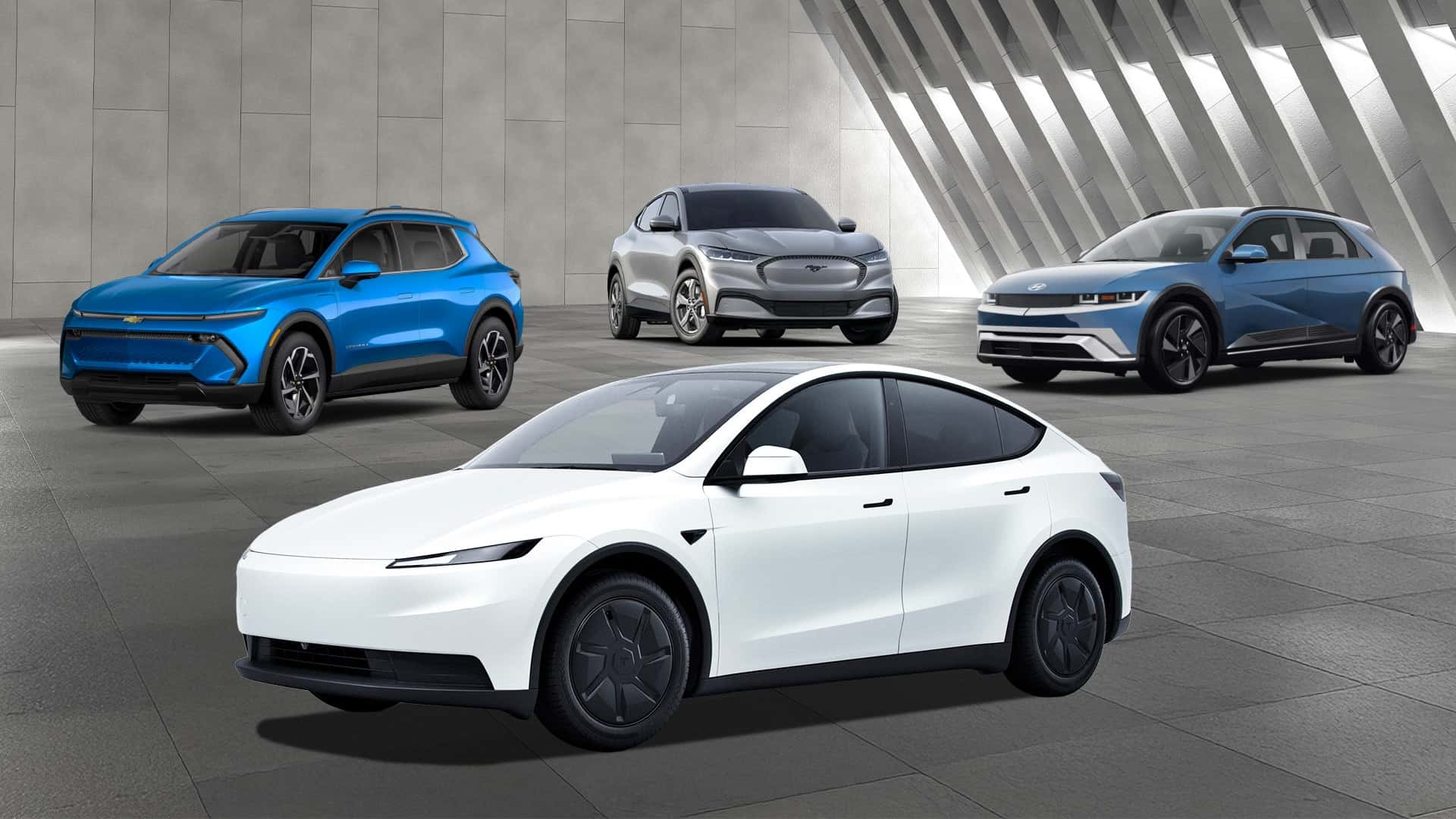
The automotive landscape for electric vehicles (EVs) has grown increasingly competitive, with new models challenging established players. Tesla, long a dominant force, has introduced its most affordable variant, the 2026 Tesla Model Y Standard. Priced at approximately $40,000, this new trim level aims to attract a broader consumer base, positioning itself about $5,000 below the ‘Premium’ trim. This strategic move by Tesla comes notably after the discontinuation of the $7,500 federal tax credit for new EVs, making the Model Y Standard’s pricing even more critical.
However, this lower entry point into the Tesla Model Y lineup comes with a series of compromises. The Model Y Standard faces robust competition from a new generation of electric crossovers, including formidable rivals like the Hyundai Ioniq 5, the Chevrolet Equinox EV, and the Ford Mustang Mach-E. These competitors not only offer compelling value propositions but, in some cases, undercut the Tesla Model Y Standard on price while delivering an impressive array of features and capabilities.
Key Takeaways
- The 2026 Tesla Model Y Standard is the cheapest Model Y variant, starting around $40,000, roughly $5,000 less than the Premium trim.
- Its introduction follows the end of the $7,500 federal EV tax credit, necessitating a more competitive price point.
- The Model Y Standard includes notable drawbacks such as a smaller front trunk, cloth seats, absence of lane-centering without an expensive upgrade, no AM/FM radio, lack of adaptive headlights, and a panoramic glass roof covered by a headliner.
- Key competitors like the Hyundai Ioniq 5, Chevrolet Equinox EV, and Ford Mustang Mach-E offer strong alternatives, often at lower prices or with superior standard features.
- The Hyundai Ioniq 5 has up to three trims more affordable than the Model Y Standard, with competitive range and advanced charging.
- The Chevrolet Equinox EV significantly undercuts Tesla’s offering by over $5,000, promising over 315 miles of range and robust features.
- The Ford Mustang Mach-E Select RWD Standard Range is priced similarly to the Model Y Standard but includes standard features like a 360-degree camera and advanced driver assistance.
- All mentioned competitors can now access the Tesla Supercharger network, though some may require an adapter, further leveling the playing field.
Understanding the Tesla Model Y Standard’s Offerings and Compromises
The 2026 Tesla Model Y Standard represents a calculated effort by the California-based EV manufacturer to broaden its market appeal. While the roughly $40,000 starting price makes it the most accessible Model Y to date, a closer inspection reveals a strategic paring down of features and amenities compared to its more expensive siblings. This includes a reduced front trunk capacity, a departure from the usual Tesla cabin experience with the inclusion of cloth seats instead of premium alternatives, and the notable exclusion of advanced driver-assistance features like lane-centering on the base version, which requires an additional $8,000 ‘FSD Supervised’ package.
Furthermore, convenience features such as AM/FM radio and adaptive headlights are absent. One particularly unusual omission is the fully operational panoramic glass roof, a signature Tesla design element. In the Model Y Standard, while the physical glass roof structure is present, it is entirely covered by a single-piece headliner, a design choice reportedly made to reduce manufacturing costs. These compromises highlight Tesla’s focus on achieving a lower price point, even if it means foregoing features commonly found in other EVs within this segment.
The Intensifying Electric Vehicle Competitive Landscape
The decision to introduce a more budget-friendly Tesla Model Y Standard comes at a time when the global electric vehicle market is witnessing unprecedented growth and diversification. Automakers worldwide are significantly investing in EV technology, leading to a surge in innovative and competitively priced models. This increased competition directly challenges Tesla’s long-held dominance, particularly in the popular electric crossover segment. Consumers now have a wider array of choices that offer compelling blends of price, range, technology, and design.
The competitive pressure is evident in the aggressive pricing strategies adopted by brands like Hyundai, Chevrolet, and Ford. These manufacturers are not only bringing down entry-level prices but also equipping their EVs with a rich set of standard features, thereby putting the Tesla Model Y Standard’s value proposition under intense scrutiny. The ability of these rival electric crossovers to meet or exceed consumer expectations in critical areas such as driving range, charging infrastructure access, and interior comfort is reshaping purchasing decisions.
Head-to-Head: Tesla Model Y Standard vs. Its Rivals
To provide a comprehensive understanding of where the 2026 Tesla Model Y Standard stands, a detailed comparison with its closest competitors is essential. The following analysis examines key specifications, features, and pricing of the Hyundai Ioniq 5, Chevrolet Equinox EV, and Ford Mustang Mach-E, all of which present compelling alternatives.
2026 Hyundai Ioniq 5: A Formidable Contender
The 2026 Hyundai Ioniq 5 emerges as one of the strongest rivals to the Tesla Model Y Standard, particularly concerning its aggressive pricing strategy. Hyundai offers no fewer than three trim levels that are more affordable than Tesla’s entry-level offering, providing consumers with varied options tailored to different budgets and range requirements.
The base model, the Ioniq 5 SE RWD Standard Range, is priced at $36,600, including destination and order fees. While its 63 kWh battery delivers a 245-mile range, which is 76 miles less than the Model Y Standard’s 321 miles, its price point is significantly lower by $5,030. This makes it an attractive option for those prioritizing initial cost savings.
Stepping up, the Ioniq 5 SE RWD, retailing at $39,100, offers an 84 kWh battery and a more potent 225 hp rear motor. This configuration boosts the driving range to an impressive 318 miles, closely matching the Model Y Standard’s range. Furthermore, its charging capabilities are enhanced, with Hyundai claiming up to 178 miles of range can be added in just 15 minutes, making it highly competitive for long-distance travel. This variant is also cheaper than the Model Y Standard.
For those seeking more features, the Ioniq 5 SEL RWD is available for $41,400. This trim builds upon the SE RWD’s specifications, adding premium amenities such as a wireless phone charger, acoustic rear side glass for improved cabin quietness, an auto-dimming rearview mirror, blind-spot collision-avoidance assistance, power-adjustable front seats, and crucial rear A/C vents for passenger comfort. This model sits just below the Tesla Model Y Standard’s price, offering a richer feature set.
Chevrolet Equinox EV: Affordability Meets Range
The Chevrolet Equinox EV positions itself as a compelling, budget-friendly alternative to the Tesla Model Y Standard. Billed as “America’s most affordable 315+ mile range EV,” the electric Equinox LT1 FWD starts at an attractive $34,995, including destination fees. This price point significantly undercuts the entry-level Model Y by more than $5,000, making it an exceptionally strong contender on value.
In its base LT1 trim, the Equinox EV offers an impressive 319 miles of range from its 85 kWh battery, closely mirroring the Model Y Standard’s capability. Standard features are robust, including adaptive cruise control, lane keep assist with lane departure warning, and a large 17.7-inch infotainment touchscreen, providing a well-rounded and technologically advanced package at a highly competitive price. Its front-wheel-drive 220 hp drivetrain further enhances its practicality for urban and suburban driving.
Ford Mustang Mach-E: Performance with Practicality
The 2025 Ford Mustang Mach-E Select RWD Standard Range presents another strong challenge to the Tesla Model Y Standard. Priced at approximately $41,185, it slightly undercuts the Model Y Standard by around $500, offering a premium brand experience with a focus on performance and advanced technology.
This variant comes with a 73 kWh battery, providing an estimated driving range of 260 miles. While its 150 kW maximum charging power means it takes longer to recharge – approximately 50 minutes for a 10-80% charge in independent testing – it compensates with a strong standard feature list. These include a 360-degree camera system for enhanced maneuverability, a large 15.5-inch central touchscreen with wireless Android Auto and Apple CarPlay integration, and adaptive cruise control with lane centering, all standard. Its rear-wheel-drive, 264 hp powertrain also promises an engaging driving experience.
Expanding the EV Ecosystem: Charging and Beyond
A crucial factor in the growing competitiveness of the EV market is the expanding charging infrastructure. Significantly, all the aforementioned competitor EVs — the Hyundai Ioniq 5, Chevrolet Equinox EV, and Ford Mustang Mach-E — now have access to the extensive Tesla Supercharger network. While some may require a charging adapter, this development removes a key competitive advantage that Tesla once held, further leveling the playing field for non-Tesla EVs.
Beyond these direct rivals, other electric crossovers such as the Volkswagen ID.4 and Kia EV6 also remain strong contenders in the broader EV market, though their starting prices typically place them a few thousand dollars above the new Model Y Standard. The horizon also includes promising new entrants like the all-new 2026 Nissan Leaf and the upcoming Chevrolet Bolt, which, despite potentially being smaller, could offer even greater value for money in the entry-level segment, continuing to intensify the pressure on Tesla’s offerings.
Conclusion: A New Era of EV Competition
The introduction of the 2026 Tesla Model Y Standard marks a significant shift in Tesla’s strategy, aiming for greater affordability. However, its ability to dominate the market as previous Tesla models once did is now challenged by a robust and diverse field of competitors. The compromises made to achieve its lower price point, coupled with the impressive offerings from legacy automakers, suggest that the electric crossover segment is no longer a one-horse race.
The Hyundai Ioniq 5, Chevrolet Equinox EV, and Ford Mustang Mach-E, among others, have substantially elevated their game, bringing a fair fight to what was once an undisputed champion. Consumers in the electric vehicle market now benefit from unprecedented choice, with a wide range of well-equipped, competitively priced, and capable electric crossovers vying for their attention. This dynamic environment promises continued innovation and value in the rapidly evolving world of electric mobility.
Detailed Comparison Table: 2026 Tesla Model Y Standard vs. Key Rivals
| Model | Tesla Model Y Standard | Hyundai Ioniq 5 SE Standard Range RWD | Hyundai Ioniq 5 SEL RWD | Chevrolet Equinox EV LT1 FWD | Ford Mustang Mach-E Select RWD Standard Range |
|---|---|---|---|---|---|
| Price (including destination and order fees) | $41,630 | $36,600 | $39,100 | $34,995 | $41,185 |
| Battery capacity | 69.5 kWh | 63 kWh | 84 kWh | 85 kWh | 73 kWh |
| Range | 321 miles with 18-inch wheels | 245 miles with 19-inch wheels | 318 miles with 19-inch wheels | 319 miles with 19-inch wheels | 260 miles with 19-inch wheels |
| Charging | 225 kW maximum; up to 160 miles of range added in 15 minutes | Over 250 kW; 10-to-80% in 20 minutes | Over 250 kW; 10-to-80% in 20 minutes; Up to 178 miles of range added in 15 minutes | 150 kW maximum; 20-to-80% in approximately 35 minutes (independent testing) | 150 kW maximum; 100 miles of range added in 23 minutes (independent testing); 10-to-80% in roughly 50 minutes (independent testing) |
| Drivetrain | Rear-wheel drive, 300 hp | Rear-wheel drive, 168 hp | Rear-wheel drive, 225 hp | Front-wheel drive, 220 hp | Rear-wheel drive, 264 hp |
| 0-60 mph time | 6.8 seconds | N/A | N/A | N/A | N/A |
| Cargo capacity | 74 cu ft | 59.35 cu ft | 59.35 cu ft | 57.2 cu ft | 64.4 cu ft |
| Weight | 4,061 lbs | 4,144 lbs | 4,376 lbs | 4,776 lbs | 4,595 lbs |
| Driver assistance systems | No lane-centering without the optional $8,000 FSD Supervised pack. It just has traffic-aware cruise control | Lane Keeping Assist, Lane Following Assist, Smart Cruise Control | Lane Keeping Assist, Lane Following Assist, Smart Cruise Control | Adaptive cruise control with lane keeping assistance and lane departure warning | Adaptive cruise control with lane centering and predictive speed assist |
| AM/FM radio | No | Yes | Yes | Yes | Yes |
| Glass roof | Yes, but it’s completely covered by the headliner | No | No | No | No |
| Infotainment | 15.4-inch central touchscreen; Built-in apps | 12.3-inch infotainment touchscreen; Wireless Apple CarPlay and Android Auto | 12.3-inch infotainment touchscreen; Wireless Apple CarPlay and Android Auto | 17.7-inch infotainment touchscreen; Built-in apps | 15.5-inch touchscreen; Wireless Apple CarPlay and Android Auto |
| Other features | Cloth seats; Heated front seats; Dual wireless charger; Manually adjustable steering wheel | Vehicle-to-load (V2L); No rear air vents; No wireless phone charger; Cloth seats; Heated front seats; Manually adjustable steering wheel | All of the features of the SE, plus: Wireless phone charger; Acoustic rear side glass; Auto-dimming rearview mirror; Power front seats; Rear A/C vents | No wireless phone charger; Manually adjustable steering wheel; Vehicle-to-home (V2L) compatibility | Wireless charging pad; 360-degree camera with split view; Manually adjustable steering wheel |
Frequently Asked Questions (FAQ)
What is the starting price of the 2026 Tesla Model Y Standard?
The 2026 Tesla Model Y Standard starts at approximately $40,000, making it the most affordable trim level of the electric crossover. This price is about $5,000 less than the next trim, now referred to as ‘Premium’, reflecting Tesla’s strategy to capture a wider market segment.
What are the main drawbacks of the cheaper Tesla Model Y Standard?
Key drawbacks include a smaller front trunk, cloth seats, the absence of lane-centering capabilities in its base form, no AM/FM radio, no adaptive headlights, and a panoramic glass roof that is entirely covered by a headliner for cost efficiency.
How does the Hyundai Ioniq 5 compare on price to the Tesla Model Y Standard?
The Hyundai Ioniq 5 offers several trims that are more affordable. The base Ioniq 5 SE RWD Standard Range costs $36,600, approximately $5,030 less, while the Ioniq 5 SE RWD and SEL RWD are also priced below the Model Y Standard, offering competitive features and range.
Does the Chevrolet Equinox EV offer better value than the Tesla Model Y Standard?
The Chevrolet Equinox EV starts from $34,995, including destination, significantly undercutting the Model Y Standard by over $5,000. It offers 319 miles of range and standard features like adaptive cruise control and a 17.7-inch infotainment touchscreen, presenting a strong value proposition.
What unique features does the Ford Mustang Mach-E offer compared to the Model Y Standard?
The Ford Mustang Mach-E Select RWD Standard Range, priced similarly to the Model Y Standard, comes standard with a 360-degree camera, a 15.5-inch central touchscreen with wireless Android Auto/Apple CarPlay, and adaptive cruise control with lane centering, enhancing its appeal.
Can rival EVs use Tesla’s Supercharger network?
Yes, major competitor EVs such as the Hyundai Ioniq 5, Chevrolet Equinox EV, and Ford Mustang Mach-E now have access to the Tesla Supercharger network. Some models may require a charging adapter, but this development broadens charging options for non-Tesla owners.