
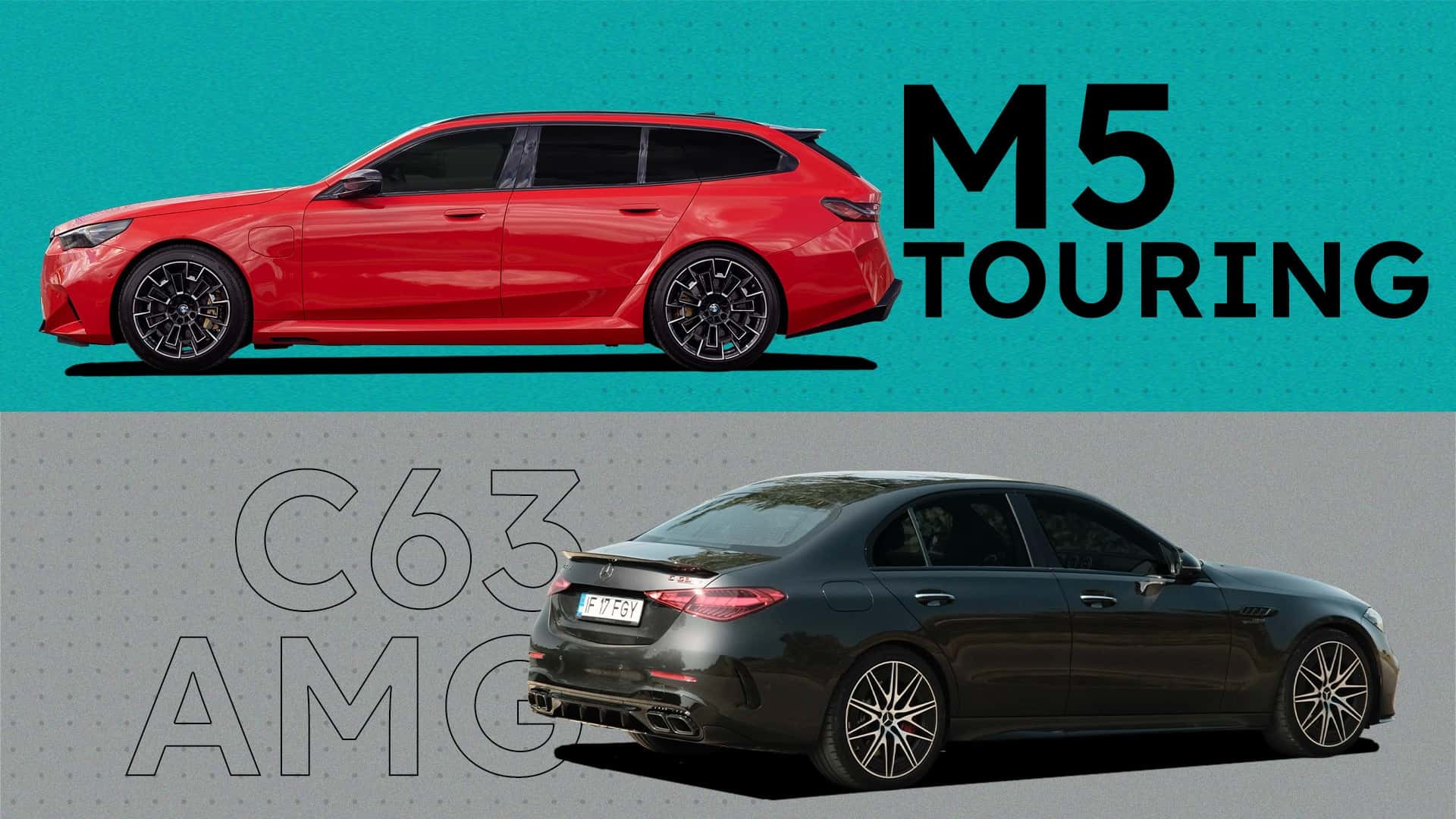
BMW M5 Touring vs. Mercedes-AMG C63s E-Performance: A Surprising Verdict on Performance Hybrids
Adding more power and battery capacity isn’t always the key to an enjoyable driving experience.
The automotive world is witnessing a significant shift, with manufacturers increasingly integrating large batteries into their most potent performance flagships. This trend, while aiming to boost power and offer electric range, has resulted in a new breed of cars that are astonishingly quick in a straight line but can falter when pushed through corners. We recently put two such titans to the test: the G99 BMW M5 Touring and the Mercedes-AMG C63s E-Performance. Their vastly different approaches to hybridization offer a fascinating glimpse into the future of performance cars.
BMW M5 Touring: A V8 Powerhouse with a Big Heart (and Battery)
The new BMW M5 Touring arrives with a formidable presence, its claimed 717 horsepower seemingly a conservative estimate. Dyno tests suggest it’s pushing closer to 800 hp, delivering relentless acceleration that pins you to your seat. The heart of this beast is a 4.4-liter twin-turbocharged V8, churning out an immense 737 pound-feet (1,000 Nm) of torque. This powertrain is undeniably brilliant, offering staggering pace from any speed.

What’s particularly surprising is how competent the M5 is in its electric-only mode. The integrated electric motor, delivering 197 hp and 206 lb-ft (280 Nm) of torque, is more than capable of propelling the hefty 5,456-pound (2,475 kg) Touring model with surprising briskness. BMW claims around 35 miles of pure electric driving, and in this mode, the car offers a subtle, engaging sound piped through the speakers. Even with the V8 off, the transmission still provides noticeable shifts, and the all-wheel-drive system ensures reassuring traction, making it a capable around-town electric cruiser in any weather.
However, the M5’s considerable heft, a consequence of its large battery and V8, presents a challenge. BMW has had to tune the suspension to manage this mass, resulting in an inconsistently jarring ride quality. It oscillates between feeling supremely comfortable and jarringly firm. Mid-corner bumps can unsettle the car, creating a disconcerting transfer of forces. The sheer inertia makes the M5 feel like an athlete burdened with ankle weights, prone to understeer when driven spiritedly. After spending time with the M5 Touring, I found myself wishing for the simpler, lighter experience of the all-electric i5 Touring M60 – a thought I never anticipated.
Mercedes-AMG C63s E-Performance: A Four-Cylinder Fury
Stepping into the Mercedes-AMG C63s E-Performance, despite its own significant weight, felt like a revelation in agility compared to the M5. While it’s a class below the M5, making a direct comparison unfair, the C63 captured my admiration. It achieves its performance with a smaller, hand-assembled 2.0-liter four-cylinder engine – a stark contrast to the BMW’s V8.

The C63’s engine bay boasts an impressive sight: a large turbo and an electric supercharger. This setup, borrowed from AMG’s potent compact offerings, produces over 400 horsepower on its own. Combined with the electric motor, the C63 churns out a colossal 670 hp and 752 lb-ft (1,020 Nm) of torque. This torque figure, exceeding the BMW’s in a significantly lighter car, is palpable. The ‘Race Start’ is an experience unlike any other in a combustion-powered car, feeling even quicker than the M5 despite similar on-paper figures. The integration of an electric supercharger minimizes lag, and the responsive powertrain delivers a thrilling surge of power.
The C63 truly shines in the corners, offering a focused, track-car-like experience. Unlike its predecessors, it prioritizes a clean, efficient corner exit with minimal drama. Mercedes-AMG achieved this by deliberately opting for a lighter hybrid system. The C63’s electric motor is integrated into the rear axle, primarily designed to boost performance rather than provide extensive EV range (around 5 miles). This focus is further exemplified by its smaller 6.1 kWh battery, a stark contrast to the M5’s 22.1 kWh unit. This smaller battery helps manage weight and keeps the chassis’s handling characteristics purer.
Efficiency vs. Performance: The Hybrid Dilemma
While the BMW M5 Touring boasts impressive WLTP efficiency ratings (around 150 mpg), these figures are contingent on constant battery charging. In real-world EPA testing, it returns closer to 13 mpg. The Mercedes-AMG C63s E-Performance claims a more modest 34 mpg in Europe, though achieving this requires gentle driving. Even when driven spiritedly, similar to the M5, the C63 returned around 15 mpg, still an excellent figure given its performance. Its EPA rating with a depleted battery stands at 20 mpg, easily achievable.
As enthusiasts of electric vehicles, we understand the allure of electrons. However, in the realm of performance cars, a colossal battery isn’t always the answer. For buyers of cars like the C63 and M5, fuel cost is less of a concern than the driving experience. The M5 demonstrates how an oversized battery can compromise handling dynamics. Mercedes-AMG’s approach with the C63, prioritizing performance enhancement over extensive electric range, aligns more with the philosophy seen in hypercars like the Ferrari SF90 and 296 GTB. Their plug-in hybrid systems, with batteries under 8 kWh, enhance performance without overburdening the chassis.
The C63’s ability to replenish its battery using the engine when low is a practical consideration, though in normal driving, its battery reserves held up well during spirited use. Ultimately, the Mercedes-AMG C63s E-Performance emerges as the more compelling driver’s car. It feels more special, more engaging, and less compromised by its hybrid technology than the heavier BMW M5 Touring. Mercedes-AMG has struck a more successful balance, proving that electrification can enhance performance without sacrificing the joy of driving.