
Key Takeaways:
- Walmart has significantly accelerated its investment in electric vehicle (EV) charging infrastructure across the United States.
- The retail giant’s proprietary DC fast charging network has expanded by 50% in just two months, now boasting over 200 high-powered connectors.
- Currently operating 31 DC fast charging stations with 224 ports, Walmart plans to install thousands more at its locations by 2030.
- Each station features advanced 400-kilowatt chargers, supporting both NACS and CCS1 charging standards for broad EV compatibility.
- Texas currently leads with 15 Walmart EV charging stations, indicating a strategic regional rollout.
BENTONVILLE, ARKANSAS – Walmart, the world’s largest retailer, is significantly ramping up its efforts to build a robust electric vehicle charging network across the United States. The company has announced a remarkable 50% increase in its DC fast charging stations over the past two months, marking a pivotal acceleration in its commitment to supporting electric mobility.

This rapid expansion positions Walmart as a key player in enhancing the national EV charging infrastructure, offering crucial convenience to a growing number of electric vehicle owners. The strategic move underscores the retailer’s broader sustainability goals and its dedication to customer service in an evolving automotive landscape.
The Rapid Expansion: Current Status and Growth Trajectory
According to data from the Department of Energy’s Alternative Fuels Data Center, Walmart now operates 31 DC fast charging stations. These stations collectively offer 224 high-powered connectors, effectively translating to 112 individual dispensers strategically placed across various states.
The pace of this expansion is noteworthy. What began with the first Walmart-branded chargers going online in April of last year, saw a relatively slow initial build-out, reaching only 10 charging stations by November 2023. This number doubled to 20 stations by February of this year, culminating in the current count of 31.

This impressive growth highlights Walmart’s aggressive push to scale its charging capabilities. The retail giant is not merely dabbling in the sector; it is making a substantial investment to integrate EV charging seamlessly into its vast retail footprint.
Technological Specifications and User Experience
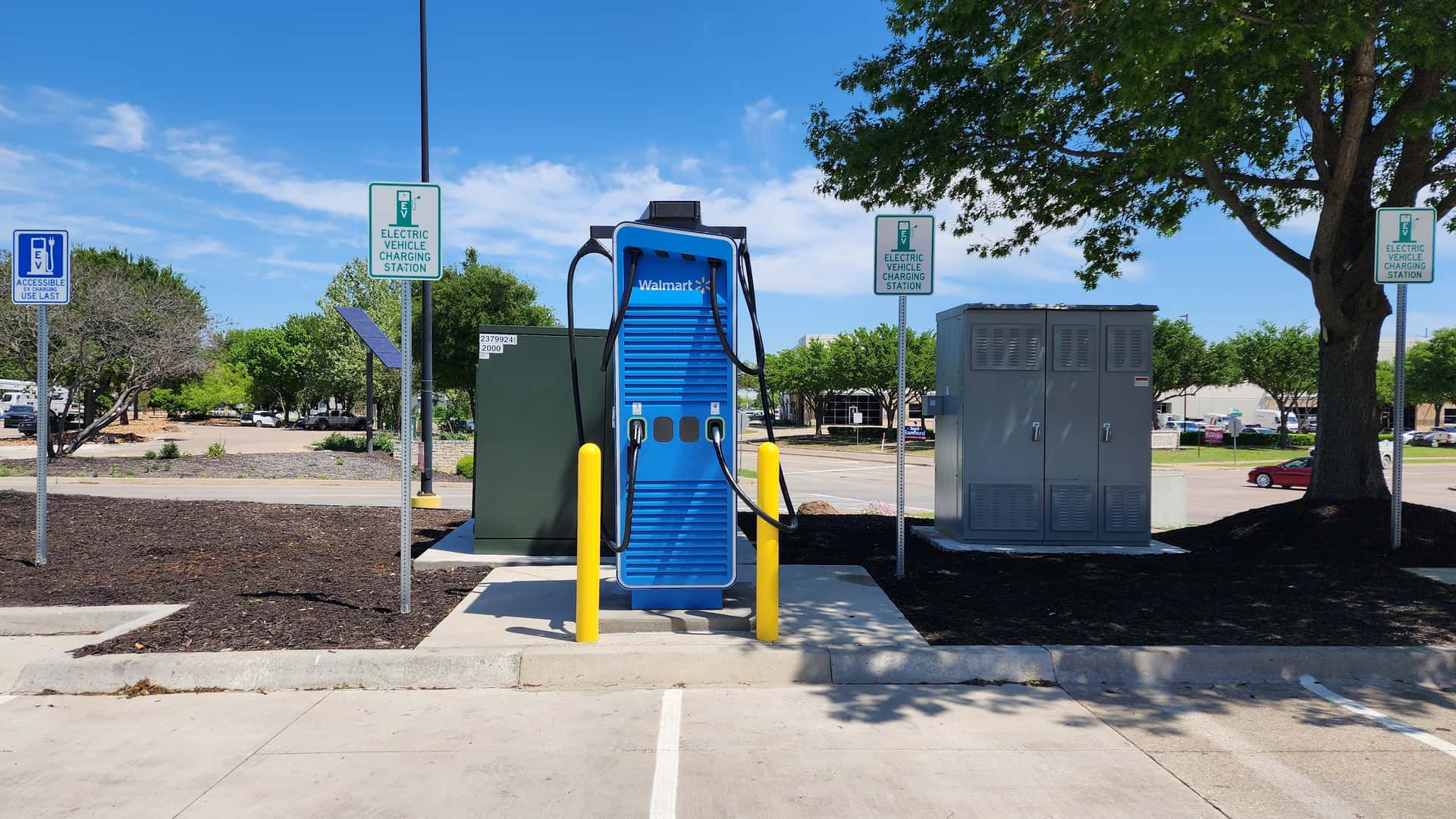
Walmart’s commitment to a high-quality charging experience is evident in its choice of technology. The company exclusively installs powerful 400-kilowatt chargers, sourced from reputable manufacturers such as Alpitronic or ABB.
These high-capacity chargers are designed to provide rapid energy replenishment, significantly reducing charging times for electric vehicle drivers. This speed is crucial for drivers looking to quickly top up their batteries while shopping or during travel.
Each individual charging stall is equipped with both a North American Charging Standard (NACS) cable and a Combined Charging System 1 (CCS1) port. This dual compatibility ensures that a wide array of electric vehicles, regardless of their manufacturer, can utilize Walmart’s charging facilities, enhancing accessibility for the entire EV community.
Strategic Geographic Rollout
The deployment of Walmart’s EV charging network is following a clear geographical strategy. Texas currently leads the nation with 15 Walmart EV charging stations, showcasing a significant concentration of these facilities.
Following Texas, Arizona hosts six stations, Florida has three, and Oklahoma accounts for two. Additionally, states such as Alabama, Arkansas, Georgia, New Jersey, and South Carolina each feature one Walmart EV charging station.
This targeted rollout suggests an emphasis on regions with high electric vehicle adoption rates or key transportation corridors. By strategically placing these charging hubs, Walmart aims to maximize convenience for its customers and contribute effectively to the broader electric mobility infrastructure.
Walmart’s Broader EV Charging Strategy and Future Outlook
While Walmart stores have long hosted third-party EV charging operators, such as Electrify America, the company made a strategic decision in 2023 to develop its own branded network. This move signifies a deeper commitment to the electric vehicle ecosystem, moving beyond simply providing space for other operators.
The retail behemoth has largely maintained a discreet approach to the specifics of its internal EV charging network development. However, the firm previously announced ambitious plans to install fast chargers at “thousands of its locations by 2030,” with projections for even more stations to follow in the subsequent decade.
This long-term vision positions Walmart as a crucial enabler of widespread EV adoption. By integrating charging capabilities into its extensive network of retail outlets, the company addresses critical issues like range anxiety, making electric vehicles a more viable option for everyday consumers.
Pricing and Accessibility
Accessing Walmart’s proprietary EV chargers is designed to be straightforward, though it requires the use of the store’s dedicated smartphone application. Drivers must utilize this app for all charging transactions, as the individual charging stalls currently lack traditional card readers.
While pricing for the service may vary by location, the average cost for charging at a Walmart station stands at approximately $0.48 per kilowatt-hour. This pricing model aims to offer competitive rates for electric vehicle owners seeking convenient and reliable charging solutions.
The app-based payment system, a common feature in many modern charging networks, streamlines the transaction process, allowing for easy management of charging sessions and payment tracking directly from a mobile device.
The Impact of Retailer-Led EV Infrastructure
The investment by a retail giant like Walmart in its own EV charging network represents a significant development for the electric vehicle industry. It underscores a growing trend where major consumer-facing businesses are actively contributing to the sustainable transition in transportation.
By providing accessible and high-speed charging options at popular retail destinations, Walmart enhances the practicality of owning an electric vehicle. This initiative not only supports environmental sustainability but also enriches the customer experience, aligning with modern consumer demands for convenience and eco-conscious services.
This expansion complements existing public and private charging efforts, creating a more robust and interconnected national charging infrastructure. The scale of Walmart’s operations means that its EV charging network will play a vital role in accelerating the broader adoption of electric mobility across the country, as noted by industry observers like EVChargingStations.com.
FAQ Section
How many EV charging ports does Walmart currently have?
As of the latest reports, Walmart operates 31 DC fast charging stations across the U.S., which collectively feature 224 high-powered connectors. This translates to 112 individual fast charging dispensers, marking a rapid expansion in its network.
What type of chargers does Walmart install?
Walmart exclusively installs high-capacity 400-kilowatt DC fast chargers. These advanced units are manufactured by leading providers like Alpitronic or ABB, ensuring efficient and quick charging for electric vehicle users.
Which states have the most Walmart EV charging stations?
Texas currently leads with the highest number of Walmart EV charging stations, boasting 15 locations. Arizona follows with six stations, Florida has three, and Oklahoma features two, with other states having single installations.
How do drivers pay for charging at Walmart stations?
Drivers must use Walmart’s dedicated smartphone application to pay for charging services. The charging stalls are not equipped with traditional card readers, making the app the sole method for initiating and completing payment transactions.
What are Walmart’s long-term goals for its EV charging network?
Walmart has ambitious plans to significantly expand its EV charging network, aiming to install fast chargers at “thousands of its locations by 2030.” The company projects even further expansion in the subsequent decade, solidifying its commitment to electric mobility.
Why is Walmart investing in EV charging infrastructure?
Walmart’s investment reflects a dual strategy of enhancing customer convenience and pursuing sustainability goals. By providing accessible charging, Walmart alleviates range anxiety for EV owners and positions itself as a leader in supporting environmentally friendly transportation solutions.
What charging standards do Walmart’s stations support?
Walmart’s charging stations are designed for broad compatibility, with each stall featuring both a North American Charging Standard (NACS) cable and a Combined Charging System 1 (CCS1) port. This ensures that most electric vehicles can utilize the network effectively.