
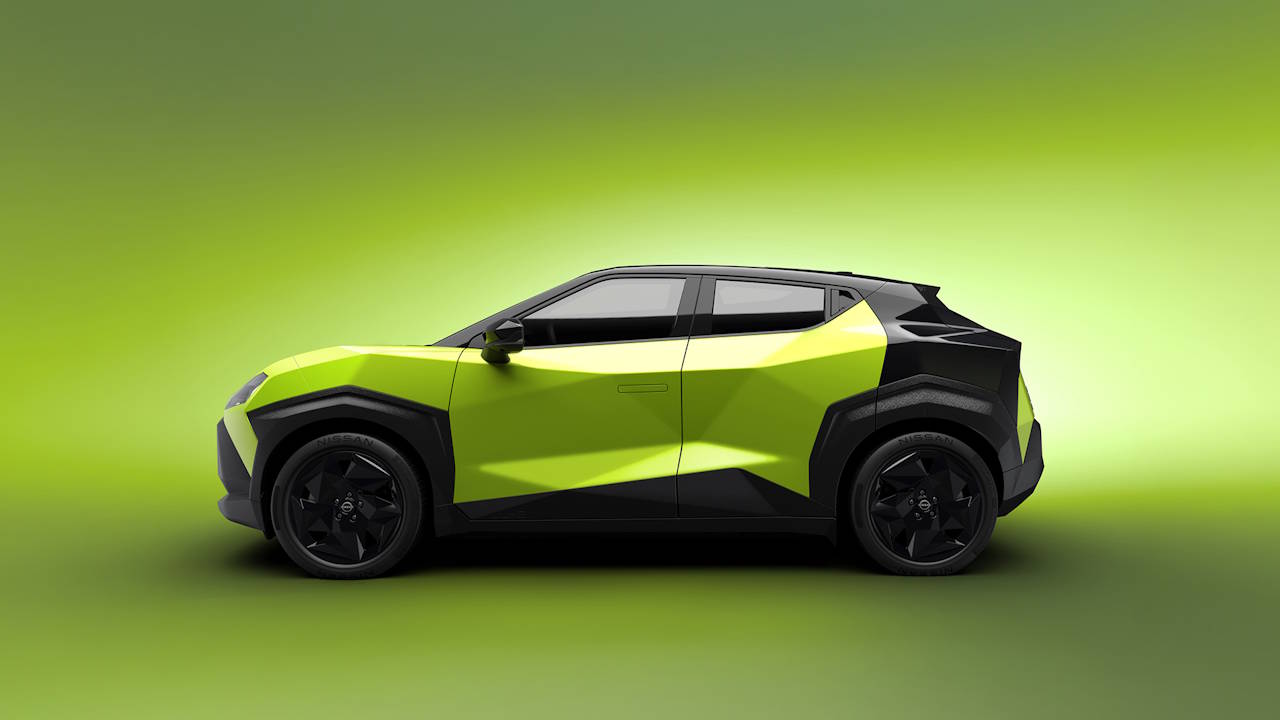
Key Takeaways:
- Nissan announced the third-generation Juke small SUV, now fully electric, at its Vision Event on April 16, 2026, in Japan.
- The new electric Juke is built on the CMF-EV platform, shared by the Renault-Nissan-Mitsubishi Alliance, underscoring a strategic shift.
- A significant feature is the integration of Vehicle-to-Grid (V2G) technology, allowing the vehicle to feed energy back into the power grid.
- Production is slated for Nissan’s Sunderland Plant in the United Kingdom, a key facility for the automaker’s European operations.
- The electric Juke is central to Nissan’s ambitious European electrification strategy, aiming to expand consumer choice in zero-emission mobility.
TOKYO, Japan — Japanese automotive giant Nissan has officially unveiled the highly anticipated third generation of its popular Juke small SUV, marking a pivotal moment in the brand’s electrification journey. Presented as an all-electric model, this new iteration of the compact crossover was introduced at the company’s Vision Event held on Tuesday, April 16, 2026, in Japan.

The transition of the Juke, renowned for its distinctive design, into a fully electric vehicle underscores Nissan’s aggressive push towards sustainable mobility. This strategic move is particularly significant for the European market, where the new electric Juke is poised to play a crucial role in the automaker’s ambitious electrification objectives.
A Strategic Leap into Zero-Emission Mobility
The introduction of the all-electric Juke is a clear indicator of Nissan’s commitment to expanding its electric vehicle (EV) portfolio and accelerating the global shift towards cleaner transportation. This unveiling aligns with the company’s broader vision for a zero-emission future, particularly within the crucial European automotive landscape.
Massimiliano Messina, Chairman of Nissan, emphasized the company’s forward-looking approach at the event. He stated, “company is looking to bring greater choice to consumers and says the next generation of vehicles will accelerate its transition to zero-emission mobility.” This statement highlights Nissan’s dedication to diversifying its electric offerings and meeting evolving consumer demands.
While the unveiling event provided a glimpse into the vehicle’s geometric-inspired design and Nissan’s overarching European electrification strategy, specific technical details about the electric Juke remain largely under wraps. However, one significant technological feature confirmed is the integration of advanced Vehicle-to-Grid (V2G) capabilities.
The CMF-EV Platform: Alliance’s Foundation for Electrification
Central to the development of the new electric Juke is its foundation on the CMF-EV platform. This advanced modular architecture is a product of the Renault-Nissan-Mitsubishi Alliance, showcasing the collaborative efforts within the automotive partnership to streamline EV development and production.
The CMF-EV platform (Common Module Family – Electric Vehicle) is specifically engineered to support a diverse range of electric vehicles, offering flexibility in design, battery configuration, and motor integration. Its modular nature allows for efficient scaling across different vehicle segments, optimizing production costs and accelerating market entry for new electric models.
By leveraging this shared platform, Nissan aims to achieve economies of scale and enhance the performance characteristics of its electric vehicle lineup. The CMF-EV architecture ensures that the electric Juke benefits from a dedicated EV design, allowing for optimized interior space, superior handling, and efficient battery packaging, tailored for a truly electric driving experience.
Pioneering Vehicle-to-Grid (V2G) Technology Integration
One of the most innovative features announced for the electric Juke is its embedded Vehicle-to-Grid (V2G) technology. This capability extends the utility of the EV beyond mere transportation, transforming it into an active component of the energy ecosystem.
V2G technology allows the electric Juke to not only draw power from the grid for charging but also to export stored energy back to the grid during peak demand or when renewable energy generation is low. This bidirectional energy flow can help stabilize the electrical grid, integrate more renewable energy sources, and potentially offer financial benefits to vehicle owners through energy arbitrage.
Nissan has been a proponent of V2G technology, exploring its potential through various pilot projects and partnerships. The inclusion of V2G in the electric Juke signifies a broader commitment to smart energy management and highlights the company’s vision for EVs as integral parts of a future sustainable energy infrastructure, moving beyond traditional charging paradigms.
Sunderland Plant: A Hub for European EV Production
The manufacturing of the new electric Juke is slated for Nissan’s historic Sunderland Plant in the United Kingdom. This facility has long been a cornerstone of Nissan’s European operations and is already home to the production of the popular Nissan Leaf, one of the world’s pioneering mass-market electric vehicles.
The decision to build the electric Juke at Sunderland reinforces the plant’s strategic importance as a dedicated EV manufacturing hub. This move is expected to support local employment and bolster the UK’s position in the global electric vehicle production landscape. The plant’s established expertise in EV assembly from the Leaf production provides a robust foundation for the Juke’s introduction.
Nissan has confirmed that the first trial phase of production for the electric Juke is anticipated to commence in the coming weeks. This preliminary stage is crucial for fine-tuning manufacturing processes and ensuring quality control ahead of full-scale production, signalling steady progress towards its market release.
Anticipated Specifications and Market Impact
While definitive specifications for the electric Juke’s battery options have not yet been released, industry observers and analysts are speculating on its potential capabilities. Given its shared manufacturing location with the Nissan Leaf, some predict that the electric Juke might offer similar battery configurations.
The Nissan Leaf, having undergone upgrades last year, now features options such as 52kWh and 75kWh battery packs. This existing framework provides a plausible benchmark for the electric Juke, suggesting it could adopt comparable battery capacities to ensure competitive range and performance within the compact EV crossover segment.
The Juke has historically been characterized by its distinctive and unconventional design. Clíodhna Lyons, Region Vice President for Product, Brand, and Marketing Strategy at Nissan AMIEO, affirmed this legacy. She stated, “Juke has always stood for bold design and a willingness to challenge convention. With this third generation, we are bringing that spirit into the electric age. As our first fully electric JUKE, it will help us reach new customers while expanding choice across our electrified range.”
This statement underscores the brand’s intention to leverage the Juke’s established identity to attract a broader customer base to its expanding electric vehicle lineup. The electric Juke is set to become a significant contender in the rapidly growing compact electric SUV market, offering consumers a blend of unique styling, practical utility, and advanced electric propulsion.
The Road Ahead for Nissan’s Electrification Strategy
The introduction of the electric Juke is a key milestone in Nissan’s long-term electrification roadmap. It demonstrates the automaker’s commitment to phasing out internal combustion engines and transitioning its core models to electric powertrains.
As consumer preference for electric vehicles continues to grow, particularly in regions like Europe with stringent emission regulations, the electric Juke positions Nissan to capitalize on this demand. The vehicle’s blend of established brand recognition, innovative V2G technology, and strategic production location makes it a noteworthy addition to the evolving EV landscape.
This launch solidifies Nissan’s reputation as a pioneer in mass-market EVs and reaffirms its dedication to shaping the future of sustainable transportation. The company is set to provide more details on pricing, range, and availability as the production timeline progresses towards its market debut.
Frequently Asked Questions (FAQ)
What is the Nissan electric Juke?
The electric Juke is the third generation of Nissan’s popular small SUV, now reimagined as a fully electric vehicle. It was unveiled on April 16, 2026, and is built on the CMF-EV platform, designed to expand Nissan’s zero-emission offerings, particularly in the European market.
Where will the electric Juke be manufactured?
The new electric Juke is scheduled for production at Nissan’s Sunderland Plant in the United Kingdom. This facility is a key manufacturing hub for Nissan in Europe and already produces the Nissan Leaf, demonstrating its expertise in electric vehicle assembly.
What is Vehicle-to-Grid (V2G) technology, and will the electric Juke have it?
Vehicle-to-Grid (V2G) technology allows an electric vehicle to not only charge from the grid but also to send electricity back to it. Yes, Nissan has confirmed that the electric Juke will feature V2G technology, enhancing its role in smart energy management.
What platform is the electric Juke built on?
The electric Juke utilizes the CMF-EV platform, a dedicated electric vehicle architecture developed by the Renault-Nissan-Mitsubishi Alliance. This modular platform is designed to optimize performance, packaging, and efficiency for a new generation of electric cars.
When is production expected to begin for the electric Juke?
The first trial phase of production for the electric Juke is anticipated to commence in the coming weeks at the Sunderland Plant. This initial stage is crucial for testing manufacturing processes and ensuring the quality of the new electric vehicle.
Are there any details on the electric Juke’s battery options?
Specific battery capacity options have not been officially detailed for the electric Juke. However, given its production alongside the Nissan Leaf, which offers 52kWh and 75kWh battery choices, it is speculated that the new Juke might feature similar specifications.
How significant is the electric Juke for Nissan’s strategy?
The electric Juke is a cornerstone of Nissan’s European electrification strategy. It represents a major step in offering greater choice to consumers in the zero-emission mobility segment and reinforces the company’s commitment to an all-electric future for its popular models.