
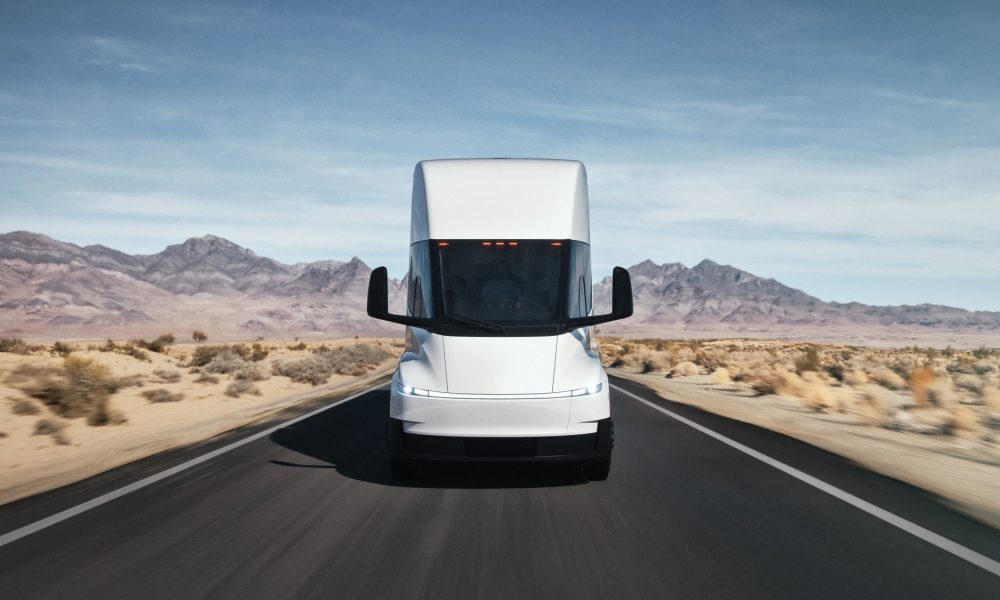
Dayton, Nevada – A Tesla Semi, the battery-electric heavy-duty truck from the innovative automaker, was involved in its first known fatal collision on Sunday, June 28, 2026. The tragic incident, occurring on U.S. Highway 50, has initiated a comprehensive investigation by Nevada authorities, drawing significant attention to commercial vehicle safety and the operational aspects of emerging electric truck technology.
The collision, which transpired around 7:20 a.m. at the intersection of U.S. Highway 50 and Traditions Parkway, approximately 40 miles east of Reno, has been confirmed as the inaugural fatal crash involving a Tesla Semi. This location is notably close to Tesla’s Gigafactory Nevada, where the advanced electric trucks are produced. The incident has cast a spotlight on the evolving landscape of heavy-duty transportation and the rigorous safety standards required for all commercial vehicles.

Key Takeaways: Examining the Tesla Semi Incident
- A Tesla Semi was involved in its first known fatal collision on June 28, 2026, in Dayton, Nevada.
- The crash resulted in two fatalities and one person critically injured after the electric heavy-duty truck struck two passenger vehicles from behind.
- Preliminary statements suggested potential driver fatigue, though the Nevada Highway Patrol states the official cause remains under active investigation.
- The incident underscores ongoing scrutiny of commercial vehicle safety on Nevada highways and highlights the comprehensive investigative process for emerging electric truck technologies.
Collision Details: A Morning of Tragedy on U.S. Highway 50
According to initial reports from the Lyon County Sheriff’s Office and details corroborated by the Nevada State Police Highway Patrol, the semi-truck collided with two passenger vehicles. The passenger vehicles were reportedly stopped at a traffic signal when the Tesla Semi struck them from behind, leading to devastating consequences. This sequence of events immediately prompted a multi-agency emergency response.
Tragically, two individuals were pronounced dead at the scene of the crash. A third person sustained life-threatening injuries and was swiftly transported to a hospital via air ambulance, as reported by Forbes. The immediate aftermath saw a rapid deployment of emergency personnel, working to manage the scene, provide aid, and secure the area for investigation.
Responders at the site included deputies from the Lyon County Sheriff’s Office, personnel from the Nevada Highway Patrol, and teams from the Central Lyon County Fire Department. The Nevada Department of Transportation also played a crucial role in managing the logistical challenges posed by the collision. Their combined efforts were essential in addressing the immediate crisis and preparing for the extensive investigation.

The severity of the incident necessitated the temporary closure of U.S. Highway 50 in both directions. This measure was implemented to facilitate emergency operations, ensure the safety of responders, and preserve the integrity of the crash site for detailed examination. The road closure significantly impacted morning traffic, rerouting commuters and emphasizing the scale of the incident.
The Ongoing Investigation: Unraveling the Cause
The investigation into the collision is being spearheaded by the Nevada Highway Patrol, recognized for its expertise in crash reconstruction and commercial vehicle incidents. While initial statements gathered at the scene by the Lyon County Sheriff’s Office suggested that the truck driver might have fallen asleep at the wheel, the Nevada Highway Patrol has stressed that the official cause has not yet been definitively determined. This distinction highlights the preliminary nature of early observations versus the methodical process of a formal investigation.
As part of standard procedure in serious traffic incidents, the Tesla Semi involved in the crash was seized for evidence. This step is critical for a thorough examination, allowing investigators to analyze the vehicle’s mechanical condition, onboard data systems, and any other factors that could have contributed to the collision. Such detailed scrutiny is paramount, especially when involving newer vehicle technologies like the electric Class 8 truck.
Authorities have indicated that additional information regarding the investigation’s progress is expected to be released early the following week, subsequent to the June 28 incident. This phased approach to information dissemination ensures that details are verified and presented accurately, maintaining the integrity of the ongoing probe. Law enforcement continues to gather all available evidence, including witness statements and physical data from the scene, to establish a comprehensive understanding of the event.
Understanding the Tesla Semi: An Emerging Electric Heavy-Duty Truck
The vehicle at the center of this incident is the Tesla Semi, a pioneering battery-electric heavy-duty truck developed by Tesla. Designed to offer a sustainable alternative to traditional diesel-powered Class 8 trucks, the Semi represents a significant step forward in commercial transportation technology. It is manufactured at Tesla’s Gigafactory located in Nevada, underscoring the region’s role as a hub for advanced automotive production.
A notable aspect of the Tesla Semi’s involvement is its current market status. The vehicle is not yet widely available to the public, with its deployment primarily focused on internal logistics for Tesla and a select number of early adopter clients for pilot programs and testing. This limited availability means that many are still unfamiliar with the existence and operational characteristics of Tesla’s electric heavy-duty trucks. The incident therefore brings a nascent technology into public focus, emphasizing the need for robust safety assessments during its early adoption phases.
The confirmation of the vehicle’s make, initially described simply as a ‘semi-truck,’ through subsequent reporting and scene identification, underscores the novelty of seeing a Tesla-branded heavy-duty truck involved in such an event. As a Class 8 truck, the Tesla Semi operates within the heaviest category of commercial vehicles, making its performance and safety under various conditions a matter of extensive engineering and regulatory interest.
Commercial Vehicle Safety on Nevada Highways: A Broader Context
The incident involving the Tesla Semi occurs within a broader context of ongoing scrutiny regarding commercial vehicle safety, particularly on Nevada’s expansive highway network. Commercial trucking is a vital component of the economy, but it also presents unique safety challenges due to the sheer size, weight, and operating hours of these vehicles. Regulatory bodies and law enforcement agencies continuously work to mitigate risks associated with heavy-duty transport.
Driver fatigue, mentioned as a preliminary theory in the current investigation, is a well-documented and pervasive issue within the commercial trucking industry. The demanding schedules, long hauls, and varying road conditions can contribute to driver exhaustion, which significantly impairs judgment and reaction times. Federal and state regulations, such as Hours of Service rules, are in place to combat fatigue, but enforcement and compliance remain critical areas of focus for highway safety advocates.
Nevada’s highways, including U.S. Highway 50, are crucial arteries for freight movement across the Western United States. The state’s authorities are consistently engaged in initiatives to enhance commercial vehicle safety through enforcement, education, and infrastructure improvements. Any major incident, particularly one involving innovative vehicle technology, prompts a renewed focus on these established safety protocols and the potential need for adjustments to accommodate technological advancements.
Implications for Electric Truck Adoption and Safety Standards
The first known fatal crash involving a Tesla Semi carries significant implications not only for Tesla but also for the broader electric vehicle industry and the future of commercial transport. As new technologies like electric heavy-duty trucks are introduced, public perception and regulatory confidence are heavily influenced by their safety records. A thorough and transparent investigation is crucial to maintain trust in these emerging solutions.
Investigations into incidents involving advanced vehicles often meticulously examine a range of factors, including the functionality of vehicle systems, driver inputs, environmental conditions, and potential software anomalies. The findings from the Nevada Highway Patrol’s probe into this Tesla Semi incident will be vital for informing future design considerations, operational guidelines, and safety standards for electric trucks across the industry. This incident will undoubtedly contribute to the ongoing dialogue about how to integrate cutting-edge vehicle technology safely and effectively into existing transportation infrastructures.
Ultimately, the objective of such an investigation extends beyond determining fault; it aims to prevent future occurrences by identifying systemic issues or specific contributing factors. The commercial transportation sector is undergoing a profound transformation towards electrification, and every incident, particularly one that is tragic, provides critical learning opportunities to ensure that innovation aligns with the paramount goal of public safety.
Looking Ahead: Next Steps in the Probe
As of early July 2026, the investigation into the fatal Tesla Semi collision remains active. Authorities have not released further official details concerning specific contributing factors or the performance of the vehicle’s systems. The Nevada Highway Patrol is committed to a comprehensive and painstaking process to ascertain all relevant facts before drawing any definitive conclusions.
Future steps in the probe will likely involve detailed forensic analysis of the seized Tesla Semi, including extraction and interpretation of any event data recorder information. This data can provide crucial insights into vehicle speed, braking, steering, and other operational parameters in the moments leading up to the crash. Additionally, witness statements will be meticulously cross-referenced, and scene evidence will be analyzed to reconstruct the precise sequence of events.
The findings from this investigation will be critical for all stakeholders, from regulatory bodies to manufacturers and fleet operators. They will inform ongoing discussions about the safe deployment and operation of electric heavy-duty trucks, contributing to the continuous effort to enhance safety across all modes of commercial transportation. The commitment to a thorough investigation underscores the importance placed on understanding this incident fully to safeguard future travel on Nevada’s highways.
FAQ Section
What happened in the Tesla Semi crash?
On June 28, 2026, a Tesla Semi was involved in a fatal collision on U.S. Highway 50 in Dayton, Nevada. The electric semi-truck struck two passenger vehicles that were stopped at a traffic signal from behind, resulting in two fatalities and one person sustaining life-threatening injuries.
Where did the fatal Tesla Semi crash occur?
The incident took place on U.S. Highway 50 at its intersection with Traditions Parkway in Dayton, Nevada. This location is situated approximately 40 miles east of Reno and is in close proximity to Tesla’s Gigafactory Nevada.
What is the significance of this Tesla Semi crash?
This collision marks the first known fatal crash involving a Tesla Semi, making it a significant event for Tesla and the electric heavy-duty truck industry. It draws considerable attention to the safety and operational aspects of emerging electric commercial vehicle technologies.
What were the initial findings or theories regarding the crash cause?
Preliminary statements gathered at the scene by the Lyon County Sheriff’s Office suggested that the truck driver might have fallen asleep at the wheel. However, the Nevada Highway Patrol, which is leading the investigation, has stated that the official cause has not yet been determined and remains under active review.
Which agencies are investigating the Tesla Semi collision?
The investigation is primarily led by the Nevada Highway Patrol. The Lyon County Sheriff’s Office was also involved in the initial response and information gathering. Other agencies, including the Central Lyon County Fire Department and Nevada Department of Transportation, responded to the scene.
What is the current status of the Tesla Semi investigation?
As of early July 2026, the investigation remains active. The Tesla Semi has been seized as evidence, and authorities are continuing to gather and analyze information, including witness statements and physical evidence. Further official details are expected to be released as the probe progresses.
How does this incident affect perceptions of electric truck safety?
Any major incident involving new vehicle technology can influence public perception. A thorough and transparent investigation into the Tesla Semi crash is crucial for informing future design, operational guidelines, and safety standards for electric trucks. The findings will help build confidence in the safety of these emerging commercial vehicles.