
Key Takeaways:
- Volkswagen Group’s Cariad software division reported a significant operating loss of $2.64 billion (€2.431 billion) in the past year, marking a continued downward trend.
- Despite a rise in sales revenue to $1.44 billion (€1.327 billion), the unit’s financial performance deteriorated compared to the previous year.
- Cumulatively, Cariad has accumulated over $7.5 billion in operating losses since 2022, highlighting persistent challenges in its development pipeline.
- Software delays at Cariad have directly impacted key product launches, including the Porsche Macan Electric and Audi Q6 E-Tron, leading to market setbacks.
- Volkswagen Group has initiated a significant restructuring, including leadership changes, planned layoffs of 1,600 employees, and a strategic pivot towards leveraging Rivian’s software expertise for future vehicle platforms.
Volkswagen Group’s ambitious foray into in-house software development, spearheaded by its Cariad software division, continues to grapple with substantial financial challenges. Despite an increase in sales revenue, the subsidiary has reported deepening operating losses, prompting a significant strategic overhaul and planned workforce reductions.

For the past year, Cariad, once envisioned as the core software powerhouse for the entire Volkswagen Group, recorded an operating loss of $2.64 billion (€2.431 billion). This figure, detailed in Volkswagen Group’s 2024 financial report, underscores a recurring pattern of financial underperformance within the crucial automotive software development unit.
The unit’s sales revenue did see an uptick, reaching $1.44 billion (€1.327 billion) from $1.17 billion (€1.078 billion) in 2023. However, this revenue growth was insufficient to offset rising operational costs, resulting in a worse operating result than the $2.6 billion (€2.392 billion) loss posted in the preceding year.
Cariad’s Cumulative Financial Strain
The financial struggles of the Cariad software division are not a recent phenomenon but a persistent issue dating back several years. The trend of escalating operating losses began in 2022, when the division reported a loss of $2.28 billion (€2.1 billion) against revenue of $870 million (€800 million).

Analysing the figures between 2022 and the past year reveals a cumulative operating loss exceeding $7.5 billion. Over the same period, the division’s total revenue stood at nearly $3.5 billion, indicating a significant disparity between investment and financial return.
The increase in sales revenue observed last year was primarily attributed to higher licensing revenues. This boost came from the increased sales of vehicles that integrate and run Cariad’s proprietary software, despite a slight overall dip in Volkswagen Group’s vehicle sales from 9.24 million units in 2023 to 9.02 million units, a 2.3% decrease.
Impact on Product Launches and Reputation
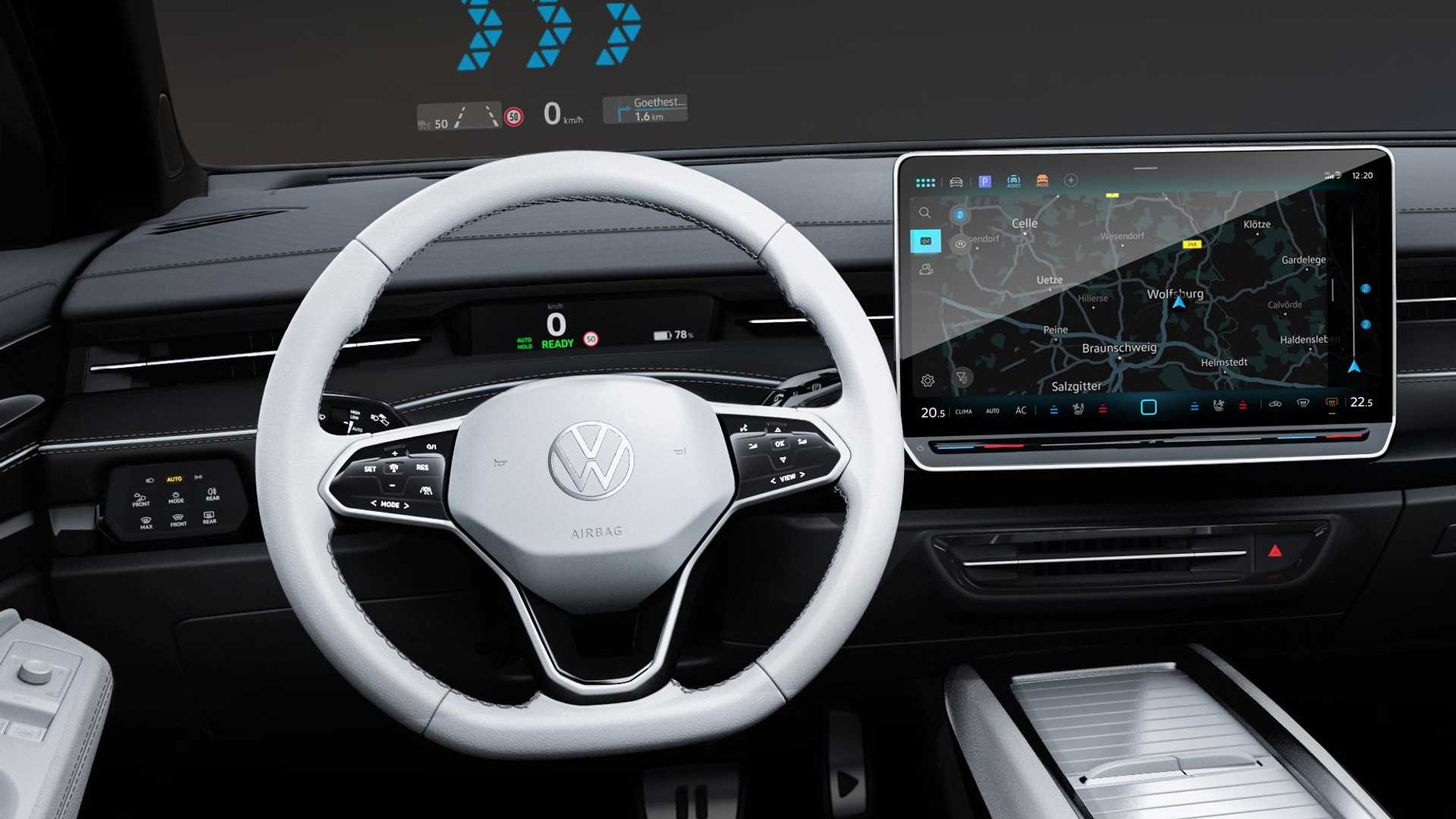
The operational difficulties within the Cariad software division have had tangible consequences for the Volkswagen Group’s product roadmap. High-profile electric vehicle (EV) launches, including the Porsche Macan Electric and the Audi Q6 E-Tron, faced significant delays of a full year due to software development hurdles originating at Cariad.
Earlier generations of electric vehicles, such as the Volkswagen ID.4 and ID.5, also encountered initial software challenges. These early versions were widely reported for issues like freezing and glitching, which not only affected customer experience but also posed a reputational risk for the automotive giant’s nascent EV lineup.
These repeated setbacks necessitated decisive action from Volkswagen Group leadership. In 2023, a major shakeup occurred within Cariad’s top management, leading to the appointment of new officials for key roles including chief operating officer, chief technology officer, and finance director. This move signaled the group’s intent to address the deeply entrenched software development issues.
Restructuring and Future Strategy
While subsequent software versions have seen improvements, the overall health and efficiency of the Cariad software division remain a critical concern. As part of a broader restructuring effort to streamline operations and improve financial viability, Volkswagen Group plans substantial workforce reductions.
According to a report by *Handelsblatt*, approximately 1,600 employees are slated to be laid off from Cariad by the end of the year. The Volkswagen Group’s 2024 financial results explicitly acknowledge that a “rescaling of operations is planned,” reinforcing the strategic importance of these impending changes for the software unit’s long-term sustainability.
Looking ahead, Volkswagen is recalibrating its approach to software development for future vehicle architectures. The group initially envisioned Cariad developing its flagship EV, Project Trinity, but multiple delays compelled a complete restart of the initiative. This shift signals a recognition of the need for external expertise and collaboration.
A pivotal element of this revised strategy involves leveraging Volkswagen’s significant $5.8 billion investment in Rivian. As reported by *Automotive News*, the revamped flagship architecture is now expected to integrate Rivian’s established software know-how, particularly for advanced features such as Level 4 driver assistance systems. This strategic partnership aims to accelerate development and mitigate past challenges by incorporating proven technologies and processes.
The Broader Landscape of Automotive Software
Cariad’s journey since its establishment in 2020 as the Car.Software Organization, with a global workforce nearing 6,000, reflects the immense challenges traditional automakers face in the rapidly evolving software-defined vehicle landscape. The ambition to develop a uniform operating system and a cohesive electrical architecture for all Volkswagen Group vehicles remains crucial for future competitiveness.
The financial performance and operational hurdles of the Cariad software division highlight the complex transition required for legacy automotive manufacturers to become proficient software developers. The outcomes of the ongoing restructuring and strategic partnerships will be critical in determining Volkswagen Group’s future success in the highly competitive electric and autonomous vehicle markets.
Frequently Asked Questions (FAQ)
What is Cariad, and what is its main purpose?
Cariad is Volkswagen Group’s dedicated software division, established in 2020 as the Car.Software Organization. Its primary purpose is to develop a uniform operating system and a standardized electrical architecture for all future vehicles across the Volkswagen Group’s diverse brands, aiming for seamless integration and advanced functionalities.
How much operating loss did Cariad report recently?
Cariad reported an operating loss of $2.64 billion (€2.431 billion) for the past year, as per Volkswagen Group’s 2024 financial report. This figure indicates a deepening of losses despite an increase in sales revenue, signaling persistent challenges within the software development unit.
What were Cariad’s cumulative operating losses?
Between 2022 and the past year, Volkswagen Group’s Cariad software division accumulated over $7.5 billion in operating losses. This significant financial drain has occurred while the division’s total revenue over the same period was approximately $3.5 billion, highlighting a substantial deficit.
How have Cariad’s software issues impacted Volkswagen Group’s products?
Cariad’s software development troubles have caused significant delays for key product launches, including the Porsche Macan Electric and Audi Q6 E-Tron, postponing their market debuts by a year. Earlier EVs like the Volkswagen ID.4 and ID.5 also suffered from initial software glitches and freezing issues, affecting early customer experience.
What measures is Volkswagen Group taking to address Cariad’s challenges?
Volkswagen Group is implementing a comprehensive overhaul for Cariad. This includes a major leadership shakeup in 2023, planned layoffs of 1,600 employees by year-end, and a strategic pivot to integrate Rivian’s software expertise. The group’s $5.8 billion investment in Rivian aims to enhance future vehicle platforms, including advanced driver assistance systems.
Why is in-house software development critical for automakers like Volkswagen?
In-house software development is crucial for automakers to maintain control over their vehicle’s digital ecosystem, enabling unique features, over-the-air updates, and advanced autonomous driving capabilities. It is essential for future competitiveness in the era of software-defined vehicles, moving beyond traditional hardware-centric manufacturing.
What is Project Trinity and its current status?
Project Trinity was initially envisioned as Volkswagen’s flagship EV, with its software development central to Cariad’s mission. However, due to multiple delays and challenges within Cariad, Volkswagen Group has had to restart the project. The revamped architecture is now expected to leverage external expertise, including Rivian’s software know-how.