
Key Takeaways:
- Over the past two and a half years, electric vehicle (EV) technology has seen more significant advancements than gasoline engines have in a decade.
- Traditional internal combustion engines (ICE) are encountering diminishing returns, with attempts at efficiency often leading to increased complexity and reliability issues.
- Hybrid vehicles offer a bridge, demonstrating how electric assistance dramatically improves the efficiency and longevity of automotive powertrains.
- Pure EVs are rapidly improving across critical metrics, including charging speeds (18-19 minutes for 10-80% to 11 minutes), range (more 300+ mile options, with prices decreasing), and affordability.
- Charging infrastructure is expanding, and battery reliability along with software stability in EVs is markedly improving.
- The market now offers a significantly broader and more compelling range of EV options across various price points, from luxury to mass-market affordable models.
- Future innovations in battery chemistry and software-defined vehicle architectures promise continued, rapid development in the EV sector, a stark contrast to the stagnation in gasoline engine technology.
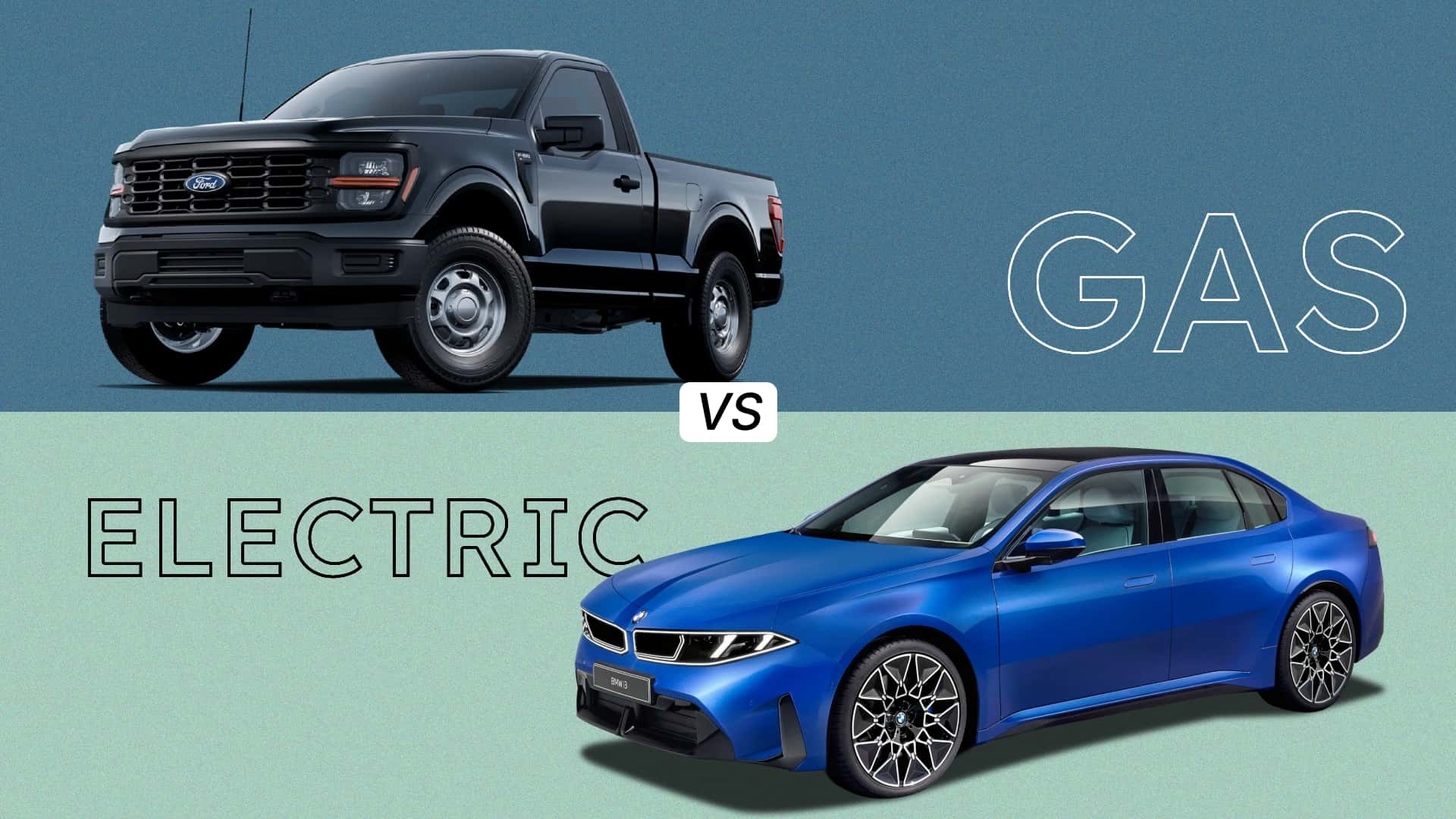
In a profound shift observed over the past two and a half years, the electric vehicle (EV) sector has demonstrated a pace of innovation far exceeding that of traditional internal combustion engine (ICE) development over the last decade. This rapid acceleration in electric vehicle advancements signals a critical juncture in automotive history, where the future of mobility is increasingly becoming synonymous with electrification.

A seasoned automotive journalist, who transitioned from reviewing high-performance supercars to focusing on EVs, articulated this dramatic divergence. He noted, “When I left Road & Track to join InsideEVs, my car enthusiast friends were surprised. I was trading in the glamorous world of six-figure supercars and earth-shaking monster trucks for the practical business of charging infrastructure and battery chemistry. Why would I bother, they asked, when even the mightiest EV was less exciting and heavier than a run-of-the-mill sports car?”
The motivation, he explained, stemmed from a desire to embrace the future. “The answer was hard to explain in the present tense. I was tired of living in a world where the past was celebrated as somehow pure, and the future tinged with anxiety about emissions and regulation. I wanted to get excited about the future again, and as I saw gas cars stagnate, I knew that I had to turn the page.” This sentiment underscores a growing recognition within the industry that the golden age of gasoline engine innovation may be behind us.
The Stagnation of Internal Combustion Engines
The journey through the automotive landscape reveals a clear trend: the evolution of gasoline powertrains has largely plateaued. Despite relentless efforts to extract more efficiency, the gains are marginal, often at the expense of simplicity and reliability.

Incremental Gains and Reliability Compromises
Consider the professional vehicle review landscape since 2017. The Volvo S90, a flagship sedan that debuted a new era for the automaker, featured a 2.0-liter inline-four engine, available with either a turbocharger or a combination of turbocharger and supercharger. Fast forward to today, while the S90 is no longer available in the American market, its SUV counterpart, the XC90, still utilizes a largely similar engine and transmission combination.
Modern iterations of this powertrain offer improved cabin technology and tuning, alongside enhanced plug-in hybrid variants. However, pure gasoline versions show minimal improvement in fuel economy, typically gaining only 1 mpg. This modest gain is attributed not to fundamental improvements in gasoline engine design, but to the integration of mild 48-volt hybrid systems, which mitigate the inherent inefficiencies of traditional engines.
Similar patterns emerge in America’s best-selling vehicles. In 2017, the Ford F-150 was powered by 2.7-liter and 3.5-liter turbocharged V-6s, alongside a 5.0-liter V-8. A decade later, the standard F-150 lineup largely retains these same engines, augmented by a hybrid option. The widespread adoption of the 10-speed automatic transmission across the lineup, initially limited to the 3.5-liter EcoBoost, came with a “long and painful teething period with widespread reliability issues.”
Chevrolet trucks faced comparable challenges, with transmission problems reported across both 8- and 10-speed models. Even the company’s venerable 5.3-liter V-8 engine, a design that persisted for over two decades until its planned phase-out for 2027 models, suffered setbacks. The introduction of cylinder-deactivation technology in 2007, intended to allow the V-8s to operate on four cylinders under light loads for improved highway mileage, inadvertently compromised the engine’s long-standing reputation for “ironclad reliability.”
The Limits of Traditional Engine Design
These examples highlight a critical paradox: engineers are increasingly adding complexity to gasoline engines to achieve minimal efficiency gains, often resulting in significant trade-offs in reliability. The efforts often feel like “putting a hat on a hat,” as foundational limitations prevent revolutionary leaps.
Toyota, a brand synonymous with automotive reliability, also encountered these limits with its Tundra pickup. The previous generation’s V-8 engine earned a “bulletproof reputation” with examples achieving “1,000,000 miles on their original engines.” However, consumer demand for better fuel economy (the older model achieved 13 mpg in the city) prompted a complete redesign. The new Tundra featured an all-new V-6 engine incorporating advanced turbocharging and direct injection, characteristic of modern powertrains.
The outcome, however, was an “unmitigated disaster, with over 100,000 recalled trucks and countless engine failures.” This incident underscores the immense difficulty even the most reliable automakers face in designing new gasoline engines that are simultaneously clean-sheet, efficient, and robust. It suggests that modern engines are being pushed beyond their practical limits. Consumers consistently seek lower fuel costs, reduced maintenance, and uncompromised power, a trifecta increasingly difficult to achieve with traditional internal combustion.
The Transformative Era of Electric Vehicle Advancements
In stark contrast to the stagnation of gasoline engines, the electric vehicle sector, including hybrids, is undergoing a period of explosive growth and innovation. This rapid evolution presents the most viable solution to the automotive industry’s powertrain challenges.
Hybrids Paving the Way
The shifting market preferences offer tangible proof. The Ford F-150, once America’s undisputed best-selling vehicle in 2017, was unseated by the Toyota RAV4 last year. This change is largely attributable to the RAV4’s “fantastic hybrid-only redesign.” While some technologies have marginally increased efficiency at the cost of reliability, the integration of hybrid systems often enhances longevity and significantly boosts fuel efficiency, thanks to the inherent efficiency of electric propulsion and the robustness of modern batteries and motors.
Since early 2024, when the shift to EVs was gaining momentum, the RAV4’s hybrid-centric approach has propelled it ahead of its gas-guzzling rivals. Hybrid options for Toyota trucks and Lexus SUVs have also seen substantial improvements. Ford’s expansion of its hybrid powertrain to the all-wheel-drive Maverick further solidifies its market position against purely gas competitors like the Hyundai Santa Cruz. The trend is clear: from “longer-range Volvo PHEVs to awesome Ferrari hybrids,” the most innovative new products in the market feature electric assistance.
Unprecedented Progress in Pure EVs
The pace of electric vehicle advancements in the pure EV space is even more remarkable. Just a couple of years ago, the fastest-charging EVs available in America could go from 10% to 80% charge in approximately 18 or 19 minutes. Today, Mercedes has launched a vehicle capable of achieving the same in just 11 minutes.
Range anxiety, a significant barrier for early adopters, is also being systematically dismantled. The Lucid Air Grand Touring still holds the record for the longest-range EV at an impressive 516 miles, a figure that remains largely unchallenged because, for most drivers, more is simply unnecessary. Crucially, its starting price has dropped by over $10,000. Moreover, the number of EVs offering competitive ranges has surged. New models from Chevy, Cadillac, BMW, Volvo, and Lucid itself now routinely exceed 400 miles of EPA range. While 500+ miles might be considered overkill, a range exceeding 300 miles is increasingly becoming the “sweet spot” for consumers.
The options in this optimal range have exploded. At the close of 2023, only 21 EV variants offered more than 300 miles of EPA range. By the end of the current year, this number is projected to grow to approximately 60 models, according to industry analyses.
Furthermore, the expansion of America’s fast-charging network has been “gigantic and still expanding rapidly.” The dramatic move by Tesla in 2023 to open its extensive fast-charging network to other EVs has been a “total game-changer,” significantly alleviating concerns about charging availability. Alongside infrastructure, data increasingly confirms that modern EV batteries degrade slowly and rarely fail, leading to improving overall reliability.
Automakers are also addressing user experience, moving away from overly complex, screen-only control schemes. Software reliability, a nascent challenge for early EVs, has matured significantly. For instance, early Ultium platform cars from GM, like the Chevy Blazer EV and Cadillac Lyriq, were initially plagued by software bugs. However, two years into daily driving, these issues have largely been resolved, with vehicles even receiving over-the-air updates adding advanced features like Google’s Gemini AI assistant.
Perhaps the most impactful electric vehicle advancements relate to consumer choice and affordability. In early 2024, compelling EV options were limited. Today, however, almost every major automaker offers a polished electric vehicle. Toyota is expanding its EV choices through its Subaru partnership; GM provides a wide array, including an “exceptional $35,000 long-range SUV”; and Rivian has introduced a mass-market option. Luxury brands like BMW, Mercedes, and Volvo are launching “software-defined, 800-volt EVs with giant ranges and prices that make them a better buy than their gasoline-slurping counterparts.”
Affordable EV options are also finally making their mark. Slate’s $25,000 EV pickup is on the horizon, with a sub-$30,000 Ford alternative expected soon. Existing entry-level models have also seen significant upgrades. The 2027 Chevy Bolt will charge from 10% to 80% in approximately half the time of its predecessor, at the same price point. Similarly, the base version of the Nissan Leaf now offers double the range of its 2024 counterpart, coupled with improved charging specifications and design.
The Divergent Future of Automotive Powertrains
The trajectory for electric vehicles promises even greater innovation. As the North American battery supply chain develops, prices are falling rapidly, and automakers are continuously iterating on their designs. Breakthroughs in battery technology, such as high-silicon anodes, lithium-manganese rich chemistry, and solid-state technology, are expected to further reduce costs while enhancing range and longevity. Simultaneously, the proliferation of software-defined vehicle architectures is simplifying EV design, making them cheaper to build, easier to service, and simpler to update through over-the-air improvements.
Conversely, there are no equivalent, groundbreaking gasoline breakthroughs on the horizon. After more than 150 years of development and refinement, the “easy money” in terms of efficiency gains and cost reductions has been harvested. Doubling miles per gallon without integrating a battery is no longer feasible, and significantly driving down costs below current figures would necessitate major sacrifices in performance or features. The technology of the internal combustion engine is nearing its logical conclusion.
The stark contrast in development cycles underscores a clear message: the future of automotive technology is undeniably electric. The continuous and dramatic electric vehicle advancements ensure that the innovation party is, indeed, “just getting started.”
Frequently Asked Questions About EV Advancements
Q1: How do recent EV advancements compare to gasoline car development?
Over the past two and a half years, electric vehicles (EVs) have experienced significantly more rapid and impactful advancements across key metrics like charging speed, range, and affordability compared to the incremental, often costly, improvements seen in gasoline cars over the last decade. Gasoline engine development has largely stagnated, facing diminishing returns.
Q2: What specific improvements have been made in EV charging?
EV charging speeds have drastically improved. Just a few years ago, a 10-80% charge typically took 18-19 minutes. New models, such as those from Mercedes, can now achieve this in as little as 11 minutes. Furthermore, the expansion of fast-charging networks and Tesla’s opening of its Supercharger network have significantly enhanced charging accessibility.
Q3: Has EV range improved significantly?
Yes, EV range has seen substantial growth. While ultra-long-range models like the Lucid Air Grand Touring (516 miles) are available, the number of EVs offering a practical 300+ miles of EPA range has exploded. From 21 variants at the end of 2023, this is projected to reach around 60 models by the end of this year, providing consumers with ample choices.
Q4: Are electric vehicles becoming more affordable?
Absolutely. The cost of EVs is decreasing rapidly. For example, the Chevy Blazer EV’s starting price dropped from $58,590 to around $45,000, and the Equinox EV offers over 300 miles of range starting at just $35,000. New affordable options like a $25,000 EV pickup from Slate and a sub-$30,000 Ford alternative are also on the horizon.
Q5: How has EV reliability and software evolved?
Modern EV batteries demonstrate slow degradation and high reliability. Software, initially a challenge for some early models, has seen significant improvements, with bugs being resolved through over-the-air updates. Carmakers are also refining control schemes, moving away from screen-only interfaces to more user-friendly designs, enhancing the overall ownership experience.
Q6: What future advancements can we expect in EV technology?
The future of EVs looks promising with continued breakthroughs in battery chemistry, including high-silicon anodes, lithium-manganese rich chemistry, and solid-state technology, which will further drive down costs and improve performance. The adoption of software-defined vehicle architectures will also lead to simpler, more updateable, and easier-to-service electric vehicles.