
Key Takeaways:
- Electric vehicle development has shown more significant progress in two years than traditional gasoline cars have in a decade.
- Internal combustion engine (ICE) technology faces stagnation, with minor efficiency gains often introducing complexity and reliability concerns.
- Hybrid and pure electric powertrains are proving superior in efficiency, robustness, and performance.
- Significant electric vehicle advancements include exponential improvements in charging speed, range, affordability, and the expansion of charging infrastructure.
- Enhanced software capabilities and a rapidly increasing array of compelling EV models are driving market growth and consumer adoption.
The automotive landscape is undergoing a profound transformation, marked by an unprecedented surge in electric vehicle advancements. What was once a niche segment, often viewed with skepticism by traditional enthusiasts, has rapidly evolved into a powerhouse of innovation, far surpassing the incremental progress seen in gasoline-powered vehicles over the past decade.

For many years, the allure of high-performance supercars and robust trucks dominated automotive discussions. However, a closer look at the trajectory of the industry reveals a decisive shift towards electric mobility, driven by a desire for a future unburdened by concerns over emissions and regulatory pressures.
In just two and a half years, the electric vehicle sector has demonstrated more exciting progress than the preceding ten years of internal-combustion engine development. This rapid evolution signals not just a change, but a fundamental redefinition of automotive powertrain technology.
Stagnation of Gasoline Powertrains: The Limits of Iteration
For those who have professionally reviewed cars for years, the narrative of gasoline engine development has become one of diminishing returns. Since 2017, the primary engines and transmissions in many popular models have largely remained the same, with minimal improvements in fuel economy.

Consider the Volvo S90, which in 2017 featured a 2.0-liter inline-four engine, either turbocharged or supercharged and turbocharged. Today, while the S90 has exited the US market, its SUV counterpart, the XC90, continues to use a similar engine/transmission combination.
Despite advancements in cabin technology and tuning, its fuel efficiency has improved by only 1 MPG, primarily due to the integration of a mild 48-volt hybrid system, rather than fundamental breakthroughs in gasoline engine design. This highlights the inherent inefficiency of conventional gas engines.
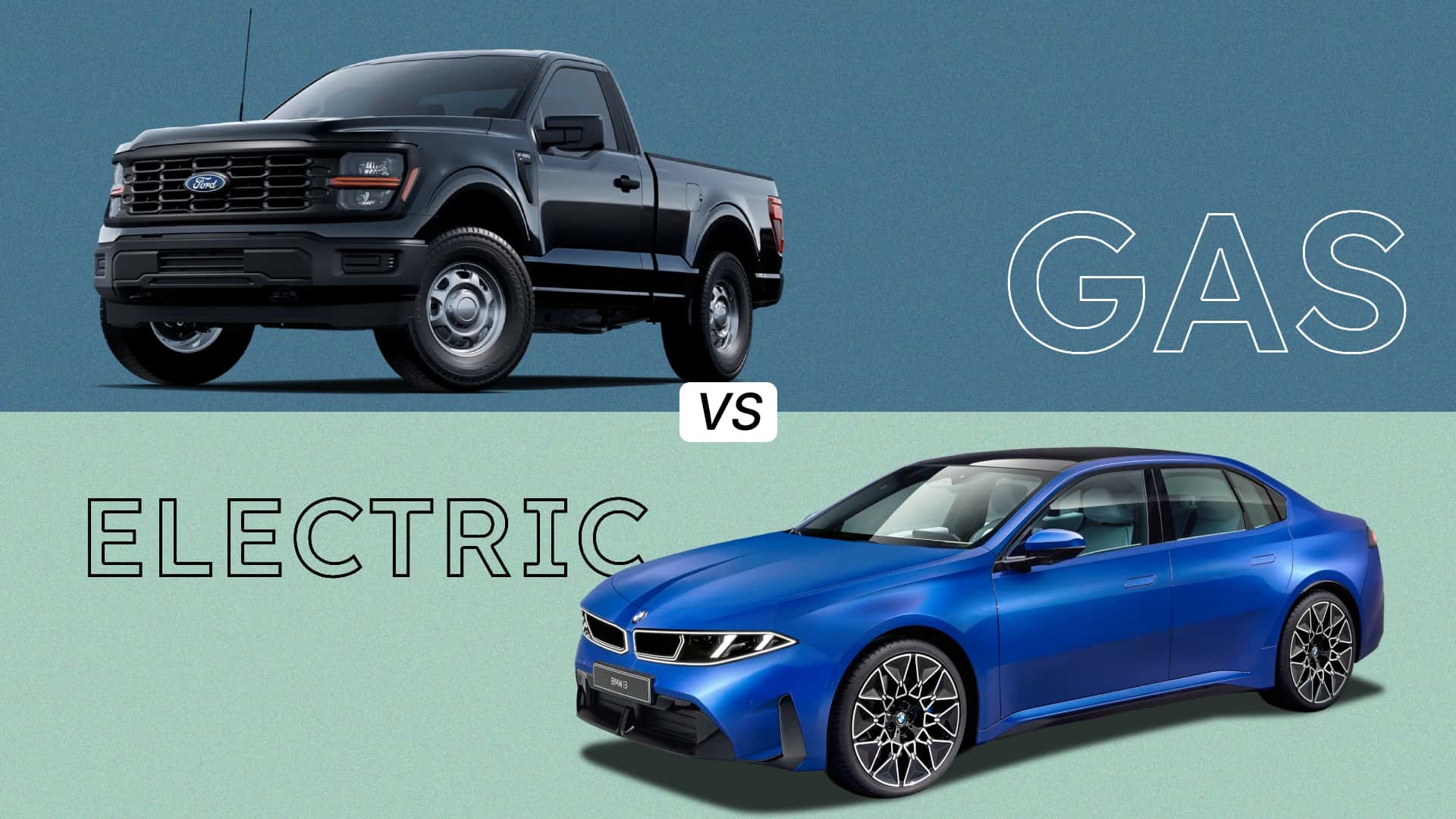
The popular Ford F-150, America’s best-selling vehicle in 2017, offered 2.7-liter and 3.5-liter turbocharged V-6s, alongside a 5.0-liter V-8. A decade later, the standard F-150 maintains these same engines, augmented by a hybrid option.
The 10-speed automatic transmission, initially exclusive to the 3.5-liter EcoBoost engine, has spread across the lineup. However, this expansion was not without challenges, experiencing a “long and painful teething period with widespread reliability issues.”
Even the addition of a hybrid model to the F-150 lineup underscores a critical trend: “Even the best gas products are better with a bit of electric assistance.” This reinforces the growing recognition that electrification is the key to significant automotive improvements.
Chevrolet trucks also faced similar transmission problems across their 8- and 10-speed models. The company’s long-standing 5.3-liter V-8 design, in use for over two decades and only slated for phase-out in 2027 models, saw the introduction of cylinder-deactivation technology in 2007.
While intended to boost efficiency by allowing the V-8s to run on four cylinders under light loads, this technology inadvertently “dinged the ironclad reliability reputation of the 5.3.” Such efforts to squeeze marginal efficiency often introduce significant mechanical complexity, leading to reliability tradeoffs.
Toyota’s Encounter with Complexity
Even automotive giants known for reliability have encountered these limits. Toyota’s previous-generation Tundra was celebrated for its “bulletproof reputation for unmatched reliability,” with some units achieving 1,000,000 miles on their original engines. However, its 13 MPG city fuel economy was becoming a concern for consumers.
To address this, Toyota introduced an entirely new V-6 engine, featuring modern turbocharging and direct injection. The outcome, however, was “an unmitigated disaster, with over 100,000 recalled trucks and countless engine failures.” This episode highlights the immense difficulty, even for seasoned manufacturers, in developing entirely new internal combustion engines without encountering substantial issues.
The skepticism of traditional enthusiasts towards features like turbochargers and cylinder deactivation is, therefore, well-founded. While older, simpler V-8 engines like the LS V-8 in a 2001 Chevy Tahoe offered robust reliability, their dismal fuel economy (e.g., 13 MPG city) is no longer acceptable to modern consumers.
The market demands reduced fuel costs, without sacrificing power, capability, or incurring higher repair bills. Electrification, whether through hybrid systems or pure battery-electric vehicles, emerges as the most viable path forward for dramatic improvements in automotive powertrain technology, especially after years of stalled progress in pure gas designs.
EV & Hybrid Tech: Paving the Way for a New Automotive Era
The shift in consumer preference is evident. The Toyota RAV4, with its “fantastic hybrid-only redesign,” has unseated the Ford F-150 as America’s best-selling vehicle. This success underscores a critical point: hybridisation often enhances longevity and significantly boosts efficiency, thanks to the inherent efficiency of electric propulsion and the robust nature of modern batteries and motors.
When the author joined InsideEVs in early 2024, the RAV4 was still offered with a conventional four-cylinder engine. Its subsequent transition to a hybrid-only approach has positioned it favorably against gas-guzzling rivals. The expansion of hybrid powertrains into Toyota trucks, Lexus SUVs, and even Ford’s all-wheel-drive Maverick demonstrates a clear trend: “From longer-range Volvo PHEVs to awesome Ferrari hybrids, the most innovative new gas products tend to have electric assistance.”
Accelerated Electric Vehicle Advancements
The pace of electric vehicle advancements in the pure EV space is even more remarkable. In just a short period, charging speeds have seen significant leaps. While the quickest-charging EVs in America previously charged from 10-80% in 18 or 19 minutes, Mercedes recently launched a car capable of achieving this in just 11 minutes.
Furthermore, EV affordability and range have dramatically improved. In early 2024, Chevy’s cheapest electric SUV, the Blazer EV, started at $58,590. Today, the Blazer EV begins at approximately $45,000, and the Equinox EV, offering over 300 miles of range, is available from just $35,000.
While the Lucid Air Grand Touring still holds the title for the longest range at 516 miles, its starting price has decreased by over $10,000. Crucially, the number of models exceeding 400 miles of EPA range has expanded significantly, with new offerings from Chevrolet, Cadillac, BMW, Volvo, and Lucid itself entering the market within the last two years.
The sweet spot for consumers, around 300 miles of range, has also seen an explosion of options. At the close of 2023, only 21 EV variants offered over 300 miles of EPA range. Projections indicate that by the end of this year, this figure will soar to approximately 60 models, as detailed by Tim Levin in his analysis of EV range.
Expanding Infrastructure and Enhancing Reliability
Alongside expanding ranges, America’s fast-charging network has grown “gigantic” and continues to expand rapidly. The opening of Tesla’s extensive Supercharger network to other EVs since 2023 has been a “total game-changer,” significantly alleviating range anxiety for many drivers.
Reliability concerns surrounding EV batteries are also being consistently debunked by data, which shows that “modern EV batteries degrade slowly and rarely fail.” Automakers are also responding to consumer preferences by moving away from “screen-only control schemes” in favor of more intuitive interfaces.
Software reliability, a common initial hurdle for new EV platforms, is also improving rapidly. General Motors’ Ultium cars, such as the Chevy Blazer EV and Cadillac Lyriq, initially faced software glitches. However, consistent over-the-air updates have addressed these issues, with one owner reporting no meaningful software bugs in at least 21 months and recent access to Google’s Gemini AI assistant.
Perhaps the most significant of the electric vehicle advancements is the sheer expansion of consumer choice. In 2024, EV options were limited and often uncompelling. Today, nearly every major automaker offers polished electric vehicles across various categories.
Toyota, through its partnership with Subaru, is expanding its EV lineup. GM provides a diverse range of EVs, including an “exceptional $35,000 long-range SUV.” Rivian has introduced a mass-market option, while luxury brands like BMW, Mercedes, and Volvo are launching sophisticated 800-volt EVs with extensive ranges, often presenting a more attractive value proposition than their gasoline counterparts.
Affordable and compelling options are also finally arriving. A $25,000 EV pickup from Slate is anticipated, with a sub-$30,000 Ford alternative on the horizon. Existing models have also seen substantial improvements. The upcoming 2027 Chevy Bolt will charge from 10-80% in roughly half the time of its predecessor at the same price point, while the base Nissan Leaf now offers double the range of its 2024 counterpart.
The trajectory for electric vehicle advancements continues upwards. With the North American battery supply chain gearing up, prices are expected to fall further, and automakers are relentlessly iterating. Future battery breakthroughs, including high-silicon anodes, lithium-manganese rich chemistry, and solid-state technology, promise to reduce costs while boosting range and longevity.
Simultaneously, the proliferation of software-defined vehicle architectures is simplifying EV design, making them cheaper to build, easier to service, and simpler to update over time.
The Future of Automotive Technology: A Clear Divide
In stark contrast, no equivalent gasoline breakthroughs are on the horizon. After more than 150 years of development and iteration, internal combustion engine technology has reached its practical limits. Significant gains in fuel efficiency without electrification are increasingly difficult to achieve, often requiring major sacrifices in complexity or cost.
The technology of gasoline engines is nearing the end of its evolutionary line. Fortunately, for consumers and the industry alike, electric vehicle technology is just beginning its most dynamic phase of development.
Frequently Asked Questions About EV Advancements
Q1: How rapidly have electric vehicles improved compared to gasoline cars?
Electric vehicles have shown more significant advancements in the past two to two and a half years than gasoline cars have in the last ten years, especially in key areas like charging speed, range, and affordability.
Q2: Why are gasoline engines experiencing stagnation?
Gasoline engines are nearing their technological limits. Efforts to achieve marginal efficiency gains often introduce significant complexity and reliability issues, as seen with cylinder deactivation or new turbocharged engine designs.
Q3: What are the main areas of electric vehicle advancements?
Key areas of improvement include dramatically faster charging times, significantly increased driving ranges, substantial reductions in vehicle prices, rapid expansion of the charging infrastructure, and enhanced battery longevity and software reliability.
Q4: How has EV range changed?
The number of EV models offering over 300 miles of EPA range is projected to triple by the end of this year compared to 2023. Even ultra-long-range models have become more affordable, while many new models exceed 400 miles of range.
Q5: Is the EV charging infrastructure improving?
Yes, America’s fast-charging network is expanding rapidly. The integration of Tesla’s Supercharger network for non-Tesla EVs since 2023 has been a major boost, significantly reducing concerns about charging availability.
Q6: Are EVs becoming more affordable?
Yes, entry-level EV prices have dropped, with new models offering competitive ranges at significantly lower costs than just a few years ago. Future advancements in battery supply chains are expected to drive prices down further.
Q7: What future innovations are expected in EVs?
Upcoming innovations include breakthroughs in battery chemistry (e.g., high-silicon anodes, solid-state technology) promising even greater range and longevity, as well as the proliferation of software-defined vehicle architectures for simpler manufacturing and updates.