
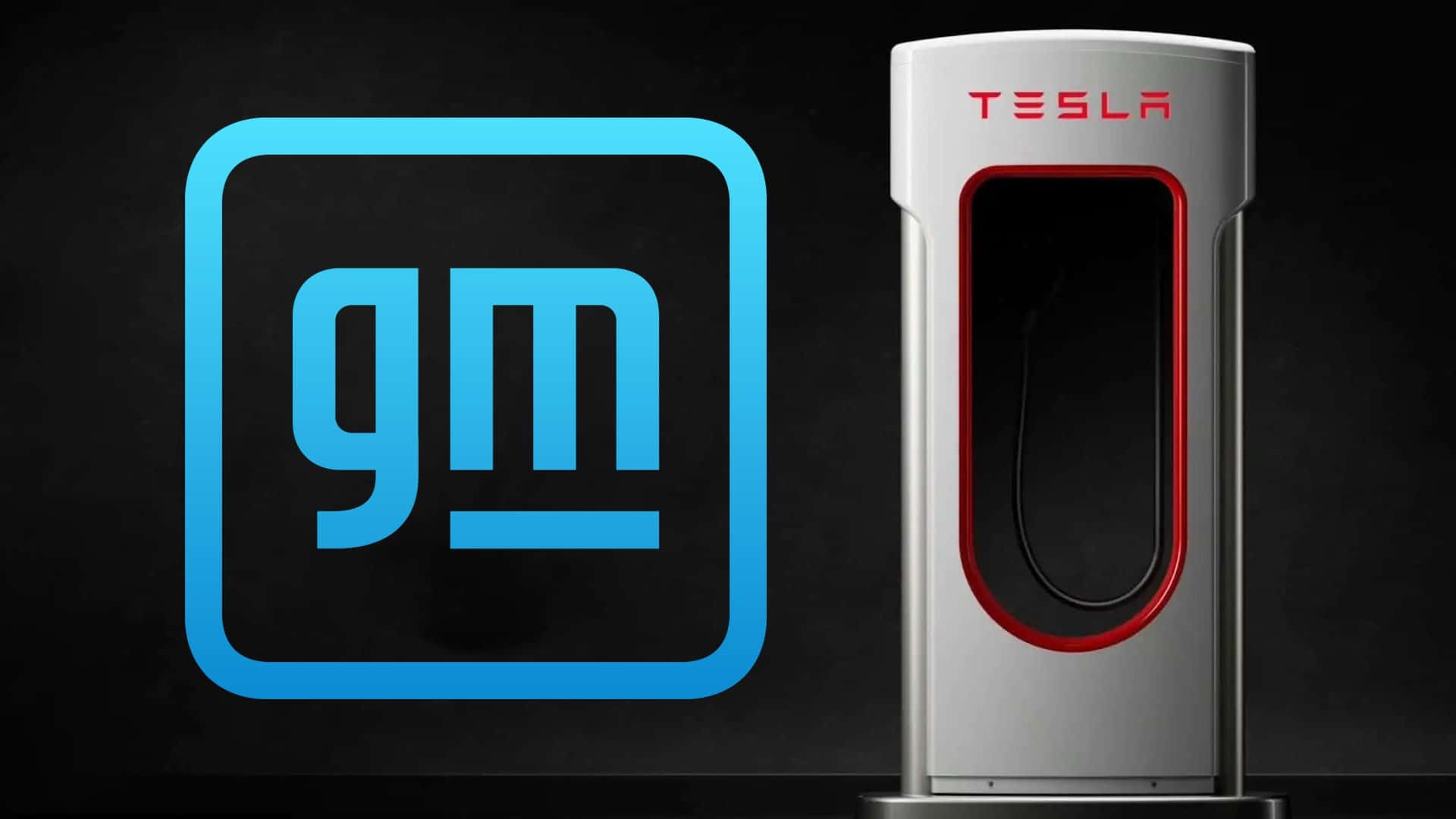
In a landmark announcement poised to significantly redefine the landscape of electric vehicle (EV) charging in North America, General Motors (GM) has officially confirmed its commitment to integrate Tesla’s North American Charging Standard (NACS). This strategic decision will grant GM’s extensive base of electric vehicle owners unprecedented access to Tesla’s formidable 12,000-unit Supercharger network, commencing in the spring of 2024. The move underscores a growing industry consensus towards a unified charging solution, enhancing convenience and addressing critical infrastructure concerns for EV drivers across the continent.
The declaration, made by GM CEO Mary Barra during a Twitter Spaces session with Tesla founder Elon Musk, mirrors a similar commitment made by Ford a few weeks prior. This alignment by two of America’s largest automakers signals a potent shift in the ongoing evolution of electric mobility. It is expected to dramatically improve the charging experience and alleviate range anxiety for hundreds of thousands of EV users.
Key Takeaways (TL;DR)
- General Motors (GM) announced its adoption of Tesla’s North American Charging Standard (NACS), granting its EV owners access to Tesla’s extensive Supercharger network.
- Existing GM EV owners will receive adapters in spring 2024, enabling them to use Tesla’s 12,000 fast chargers.
- Future GM electric vehicles, starting in 2025, will feature native integration of the Tesla charging standard directly into their design.
- GM will seamlessly integrate the Tesla Supercharger Network into its vehicle and mobile applications, streamlining the process of locating, paying for, and initiating charging sessions.
- Following Ford’s earlier adoption, this decision by GM reinforces NACS as a dominant force in North American EV charging infrastructure, poised to significantly benefit over 300,000 American EV drivers.
A Pivotal Shift in EV Charging Infrastructure
General Motors CEO Mary Barra’s confirmation marks a pivotal moment for the automotive sector and the burgeoning electric vehicle market. By embracing the Tesla charging standard, GM is directly addressing one of the primary challenges for EV adoption: access to reliable and widespread charging solutions. This collaboration is set to simplify the electric vehicle ownership experience for countless consumers.
Barra articulated the immediate benefits and future trajectory of this integration. She stated, “What’s even more exciting is that our existing EV customers can leverage the 12,000 Tesla fast chargers early next spring with an adapter.” This initiative provides a tangible solution for current EV owners, offering a significant expansion of available fast-charging points.
Immediate Access for Current GM EV Owners
The first phase of this transition will see existing GM electric vehicle owners receive an adapter, slated for distribution sometime in early 2024. This adapter will serve as a bridge, allowing them to connect their vehicles to the extensive Tesla Supercharger network. This means access to an additional 12,000 fast-charging units, considerably easing concerns about charging availability during long-distance travel or in underserved areas.
This rapid provision of adapters ensures that the benefits of the expanded charging infrastructure are not limited to future vehicle models. It demonstrates a commitment to enhancing the value proposition for current owners who have already invested in GM’s electric vehicle technology. The enhanced public charging access is a crucial step towards reducing range anxiety.
Seamless Integration for Future Electric Vehicles
Looking ahead, GM’s future electric vehicles will integrate the Tesla charging standard directly. Barra further elaborated on this long-term strategy, stating, “We plan to adopt the North American charging standard, we’re working really hard that our first vehicle will come in 2025.” This native integration eliminates the need for adapters, offering a more streamlined and aesthetically pleasing charging experience.
Beyond physical compatibility, GM revealed plans for deep digital integration with the Tesla Supercharger Network. The company affirmed that “GM will also integrate the Tesla Supercharger Network into its vehicle and mobile apps, helping drivers quickly and easily locate, pay for, and initiate charging at available Tesla Superchargers.” This comprehensive integration is crucial, as it vastly simplifies the charging process by eliminating the need to use some sort of third-party access to carry out the charging and payment process, fostering greater user convenience and accessibility for electric vehicle charging.
The Expanding Dominance of Tesla Charging Standard
The announcement from General Motors comes on the heels of a similar declaration by Ford in late May, signifying a broader industry trend towards a harmonized electric vehicle charging infrastructure. With both automotive giants now on board, a substantial number of American EV drivers are set to experience a significant improvement in fast charging capabilities. This collective action is poised to accelerate the transition to electric mobility.
Cumulatively, these decisions impact an impressive segment of the EV market. The move will suddenly benefit some 300,000 American EV drivers, enhancing their ability to recharge conveniently and efficiently. This figure includes over 170,000 Battery Electric Vehicles (BEVs) sold by General Motors, although it is noted that not all of these are fast-charge capable. Additionally, it encompasses over 108,000 Ford BEVs, primarily comprising newer models such as the Mach-E, F-150 Lightning, and E-Transit.
Industry Leaders Speak on the Transformation
The significance of these developments was not lost on the industry leaders involved. During their joint Twitter Spaces conversation, both Mary Barra and Elon Musk reflected on the current epoch. They commented on this time as “one of the most exciting” for the automotive industry, highlighting the rapid pace of innovation.
Elon Musk concurred, emphasizing the historical weight of the moment. He agreed that “we are at one of the great inflection points in vehicles … comparable to the moving production line.” This comparison underscores the transformative potential of standardized EV charging infrastructure, suggesting a foundational shift akin to early 20th-century automotive advancements. The establishment of a widespread, accessible Tesla charging standard is indeed a game-changer for electric vehicles.
Reshaping North America’s EV Charging Landscape
The strategic decisions by Ford and General Motors to adopt Tesla’s North American Charging Standard (NACS) represent a decisive turn in the ongoing ‘charging standards battle’ that has characterized the North American electric vehicle market. For years, the landscape has been fragmented, with various charging solutions vying for dominance. This new alignment significantly reshapes that competitive environment.
Historically, the market has witnessed the slow demise of CHAdeMO, a charging standard primarily used by Nissan and Mitsubishi. Simultaneously, the Combined Charging System (CCS1) emerged as a prominent standard, adopted by numerous non-Tesla automakers. However, with the embrace of NACS by two major players and some smaller innovators like Aptera, the question now arises: “will these moves by Ford and GM mark the start of the fall of CCS1?” This question, directly posed in the original reporting, highlights the profound implications for future electric vehicle charging infrastructure.
Implications for Competition and Consumer Choice
The widespread adoption of the Tesla charging standard could lead to increased interoperability across the entire EV ecosystem. This would benefit consumers by simplifying vehicle choice, as charging compatibility becomes less of a concern. Automakers might face pressure to conform to the prevailing standard, potentially accelerating NACS adoption among other brands.
For consumers, this translates to reduced range anxiety and greater confidence in long-distance travel. The existing investment in public charging infrastructure by Tesla, combined with broad industry adoption, creates a powerful network effect. This can foster a more robust and user-friendly environment for electric vehicle ownership, driving further market growth and consumer uptake of electric vehicles.
A Collaborative Future for Electric Mobility
The convergence around the Tesla charging standard signals a maturing electric vehicle market ready for more cohesive infrastructure development. This collaboration between industry giants, rather than continued fragmentation, promises a more streamlined and efficient future for electric mobility. It suggests a growing recognition that collective efforts are essential to overcome the barriers to widespread EV adoption.
Such moves are critical for fulfilling the promise of electric vehicles to transform personal transportation and contribute to environmental sustainability. By ensuring robust, accessible, and user-friendly charging options, the automotive industry can significantly accelerate the transition away from fossil fuel dependency. The standardization facilitated by NACS adoption is a monumental step towards achieving a fully electric future, improving the overall EV charging experience for millions.
Frequently Asked Questions (FAQ)
What is the North American Charging Standard (NACS)?
NACS is Tesla’s proprietary charging connector design, which the company has since opened for use by other automakers. It is a compact and efficient connector that supports both AC and DC charging. Its widespread deployment through the Tesla Supercharger network has made it a leading contender for the dominant EV charging standard in North America.
When will GM EV owners gain access to Tesla Superchargers?
General Motors has confirmed that its existing electric vehicle owners will be able to access the Tesla Supercharger network starting in the spring of 2024. This initial access will be facilitated through an adapter provided by GM, allowing compatibility with the Tesla charging standard across their current EV fleet.
Will new GM EVs come with native Tesla charging standard support?
Yes, GM plans to integrate the Tesla charging standard directly into its future electric vehicles. The company anticipates that its first EV model with native NACS compatibility will be introduced in 2025. This will eliminate the need for adapters for new vehicle purchases, offering a seamless charging experience.
How will GM EV drivers locate and pay for Supercharger access?
GM is integrating the Tesla Supercharger Network into its vehicle and mobile applications. This means drivers will be able to quickly and easily locate available Tesla Superchargers, initiate charging sessions, and manage payments directly through GM’s familiar digital platforms. This significantly simplifies the user experience for electric vehicle charging.
What does this mean for the CCS1 charging standard?
The adoption of the Tesla charging standard by major automakers like Ford and General Motors casts significant doubt on the long-term viability of CCS1 as the primary standard in North America. While CCS1 is still widely used, these strategic shifts by industry leaders suggest a potential decline in its dominance, moving towards a more unified NACS ecosystem for EV charging infrastructure.
How many EV drivers will benefit from this change?
Combined with Ford’s earlier announcement, GM’s decision will immediately benefit approximately 300,000 American EV drivers. This includes over 170,000 Battery Electric Vehicles (BEVs) sold by General Motors and more than 108,000 Ford BEVs. This expanded access to fast-charging options is expected to greatly improve the overall electric vehicle ownership experience.