
Key Takeaways:
- An elderly couple, aged 60s and 70s, residing in rural North Carolina, successfully transitioned to a full electric vehicle (EV) lifestyle, debunking common concerns about EV adoption outside major urban centers.
- Despite having limited prior knowledge of electric vehicles and no initial home charging infrastructure, they quickly adapted and discovered the inherent benefits of EV ownership.
- The decision to switch from conventional gasoline cars, including a Lincoln Corsair and a Mini Cooper, to a Hyundai Ioniq 6 was unexpected, even by their closest family members.
- The installation of a home charging solution proved to be a pivotal factor, transforming their daily routine and eliminating range anxiety for local commutes and even longer road trips.
- Their experience highlights that the convenience, reduced reliance on gas stations, and seamless operation of EVs can resonate strongly with diverse demographics, proving that the technology ‘sells itself’ to unexpected early adopters.
RALEIGH, North Carolina – In a surprising turn that challenges conventional perceptions of electric vehicle (EV) adoption, an elderly couple residing in the rural expanse of North Carolina has fully embraced an all-electric lifestyle. This unexpected transition, made by individuals in their 60s and 70s living an hour away from the nearest major city, offers a compelling real-world case study on the accessibility and growing appeal of electric vehicles, even for demographics traditionally deemed late adopters.
The couple’s decision to replace both their gas-powered Lincoln Corsair and Mini Cooper with a Hyundai Ioniq 6 initially prompted apprehension from their family, particularly concerning the logistics of EV ownership in an area with sparse charging infrastructure. However, their subsequent experience has not only alleviated these concerns but has also illuminated the straightforward benefits of electric vehicle ownership.
An Unforeseen Leap into Electric Mobility
The journey towards full electrification was largely unforeseen. Both parents had a long-standing association with Ford Motor Company, with the father having retired from the firm in the 2010s. This history meant their vehicle choices typically gravitated towards Ford products, often leveraging retiree discounts for leases on small crossovers.
Initial Considerations and Misconceptions
Their earlier attempts to lease a Ford Maverick Hybrid indicated a nascent interest in electrified transport. Over the preceding 18 months, casual conversations sometimes touched upon hybrid models such as the Toyota Venza or Honda Civic Hybrid. Yet, their understanding of electrification appeared limited, with some believing that many hybrids required plugging in, and expressing hesitation about the charging infrastructure needed for a Plug-in Hybrid Electric Vehicle (PHEV).
They were often reassured that several models, like the new Toyota Prius, were available in non-PHEV variants and did not necessitate external charging. This background suggested a gradual progression towards mild electrification, rather than an immediate full dive into battery-electric vehicles.
The Pivotal Decision: Hyundai Ioniq 6
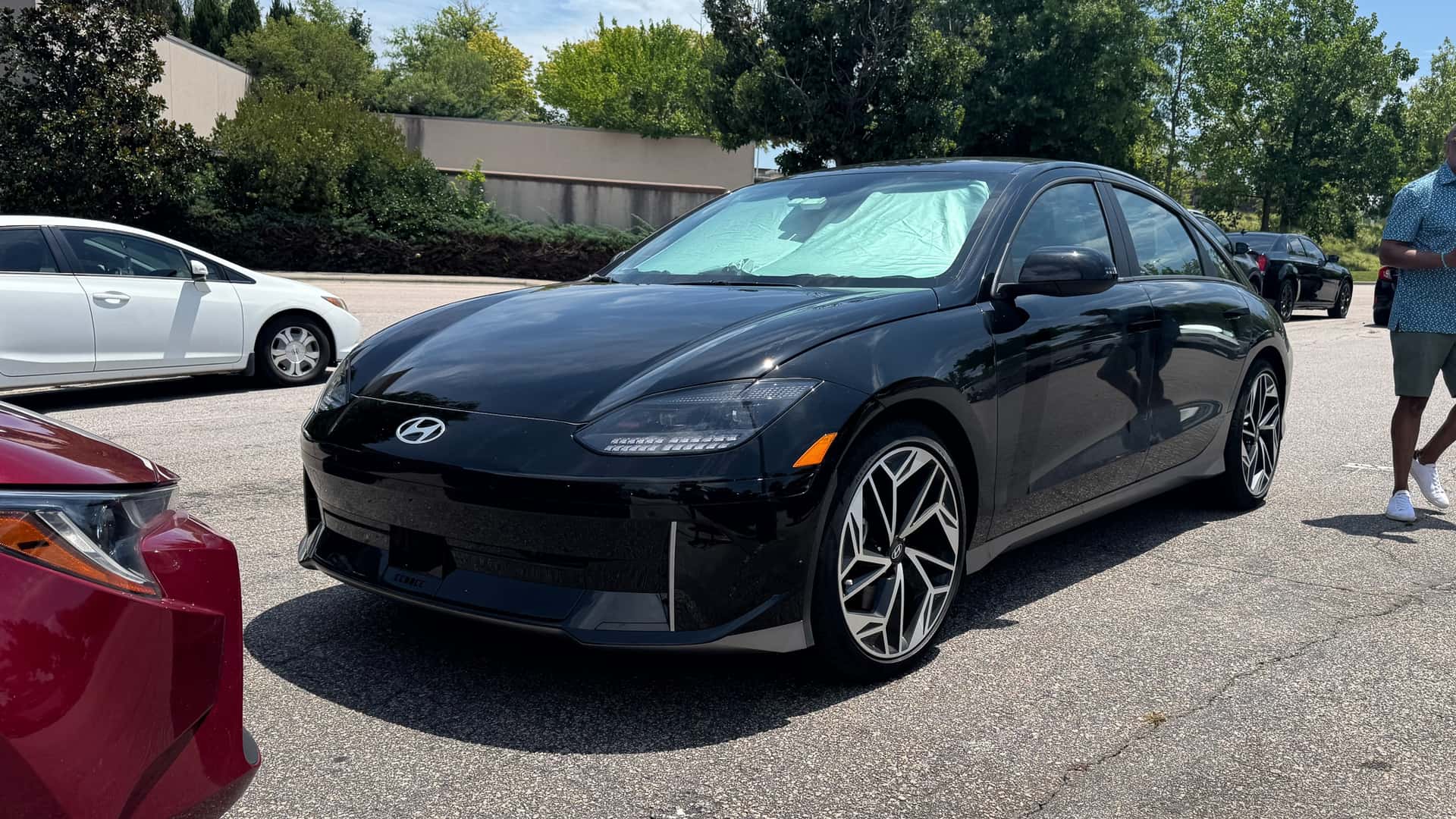
The turning point arrived abruptly in March, when the father inquired about the 2025 Ioniq 6 via text. This query, in hindsight, was less coincidental than it first appeared, aligning with news of the model’s cancellation in the U.S. and the subsequent attractive lease deals.
Just five days later, a subsequent text revealed the unexpected outcome: “Yesterday, we drove the Mustang Mach-E and liked it, but I thought they wanted too much even with my retiree discount,” the father wrote. He added, “Today, we drove the Ioniq 6. I loved it, and the price was right. It’s in our garage now.”
The Ioniq 6, a sleek electric sedan, met their practical criteria: a low-to-the-ground profile, suitability for their small garage, and a price point that promised reduced expenses compared to previous vehicles like the Mini Countryman S and SE or the Toyota Prius Prime. The swift acquisition, however, initially raised alarms due to the absence of home charging and the significant distance to the nearest public fast chargers.
Navigating Rural EV Living Without Prior Infrastructure
The initial concerns centered on the viability of electric vehicle ownership in their rural setting. With no existing home charging setup and the closest DC fast charger a taxing 30 minutes away, the prospect of managing an EV as their sole mode of transport seemed daunting.
Overcoming Early Hurdles
Despite these initial infrastructural limitations, the couple’s quiet adaptation over the subsequent months suggested they were successfully managing. Their silence on the matter, devoid of complaints about range or charging difficulties, hinted at a smoother transition than anticipated.
Upon finally reconnecting, they confirmed the initial adjustment phase. “Yeah, those first couple of weeks took a bit of adjustment; charging bills were a little more expensive than we thought they’d be, and sometimes it doesn’t go as fast as we thought, either,” the mother recounted. However, the inherent convenience of EV driving quickly began to outweigh these minor initial drawbacks.
The Game-Changer: Home Charging Installation
The pivotal moment in their electric vehicle ownership experience was the installation of a Tesla Universal Wall Connector. This decision, funded by the sale of their Mini Cooper, proved transformative. Operating at 48 amps, the new home charging unit could efficiently recharge their Ioniq 6’s 77.4 kWh battery from empty to full overnight, providing unparalleled convenience and peace of mind.
With reliable home charging in place, the couple reported a drastic change in their daily EV experience. “Yeah, we don’t really even notice the power bill, to be honest. It’s gone up a little bit, but we really don’t even feel it,” the mother observed, indicating that the perceived cost increase was negligible in their overall budget.
The Unforeseen Advantages of an EV Lifestyle
The couple’s journey from apprehension to advocacy for electric vehicles underscores the intuitive appeal of the technology once initial hurdles are overcome. Their experience highlights several key advantages that resonated strongly with them.
Daily Convenience and Cost Benefits
The convenience of waking up to a fully charged vehicle every morning, ready for any local excursion, became a significant daily benefit. This eliminated the need for frequent trips to gas stations, a chore the mother explicitly expressed her newfound aversion to. “I never realized how much I didn’t ever really like going to gas stations. I don’t really ever want to have to go to them again,” she stated, articulating a common sentiment among EV owners.
The father echoed these sentiments, expressing enthusiasm for the ease of the charging process and the user-friendliness of public charging applications, even if still imperfect. The routine became one of simply unplugging the car and departing, free from range or charging anxiety for their typical movements.
Seamless Long-Distance Travel
Even road trips, a potential point of anxiety for EV owners, proved seamless for the couple. On a 400-mile journey to Atlanta, they reported needing only two charging stops – one on the outbound leg and another on the return. The Hyundai Ioniq 6’s EPA-rated 270-mile range proved more than sufficient, especially given their conservative driving speeds.
Interestingly, the charging stops, typically lasting around 30 minutes, were viewed as a welcome opportunity for rest and meals, turning a perceived inconvenience into a positive aspect of their travel. They described the experience as “relaxing,” a testament to the evolving user experience of long-distance EV travel.
A Broader Implication for EV Adoption
This couple’s successful transition to electric vehicle ownership offers significant insights into the broader landscape of EV adoption in America. Despite persistent narratives about the challenges of convincing everyday citizens, particularly those outside urban centers, to go electric, this case study demonstrates a powerful counter-narrative.
Their journey highlights that while initial speed bumps, such as understanding charging costs or the mechanics of public charging, are present, the fundamental advantages of electric vehicles can ultimately sway even the most unlikely candidates. The intrinsic benefits of quiet operation, instant torque, home refueling, and reduced environmental impact often speak for themselves, dissolving pre-conceived notions and anxieties.
The experience of these retirees in rural North Carolina serves as a compelling indicator: if electric vehicle life can win over a couple with practically zero prior electrification knowledge and initial infrastructural disadvantages, its potential to convert a vast segment of the population is demonstrably high.
Frequently Asked Questions About Rural EV Ownership
Is EV ownership feasible in rural areas?
Yes, as demonstrated by this case, EV ownership in rural areas is feasible, especially with the installation of home charging infrastructure. While public charging options may be sparser, a dedicated home charger significantly mitigates range anxiety and daily charging concerns.
What are the primary challenges for seniors adopting EVs?
Initial challenges for seniors adopting EVs often include understanding charging logistics, navigating new technology interfaces, and overcoming long-held habits associated with gasoline vehicles. However, the inherent simplicity and convenience of EVs can quickly make these initial hurdles negligible.
How important is home charging for rural EV owners?
Home charging is critically important for rural EV owners. It provides the convenience of daily overnight refueling, eliminating dependence on potentially distant or limited public charging stations. It transforms the EV experience from a logistical challenge into a seamless part of daily life.
Do EVs make long road trips difficult in rural settings?
Modern EVs with adequate range, like the Hyundai Ioniq 6 with its 270-mile EPA rating, can handle long road trips even in rural settings. Strategic planning for charging stops, often integrated with meal or rest breaks, can make the journey efficient and even relaxing, as the article highlights.
Can EV ownership lead to cost savings for seniors?
Yes, EV ownership can lead to significant cost savings. While initial charging bills might seem higher, the elimination of gasoline costs and reduced maintenance requirements often result in overall lower operational expenses. This can be particularly beneficial for retirees managing fixed incomes.
What makes the Hyundai Ioniq 6 suitable for this demographic?
The Hyundai Ioniq 6, as noted in the article, met the couple’s criteria for being low to the ground and suitable for a small garage. Its comfortable ride, sufficient range, and competitive pricing likely contributed to its appeal, making it a practical choice for their lifestyle needs.