
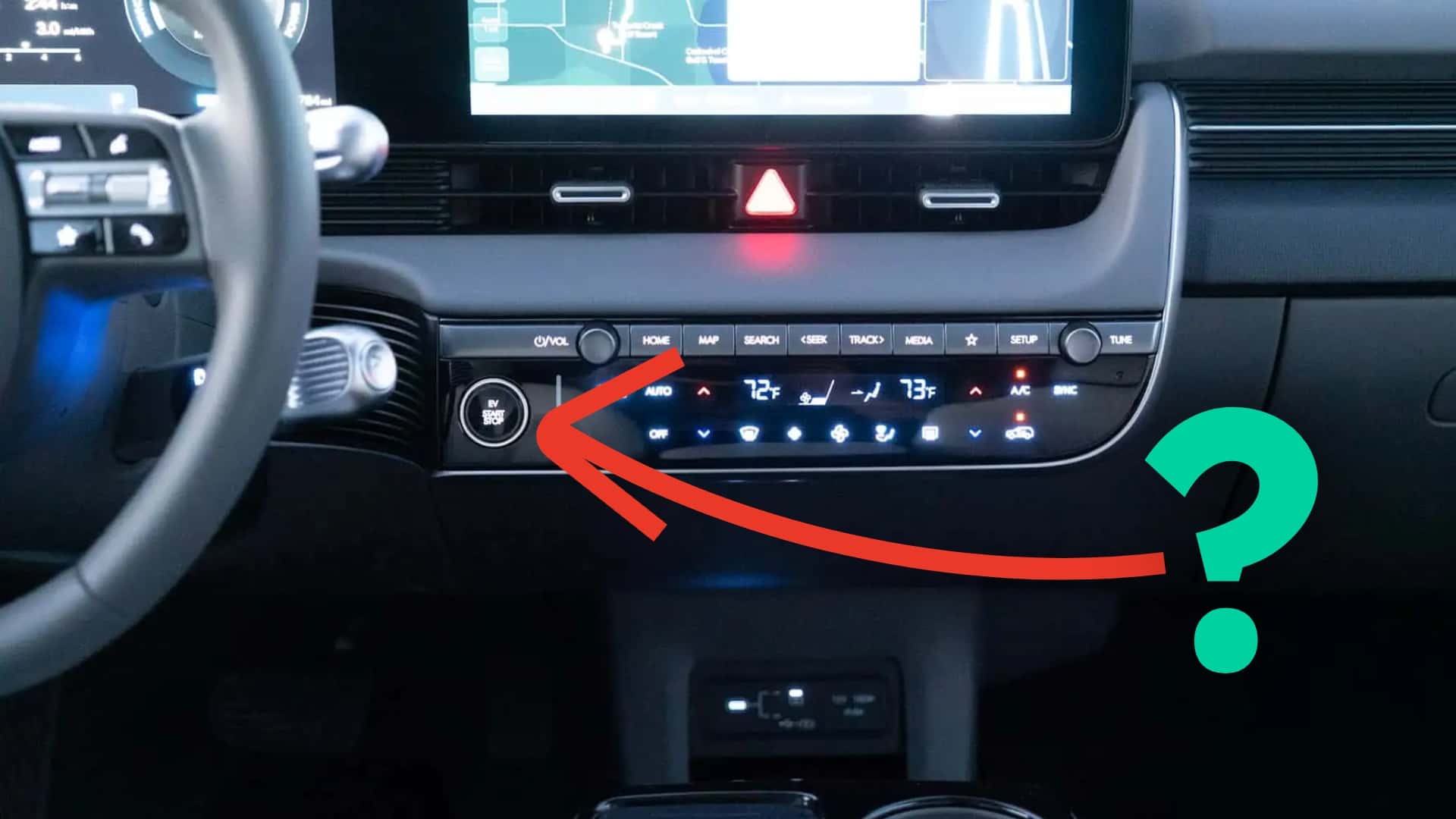
Key Takeaways (TL;DR):
- Many electric vehicles (EVs) retain a start/stop button despite its functional redundancy compared to internal combustion engine (ICE) cars.
- Pioneering EV brands like Tesla, Rivian, and Lucid have adopted a button-less system, where the vehicle ‘wakes up’ upon brake pedal engagement and ‘shuts down’ when parked and exited.
- Legacy automakers often keep the EV start/stop button to provide familiarity for drivers transitioning from traditional gasoline vehicles, aiming to ease the learning curve.
- Industry experts and manufacturers suggest this design choice acts as a ‘security blanket’ for new EV owners, indicating a clear ‘READY’ state for driving.
- The debate extends to other carried-over ICE features, such as simulated gears or artificial ‘creep,’ highlighting a tension between innovation and consumer comfort.
In the rapidly evolving landscape of electric mobility, a seemingly minor yet persistent design element continues to spark discussion among automotive enthusiasts and industry experts: the EV start/stop button. For many drivers accustomed to the quiet efficiency of modern electric vehicles, encountering a physical button to ‘start’ or ‘stop’ an electric powertrain feels increasingly anachronistic. This functional redundancy in electric vehicles poses a unique paradox for manufacturers navigating the transition from traditional internal combustion engines (ICE).

The experience is often highlighted by those who frequently interact with diverse vehicle fleets. For instance, a common scenario involves parking a silent EV, exiting, and being met with persistent alerts such as “Key not in vehicle.” The only way to silence these warnings is to re-enter the vehicle and manually press the start/stop button to power down the system, an action unnecessary in many contemporary EV models.
The Functional Redundancy in Electric Vehicles
The very purpose of a start/stop button originated from the mechanics of an internal combustion engine. In a gasoline-powered car, this button serves a critical function: engaging the starter motor to ignite the engine. Once running, the engine powers various high-draw systems like air conditioning and ensures the vehicle is ready for operation. The driver’s conscious decision to turn the engine off is fundamental to its operation and energy management.
However, an electric vehicle operates fundamentally differently. There is no engine to ‘start’ in the traditional sense, and consequently, nothing that genuinely needs to ‘stop.’ The electric motor is always ready, simply awaiting a power input command from the driver. In this context, a start/stop button primarily serves to transition an EV from an ‘on’ state to an ‘even more on’ or ‘ready-to-drive’ state, a distinction that many argue is superfluous.

The Evolution of Automotive Ignition and Driver Interface
The history of automotive interaction points towards a continuous drive for simplification and seamless user experience. Decades ago, drivers manually inserted keys into an ignition and turned them. This evolved into the convenience of keyless entry and push-button start systems, which, at their introduction, significantly streamlined the act of getting a car ready to drive.
These innovations were adopted because they eliminated extra steps, making the overall experience easier and more intuitive. The move away from the EV start/stop button represents the next logical progression in this pursuit of a more fluid driver interface, aligning automotive operation with the instantaneous nature of modern digital devices.
Pioneering a Seamless Electric Mobility Experience
The trend towards eliminating the start/stop button was notably pioneered by Tesla with its Model S more than a decade ago. Tesla’s approach redefined the driver’s interaction with the vehicle. To ‘start’ a Tesla, a driver simply enters the car with a paired smartphone or key fob, presses the brake pedal to wake the vehicle’s systems, and then shifts into gear.
Conversely, to ‘stop’ the vehicle, the driver merely places the car in park and exits. This intuitive, almost automatic process minimizes unnecessary physical inputs and creates a highly integrated user experience. This design philosophy has since been adopted by other tech-forward, EV-focused brands, including Rivian, Lucid, and Polestar, as well as some legacy automakers like Volvo and General Motors.
Analogies from Modern Technology
The seamlessness of a button-less EV experience draws parallels to everyday consumer electronics. Consider a modern smartphone with FaceID or fingerprint recognition: users don’t manually ‘turn on’ or ‘turn off’ their devices with each interaction. Instead, they wake up when engaged and go to sleep when idle. This principle of ‘wake on use, sleep on disuse’ is increasingly seen as the benchmark for intuitive digital interaction, and its application in electric vehicle technology reflects a natural progression.
The Rationale Behind Retention: Bridging the Familiarity Gap
Despite the logical case for its removal, the EV start/stop button persists in many new electric models. This retention often stems from a strategic decision by manufacturers to ease the transition for first-time EV buyers, particularly those moving from traditional internal combustion engine vehicles. The primary goal is to provide a sense of familiarity and security.
Ed Kim, president and chief analyst at AutoPacific, a prominent market research firm, articulated this perspective, stating, “Having that start button in some ways is still kind of a security blanket.” He added that “For the uninitiated, not having a way to manually turn the car on and off feels weird.” This suggests that for many consumers, the physical act of pressing a button provides psychological reassurance about the vehicle’s operational status.
Hyundai, a manufacturer known for its strong EV offerings, echoed this sentiment. A company spokesperson explained, “While some EV manufacturers have chosen to eliminate the start/stop button, Hyundai continues to use it on its EVs because it gives drivers a clear indication that the vehicle has entered its READY state and is prepared to drive.” They emphasized that “For many customers, especially those moving from ICE vehicles to an EV for the first time, this familiar interaction helps reduce the learning curve and creates a seamless transition to electric mobility.”
Similarly, a Toyota spokesperson affirmed that the on button “gives customers an EV experience that feels familiar and is easy to use.” These statements underscore a shared industry strategy: prioritizing consumer comfort and familiarity during a significant technological shift, even if it means incorporating a technically redundant feature.
Beyond On/Off: Functional Considerations and Workarounds
While the core ‘start/stop’ function is redundant, a physical button does offer certain distinct benefits. For instance, drivers might want to force the car to remain ‘on’ even after exiting, perhaps to keep the air conditioning running for pets or passengers. In button-less systems, this functionality is often provided through digital alternatives, such as a ‘pet mode’ or a ‘leave on’ setting accessible via the central touchscreen interface.
Volkswagen EVs, for example, do not require a button push for routine starting or stopping but include a discreetly mounted button on the steering column for these specific control purposes. Additionally, the ability to easily restart a vehicle when it experiences a software glitch or other minor issue can be a practical advantage of a physical power button, as pointed out by AutoPacific’s Ed Kim.
The Broader Debate: Retaining ICE Legacy Features
The discussion around the EV start/stop button is symptomatic of a larger industry debate: which features from the internal combustion era should be carried over into electric vehicles, and which are best left behind? This question touches upon fundamental aspects of automotive design and user experience in the age of electric mobility.
Examples abound where manufacturers blend traditional and innovative elements. Some Porsche and Hyundai electric vehicles incorporate simulated ‘gears’ that drivers can ‘shift,’ mimicking a manual transmission experience. The upcoming Dodge Charger EV, for instance, is designed to project artificial engine noise outside the car, a feature aimed at replicating the visceral sound of a high-performance gasoline engine. Many EVs also include an artificial ‘creep’ function, where the car slowly moves forward when the foot is lifted from the brake pedal, a characteristic behavior of conventional automatic transmissions.
These design choices reflect a cautious approach by automakers, who are wary of alienating customers by making electric vehicles feel too alien or unfamiliar. The goal is often to provide a bridge between the driving experiences of the past and the future.
The Pitfalls of Over-Innovation in Automotive Design
While innovation is crucial, there’s a fine line between pioneering and alienating. Carmakers can sometimes go too far in their attempts to reinvent the in-car experience, leading to consumer backlash and usability issues. Tesla, for instance, faced significant criticism when it removed the traditional turn-signal stalk in its refreshed Model 3.
This decision, which replaced physical stalks with capacitive buttons on the steering wheel, proved unpopular enough that Tesla eventually reinstated the stalk in later models and avoided the same change in the refreshed Model Y. Similarly, Tesla’s move to delete the gear selector in favor of touchscreen swipes and a predictive ‘Auto Shift’ feature (still in beta) has generated mixed reactions.
Furthermore, the shift towards screen-operated functionalities, such as adjusting air vents via a touchscreen in some Teslas and Rivians, is often perceived by users as a downgrade from the simpler, more tactile control offered by physical tabs. These instances highlight the importance of balancing technological advancement with practical usability and established driver expectations.
Towards an Intuitive Future in Electric Mobility
Ultimately, the continued presence of the EV start/stop button is a reflection of the automotive industry’s ongoing negotiation between heritage and innovation. While it may serve as a ‘security blanket’ for some new electric vehicle owners, the broader trend in modern electric vehicle technology points towards a more integrated, intuitive, and ultimately button-less driver interface.
As electric vehicles become increasingly mainstream, and drivers grow more accustomed to their unique operational characteristics, features like the EV start/stop button are likely to recede into automotive history. The future of electric mobility promises an even more seamless and user-centric driving experience, where the car intelligently anticipates and responds to the driver’s intent without redundant manual inputs.
Frequently Asked Questions (FAQ)
Q1: Why do some electric vehicles still have a start/stop button?
Many legacy automakers retain the EV start/stop button primarily for familiarity. It helps drivers transitioning from gasoline cars feel more comfortable and provides a clear signal that the vehicle is in a ‘READY’ state, reducing the learning curve for new electric mobility users.
Q2: What is the main argument against having an EV start/stop button?
The main argument is functional redundancy. Unlike gasoline engines that need to be started, an EV’s electric motor is always ready. The button doesn’t ‘start’ anything; it merely activates the drive systems, which can be done seamlessly by pressing the brake and shifting into gear.
Q3: Which EV brands have eliminated the start/stop button?
Pioneering EV brands such as Tesla, Rivian, Lucid, and Polestar have largely eliminated the traditional EV start/stop button. Some legacy automakers like Volvo and General Motors have also adopted this button-less approach in certain electric models, focusing on a more intuitive ‘get-in-and-go’ experience.
Q4: Are there any benefits to having a physical EV start/stop button?
Yes, some benefits include the ability to explicitly force the car to stay ‘on’ (e.g., for continuous air conditioning) or to easily restart the system in case of a minor electronic glitch. However, many button-less EVs offer digital alternatives for these functionalities.
Q5: How do button-less EVs ‘start’ and ‘stop’?
In button-less electric vehicles, you typically ‘start’ by simply entering the vehicle with the key or phone, pressing the brake pedal to wake the car, and then shifting into drive. To ‘stop,’ you usually put the car in park and exit, at which point the vehicle powers down automatically.
Q6: Is the EV start/stop button part of a larger trend in automotive design?
Yes, the debate around the EV start/stop button is part of a broader discussion about which traditional features should carry over into electric vehicles. This includes features like simulated gear shifts, artificial engine noises, or ‘creep’ functionality, all aimed at easing the transition for drivers from ICE to electric models.