
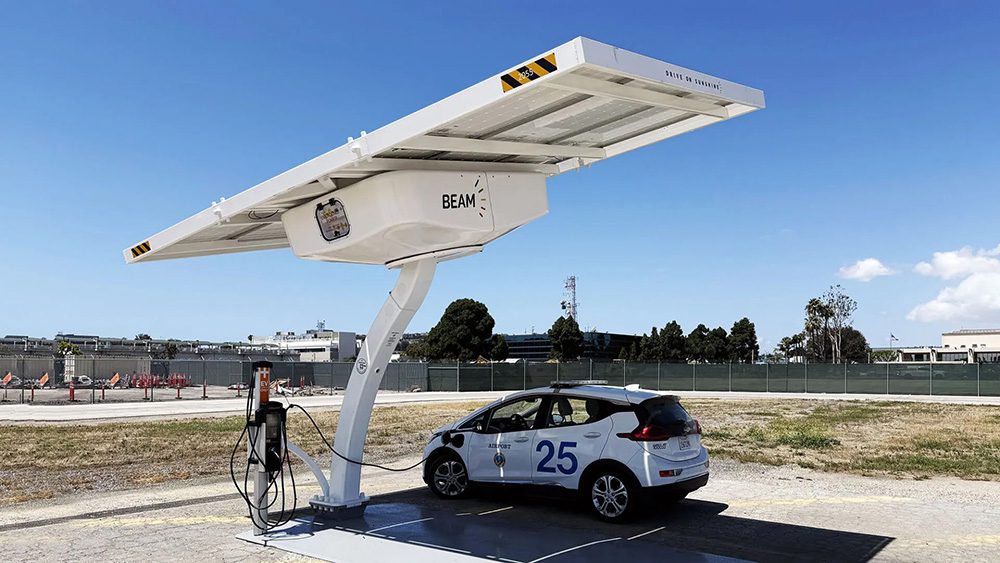
As the global transition to electric vehicles (EVs) accelerates, the demand for robust and resilient charging infrastructure has become paramount. Traditional grid-tied charging solutions often face challenges related to high installation costs, lengthy permitting processes, and vulnerabilities to grid outages. In this landscape, innovative
off-grid EV charging systems
are emerging as a vital alternative, providing rapid deployment and energy independence. Beam Global, a leading provider in this domain, continues to expand its footprint, recently securing a significant follow-on order from the City of Dallas and deploying its technology in a pioneering carshare pilot in Massachusetts.
Key Takeaways
- Beam Global has received a fourth order from the City of Dallas for ten EV ARC systems to support its growing municipal EV fleet, signifying sustained confidence in off-grid charging solutions.
- The EV ARC systems, which integrate solar panels, battery storage, and EV chargers, are designed for rapid deployment without requiring construction, trenching, or grid connections.
- In Massachusetts, Beam Global’s EV ARC systems are powering the CommunityEV Carshare pilot, a collaboration with Boston’s Metropolitan Area Planning Council (MAPC) and Zipcar, providing zero-cost electricity for shared EVs.
- Beam Global CEO Desmond Wheatley emphasizes the systems’ resilience against energy price fluctuations and geopolitical instabilities, offering users predictable ‘fuel’ costs.
- These deployments underscore the increasing adoption of solar-powered, battery-integrated EV charging infrastructure for both public and private sector fleets, enhancing energy independence and sustainability.
Revolutionizing EV Charging with Off-Grid Technology
Beam Global’s signature product, the EV ARC system, represents a paradigm shift in electric vehicle charging infrastructure. These self-contained units ingeniously incorporate solar panels for energy generation, robust battery storage for energy resilience, and integrated EV chargers, offering a comprehensive and autonomous charging solution.
One of the primary advantages of these innovative
off-grid EV charging systems
lies in their rapid deployability. Unlike conventional charging stations that demand extensive civil engineering work, trenching, and complex utility grid connections, EV ARC systems can be installed quickly and efficiently. This eliminates the need for electrical permitting, significantly reducing both the time and cost associated with infrastructure development.
The self-sufficient nature of these systems ensures that EV charging remains operational even during grid interruptions, enhancing energy security and resilience for critical services and public access points. This independence from the utility grid also translates into predictable operational costs, safeguarding users from fluctuating electricity prices.
Dallas Fortifies Municipal Fleet with Fourth EV ARC Order
The City of Dallas has reinforced its commitment to sustainable transportation and energy independence by placing a significant follow-on order for ten Beam Global EV ARC systems. These new units are slated for deployment later in 2026, further expanding the city’s robust infrastructure to support its burgeoning electric vehicle fleet.
This latest acquisition marks the fourth time Dallas has invested in Beam Global’s technology, following its initial purchase in 2025. Such repeat orders underscore the city’s satisfaction with the performance and reliability of these
off-grid EV charging systems
in supporting its daily municipal operations.
The procurement was streamlined through Beam Global’s General Services Administration (GSA) Multiple Award Schedule (MAS) contract. This federal contracting vehicle facilitates efficient purchasing for government entities, demonstrating the proven value and compliance of Beam Global’s offerings for public sector applications.
Predictable Costs Amid Global Instability
Desmond Wheatley, CEO of Beam Global, highlighted the strategic advantages of the EV ARC systems, particularly in a volatile global energy market. He emphasized the company’s extensive experience and market leadership:
“With thousands of EV ARC systems deployed across the US, Europe and the Middle East and 15 years of successful field operations with this product, we can say with confidence that no one can match our capabilities.”
Wheatley further underscored the financial stability offered by grid-independent charging:
“No EV ARC user has seen an increase in their fuel costs due to inflation, shortages or geopolitical instabilities such as those we are seeing in the Gulf today.”
This statement points to a crucial benefit for municipal fleets like Dallas’s, where budget predictability and operational continuity are paramount, safeguarding against external economic pressures.
Massachusetts Pilot Accelerates Carshare Electrification
Beyond municipal fleets, Beam Global’s
off-grid EV charging systems
are also playing a pivotal role in advancing community-level clean transportation initiatives. In Massachusetts, EV ARC systems have been integrated into the new CommunityEV Carshare pilot, an innovative program launched by Boston’s Metropolitan Area Planning Council (MAPC).
This groundbreaking pilot seamlessly combines Beam Global’s self-sustaining charging infrastructure with electric vehicles provided by Zipcar, a leading carsharing network. Currently, four EV ARC systems are operational across various locations in Greater Boston, providing essential charging services for the shared electric fleet.
Zero Unit Cost and Grid Independence
A key feature of the Massachusetts pilot is its ability to deliver EV charging with a zero unit cost for electricity. By generating and storing renewable energy directly on-site, the EV ARC systems eliminate the need to draw power from the local electric grid for these charging sessions. This not only offers significant cost savings but also reduces the carbon footprint associated with vehicle operation.
Each EV ARC system is engineered to generate and store sufficient renewable energy to support substantial daily usage. Specifically, each unit can enable up to 265 miles of driving per day and facilitate multiple Zipcar charging sessions without placing any additional demand on the local electricity grid. This capability is vital for densely populated urban areas where grid capacity can be a concern.
The MAPC is leveraging a rental model for these EV ARC systems, which establishes a new and recurring revenue stream for Beam Global. This approach allows communities to access advanced sustainable infrastructure without the upfront capital expenditure of a direct purchase, making clean transportation more accessible.
Desmond Wheatley reiterated the core advantages of these rapidly deployable solutions:
“With no construction and no connection to the grid, our rapidly deployed off-grid infrastructure solutions generate reliable electricity, but they don’t generate a utility bill, so people in these communities can access clean transportation options without delays and in the most cost-efficient manner.”
This highlights the dual benefit of environmental sustainability and economic efficiency, making electric mobility a practical reality for more communities.
The Broader Impact of Off-Grid EV Charging
The successful deployments in Dallas and Massachusetts underscore the growing importance of
off-grid EV charging systems
in the broader transition to electric vehicles. These solutions address critical infrastructure gaps, particularly in areas where traditional grid expansion is costly, complex, or time-consuming.
For municipal fleets, energy independence translates into operational stability and cost predictability, vital for public services. For carshare programs and community initiatives, it means equitable access to clean transportation, free from the constraints of grid limitations and utility costs.
Furthermore, these solar-powered, battery-integrated systems contribute significantly to energy resilience. In the face of increasing extreme weather events and potential grid vulnerabilities, having charging options that operate independently ensures continuity of service, especially for emergency response vehicles and public transportation.
The environmental benefits are also substantial. By relying on renewable solar energy, these systems reduce reliance on fossil fuels and lower greenhouse gas emissions associated with electricity generation. This aligns with global efforts to combat climate change and promotes cleaner air quality in urban environments.
Future Outlook for Sustainable EV Infrastructure
As governments and organizations worldwide prioritize decarbonization and sustainable development, the demand for advanced EV charging solutions like those offered by Beam Global is projected to surge. The ability to deploy charging infrastructure quickly, efficiently, and independently of the grid positions
off-grid EV charging systems
as a critical component of future smart cities and resilient energy networks.
Innovations in battery technology, solar panel efficiency, and intelligent energy management systems are continuously enhancing the capabilities and economic viability of these solutions. This trajectory promises a future where electric vehicle charging is not only ubiquitous but also environmentally sustainable and economically advantageous.
Beam Global’s continued success in securing repeat municipal orders and partnering on innovative public programs demonstrates the proven value and expanding market acceptance of truly grid-independent electric vehicle charging infrastructure.
Source: Beam Global
FAQ Section
What are Beam Global’s EV ARC systems?
Beam Global’s EV ARC systems are self-contained, solar-powered electric vehicle charging stations. They integrate solar panels for renewable energy generation, battery storage for continuous power, and EV chargers. These systems are designed for rapid deployment without requiring any construction, trenching, or connections to the utility grid, offering a highly flexible and resilient charging solution.
How do off-grid EV charging systems benefit municipal fleets?
Off-grid EV charging systems provide municipal fleets with several key benefits. They offer energy independence, protecting against grid outages and ensuring operational continuity. They also provide predictable ‘fuel’ costs, insulating fleets from electricity price fluctuations and geopolitical instabilities, which helps with budget management and long-term financial planning for public services.
What is the CommunityEV Carshare pilot in Massachusetts?
The CommunityEV Carshare pilot, launched by Boston’s Metropolitan Area Planning Council (MAPC), is an initiative to provide accessible and sustainable transportation options. It utilizes Beam Global’s EV ARC systems to power Zipcar’s electric vehicles in a carsharing model, allowing community members to access clean transportation without the burden of vehicle ownership or high charging costs.
Do EV ARC systems increase demand on the local electric grid?
No, EV ARC systems are specifically designed to operate independently of the local electric grid. They generate and store all the necessary energy on-site using solar power. This means they do not draw electricity from the grid, thereby avoiding any increase in demand and contributing to grid stability, especially in areas with limited infrastructure capacity.
What are the economic advantages of using EV ARC systems?
The economic advantages include zero unit cost for electricity, as the power is generated renewably on-site. There are also significant savings from avoiding construction, trenching, and utility connection costs, as well as the ongoing benefit of no utility bills for charging. This leads to lower total cost of ownership and predictable operational expenses for users and fleet operators.
How much driving range can an EV ARC system support daily?
Each EV ARC system is capable of generating and storing enough renewable energy to support approximately 265 miles of driving range per day. This capacity allows for multiple charging sessions daily, making them suitable for busy applications like municipal fleets or carshare programs where vehicles are frequently used and require recharging.