
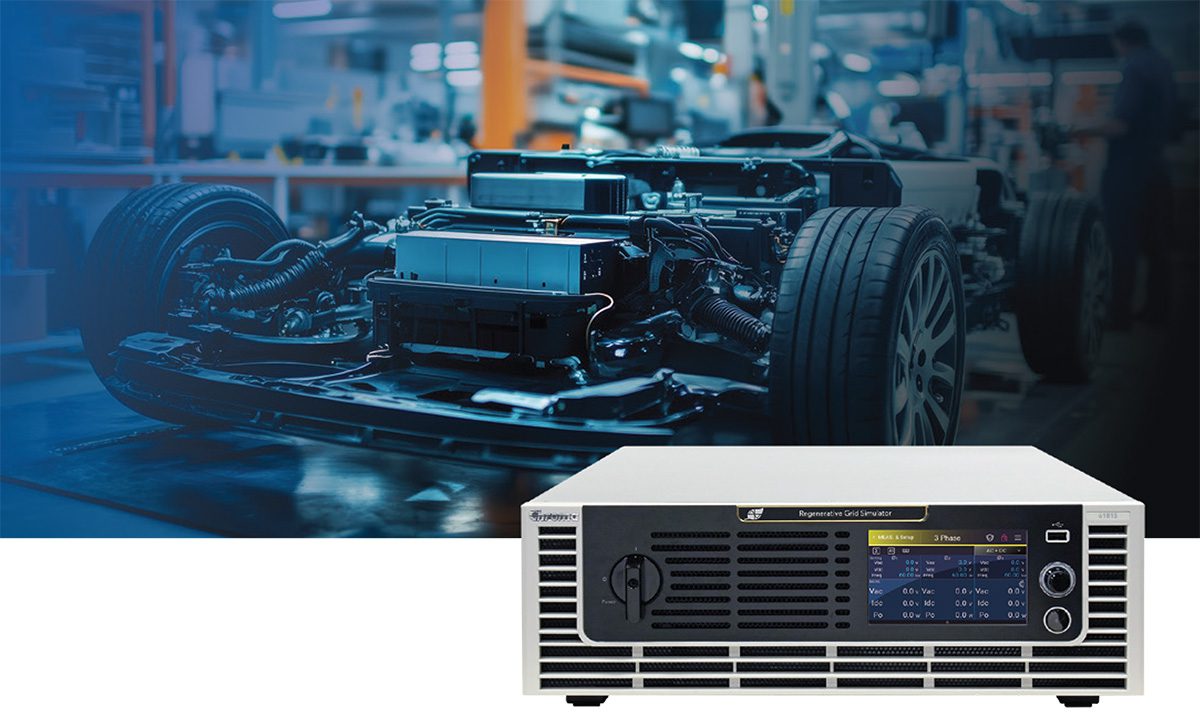
Key Takeaways:
- Bidirectional Onboard Chargers (BOBCs) are crucial for electric vehicles, enabling both battery charging and energy export via Vehicle-to-Grid (V2G) and Vehicle-to-Load (V2L) functionalities.
- V2L technology empowers EVs as mobile power sources for appliances, tools, and outdoor equipment, enhancing energy flexibility and supporting the low-carbon transition.
- Comprehensive and efficient testing is paramount for V2L systems to ensure safety, performance, and compliance across diverse real-world scenarios.
- Programmable AC load simulation emerges as a robust solution to overcome V2L testing challenges, allowing precise replication of various electrical loads and grid conditions.
- Advanced testing methodologies are essential for accelerating the development and widespread adoption of reliable and safe V2L-enabled electric vehicles.
The Pivotal Role of Bidirectional Onboard Chargers in EV Evolution
At the heart of modern electric vehicle (EV) energy architecture lies the bidirectional onboard charger (BOBC). Far beyond merely replenishing an EV’s battery, BOBCs are engineered to facilitate a dynamic, two-way energy exchange. This capability allows power to flow not only into the vehicle for charging but also out from the battery to external systems.
This transformative feature unlocks dual value for electric vehicles. They function simultaneously as efficient means of transportation and as potent mobile energy storage systems. The bidirectional flow is primarily realised through innovative power conversion modes such as Vehicle-to-Grid (V2G) and Vehicle-to-Load (V2L).

Beyond Mobility: The Rise of Vehicle-to-Load (V2L) Technology
Among these advancements, V2L technology stands out for its immediate and practical applications. It empowers an EV to become a versatile power source, capable of directly energising household appliances, various tools, or outdoor equipment. This functionality significantly broadens the everyday utility of electric vehicles, extending their value proposition beyond simple transportation.
The integration of V2L technology with renewable energy systems marks a substantial leap forward in energy management. It dramatically improves overall energy flexibility, allowing for more adaptive and resilient power distribution. Ultimately, V2L is recognised as a critical enabler for the global low-carbon transition, fostering a more sustainable and decentralised energy ecosystem.
Navigating the Intricacies of V2L System Development
While the promise of V2L is immense, its successful implementation hinges on meticulous engineering and rigorous validation. The complexities inherent in designing and integrating bidirectional power flow systems present significant hurdles for manufacturers. These systems must seamlessly handle varying power demands, maintain stability, and ensure the safety of both the vehicle and connected loads.
Developing a robust V2L system requires overcoming challenges related to power electronics efficiency, thermal management, electromagnetic compatibility (EMC), and sophisticated control algorithms. Each component must function harmoniously to deliver reliable power under diverse operational conditions, from powering a single appliance to acting as an emergency backup for a home.
Addressing Core Challenges in Bidirectional Onboard Charger V2L Testing
The imperative for comprehensive testing of V2L systems cannot be overstated. Ensuring optimal performance, safety, and regulatory compliance across a multitude of real-world scenarios is critical for widespread adoption. However, the unique characteristics of bidirectional power flow introduce several complex bidirectional onboard charger V2L testing challenges.
Firstly, the variability of connected loads presents a significant hurdle. V2L systems must reliably power a vast array of devices, each with distinct electrical characteristics, including resistive, inductive, and capacitive loads. Simulating these diverse load profiles accurately during testing is essential but can be difficult without advanced equipment.
Secondly, considerations around anti-islanding protection are paramount. When an EV is connected to the grid (even indirectly via a home or office electrical system), it must be able to detect a grid outage and safely disconnect to prevent feeding power into a de-energised grid. This protects utility workers and prevents equipment damage, requiring precise detection and rapid response mechanisms that must be thoroughly validated.
Ensuring Safety and Performance Under Diverse Scenarios
Beyond load variability, the dynamic nature of an EV battery’s state of charge impacts its power delivery capabilities. Testing must account for how V2L performance changes as the battery drains, ensuring consistent output voltage and current under diminishing energy reserves. Thermal management during continuous discharge also demands rigorous validation to prevent overheating and ensure component longevity.
Furthermore, electromagnetic compatibility (EMC) is a crucial aspect of bidirectional onboard charger V2L testing. The rapid switching of power electronics can generate electromagnetic interference, potentially affecting other vehicle systems or nearby electronics. Comprehensive EMC testing ensures that V2L operations do not compromise the functionality or safety of the EV or its surroundings.
Compliance with global electrical safety standards and regional grid codes is another non-negotiable requirement. V2L systems must meet stringent regulations concerning insulation, grounding, overcurrent protection, and fault detection. Simulating fault conditions and validating the system’s protective responses accurately are vital steps in achieving certification and market readiness.
Advanced Solutions for Comprehensive V2L Validation
To address these intricate bidirectional onboard charger V2L testing challenges, the industry requires sophisticated and adaptable testing solutions. Traditional testing methods often fall short in replicating the dynamic and varied conditions an EV’s V2L system encounters in practical use. A truly comprehensive solution must offer precision, flexibility, and repeatability.
Such solutions need to go beyond simple load banks, providing the capability to emulate complex and real-world scenarios. This includes simulating fluctuating loads, transient events, different grid conditions, and various battery states. The goal is to thoroughly stress-test the BOBC and its V2L functionality, identifying potential weaknesses before vehicle deployment.
The Power of Programmable AC Load Simulation
An efficient and comprehensive approach to V2L testing is significantly enhanced by leveraging programmable AC load simulation. This advanced capability allows engineers to precisely control and vary the electrical loads connected to the EV’s V2L output, mirroring virtually any real-world scenario.
Programmable AC loads can emulate a wide spectrum of devices, from simple resistive heaters to complex motor-driven appliances. This enables engineers to assess the BOBC’s performance under various power factors, harmonic conditions, and transient spikes, ensuring stable and clean power delivery. Such detailed control is indispensable for validating sophisticated control algorithms and power quality outputs.
Moreover, programmable AC loads facilitate the rigorous testing of safety features, including overcurrent protection, short-circuit handling, and anti-islanding responses. By simulating specific fault conditions with high accuracy, developers can verify that the V2L system reacts as designed, ensuring user safety and compliance with critical standards.
Benefits of a Comprehensive Testing Approach
Adopting a comprehensive testing strategy with programmable AC load simulation offers multiple advantages. It accelerates the development cycle by providing repeatable and consistent test environments, allowing for rapid iteration and refinement of V2L designs. This precision significantly reduces the time and cost associated with physical prototyping and field testing.
Furthermore, such detailed testing enhances the overall reliability and longevity of V2L-enabled vehicles. By identifying and mitigating potential issues early in the design phase, manufacturers can deliver more robust and dependable products, fostering greater consumer confidence and driving market acceptance of these innovative energy solutions.
Future Implications: EVs as Cornerstone of Energy Flexibility
The evolution of bidirectional onboard charger V2L testing capabilities is not merely a technical advancement; it’s a foundational element for the broader energy transition. As EVs increasingly become integrated into the energy landscape, their ability to act as mobile power hubs, validated through stringent testing, will play a critical role.
Reliable V2L technology contributes directly to energy resilience, offering communities and individuals an invaluable resource during power outages or in remote locations. It also complements the growth of decentralised renewable energy sources, facilitating a more flexible and sustainable energy infrastructure. The comprehensive validation achieved through programmable AC load simulation ensures that this transformative potential is realised safely and effectively, paving the way for a smarter, greener energy future.
Frequently Asked Questions (FAQs)
What is a Bidirectional Onboard Charger (BOBC)?
A Bidirectional Onboard Charger (BOBC) is a critical component in electric vehicles that allows electricity to flow in two directions. It charges the EV battery from an external power source and also enables the battery to export power back to the grid (V2G) or directly to connected loads (V2L).
How does V2L technology differ from V2G?
Vehicle-to-Load (V2L) technology allows an EV to directly power external electrical appliances or equipment. Vehicle-to-Grid (V2G), on the other hand, enables the EV to send stored energy back into the utility grid, typically for grid stabilisation, peak shaving, or generating revenue.
Why is specialized testing crucial for V2L systems?
Specialized testing for V2L systems is crucial to ensure safety, reliability, and performance across diverse operating conditions. It validates that the system can handle various load types, respond correctly to fault conditions, comply with electrical standards, and prevent issues like anti-islanding during grid outages.
What are the key challenges in V2L testing?
Key bidirectional onboard charger V2L testing challenges include simulating diverse electrical load profiles (resistive, inductive, capacitive), verifying anti-islanding protection, assessing power quality under varying battery states, validating thermal management during discharge, and ensuring electromagnetic compatibility (EMC) compliance.
How does programmable AC load simulation aid V2L testing?
Programmable AC load simulation provides a versatile and precise method to replicate a wide range of real-world electrical loads and grid conditions. This allows engineers to accurately test V2L system performance, validate control algorithms, verify safety features, and identify potential issues efficiently in a controlled environment.
What are the practical applications of V2L technology?
Practical applications of V2L technology include powering household appliances during blackouts, running tools at remote job sites, providing electricity for camping or outdoor events, and acting as a mobile power source for emergency services or disaster relief operations, significantly enhancing the EV’s utility.
How does V2L contribute to the low-carbon transition?
V2L contributes to the low-carbon transition by increasing energy flexibility and resilience. It enables EVs to serve as distributed energy storage, complementing renewable energy sources and reducing reliance on fossil fuels. This fosters a more sustainable and decentralised energy ecosystem.