
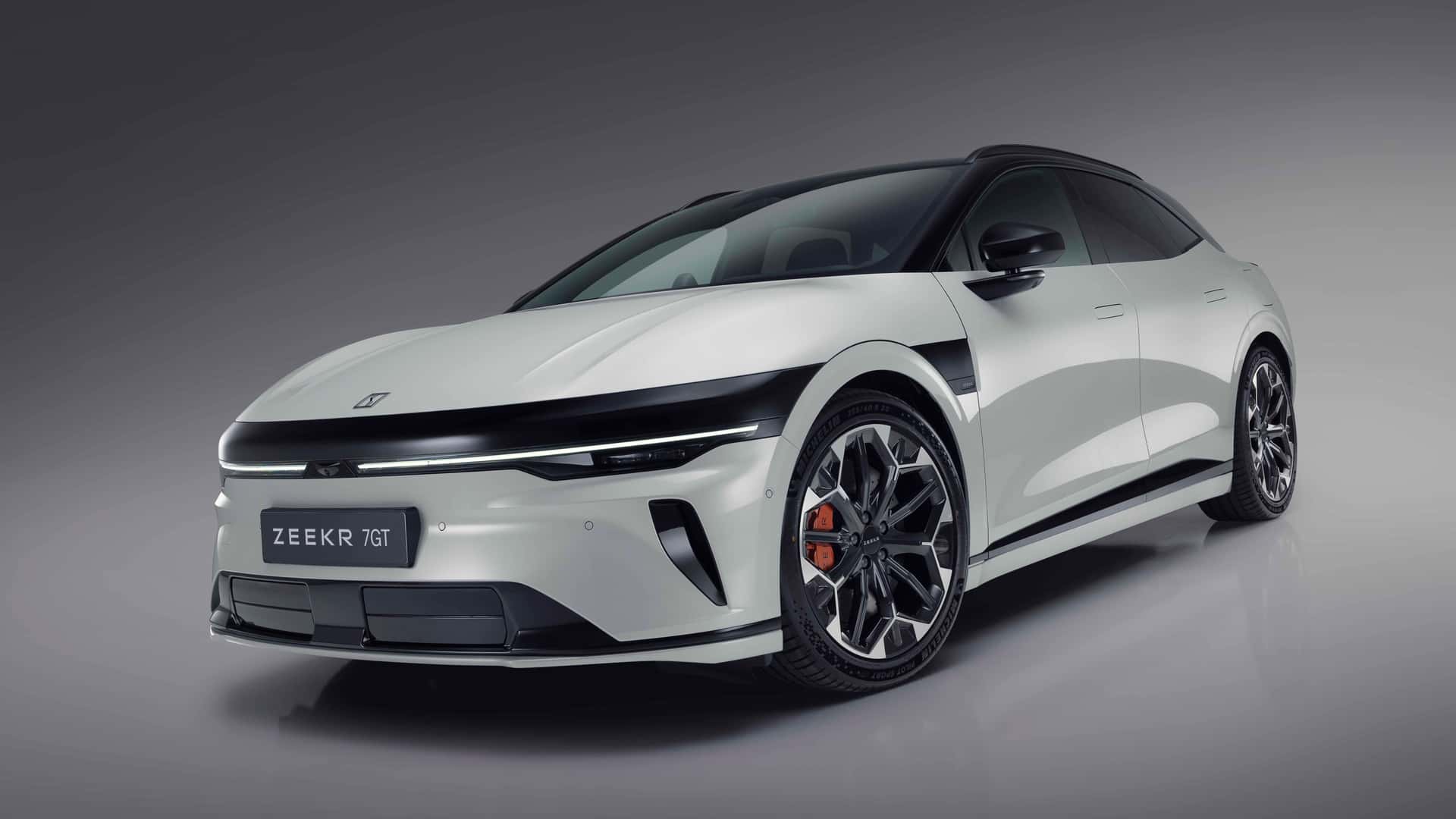
Key Takeaways:
- The 75-kWh Zeekr 7GT demonstrably outperformed its manufacturer’s charging time claims in a recent independent test, achieving 10% to 80% charge in approximately 11 minutes, two minutes faster than the stated 13 minutes.
- Despite never reaching its theoretical peak charging power of 480 kW, the vehicle’s 75-kWh LFP battery, leveraging Zeekr’s second-generation Golden Battery technology, showcased an exceptionally flat charging curve.
- This sustained high charging rate allowed the Zeekr 7GT to reach a full 100% charge in just about 21 minutes, a remarkable feat that surpasses the typical charging performance of many electric vehicles (EVs) from 20% to 80%.
- The LFP variant maintained a robust 220 kW at 80% state of charge and 165 kW even at 90%, highlighting a paradigm shift in practical fast-charging efficiency over mere peak power figures.
In a significant development for the electric vehicle (EV) industry, the Zeekr 7GT has showcased extraordinary fast-charging capabilities, defying conventional metrics that often prioritize peak power ratings. An independent real-world assessment revealed that the 75-kilowatt-hour (kWh) Zeekr 7GT, equipped with an advanced Lithium Iron Phosphate (LFP) battery, not only met but exceeded its charging efficiency claims, despite operating well below its advertised maximum power input.

This achievement underscores a critical insight into EV technology: the shape and consistency of a charging curve are often more influential in determining real-world charging times than a fleeting high-kilowatt peak. For consumers and industry observers, the performance of the Zeekr 7GT charging system offers a compelling case for a re-evaluation of how fast-charging prowess is measured and understood.
Zeekr 7GT Charging: Outperforming Expectations
The Zeekr 7GT, a prominent entrant from China in the European EV market, boasts an 800-volt architecture designed to theoretically accommodate up to 480 kilowatts (kW) of charging power. The manufacturer had initially claimed that the smaller of its two available battery options could charge from 10% to 80% in a mere 13 minutes.
However, recent independent tests conducted by renowned EV enthusiast Bjørn Nyland provided a more impressive outcome. The rear-wheel-drive 7GT Core, featuring a 75-kWh LFP battery, completed the 10% to 80% charge cycle in approximately 11 minutes. This result notably surpassed Zeekr’s own official claim, setting a new benchmark for efficiency.

The Significance of a Sustained Charging Curve
What makes the Zeekr 7GT’s performance particularly remarkable is that it achieved these rapid charging times without ever hitting its claimed peak power. During Nyland’s tests, the 75-kWh LFP pack, which incorporates Zeekr’s in-house-developed second-generation Golden Battery technology, peaked at around 325 kW.
This figure is more than 150 kW below the advertised 480 kW maximum. Yet, the vehicle’s sustained high charging rate, characterized by an unusually flat charging curve, allowed it to maintain superior energy transfer throughout the session. This demonstrates that a consistent power delivery, rather than a momentary high peak, is key to minimizing overall charging duration.
Full Charge in Record Time: A Deep Dive into Zeekr 7GT’s Battery Technology
One of the most common challenges with EV fast charging is the significant tapering of power as the battery approaches full capacity, typically beyond 80% state of charge (SoC). This phenomenon often makes charging the final 10-20% of the battery a time-consuming affair, dissuading drivers from topping up to 100% during long journeys.
The Zeekr 7GT with its LFP battery fundamentally alters this dynamic. While many high-performance EVs struggle to maintain 100 kW past 80% SoC, the 7GT LFP continued to draw an impressive 220 kW at 80%. Even at 90% charge, the system was still pulling roughly 165 kW. This exceptional persistence meant the charging power only dipped below 100 kW once the battery reached a remarkable 97% SoC.
This efficiency allowed the vehicle to reach a full 100% charge in approximately 21 minutes, a timeframe quicker than many contemporary EVs take to achieve a 20% to 80% charge. Such performance makes the prospect of charging to 100% far more practical for everyday use and extended travel, significantly enhancing user convenience.
Comparing Charging Dynamics: Zeekr 7GT vs. Competitors
To provide further context, the independent test also compared the 75-kWh Zeekr 7GT LFP variant with the long-range 7GT, which features a 100-kWh Nickel Manganese Cobalt (NMC) battery, and an Xpeng G6 equipped with an 81-kWh LFP battery.
Both the 100-kWh NMC Zeekr 7GT and the Xpeng G6 recorded higher peak charging powers early in their sessions. The larger battery 7GT briefly exceeded 420 kW, maintaining it between 12% and 20% SoC before dropping to 380 kW. Similarly, the Xpeng G6 achieved a comparable peak early on but quickly saw its charging rate fall below 400 kW.
However, the crucial differentiator lay in the consistency of the charge. Both competitor vehicles began to slow down earlier in their charging cycles. The 100-kWh 7GT’s charging power dropped below 100 kW near 90% SoC. While the Xpeng G6 performed slightly better, accepting around 125 kW at the same state of charge, neither could match the smaller Zeekr 7GT’s sustained rate.
Despite the larger battery Zeekr delivering more actual energy earlier due to greater capacity per percentage point, the 75-kWh LFP variant’s flatter curve ultimately allowed it to complete its charge first, highlighting its superior overall charging efficiency.
Zeekr’s Golden Battery Technology: A Game Changer
The exceptional performance of the Zeekr 7GT is not an isolated incident. An earlier model, the 7X, equipped with a prior version of the Golden Battery technology, demonstrated similar impressive results, charging from empty to full in just over 22 minutes. This consistent performance across different models suggests a deliberate engineering focus by Zeekr on optimizing both peak charging rates and the critical shape of the charging curve.
Zeekr’s commitment to advancing battery technology, particularly its second-generation Golden Battery, is evidently paying dividends in real-world applications. By prioritizing a flatter and more sustained power delivery profile, the company is addressing one of the primary concerns of EV ownership: charging anxiety.
Independent Validation and Future Outlook
It is important to emphasize that these impressive charging metrics were obtained from an independent, real-world test, rather than controlled manufacturer or laboratory validations. As such, the specific times and power figures should be considered indicative of exceptional performance rather than definitive, absolute values under all conditions.
Nonetheless, the results from the Zeekr 7GT charging test send a clear message to the electric vehicle market. As charging infrastructure continues to expand globally, the emphasis will increasingly shift from raw peak power numbers to the practical efficiency of the entire charging session. Zeekr’s approach with its Golden Battery technology appears to be well-aligned with the future demands of EV users, promising quicker and more convenient charging experiences across the board.
FAQ Section
What is the key takeaway from the Zeekr 7GT charging test?
The Zeekr 7GT with its 75-kWh LFP battery charged from 10% to 80% in about 11 minutes, beating its 13-minute claim, and reached 100% in 21 minutes. This highlights the importance of a sustained, flat charging curve over a high, momentary peak power for overall charging speed.
Did the Zeekr 7GT reach its advertised peak charging power?
No, the Zeekr 7GT never came close to its claimed 480 kW peak charging power during the independent test. It peaked at approximately 325 kW, more than 150 kW below the advertised figure, yet still exceeded its charging time claims.
What kind of battery does the Zeekr 7GT (75-kWh variant) use?
The 75-kWh Zeekr 7GT variant utilizes an LFP (Lithium Iron Phosphate) battery pack. This battery incorporates Zeekr’s in-house-developed second-generation Golden Battery technology, which contributes significantly to its remarkable charging performance.
Why is a flat charging curve more important than peak power?
A flat charging curve means the EV maintains a high charging rate for a longer duration of the session, especially beyond 80% state of charge. This consistency reduces the total time required to replenish the battery, making the overall charging experience much faster and more practical than an EV with a very high peak that quickly tapers off.
How long did it take for the Zeekr 7GT to reach 100% charge?
In the independent real-world test, the 75-kWh Zeekr 7GT took approximately 21 minutes to charge from 10% to a full 100%. This is notably faster than many other EVs achieve even for a 20% to 80% charge, owing to its superior sustained charging power at higher states of charge.
How does the Zeekr 7GT’s charging at high SoC compare to other EVs?
The Zeekr 7GT demonstrated exceptional sustained power at high states of charge, drawing 220 kW at 80% and 165 kW at 90%. Many other EVs typically see charging power drop significantly below 100 kW after 80% SoC, making the Zeekr 7GT’s performance uniquely efficient in the crucial final stages of charging.