
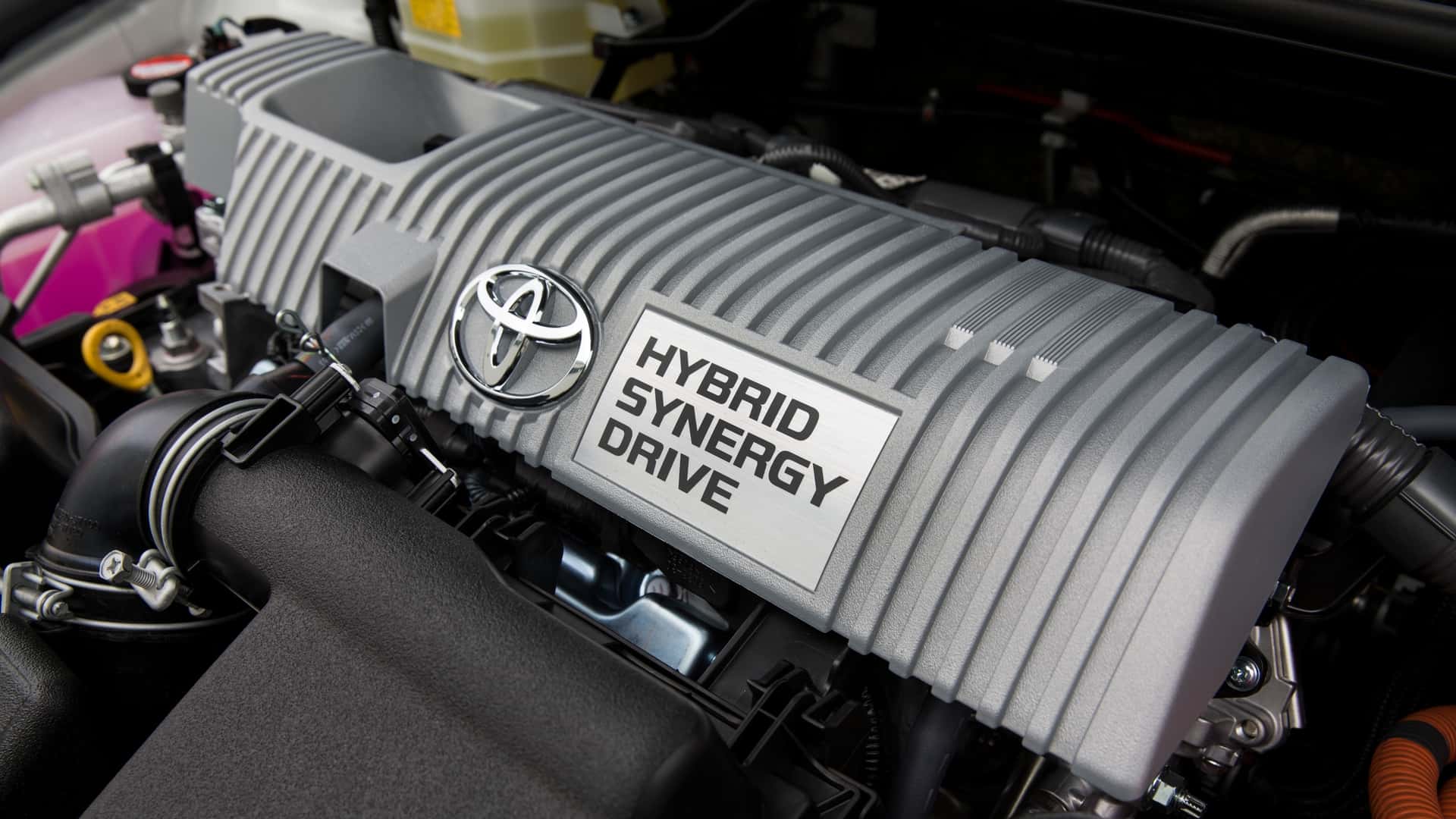
Toyota is set to introduce a new generation of high-voltage hybrid batteries next year, a strategic move aimed at delivering superior performance at a reduced cost. This announcement, made during the company’s recent earnings call, underscores Toyota’s continued commitment to its hybrid vehicle lineup as it anticipates record-breaking sales.
The Japanese automotive giant projects that it will sell more than 5 million hybrid vehicles globally this year, marking a significant milestone for the first time in its history. This robust growth in hybrid sales reinforces the automaker’s strategy to enhance its electrified offerings, even as it simultaneously develops advanced battery technologies for its burgeoning electric vehicle (EV) segment.

Key Takeaways: Toyota’s Battery and Electrification Strategy
- Toyota will roll out next-generation hybrid batteries starting in 2025, promising improved performance and lower production costs.
- The company is on track to sell over 5 million hybrid vehicles worldwide in 2024, an unprecedented achievement.
- Existing Japanese battery production lines will be converted to accommodate the new hybrid battery packs, with capacity for approximately 600,000 vehicles.
- Toyota’s electrified vehicle sales surged by 9.1% year-over-year in the first half of 2026, largely driven by hybrids.
- Significant advancements are also underway for longer-range lithium-ion batteries and ultra-fast charging solid-state batteries for Battery Electric Vehicles (BEVs), expected between 2027 and 2028.
- The automaker acknowledges the need to boost the competitiveness of its BEVs, particularly against cutting-edge models emerging from China, and plans to strengthen local partnerships.
Next-Generation Hybrid Batteries: A Strategic Shift
Beginning next year, Toyota will commence the rollout of its next-generation hybrid batteries, a critical component in its long-term electrification roadmap. The automaker plans to retool existing battery production lines in Japan, dedicating them to the new packs. This conversion will yield sufficient capacity to support approximately 600,000 vehicles annually.
This initiative is designed to achieve a dual objective: enhancing the performance of its hybrid vehicles while simultaneously reducing manufacturing costs. Takanori Azuma, Toyota’s chief accounting officer, affirmed the company’s dedication to meeting consumer demand.
“We are expanding battery production capacity during 2027 and 2028, and we will continue our efforts to fully capture customer demand,” Azuma stated during a recent call with investors.

The Transition from NiMH to Lithium-ion
Historically, Toyota has predominantly relied on nickel-metal hydride (NiMH) batteries for its extensive hybrid fleet, a technology celebrated for its proven reliability and longevity over many years. However, the automotive landscape has evolved, with lithium-ion (li-ion) cells demonstrating significant advancements in energy density, power output, and overall efficiency.
In response to these technological shifts, Toyota has been progressively integrating lithium-ion packs into its newer hybrid models, including the sixth-generation RAV4. While the specific chemistry of the newly announced next-generation hybrid battery remains undisclosed—whether it’s an improved iteration of current lithium-ion technology or an entirely new composition—the emphasis is clearly on optimizing cost and performance.
This strategic pivot towards enhanced hybrid battery production capacity makes considerable business sense for Toyota. Despite a 3% dip in its overall global sales, including both Toyota and Lexus brands, to roughly 5 million vehicles during the January-June period of the specified year—marking the first decline in two years—its electrified segment has experienced robust growth.
Surging Hybrid Sales Drive Toyota’s Growth
Toyota’s electrified lineup, encompassing hybrids, plug-in hybrids (PHEVs), battery-electric vehicles (BEVs), and fuel-cell vehicles, has demonstrated remarkable resilience and growth. Sales in this segment surged by an impressive 9.1% year-over-year, reaching 2.7 million units in the first half of 2026.
Crucially, hybrid vehicles remained the predominant force behind this expansion. Toyota recorded approximately 2.3 million hybrid vehicle sales worldwide during the initial six months of the year. This figure alone accounted for a substantial 86% of the company’s total electrified vehicle sales, highlighting the critical role of the hybrid segment in Toyota’s current market performance.
Building on this momentum, the company now anticipates that its global hybrid sales will surpass the 5 million unit mark for the first time by the close of 2026, setting a new benchmark for the automaker.
Market Dynamics and Policy Influence
Several factors have contributed to this sustained growth in hybrid adoption. Elevated global fuel prices, partly influenced by geopolitical events such as the war in Iran, have spurred consumer interest in more fuel-efficient vehicles worldwide. Hybrid models offer a compelling balance of conventional fueling convenience with improved mileage, appealing to a broad spectrum of buyers concerned about running costs.
In the U.S., which represents Toyota’s largest market, shifts in policy have also played a role. The phased rollback of federal tax credits for certain electric vehicles and evolving fuel economy norms have subtly recalibrated the pace of pure EV growth, consequently encouraging a greater adoption of hybrid alternatives.
Furthermore, Toyota’s strategic decision to offer some of its most popular models, such as the Camry and RAV4, exclusively as hybrids has significantly bolstered its electrified sales figures. This move ensures that a substantial portion of its high-volume offerings directly contribute to its hybrid sales, aligning with consumer preferences for proven, efficient technologies.
Advancing Battery Technology for EVs
While hybrids are currently a major driver of Toyota’s electrified sales, the company is not neglecting its push into the pure battery-electric vehicle market. Toyota’s worldwide BEV sales have shown substantial growth this year, with 193,000 units sold in the first half, marking a robust 135% year-over-year increase.
The automaker is aggressively pursuing next-generation battery solutions specifically for its EV portfolio. Toyota has previously announced plans for new lithium-ion batteries slated for introduction in 2027. These advanced batteries are projected to deliver an impressive range of up to 621 miles (1,000 kilometers) under the optimistic WLTP test cycle. This translates to just over 500 miles when measured against the stricter EPA standard, positioning Toyota’s future EVs competitively in terms of range.
Beyond lithium-ion, Toyota is also heavily invested in the development of solid-state batteries, a groundbreaking technology that promises even greater energy density and significantly faster charging capabilities. The company anticipates that these solid-state batteries will be capable of charging from 10% to 80% in under 10 minutes. While still in the development phase, these batteries are tentatively expected to be market-ready between 2027 and 2028, contingent on achieving crucial production breakthroughs.
The Race for EV Dominance and Future Outlook
Toyota executives have openly acknowledged the intensifying competition in the global EV market, particularly from manufacturers in China who are rapidly advancing with cutting-edge models. This recognition underscores the imperative for continuous innovation and improvement in Toyota’s own EV offerings.
“Going forward, we need to enhance the competitiveness of not only conventional vehicles but also BEVs,” Mr. Azuma stated. “We intend to work closely with our local partners, including through joint development, to strengthen our competitiveness.” This commitment to collaboration and enhancement highlights Toyota’s pragmatic approach to navigating the rapidly evolving electric vehicle landscape, ensuring its long-term viability and leadership in the automotive industry.
Frequently Asked Questions (FAQ)
What are Toyota’s plans for next-generation hybrid batteries?
Toyota plans to roll out new high-voltage hybrid batteries starting next year. These batteries are designed to offer better performance and lower costs, with existing production lines in Japan being converted to support their manufacture for approximately 600,000 vehicles annually.
How are Toyota’s hybrid sales performing globally?
Toyota’s hybrid sales are experiencing a significant surge. The company anticipates selling over 5 million hybrid vehicles globally this year for the first time, driven by factors like high gas prices and strategic product offerings such as hybrid-only versions of popular models like the Camry and RAV4.
What is the difference between NiMH and Lithium-ion batteries for hybrids?
Historically, Toyota used nickel-metal hydride (NiMH) batteries known for reliability. However, lithium-ion (Li-ion) batteries offer higher energy density and improved performance, making them increasingly preferred for modern hybrid applications. Toyota is transitioning towards Li-ion in newer hybrid models.
What are Toyota’s goals for its Battery Electric Vehicle (BEV) batteries?
For BEVs, Toyota is developing new lithium-ion batteries by 2027, aiming for a range of up to 621 miles (WLTP). Additionally, it’s developing solid-state batteries projected to charge from 10% to 80% in under 10 minutes, with a target arrival between 2027 and 2028.
Why is Toyota focusing on both hybrid and EV battery development?
Toyota’s dual focus reflects a comprehensive electrification strategy. Hybrids provide immediate market demand and fuel efficiency benefits, while concurrent investment in advanced EV battery technologies like solid-state aims to secure long-term competitiveness and leadership in the rapidly evolving electric vehicle market.
How is Toyota addressing competition in the EV market?
Toyota executives acknowledge the need to enhance BEV competitiveness, especially against innovations from Chinese manufacturers. Their strategy includes working closely with local partners and engaging in joint development efforts to strengthen their offerings and maintain market relevance.