
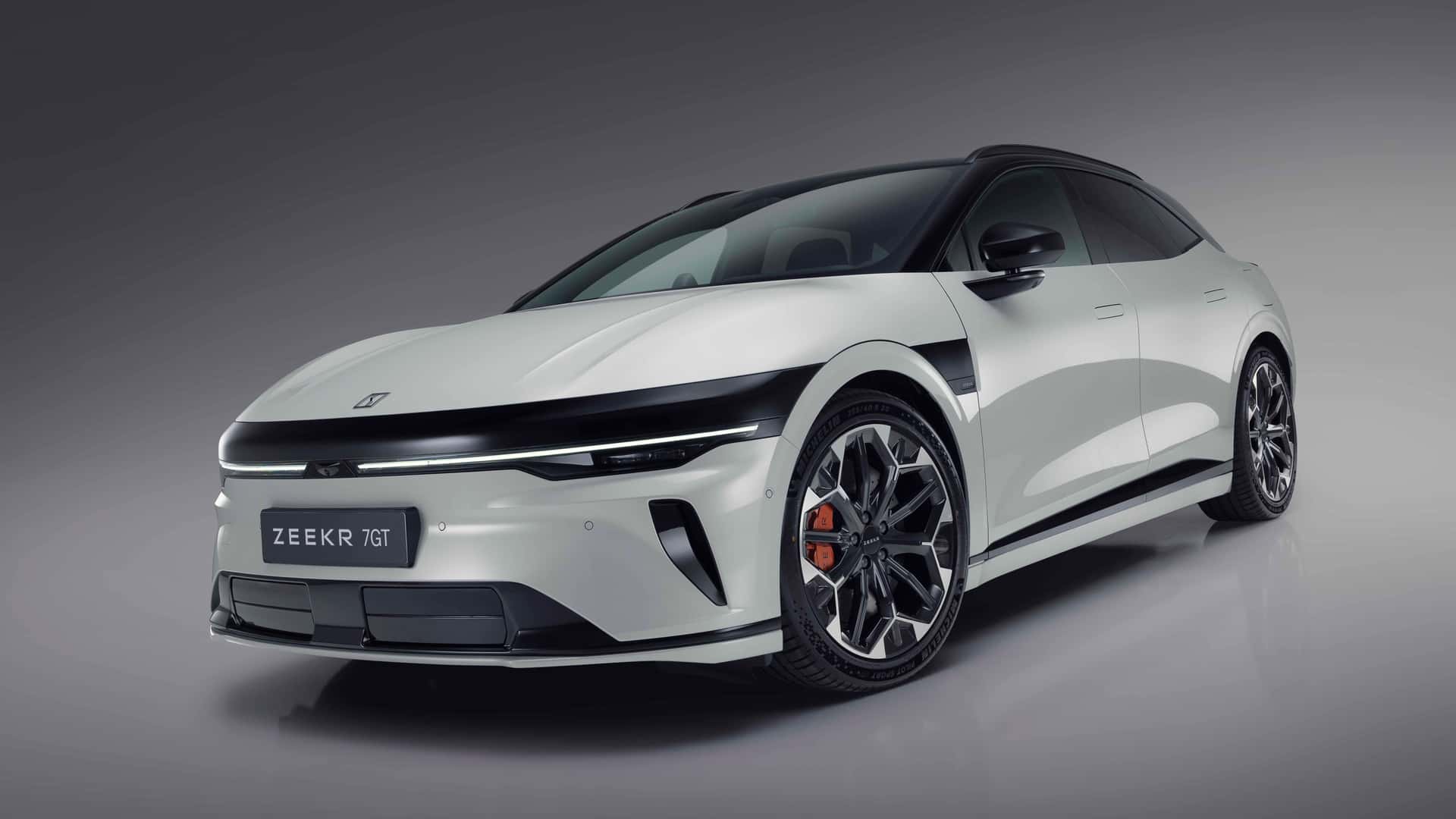
Key Takeaways:
- The 75-kWh Zeekr 7GT LFP battery achieved a 10% to 80% charge in approximately 11 minutes, surpassing Zeekr’s own 13-minute claim.
- Despite peaking at around 325 kW, significantly below its advertised 420 kW maximum, the electric vehicle showcased an exceptionally flat charging curve.
- This sustained high power allowed the vehicle to reach 100% charge in roughly 21 minutes, maintaining 165 kW at 90% state of charge.
- The results highlight the critical importance of a consistent charging curve over momentary peak power ratings for practical EV user experience.
In a significant development for the electric vehicle (EV) industry, the Zeekr 7GT, despite not achieving its theoretical peak charging power, has demonstrated an unparalleled real-world charging performance. An independent test revealed that the 75-kilowatt-hour (kWh) variant of the Chinese EV defied conventional expectations, completing a 10% to 100% charge in a remarkably short 21 minutes, setting a new benchmark for practical electric vehicle charging efficiency.
This achievement underscores a pivotal shift in how the automotive world perceives charging metrics. While manufacturers often highlight impressive peak power figures, the Zeekr 7GT’s performance illustrates that the consistency and shape of the charging curve are far more critical for consumer convenience and overall electric mobility adoption.

Zeekr 7GT’s Charging Prowess Unveiled
The 75-kWh LFP Golden Battery Advantage
The Zeekr 7GT, specifically the rear-wheel-drive Core model equipped with a 75-kWh Lithium Iron Phosphate (LFP) battery, boasts Zeekr’s proprietary second-generation Golden Battery technology. This advanced battery system, paired with an 800-volt architecture, is theoretically capable of accepting up to 420 kilowatts (kW) of charging power. The manufacturer had claimed a 10% to 80% charge time of just 13 minutes, requiring a 480 kW charger to achieve this.
However, recent real-world testing by renowned EV expert Bjørn Nyland presented a more nuanced, yet ultimately more impressive, picture of the 7GT’s capabilities. The vehicle, on multiple chargers, peaked at approximately 325 kW, falling more than 150 kW short of its advertised maximum. This discrepancy, however, did not hinder its remarkable performance.
Dispelling Peak Power Myths: The Charging Curve Advantage
The true marvel of the Zeekr 7GT’s charging experience lies in its exceptionally flat charging curve. Unlike many electric vehicles that exhibit a steep drop in power delivery after reaching a certain state of charge (SoC), the 7GT maintained high charging rates deep into its session. This consistent power delivery proved to be a game-changer, allowing the car to charge from 10% to 80% in just 11 minutes – two minutes faster than Zeekr’s own claim, even without hitting peak rated power.

Furthermore, the 7GT continued to impress as it approached full capacity. At 80% SoC, it was still drawing an impressive 220 kW. By the time it reached 90% charge, the LFP pack was remarkably still pulling approximately 165 kW. The charging power only dipped below 100 kW once the battery hit 97% SoC. This sustained high rate enabled the electric vehicle to achieve a full 100% charge in about 21 minutes, a time frame often associated with a 20% to 80% top-up in many other EVs.
Comparative Analysis: Zeekr 7GT vs. Competitors
The 100-kWh NMC Variant and Xpeng G6
To provide context for the 75-kWh Zeekr 7GT’s performance, the independent test also included a comparison with the long-range 7GT, featuring a 100-kWh NMC (Nickel Manganese Cobalt) battery, and an Xpeng G6 equipped with an 81-kWh LFP battery. Both of these comparison vehicles demonstrated higher peak charging powers early in their sessions.
The 100-kWh Zeekr 7GT briefly surpassed 420 kW, maintaining this power level from 12% to 20% SoC before dropping to 380 kW. Similarly, the Xpeng G6 reached comparable early charging levels, though its power quickly fell below 400 kW. However, a significant difference emerged in the latter stages of the charging process.
The Unconventional 100% Top-Up Feasibility
Both the 100-kWh Zeekr and the Xpeng G6 began to significantly slow down much earlier than the 75-kWh Zeekr 7GT. The larger-battery 7GT’s charging power dropped below 100 kW near 90% SoC. While the Xpeng G6 performed slightly better in this regard, accepting around 125 kW at the same state of charge, neither could match the sustained high power of the 75-kWh variant.
This stark difference makes topping up to 100% far more practical in the 75-kWh Zeekr 7GT. In most other electric vehicles, the final 10% or 20% of charging can take a disproportionately long time, often leading drivers to disconnect at 80% or 90% to save time. The 7GT LFP challenges this norm, making a full charge a viable and efficient option for users, especially on longer journeys where maximum range is desired.
Zeekr’s Innovation in Battery Technology
This outstanding performance is not an isolated incident for Zeekr. An earlier version of their Golden Battery, deployed in a Zeekr 7X, also demonstrated impressive charging capabilities, going from empty to full in just over 22 minutes. These consistent results indicate that Zeekr is strategically focusing on both achieving high peak charging power ratings and optimizing the shape of the charging curve for real-world usability.
The company’s commitment to developing advanced battery technology, such as the second-generation Golden Battery, is clearly paying dividends in terms of user experience. By prioritising a flatter, more consistent charging curve, Zeekr is addressing a key pain point for EV owners – the wait time at charging stations – and setting a new standard for fast charging in the global EV market.
Verifying the Data: Independent Testing
It is crucial to note that these compelling results stem from an independent real-world test, not a controlled manufacturer or laboratory validation. While such tests provide invaluable insights into actual user experience, the displayed times and power figures should be considered indicative rather than definitively absolute. Nevertheless, the consistency across multiple tests and vehicles featuring Zeekr’s Golden Battery technology lends strong credibility to these findings.
The Broader Impact on EV Adoption
The Zeekr 7GT’s exceptional charging performance has significant implications for the wider electric vehicle landscape. Faster, more reliable, and consistently high-speed charging directly addresses range anxiety and convenience concerns, which are frequently cited barriers to widespread EV adoption. As electric mobility continues its global expansion, innovations like Zeekr’s Golden Battery technology will be instrumental in making electric vehicles a more practical and appealing choice for consumers worldwide.
The industry’s focus must increasingly shift from mere peak power figures to the practical application of charging technology. The Zeekr 7GT serves as a compelling case study, proving that a well-engineered charging curve can redefine expectations and significantly enhance the daily usability of an electric vehicle. This approach benefits not just Zeekr but pushes the entire automotive sector towards more user-centric innovations in electric mobility.
Frequently Asked Questions (FAQ)
What is the Zeekr 7GT’s claimed peak charging power?
The Zeekr 7GT, with its 800-volt architecture, has a claimed peak charging power of up to 420 kilowatts (kW).
How quickly did the 75-kWh Zeekr 7GT charge from 10% to 80% in real-world tests?
In independent real-world tests, the 75-kWh Zeekr 7GT charged from 10% to 80% in approximately 11 minutes, outperforming Zeekr’s own 13-minute claim.
Did the Zeekr 7GT reach its advertised peak power during the test?
No, the 75-kWh Zeekr 7GT peaked at roughly 325 kW during the tests, which is more than 150 kW below its claimed maximum of 420 kW.
What is significant about the Zeekr 7GT’s charging curve?
The Zeekr 7GT exhibited an unusually flat charging curve, meaning it maintained high charging power levels consistently, even as the battery approached a full state of charge. This sustained power delivery is crucial for overall charging speed.
How long did it take the 75-kWh Zeekr 7GT to reach 100% charge?
The 75-kWh Zeekr 7GT reached a 100% charge in about 21 minutes, a remarkably quick time for a full top-up compared to most other electric vehicles.
What kind of battery technology does the 75-kWh Zeekr 7GT use?
The 75-kWh Zeekr 7GT is equipped with a Lithium Iron Phosphate (LFP) battery, featuring Zeekr’s in-house-developed second-generation Golden Battery technology.
Why is a flat charging curve more important than peak power?
A flat charging curve ensures consistent high-speed energy transfer throughout the charging session, minimizing the overall time spent plugged in. High peak power, if only sustained for a brief moment, offers less practical benefit to the user.