
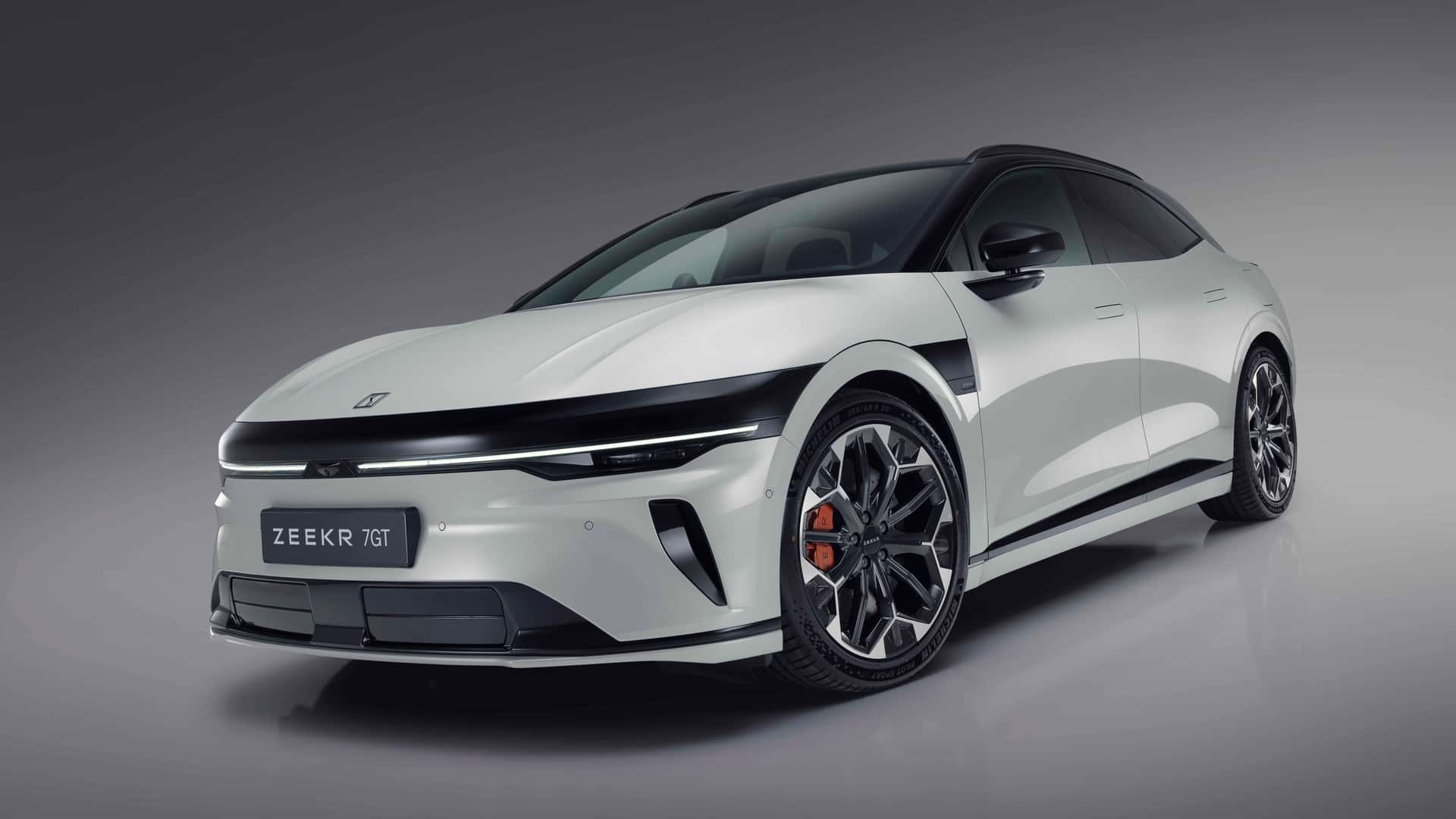
In a significant development for the electric vehicle (EV) market, the Zeekr 7GT has demonstrated an extraordinary charging capability, fundamentally challenging conventional metrics dominated by peak power figures. An independent, real-world assessment revealed that the 75-kilowatt-hour (kWh) Zeekr 7GT, equipped with a Lithium Iron Phosphate (LFP) battery, not only met but surpassed its manufacturer’s charging claims, despite never reaching its advertised peak power.
This remarkable outcome underscores a crucial paradigm shift: the shape and consistency of an EV’s charging curve can be far more impactful than a momentary high peak in determining overall charging speed. The Zeekr 7GT’s performance offers valuable insights into the future of fast charging technology and user experience.

Key Takeaways
- The 75-kWh Zeekr 7GT charged from 10% to 80% in approximately 11 minutes, outperforming Zeekr’s own 13-minute claim.
- Despite peaking at around 325 kW, significantly below its theoretical maximum, the vehicle sustained high charging power late into the session due to an exceptionally flat charging curve.
- The LFP battery pack continued to draw roughly 165 kW at 90% charge, reaching a full 100% in an impressive 21 minutes.
Zeekr 7GT’s Charging Prowess: A Real-World Revelation
The Zeekr 7GT, touted for having one of the highest claimed peak charging powers among EVs sold in Europe, features an 800-volt architecture designed to theoretically accept up to 420 kilowatts. The manufacturer indicates that its smaller 75 kWh battery variant can achieve a 10% to 80% charge in just 13 minutes, provided a 480 kW charger is utilised.
However, recent independent testing by Bjørn Nyland provided a compelling narrative that shifts focus from theoretical maximums to practical, sustained performance. The rear-wheel-drive 7GT Core, equipped with its 75 kWh LFP pack featuring Zeekr’s second-generation Golden Battery technology, recorded a peak charging power of approximately 325 kW across multiple charging stations.
While this figure is more than 150 kW below its advertised maximum, the real-world Zeekr 7GT charging performance proved exceptionally efficient. It charged from 10% to 80% in a mere 11 minutes, a full two minutes faster than Zeekr’s own conservative estimate. More strikingly, the vehicle achieved a 100% charge in about 21 minutes, a time frame many EVs struggle to meet for a 20% to 80% increment.

The Unsung Hero: A Flat Charging Curve
The remarkable aspect of the Zeekr 7GT charging performance lies not in its peak power, but in the sustained output it maintains throughout the charging cycle. Typically, most electric vehicles experience a significant drop in charging power as the battery’s state of charge increases, particularly beyond 80%.
For many EVs, reaching 80-90% often sees charging rates plummeting well below 100 kW. This tapering effect makes charging the final 10-20% of the battery highly inefficient, often doubling or tripling the time compared to earlier charging segments. Consequently, EV drivers are frequently advised to stop charging at 80% to optimise time and charger availability.
The Zeekr 7GT LFP variant defies this conventional pattern. During the test, it was still drawing an impressive 220 kW at 80% state of charge. Even at 90%, the vehicle maintained a robust 165 kW. The charging power only dipped below 100 kW once the battery reached an exceptionally high 97% state of charge.
This unusually flat and high charging curve makes topping up the Zeekr 7GT to 100% a far more practical and time-efficient proposition than with most other electric vehicles. It fundamentally changes the user experience by mitigating the ‘waiting game’ often associated with the final stages of EV charging.
Technical Underpinnings: 800-Volt Architecture and Golden Battery Technology
The foundation of the Zeekr 7GT’s superior charging capabilities lies in its sophisticated 800-volt architecture. This advanced electrical system allows for higher power transfer at lower currents, reducing heat generation and enabling faster charging speeds. Many premium EVs are now adopting this architecture to push the boundaries of rapid charging.
Furthermore, Zeekr’s in-house-developed second-generation Golden Battery technology plays a pivotal role in this efficiency. While LFP batteries are generally known for their durability, cost-effectiveness, and safety, they have traditionally lagged behind Nickel Manganese Cobalt (NMC) chemistries in energy density and peak charging rates.
However, Zeekr’s innovation appears to have overcome some of these limitations, demonstrating that LFP packs can deliver competitive, and in some aspects, superior charging performance, particularly in maintaining a flat curve. This technological advancement suggests a promising future for LFP battery applications in high-performance EVs.
Comparative Analysis: Outperforming its Peers
The independent test also included a comparison of the 75 kWh LFP Zeekr 7GT with its long-range sibling, a 100 kWh NMC battery variant (rated at the same peak charging power), and an Xpeng G6 equipped with an 81 kWh LFP battery. Both the 100 kWh Zeekr 7GT and the Xpeng G6 recorded higher peak charging powers early in their sessions.
The 100 kWh Zeekr briefly exceeded 420 kW, maintaining it between 12% and 20% before dropping to 380 kW. The Xpeng G6 also reached a similar high level early on, though it quickly fell below 400 kW. However, these vehicles began to taper their charging power much earlier than the 75 kWh LFP model.
The 100 kWh Zeekr 7GT saw its charging power drop below 100 kW near 90% state of charge. The Xpeng G6 performed slightly better, still accepting approximately 125 kW at 90%. Despite delivering more absolute energy earlier in the session due to its larger capacity, the flatter charging curve of the 75 kWh Zeekr 7GT ultimately enabled it to complete its full charge first.
Implications for the EV Landscape and User Experience
This exceptional Zeekr 7GT charging performance carries significant implications for both consumers and the broader electric vehicle industry. For drivers, it means less time spent at charging stations, effectively reducing range anxiety and making long-distance EV travel more convenient and comparable to refuelling a gasoline car.
The ability to charge an EV to 100% efficiently also offers greater flexibility and peace of mind for users who prefer to start their journeys with a full battery, especially for extended trips. This could accelerate EV adoption by addressing one of the primary concerns of potential buyers: charging infrastructure and speed.
From an industry perspective, Zeekr’s approach highlights the importance of optimising the entire charging curve, not just chasing headline-grabbing peak power figures. This could prompt other manufacturers to reassess their battery management systems and charging strategies to deliver more consistent and user-friendly fast-charging experiences.
It is important to acknowledge that this was an independent, real-world test, and as such, the displayed times and power figures should be considered indicative rather than definitive laboratory validations. Nevertheless, the findings consistently point to Zeekr’s innovative prowess in battery technology and charging optimisation.
FAQs on Zeekr 7GT Charging Performance
What is the key takeaway from the Zeekr 7GT’s charging test?
The primary insight is that the Zeekr 7GT, particularly its 75 kWh LFP variant, exhibits superior charging performance due to an exceptionally flat charging curve, even without reaching its claimed peak power. It significantly reduced overall charging time to 100%, outperforming many rivals.
How quickly did the Zeekr 7GT charge from 10% to 80%?
During the independent real-world test, the 75 kWh Zeekr 7GT charged from 10% to 80% in approximately 11 minutes. This time frame is notable as it is faster than Zeekr’s own conservative claim of 13 minutes for the same charge bracket.
What was the peak charging power observed for the Zeekr 7GT in the test?
The Zeekr 7GT, featuring the 75 kWh LFP battery, peaked at around 325 kW during the test. This figure is below its theoretical maximum of 420 kW, but its sustained high power delivery across the charging curve proved to be more effective for overall speed.
Why is a flat charging curve considered more beneficial than a high peak?
A flat charging curve is more beneficial because it maintains a high charging rate for a longer duration, especially into higher states of charge. This consistency reduces the total time required for a full charge, making the entire process more efficient and practical for the user, unlike a brief, high peak that quickly tapers off.
How long did it take for the Zeekr 7GT to reach 100% charge?
The 75 kWh Zeekr 7GT impressively reached a full 100% charge in about 21 minutes during the independent test. This is significantly faster than most electric vehicles, which often require much longer to charge the final 20-30% of their battery capacity.
What battery technology does the Zeekr 7GT use for this performance?
The Zeekr 7GT model tested featured a 75 kWh Lithium Iron Phosphate (LFP) battery pack, which incorporates Zeekr’s in-house-developed second-generation Golden Battery technology. This technology contributes to the LFP battery’s ability to sustain high charging power even at elevated states of charge.
How does Zeekr’s charging performance compare to other EVs like Xpeng G6?
While the Xpeng G6 (with an 81 kWh LFP battery) and the 100 kWh NMC Zeekr 7GT achieved higher peak charging powers early in their sessions, they both experienced a more rapid tapering of power. The 75 kWh LFP Zeekr 7GT’s consistently high and flat charging curve allowed it to complete a full charge faster overall.