
Key Takeaways
- Battery Management Systems (BMS) are vital for the safety, performance, and longevity of modern rechargeable batteries in electric vehicles.
- As BMS complexity grows, robust and efficient testing — including model-based methods and Hardware-in-the-Loop (HIL) simulation — becomes increasingly critical for battery management system validation.
- The automotive industry faces significant pressure to reduce testing efforts, shorten validation cycles, and lower costs while maintaining high accuracy and flexibility for next-generation battery architectures.
- A forthcoming webinar by dSPACE, scheduled for September 15, 2026, will present a standardized approach to BMS HIL testing designed to enhance efficiency, accuracy, and scalability.
- This session is a key highlight of the larger Virtual Conference on EV Engineering, taking place from September 14 to 17, 2026, which covers the entire electric vehicle supply chain.
In the rapidly evolving landscape of electric vehicles (EVs), the Battery Management System (BMS) stands as a foundational technology, integral to the safe, efficient, and extended operation of rechargeable batteries. These sophisticated electronic systems are not merely components but the ‘brain’ of the battery pack, orchestrating its health and performance across varied operating conditions. Ensuring the reliability and robustness of these systems is paramount, driving the demand for advanced BMS testing solutions that can keep pace with innovation.

As automotive manufacturers push the boundaries of EV range, power, and charging speeds, the underlying battery technology and its management grow exponentially in complexity. This escalating intricacy necessitates equally advanced and comprehensive testing methodologies, prompting the industry to seek out scalable and cost-efficient strategies for battery management system validation.
The Critical Role of Battery Management Systems in EVs
Modern rechargeable batteries, particularly those powering electric vehicles, operate under stringent requirements for safety, performance, and longevity. The BMS is the technological cornerstone that ensures these critical criteria are met throughout the battery’s operational life. Its functions are multifaceted, extending from safeguarding the battery against hazardous conditions to optimizing its energy delivery.
Precision Monitoring and Control
At its core, a BMS must meticulously monitor and control individual cells within a battery pack, ensuring they remain within a very narrow, optimal operating window. This necessitates highly accurate measurement of essential parameters such as cell voltages and temperatures. Deviations from these predefined limits, even slight ones, can significantly impact battery health, efficiency, and safety, potentially leading to premature degradation or dangerous thermal events.
Maintaining precise control over these parameters helps prevent conditions like overcharging or deep discharging, which are detrimental to cell chemistry. The ability to accurately sense and react to minute changes is therefore indispensable for sustaining battery integrity and maximizing its operational lifespan. Such precision in monitoring directly translates to enhanced vehicle safety and performance.
Advanced Cell Balancing Strategies
Beyond monitoring, the BMS employs advanced balancing strategies to maintain a uniform state of charge (SoC) across the entire battery pack. In a multi-cell battery, inherent manufacturing variations or slight differences in impedance can cause cells to charge and discharge unevenly. This imbalance can lead to a reduction in the overall pack capacity, as the weakest cell dictates the performance limit.
By actively or passively balancing the cells, the BMS ensures that all cells contribute equally to the pack’s performance, preventing localized stress and extending the battery’s usable capacity and cycle life. Effective cell balancing is thus a critical aspect of battery longevity and consistent power delivery, making it a key focus for battery management system validation efforts.
Evolving Challenges in BMS Testing and Validation
The continuous growth in BMS functionality and software complexity presents significant challenges for development and testing teams. As new features, algorithms, and connectivity options are integrated, the potential for intricate interactions and failure modes increases. This complexity demands more sophisticated and rigorous testing approaches than ever before.
The Rise of Model-Based Testing
In response to these escalating demands, model-based testing methods are increasingly utilized throughout the development process of BMS. This approach leverages simulation models to represent the battery and its environment, allowing engineers to test BMS algorithms in a virtual setting before deploying them on physical hardware. This shift enables earlier detection of design flaws and accelerates the development cycle.
For effective model-based BMS testing solutions, test environments must be equipped with accurate cell voltage emulation capabilities and high-fidelity battery simulation models. These elements are essential for validating BMS algorithms under realistic operating conditions, accurately replicating various scenarios that a battery might encounter in an EV, from rapid charging to extreme temperatures.
Demands for Precision, Flexibility, and Scalability
The effectiveness of these advanced testing environments hinges on their ability to combine several critical attributes: precision, flexibility, and scalability. Precision ensures that measurements and simulations are accurate enough to detect subtle anomalies. Flexibility allows the test setup to adapt to diverse BMS architectures and evolving specifications. Scalability ensures that the system can handle a wide range of battery configurations, from small packs to large, complex EV batteries, without significant retooling or re-engineering.
These requirements are particularly challenging given the wide variety of battery chemistries, cell formats, and pack designs emerging in the market. Consequently, advanced BMS testing solutions must be adaptable enough to support this dynamic landscape, providing robust validation across numerous platforms.
Addressing Industry Pressures: Efficiency and Cost-Effectiveness
While the technical demands of BMS testing are escalating, development teams simultaneously face intense pressure to streamline operations. The automotive industry constantly seeks to reduce overall testing effort, shorten validation cycles, and lower costs. This imperative is driven by competitive market dynamics, the need for faster time-to-market for new EV models, and the economic realities of large-scale production.
Traditional, entirely hardware-based testing approaches can be time-consuming and expensive. The physical construction, testing, and modification of numerous battery prototypes for every design iteration are unsustainable in a fast-paced innovation environment. This economic and temporal pressure highlights the critical need for more efficient and adaptable BMS testing solutions that can deliver comprehensive validation without prohibitive expenses or delays.
dSPACE Presents Standardized Hardware-in-the-Loop Testing
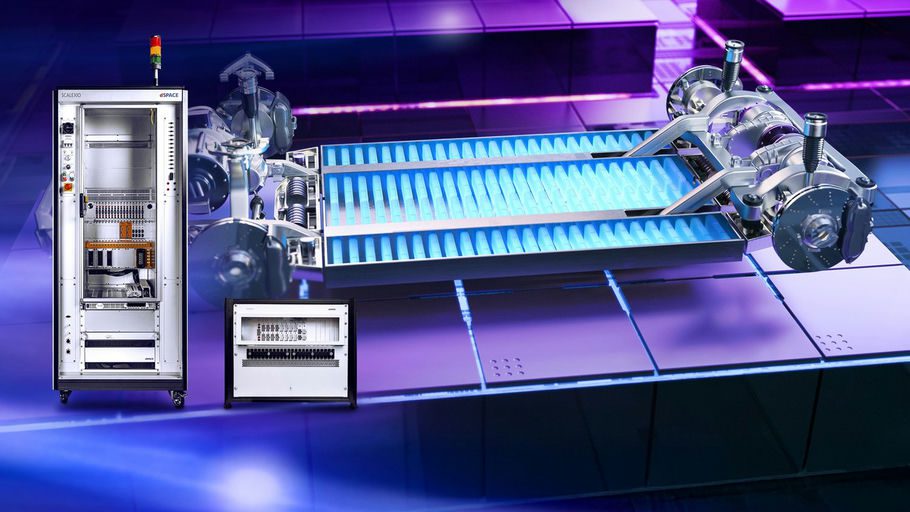
Recognizing these complex challenges, dSPACE is set to host a pivotal webinar on September 15, 2026, at 10:15 am EDT. This session will delve into how a more standardized approach to BMS Hardware-in-the-Loop (HIL) testing can significantly enhance efficiency within the development process. HIL testing simulates the real-time interaction between a physical BMS controller and a virtual battery model, providing a realistic test bed under laboratory conditions.
The webinar aims to demonstrate how such standardization in BMS testing solutions can dramatically improve development workflows while maintaining the rigorous accuracy, performance, and flexibility essential for validating next-generation battery management systems. By streamlining the test setup and execution, this approach promises to accelerate validation cycles and optimize resource utilization, directly addressing the industry’s need for cost-efficient solutions.
Interested participants can register for this complimentary webinar to gain insights into innovative methodologies for robust battery management system validation.
The Broader Landscape: Virtual Conference on EV Engineering
The dSPACE webinar is an integral part of the comprehensive Virtual Conference on EV Engineering, broadcast live from September 14 to 17, 2026. This extensive conference is designed to encompass the entire EV engineering supply chain and ecosystem, offering deep dives into a wide array of critical topics shaping the future of electric mobility.
The conference agenda spans key areas including motor and power electronics design and manufacturing, advanced cell development, sophisticated battery systems, crucial testing and measurement techniques, robust powertrains, efficient thermal management, circuit protection strategies, wire and cable innovations, and solutions for EMI/EMC challenges. This holistic coverage underscores the interconnectedness of various engineering disciplines in bringing advanced EVs to market.
Spotlight on Diverse EV Engineering Topics
Beyond BMS testing solutions, the Virtual Conference on EV Engineering features a diverse range of sessions addressing other pressing challenges and advancements in the sector. These include discussions on Advancing Battery Safety Through Early Thermal Runaway Detection with Infineon Sensors, highlighting proactive safety measures. Another session explores the CoolGaN™ Automotive Bidirectional Switch for shaping single-stage on-board chargers, showcasing power electronics innovation.
Further topics delve into Microseconds Matter: High-Fidelity FPGA Motor Models For Real-Time HIL Validation, emphasizing precision in motor control testing. Simplifying Commercial EV Power Distribution With Integrated Off-the-Shelf Solutions provides insights into practical design, while From Lab To Vehicle: Driving Reliable Insulation Systems For E-mobility Innovation focuses on material science. Driving Efficiency In EV Manufacturing: Ultrasonic Solutions For Critical Connections discusses manufacturing processes, and How To Test For Anti-Islanding In EV Chargers, OBCs, And V2G Systems addresses grid interaction. Multiphysics Modeling Of Transport Phenomena In Cells With Gas Diffusion Electrodes examines fundamental battery science, Optimizing HV/LV Power Conversion For Next-Generation xEV Architectures covers power conversion, and Beyond Sealing: Extrusion And Co-Extrusion For Thermal, Electrical, And Sensing Applications explores advanced materials applications. This breadth of content provides a complete picture of the advancements and challenges across the EV ecosystem.
Conclusion
The relentless pursuit of innovation in electric vehicle technology places the Battery Management System at the forefront of development. As these systems become increasingly complex, the demand for sophisticated, yet efficient, BMS testing solutions grows. Standardized Hardware-in-the-Loop methodologies offer a promising path to reconcile the need for rigorous validation with the industry’s pressures for reduced costs and faster development cycles.
The upcoming dSPACE webinar and the broader Virtual Conference on EV Engineering present an invaluable opportunity for professionals to explore these advanced testing paradigms and gain comprehensive insights into the evolving landscape of electric vehicle technology. Engaging with such focused discussions is crucial for advancing the safety, performance, and sustainability of electric mobility worldwide.
Frequently Asked Questions About BMS Testing
What is a Battery Management System (BMS) in EVs?
A Battery Management System (BMS) is an electronic control unit that oversees the operational parameters of a rechargeable battery pack. It manages individual cell voltages, temperatures, and state of charge, ensuring the battery’s safe operation, optimal performance, and extended lifespan by preventing conditions like overcharging, deep discharging, and overheating.
Why is robust BMS testing crucial for electric vehicles?
Robust BMS testing is crucial for EVs because it directly impacts vehicle safety, performance, and reliability. Thorough testing ensures the BMS can accurately monitor and control battery cells, prevent hazards like thermal runaway, optimize energy output, and prolong battery life, thereby safeguarding occupants and maximizing vehicle efficiency and durability.
What are model-based testing methods in BMS validation?
Model-based testing methods involve using virtual simulation models of the battery and its environment to validate BMS algorithms. This approach allows developers to test complex BMS functionalities and software under various realistic operating conditions in a controlled, virtual setting, accelerating the development process and identifying issues earlier than traditional physical testing.
What is Hardware-in-the-Loop (HIL) testing for BMS?
Hardware-in-the-Loop (HIL) testing for BMS involves connecting the actual physical BMS controller to a real-time simulation model of the battery pack and other vehicle components. This method allows the BMS to interact with a virtual environment as if it were in a live vehicle, providing a comprehensive and realistic test bed to validate its performance and safety functions.
How do standardized BMS testing solutions improve efficiency?
Standardized BMS testing solutions improve efficiency by providing common frameworks, tools, and processes for validation. This reduces setup time, minimizes errors, and allows for easier replication and comparison of test results across different projects or teams. Standardization also facilitates scalability, enabling consistent and cost-effective testing for a diverse range of battery architectures and vehicle models.
What challenges does increasing BMS complexity pose for testing?
Increasing BMS complexity, driven by new functionalities and advanced software, poses challenges such as a greater number of potential failure modes, longer testing times, and higher costs. It demands more sophisticated testing environments that can offer high precision, flexibility, and scalability to accurately validate intricate algorithms and diverse battery architectures under various operating conditions.
What is the Virtual Conference on EV Engineering?
The Virtual Conference on EV Engineering is an online event broadcast from September 14 to 17, 2026, covering the entire electric vehicle engineering supply chain. It features sessions on motor and power electronics, cell development, battery systems, testing, powertrains, thermal management, and other critical aspects, offering comprehensive insights into advancements shaping the future of electric mobility.