
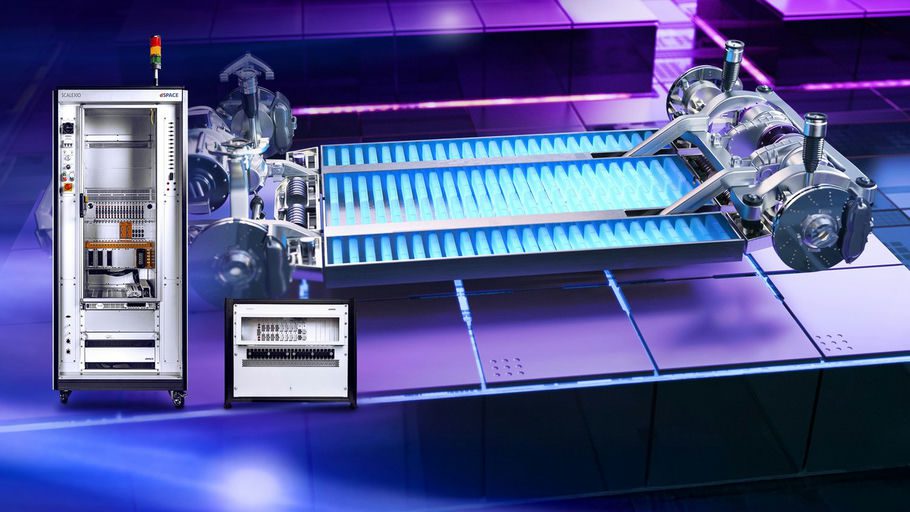
In the rapidly evolving landscape of electric vehicles (EVs), the Battery Management System (BMS) stands as a critical guardian, ensuring the safety, performance, and longevity of sophisticated battery packs. As the complexity of these systems escalates, so does the imperative for rigorous, yet efficient, testing methodologies. Industry leaders are now focusing on streamlined approaches to validate next-generation BMS technologies.
Key Takeaways
- Battery Management Systems (BMS) are fundamental for EV battery safety, performance, and lifespan, requiring precise monitoring and control.
- The increasing complexity of BMS functionalities necessitates advanced, model-based testing methods throughout the development lifecycle.
- Accurate cell voltage emulation and high-fidelity battery simulation are vital for validating BMS algorithms under realistic operating conditions.
- Development teams face significant pressure to reduce testing efforts, shorten validation cycles, and manage costs effectively.
- dSPACE is presenting a webinar on September 15, 2026, at 10:15 am EDT, advocating for a standardized Hardware-in-the-Loop (HIL) testing approach.
- This standardized HIL method promises enhanced efficiency while maintaining the accuracy, performance, and flexibility essential for state-of-the-art BMS validation.
- The webinar is part of the broader Virtual Conference on EV Engineering, running from September 14-17, 2026, covering the entire EV supply chain.
The core challenge lies in balancing the need for highly accurate measurements and comprehensive validation with the industry’s demand for faster development cycles and reduced expenditure. This balance is crucial for bringing innovative EV technologies to market promptly and safely.

The Indispensable Role of Battery Management Systems in EVs
Modern rechargeable batteries, particularly those powering electric vehicles, are highly sensitive components. Their optimal operation is intrinsically linked to the efficacy of the Battery Management System. The BMS acts as the ‘brain’ of the battery pack, orchestrating various critical functions that impact the vehicle’s reliability and the battery’s overall lifespan.
One of the primary responsibilities of a BMS involves meticulous monitoring and control. Individual battery cells within a pack must operate within a tightly defined, narrow window of parameters. This necessitates highly accurate measurement of cell voltages, preventing overcharging or deep discharging that could compromise safety and degrade performance. Simultaneously, precise temperature monitoring is vital to prevent thermal runaway, a critical safety concern in high-energy battery systems.
Beyond monitoring, the BMS employs advanced balancing strategies. These strategies are crucial for maintaining a uniform state of charge across all cells within the battery pack. Uneven cell charges can lead to reduced capacity, accelerated degradation of individual cells, and ultimately, a shortened battery lifespan for the entire system. Effective balancing ensures that the battery pack performs optimally throughout its operational life.

Navigating the Evolving Complexity of BMS Development
As electric vehicles become more sophisticated, so too do their underlying components. Battery Management Systems are no exception, with their functionality and software complexity growing exponentially. Today’s BMS platforms integrate advanced algorithms for predictive analytics, adaptive charging, and sophisticated fault detection, demanding an equally advanced approach to their development and validation.
The increasing intricacy of BMS software, coupled with the critical safety implications of battery performance, has made traditional testing methods less viable. Developers require comprehensive validation that can keep pace with innovation, ensuring that every new feature and software update is thoroughly vetted before deployment. This paradigm shift underscores the urgent need for more robust, scalable, and efficient testing environments.
Model-Based Testing: A Strategic Imperative for Validation
To address the burgeoning complexity and accelerate development cycles, model-based testing methods are increasingly being adopted across the EV industry. This approach integrates simulation models early in the development process, allowing engineers to test and refine BMS algorithms in a virtual environment before committing to physical prototypes.
Central to effective model-based testing are two key components: accurate cell voltage emulation and high-fidelity battery simulation models. Accurate cell voltage emulation allows the test environment to precisely mimic the electrical behavior of individual cells under various load and charge conditions. This level of realism is indispensable for identifying potential issues that might arise in real-world scenarios, ensuring robust algorithm performance.
Furthermore, high-fidelity battery simulation models provide a comprehensive virtual representation of the entire battery pack, including its electrochemical, thermal, and electrical characteristics. These models enable the validation of BMS algorithms under a wide range of realistic operating conditions, from extreme temperatures to rapid charging and discharging cycles. Such rigorous virtual testing is paramount for guaranteeing the safety and reliability of modern EV batteries.
The Dual Challenge: Precision Meets Efficiency in Testing
While the demand for precision and thoroughness in BMS testing continues to rise, development teams face an equally pressing challenge: the need for efficiency. The automotive industry operates under immense pressure to shorten validation cycles, reduce overall testing effort, and, critically, lower costs. This necessitates testing environments that are not only accurate and flexible but also inherently scalable to support diverse battery architectures and evolving requirements.
Traditional testing approaches, often reliant on extensive physical prototyping and manual validation, are becoming unsustainable in this fast-paced environment. They typically involve significant resource allocation, longer lead times, and can struggle to adapt quickly to changes in design or functionality. The imperative for faster time-to-market for new EV models further intensifies the need for more agile and cost-effective testing solutions.
Striking the right balance between achieving high standards of accuracy and performance, while simultaneously optimizing for cost-efficiency and speed, remains a significant hurdle for many engineering teams. The industry is actively seeking innovations that can streamline the testing process without compromising on the quality or reliability of the final product.
dSPACE Presents a Standardized Approach to HIL Testing
Addressing these critical industry needs, dSPACE, a prominent name in simulation and validation solutions, is set to present a cutting-edge approach to BMS testing. Their upcoming webinar will delve into how a more standardized approach to Hardware-in-the-Loop (HIL) testing can significantly enhance efficiency in the validation process for battery management systems.
The proposed methodology focuses on streamlining HIL test environments, which are crucial for real-time validation of electronic control units (ECUs) like the BMS. By standardizing components and procedures within the HIL setup, dSPACE aims to reduce the complexities typically associated with configuring and managing diverse test scenarios. This standardization is designed to accelerate the development workflow, enabling engineers to conduct more tests in less time.
Crucially, this standardization does not come at the expense of performance or flexibility. The dSPACE approach ensures that the accuracy and robustness required for validating next-generation battery management systems are fully maintained. Engineers can still achieve precise emulation of battery cell behavior and complex fault injection, critical for thorough validation, while benefiting from the efficiencies gained through a unified testing framework.
Webinar Details and Broader Conference Context
Professionals keen to understand these advancements are invited to join the upcoming webinar, presented by dSPACE, titled ‘Scalable and Cost-Efficient Testing of State-of-the-Art Battery Management Systems.’ The session is scheduled for September 15, 2026, at 10:15 am EDT. Participation in this insightful session is free, and interested individuals are encouraged to register promptly to secure their virtual attendance.
This particular webinar forms part of the much larger Virtual Conference on EV Engineering, an extensive industry event broadcast live from September 14 to 17, 2026. The conference is designed to be a comprehensive platform, covering the entire EV engineering supply chain and ecosystem. Attendees will have the opportunity to explore a diverse range of topics pertinent to electric vehicle development.
The expansive conference content will encompass critical areas such as motor and power electronics design and manufacturing, advanced cell development, sophisticated battery systems, and rigorous testing methodologies. Additionally, it will delve into powertrains, thermal management solutions, circuit protection, wire and cable technologies, and crucial aspects of EMI/EMC compliance. This broad spectrum ensures that professionals across various disciplines within the EV sector can gain valuable insights and stay abreast of the latest innovations.
FAQs on Battery Management System Testing
What is the primary function of a Battery Management System (BMS)?
A BMS serves as the intelligent control unit for rechargeable battery packs, primarily in EVs. Its main functions include monitoring individual cell voltages and temperatures, managing the state of charge, balancing cells, and ensuring the overall safety, performance, and longevity of the battery throughout its operational life.
Why is robust testing crucial for BMS in electric vehicles?
Robust testing is critical because BMS directly impacts vehicle safety, performance, and reliability. Malfunctioning BMS can lead to dangerous conditions like thermal runaway or significantly reduce battery lifespan. Thorough testing validates algorithms and hardware under various conditions, ensuring the system operates reliably and safely in real-world scenarios.
What is model-based testing in the context of BMS development?
Model-based testing utilizes virtual simulation models of battery cells and packs to validate BMS algorithms early in the development cycle. This approach allows engineers to test complex functionalities and scenarios in a controlled, virtual environment, reducing the need for expensive physical prototypes and accelerating the identification and resolution of design flaws.
How does Hardware-in-the-Loop (HIL) testing benefit BMS validation?
HIL testing integrates the actual BMS hardware with simulated battery and vehicle environments. This real-time simulation allows the BMS to interact with a realistic virtual world, enabling comprehensive validation of its control logic and responses to dynamic conditions, including faults, without the risks and costs associated with real-vehicle testing.
What are the key challenges in current BMS testing methodologies?
Current challenges include the increasing complexity of BMS software, the need to balance testing accuracy with development speed and cost-efficiency, and ensuring scalability for diverse battery architectures. Traditional methods often struggle to keep pace with rapid innovation and the demand for shorter product validation cycles in the competitive EV market.
How can standardization improve BMS Hardware-in-the-Loop testing?
Standardization in HIL testing can significantly improve efficiency by providing uniform test environments and procedures. This reduces setup time, simplifies test case development, and allows for greater reusability of test assets across different projects. It helps maintain accuracy and flexibility while accelerating validation cycles and reducing overall development costs.
What other topics will be covered at the Virtual Conference on EV Engineering?
The Virtual Conference on EV Engineering will offer a wide array of topics beyond BMS testing. It will delve into motor and power electronics design, advanced cell development, battery systems, powertrains, thermal management, circuit protection, wire and cable solutions, and EMI/EMC compliance, covering the entire EV engineering supply chain.