
Siemens Government Technologies (SGT) has been awarded a significant $80 million contract by the Army Contracting Command. This crucial award designates SGT to establish U.S. Army-controlled production lines dedicated to electric motor stator assemblies, vital components for unmanned aircraft systems (UAS).
Key Takeaways
- Siemens Government Technologies won an $80 million contract from the Army Contracting Command.
- The award is for establishing US Army-controlled production of electric motor stator assemblies for unmanned aircraft systems.
- The project has a 12-month performance period, focusing on an integrated digital and physical advanced manufacturing environment.
- New production lines will be installed at the Anniston Army Depot in Alabama, transforming a World War II-era facility.
- Digital twin technology will be central to the production process, informing and validating manufacturing lines before physical implementation.
- The initiative aims to enhance the Army’s organic expertise and innovation for next-generation UAS development.
Bolstering Domestic Defense Manufacturing
The contract, with a performance period spanning 12 months, underscores a strategic push towards strengthening the domestic defense industrial base. SGT’s mandate encompasses the creation of an advanced manufacturing environment that integrates both digital and physical components, ensuring a robust and secure supply chain for critical military hardware.

This initiative represents a significant step for the U.S. Army to secure its manufacturing independence for unmanned aircraft systems. By bringing the production of electric motor stator assemblies under direct Army control, the reliance on external or potentially vulnerable supply chains for these essential components can be substantially mitigated.
Anniston Army Depot: A Hub for Modernization
The new production facilities are slated for installation at the Anniston Army Depot in Alabama. This location holds historical significance, as SGT plans to revitalize a World War II-era facility, transforming it into a state-of-the-art manufacturing hub.
Anniston Army Depot is already recognized as the designated Center of Industrial and Technical Excellence for a diverse range of commodities. These include tracked and wheeled ground combat vehicles, artillery, and small-caliber weapons. The integration of advanced drone motor stator production capabilities further solidifies its role as a cornerstone of the nation’s defense manufacturing infrastructure.

The Power of Digital Twins in Production
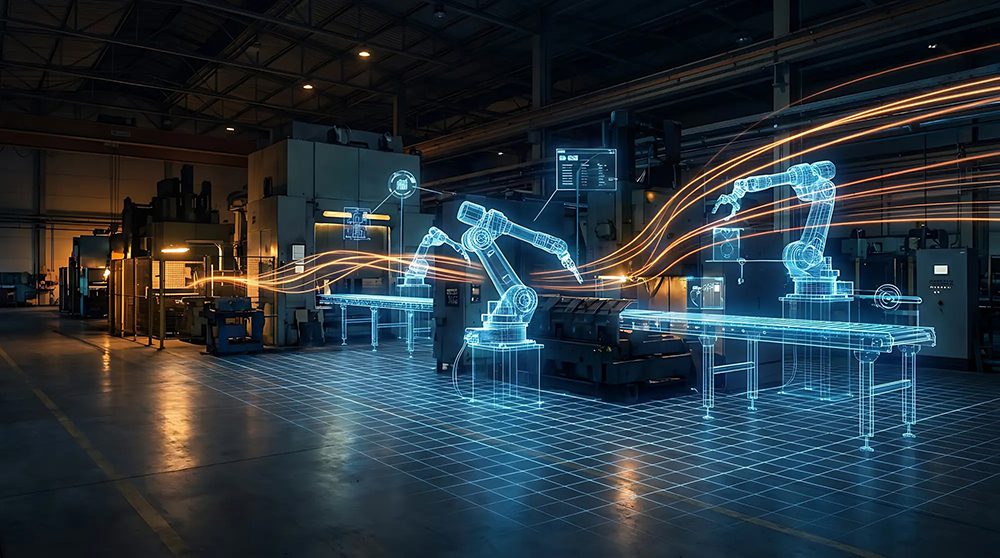
A cornerstone of this ambitious project is the implementation of digital twin technology. SGT specifies that an integrated digital production environment, driven by digital twins, will be instrumental in the process. This advanced methodology allows for the comprehensive informing and validating of the stator assembly production lines even before any physical work commences.
Digital twins are virtual models designed to accurately reflect a physical object, process, or system. In this context, they will simulate the entire manufacturing workflow, enabling engineers to identify potential bottlenecks, optimize processes, and ensure precision. This pre-validation phase is crucial for accelerating deployment, reducing risks, and enhancing the overall efficiency and quality of the drone motor stator production.
Understanding the Electric Motor Stator
At the heart of any electric motor, including those powering unmanned aircraft systems, is the stator. A stator is defined as the stationary part of an electric motor. Its design is fundamental to the motor’s performance and efficiency.
The windings within the stator carry the electrical current that generates the magnetic field. This magnetic field, in turn, interacts with the rotor, the motor’s rotating component, to produce motion. Encircling these windings is a laminated core, which serves to channel the magnetic flux while effectively limiting eddy-current losses—a critical factor for maximizing motor efficiency and lifespan, particularly in high-performance applications like military drones.
Leadership’s Vision for Autonomous Systems
John Ustica, President and CEO of Siemens Government Technologies, highlighted the strategic importance of this endeavor. He emphasized the transformative potential of the Army gaining direct control over its manufacturing environment.
“The ability for the Army to control its own production and manufacturing environment, leveraging digital twins and a digital-first mindset, will accelerate their organic expertise and innovation for next-generation unmanned aircraft system development,” Ustica stated. His comments underscore the broader objective: fostering a self-reliant and innovative defense ecosystem capable of rapidly developing and deploying cutting-edge unmanned aircraft technologies.
Strategic Implications for UAS Development
This $80 million award transcends mere manufacturing; it is an investment in the future of military autonomy and technological superiority. By localizing drone motor stator production, the U.S. Army enhances its strategic flexibility and ensures a reliable pipeline of components essential for its growing fleet of unmanned aircraft systems.
The integration of advanced manufacturing techniques, particularly digital twin technology, positions the Army at the forefront of industrial innovation. This approach not only streamlines production but also cultivates a deep pool of organic expertise within the defense sector, driving continuous improvement and rapid iteration in UAS design and deployment. The project at Anniston Army Depot serves as a paradigm for future public-private collaborations aimed at modernizing the nation’s defense industrial capabilities.
FAQ Section
What is the purpose of the $80 million Army award to Siemens Government Technologies?
The award aims to establish U.S. Army-controlled production lines for electric motor stator assemblies, critical components for unmanned aircraft systems. This initiative enhances domestic manufacturing capabilities and strengthens supply chain security for defense applications.
Where will the new production lines for drone motor stators be located?
The new production lines will be installed at the Anniston Army Depot in Alabama. This project involves converting an existing World War II-era facility into a modern manufacturing hub, leveraging its status as a Center of Industrial and Technical Excellence.
How will digital twin technology be utilized in this manufacturing process?
Digital twins will create an integrated digital production environment. These virtual models will inform and validate the commissioning of the stator assembly production lines, allowing for simulation and optimization before any physical manufacturing work begins, enhancing efficiency and accuracy.
Why is the electric motor stator assembly a critical component for unmanned aircraft systems?
The stator is the stationary part of an electric motor whose windings generate a magnetic field interacting with the rotor. Its proper function is vital for efficient motor operation in drones, directly impacting performance, reliability, and the overall capability of unmanned aircraft systems.
What is the timeframe for the completion of this project?
The award carries a 12-month performance period. During this time, Siemens Government Technologies will focus on setting up the integrated digital and physical advanced manufacturing environment for the electric motor stator assemblies at the Anniston Army Depot.
What broader strategic benefits does this award offer the U.S. Army?
This award allows the Army to control its own production and manufacturing environment, accelerating its organic expertise and innovation. It fosters self-reliance, reduces dependency on external supply chains, and supports the development of next-generation unmanned aircraft systems through advanced domestic manufacturing.