
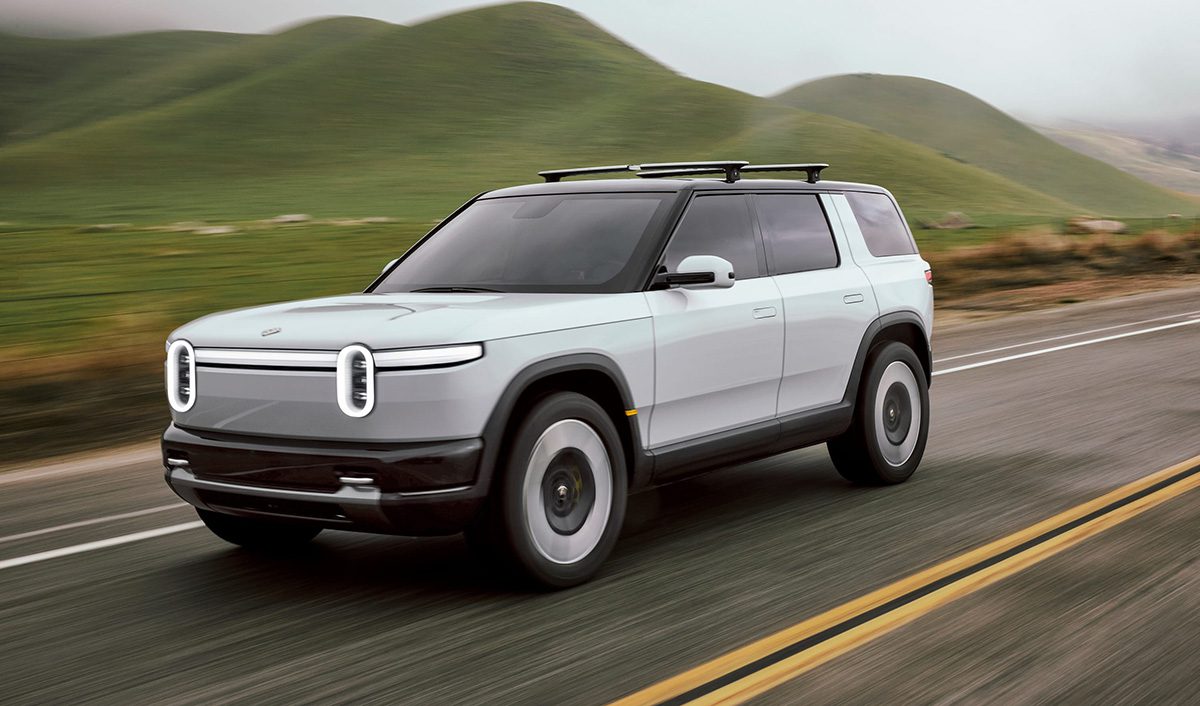
Key Takeaways
- Rivian is implementing a second production shift at its Normal, Illinois facility by late September to significantly increase R2 electric vehicle output.
- The R2 is strategically positioned as Rivian’s ‘breakout vehicle,’ crucial for achieving profitability by offering more affordable options.
- Initial deliveries of the high-performance R2 trim began in June, with entry-level models anticipated by summer 2027, starting at $46,495.
- The company is meticulously coordinating with hundreds of suppliers to ensure a smooth and sustained ramp-up of its manufacturing operations.
- Rivian has raised its full-year delivery target to between 65,000 and 70,000 vehicles, underscoring strong market confidence and demand for its EV lineup.
Rivian, the American electric vehicle manufacturer, is set to significantly scale its manufacturing capabilities for the new R2 model. The company plans to introduce a second production shift at its Normal, Illinois, facility by the end of September. This strategic move marks a pivotal moment for Rivian as it endeavors to meet burgeoning market demand and solidify its path to profitability within the highly competitive electric vehicle landscape.
The expansion in production at the Illinois plant is an integral part of Rivian’s broader manufacturing strategy. Further increments in output are anticipated once the company’s second dedicated manufacturing facility in Georgia becomes operational. This dual-plant approach underscores Rivian’s long-term vision for sustainable growth and increased market penetration.

The R2: A Strategic ‘Breakout’ Vehicle for Rivian’s Future
Industry analysts and market observers are increasingly referring to the R2 as Rivian’s “breakout vehicle.” This designation reflects its critical role in steering the company beyond the challenging initial phase often termed the “Valley of Death” for automotive startups. By launching a more accessible and potentially higher-volume model, Rivian aims to transition from its initial niche market of premium, low-volume offerings to a broader consumer base.
This strategy aligns with conventional wisdom for successful auto startups. Typically, new manufacturers begin with high-end, low-volume vehicles to refine their engineering, manufacturing processes, and brand identity. The lessons learned from these initial models are then leveraged to produce smaller, more affordable offerings designed for mass market appeal.
Rivian has uniquely augmented this traditional progression. In addition to its consumer vehicles, the company has also ventured into high-volume commercial vehicle production for Amazon, diversifying its revenue streams and refining its large-scale manufacturing expertise.

Expanding Market Accessibility: R2 Model Lineup and Pricing
Deliveries of the Rivian R2 commenced in June, beginning with the top-of-the-line Performance trim. This premium variant, starting at $59,485, boasts impressive specifications designed to attract discerning electric vehicle enthusiasts. It features a dual-motor, 656 horsepower all-wheel-drive system, offering robust performance and traction across various conditions.
Furthermore, the Performance trim provides an EPA-estimated range of 330 miles on a single charge, addressing a key concern for potential EV buyers. Notably, it incorporates a North American Charging Standard (NACS) port, ensuring compatibility with a rapidly expanding charging infrastructure across the continent.
To cater to a wider demographic, Rivian has scheduled the introduction of more affordable trims over the coming months. The culmination of this strategy will be the launch of the Standard Rear-Wheel Drive, an entry-level model, scheduled to hit the market in summer 2027. Priced at a more accessible starting point of $46,495, this variant is expected to significantly broaden the R2’s appeal and accelerate its adoption.
Navigating the Complexities of Production Ramp-Up and Supply Chain
Scaling up the production of an entirely new vehicle model is an inherently intricate and demanding process, particularly for a relatively young company like Rivian that must carefully manage its capital resources. A crucial initial step for Rivian was to launch R2 production on a single shift. This deliberate approach allowed the company to systematically get its extensive supply chain operating efficiently and to iron out any potential bottlenecks before committing to a larger workforce and higher output.
Rivian CEO RJ Scaringe has underscored the intensive collaborative efforts underway with hundreds of suppliers. This intricate coordination is vital to ensure that each supplier can adequately increase their own production capacity to support a seamless and sustained R2 ramp-up. The success of any automotive production line is intrinsically linked to the reliability and readiness of its suppliers.
As highlighted by Rivian-watchers at RivianTrackr, supplier coordination is a paramount component of an effective ramp-up strategy. The overall pace of the entire production line is ultimately dictated by the speed of its slowest supplier. Recognizing this critical dependency, Rivian’s dedicated supply chain team will be actively working closely and on-site with these partners. Their objective is to proactively manage and mitigate potential challenges, ensuring a smooth increase in component supply over the next couple of years.
Ambitious Targets: Production Capacity and Future Expansion
In a clear signal of confidence in its manufacturing capabilities and market demand, Rivian has revised its full-year delivery target. The company now anticipates delivering between 65,000 and 70,000 vehicles, a figure that encompasses its R1 and R2 models, as well as its commercial vans. This upward revision reflects strong pre-orders and robust internal production forecasts.
The Normal, Illinois plant, Rivian’s primary manufacturing hub, is engineered for impressive production potential. When operating at its full three-shift capacity, the facility is designed to produce 215,000 units per year. A significant proportion of this capacity, specifically up to 155,000 units annually, is expected to be dedicated to the R2 model, emphasizing its central role in Rivian’s product portfolio.
The company has laid out a clear roadmap for further expansion. A third production shift at the Normal plant is tentatively planned for 2027, further boosting output. Subsequently, production at the new Georgia plant will commence, adding substantial additional capacity and flexibility to Rivian’s global manufacturing footprint. This phased expansion strategy is designed to ensure controlled growth and maintain rigorous quality standards.
Market Reception and CEO’s Vision for EV Adoption
The introduction of the R2 is resonating strongly with consumers, particularly with those new to the electric vehicle segment. RJ Scaringe, Rivian’s CEO, highlighted this trend, stating that a “significant number” of R2 buyers are first-time EV owners. This indicates that the R2 is successfully attracting a new wave of electric vehicle adopters, expanding the overall EV market.
Scaringe articulated his belief in the R2’s market position, noting, “The US automotive marketplace is starved for high-quality EV choice, and I believe R2 is an attractively priced option for everyday adventures that will resonate with a broad set of consumers.” This statement underscores Rivian’s perception of a demand gap for well-engineered, competitively priced electric vehicles that blend utility with compelling design.
The company’s focus on practical features, robust performance, and a clear value proposition positions the R2 to capitalize on this perceived market need. As the global shift towards electric mobility continues to gather momentum, Rivian’s strategic ramp-up of R2 production is a critical step in establishing its long-term presence and influence within the evolving automotive industry.
Sources: RivianTrackr, EVinfo.net
Frequently Asked Questions (FAQs)
When will Rivian introduce the second shift for R2 production?
Rivian plans to implement a second production shift for its R2 assembly line at the Normal, Illinois manufacturing facility by the end of September. This move aims to significantly boost the output of its new electric SUV and accelerate its market availability.
Why is the R2 considered Rivian’s ‘breakout vehicle’?
The R2 is viewed as Rivian’s ‘breakout vehicle’ because it represents a strategic shift towards more affordable, higher-volume models. This is crucial for the company to move past the initial challenges faced by automotive startups and achieve sustainable profitability by expanding its appeal to a broader consumer base.
What are the key specifications of the Rivian R2 Performance trim?
The R2 Performance trim, which started deliveries in June, is priced at $59,485. It features a dual-motor, 656 horsepower all-wheel-drive system and offers an EPA-estimated range of 330 miles. It also includes a NACS charging port for broader compatibility.
When will more affordable Rivian R2 trims be available?
More affordable trims of the Rivian R2 are scheduled for rollout over the coming months. The entry-level Standard Rear-Wheel Drive model is specifically slated for launch in summer 2027, with a starting price of $46,495, making the R2 more accessible.
How is Rivian managing its supply chain during the R2 production ramp-up?
Rivian is working closely with hundreds of suppliers to ensure they can scale their production to support the R2 ramp-up. The company’s supply chain team is actively engaging on-site with suppliers to coordinate efforts and manage any potential bottlenecks, ensuring a smooth and efficient manufacturing process.
What are Rivian’s revised delivery targets for the full year?
Rivian has raised its full-year delivery target to between 65,000 and 70,000 vehicles. This target includes a combination of its R1 and R2 models, along with its commercial vans, reflecting strong demand and increased production capacity.
What is the production capacity of Rivian’s Normal, Illinois plant?
When operating at its full three-shift capacity, Rivian’s Normal, Illinois plant is designed to produce 215,000 units per year. Of this total capacity, up to 155,000 units annually are projected to be dedicated to the R2 model, highlighting its importance.