
Key Takeaways (TL;DR)
- LG Energy Solution (LGES) posted record Q3 earnings, demonstrating robust financial health.
- The company’s revenue surged by 59% year-over-year to $7.21 billion, with operating profit climbing 25% to $565 million.
- Growth was primarily propelled by strong demand for stationary energy storage batteries in the U.S., serving AI data centers and grid upgrades.
- Simultaneously, a thriving electric vehicle (EV) market in Europe significantly bolstered LGES’s EV battery segment.
- U.S. Inflation Reduction Act (IRA) manufacturing credits and compensation from automakers further enhanced the company’s bottom line.
- LGES is actively expanding its North American supply chain, including a new lithium off-take agreement and a $2 billion gigafactory in Michigan.
Seoul, South Korea – LG Energy Solution, a global leader in battery manufacturing, has announced record quarterly earnings, signaling a pivotal moment for the company amidst a dynamic global energy landscape. The robust performance in the third quarter of 2023 was primarily fueled by a strategic dual approach: capitalizing on the burgeoning energy storage battery market in the United States and leveraging sustained growth in electric vehicle sales across Europe. This achievement underscores the company’s resilience and adaptability in navigating complex market shifts.
The South Korean battery giant revealed preliminary results on Thursday in a regulatory filing, reporting a remarkable 59% year-over-year increase in revenue, reaching an impressive $7.21 billion. Concurrently, the company’s operating profit saw a substantial 25% jump, amounting to $565 million. These figures represent a significant milestone for LGES, highlighting its successful diversification and strategic investments. Full official results are anticipated in November.
Strategic Diversification: Offsetting EV Challenges with Energy Storage
The past two years have presented a disruptive environment for battery manufacturers, particularly in North America, where slower-than-expected electric vehicle sales prompted some companies, including LGES, to temper their initial EV battery production ambitions. However, LG Energy Solution effectively mitigated these challenges by strategically pivoting towards the rapidly expanding market for stationary energy storage batteries. This segment has witnessed a surge in demand, driven by the increasing power requirements of advanced AI data centers and the urgent need for comprehensive grid upgrades across the United States.
The company’s proactive bet on stationary storage solutions has begun to yield substantial returns, proving to be a critical offset to the fluctuating demand within the EV battery market. This strategic foresight has enabled LGES to maintain a strong financial trajectory, even as segments of the automotive sector adjusted their electrification timelines. The ability to cater to diverse energy demands positions LGES favorably for long-term growth.
The Expanding Horizon of Energy Storage Systems (ESS)
The demand for Energy Storage System (ESS) batteries in the U.S. is experiencing an unprecedented surge. This is largely attributable to the escalating energy consumption of sophisticated AI data centers, which require reliable and robust power backup solutions. Furthermore, the imperative for modernizing aging electricity grids to integrate more renewable energy sources and enhance stability has created a significant market for large-scale battery storage solutions. LGES has been at the forefront of this trend, establishing local production capabilities at multiple U.S. plants to meet the escalating domestic demand for these critical components.
By producing ESS batteries within the U.S., LGES not only aligns with national initiatives for energy independence but also benefits from logistical efficiencies and a reduced exposure to global supply chain disruptions. This localized production strategy is crucial for building trust and ensuring timely delivery to key clients involved in critical infrastructure projects and the burgeoning technology sector.
European EV Adoption Drives Battery Demand
While the North American EV market experienced some recalibration, Europe’s electric vehicle sector continued its strong growth trajectory, providing a significant boost to LGES’s EV battery business. According to reports from The Korea Herald, LGES’s production facility in Poland has been operating at high capacity, meeting robust demand from prominent European automakers. Key clients such as Volkswagen and Renault have contributed significantly to the facility’s success, with their expanding ranges of plug-in vehicles driving substantial orders for LGES batteries.
The consistent increase in plug-in vehicle sales across Europe underscores the continent’s commitment to decarbonization and the widespread consumer adoption of electric mobility. This robust demand environment has allowed LGES to maintain strong performance in its core automotive battery segment, balancing regional disparities in market growth. The European market remains a cornerstone of LGES’s global EV battery strategy.
Leveraging U.S. Manufacturing Incentives and Supply Chain Integration
A significant factor contributing to LGES’s surge in earnings includes the strategic advantages derived from the U.S. Inflation Reduction Act (IRA). The company received substantial battery-manufacturing credits through this landmark legislation, designed to incentivize domestic production and strengthen the American clean energy supply chain. These credits represent a direct financial benefit, reducing operational costs and enhancing profitability for companies committed to U.S.-based manufacturing.
Furthermore, LGES benefited from compensation received from certain automakers that failed to meet their minimum electric vehicle battery purchase requirements, as stipulated in contractual agreements. This financial recourse provides a layer of protection against fluctuating demand and reinforces the importance of consistent supply chain commitments within the EV battery market. It demonstrates how contractual safeguards can play a role in supporting battery manufacturers during periods of market adjustment.
Durability of the Inflation Reduction Act’s Incentives
Crucially, the Section 45X Advanced Manufacturing Production tax credits, a cornerstone of the IRA, have remained largely intact despite recent political shifts. These vital incentives for domestic battery manufacturing are available through 2032, providing long-term predictability and encouragement for companies like LGES to continue investing heavily in U.S. production facilities. This stability in policy is a significant confidence booster for foreign investors looking to establish or expand their footprint in the American market, ensuring that the benefits of local production are sustained over a considerable period.
The continuity of these credits is paramount for fostering a robust and self-reliant domestic battery supply chain, reducing reliance on overseas production, and securing critical components for both the EV and ESS sectors. This legislative framework is a key driver for the localization of advanced manufacturing capabilities, reshaping the global EV battery market landscape.
Fortifying the North American Supply Chain and Production
In a move to further strengthen its North American supply chain, LGES recently solidified a multi-year off-take agreement with Canada’s Electra Lithium. This crucial deal ensures LGES will receive 240,000 metric tonnes of raw lithium concentrate from Electra’s mine in Quebec. Securing a steady and ethically sourced supply of critical raw materials like lithium is paramount for battery manufacturers, addressing potential vulnerabilities in the global supply chain and ensuring the long-term viability of their production capacities.
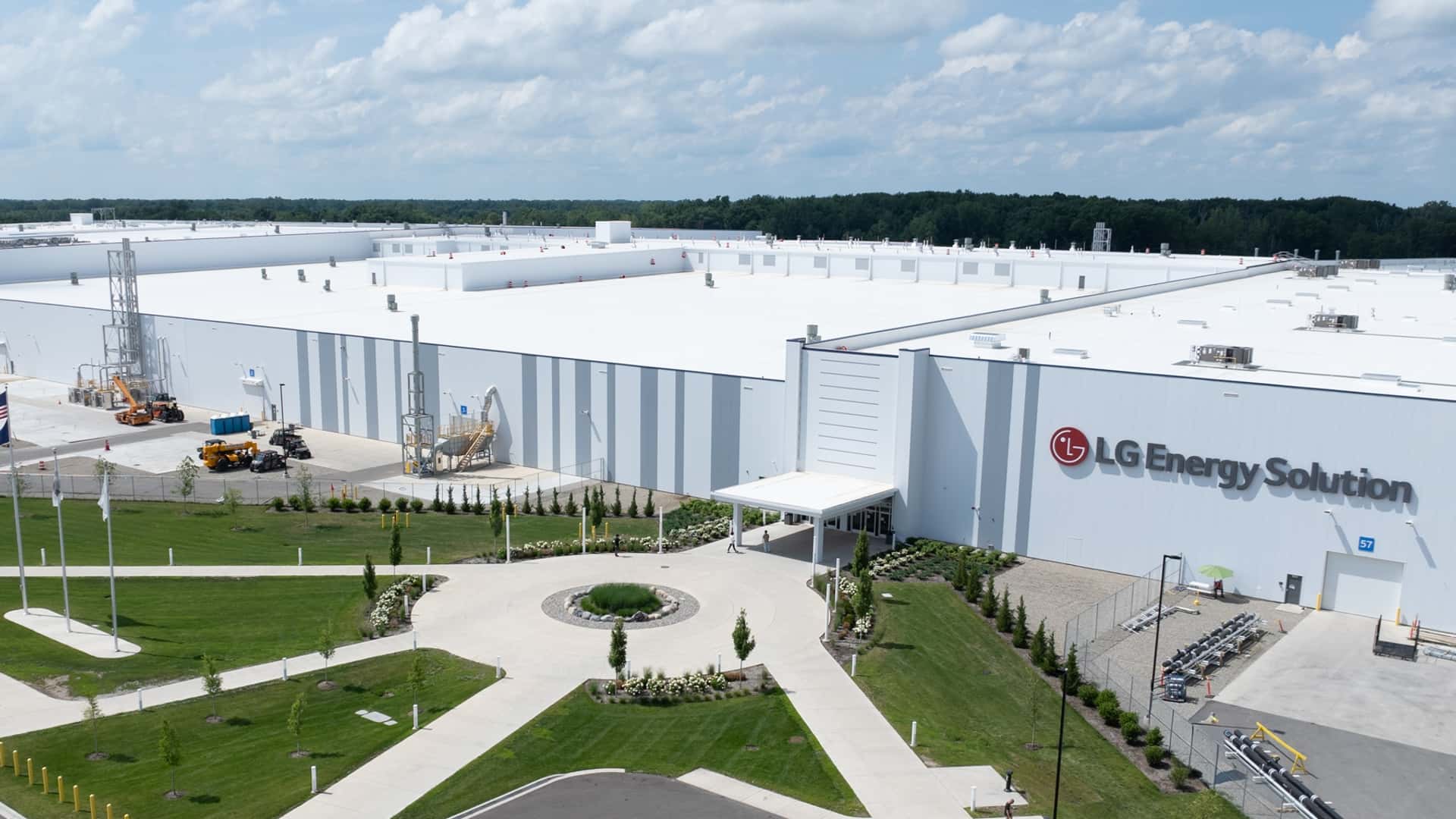
Beyond raw material sourcing, LGES has also made significant strides in expanding its manufacturing footprint. In August, the company officially inaugurated its state-of-the-art $2 billion gigafactory in Lansing, Michigan. This colossal facility is a testament to LGES’s commitment to North American production, playing a dual role in catering to diverse market needs. The Michigan plant is responsible for producing advanced lithium-iron-phosphate (LFP) batteries specifically designed for Tesla’s energy storage applications, alongside nickel-manganese-cobalt (NMC) EV batteries for Toyota, demonstrating technological versatility and strategic partnerships within the EV battery market.
The Broader EV Battery Market Landscape and Future Outlook
The record earnings reported by LG Energy Solution offer a compelling snapshot of the current dynamics within the global EV battery market. While the electric vehicle transition remains a long-term megatrend, the immediate landscape is characterized by nuanced regional demands and the strategic imperative of diversification. Battery manufacturers are increasingly finding value in developing capabilities that extend beyond purely automotive applications, such as large-scale energy storage for grids and industrial uses.
The industry continues to grapple with challenges including raw material price volatility, technological advancements, and intense competition. However, LGES’s performance demonstrates that companies with robust R&D, diversified product portfolios, and strong supply chain integration are well-positioned for sustained growth. The continued expansion of manufacturing capabilities in North America, coupled with strong performance in mature EV markets like Europe, paints a picture of strategic adaptability and long-term vision in the evolving energy sector. This comprehensive approach is essential for navigating the complexities and opportunities in the future of the EV battery market.
FAQ Section
Q1: What drove LG Energy Solution’s record Q3 earnings?
LG Energy Solution’s record Q3 earnings were primarily driven by two key factors: surging demand for stationary energy storage batteries in the U.S., particularly for AI data centers and grid upgrades, and strong electric vehicle (EV) battery sales in the growing European market. U.S. manufacturing credits and automaker compensation also contributed.
Q2: How much did LGES’s revenue and operating profit grow in Q3?
In the third quarter of 2023, LG Energy Solution reported a significant 59% year-over-year increase in revenue, reaching $7.21 billion. The company’s operating profit also saw a substantial rise, growing by 25% to reach $565 million, reflecting a period of strong financial performance.
Q3: Why is there high demand for energy storage batteries in the U.S.?
The high demand for energy storage batteries in the U.S. stems from the escalating power consumption of advanced AI data centers, which require reliable power solutions. Additionally, extensive grid upgrades and modernization efforts to integrate renewable energy sources are fueling the need for large-scale stationary storage solutions.
Q4: Which European automakers are contributing to LGES’s growth?
LG Energy Solution’s plant in Poland is experiencing strong demand for EV batteries from major European automakers. Specifically, Volkswagen and Renault are cited as key clients whose growing electric vehicle sales in Europe are significantly contributing to LGES’s robust performance in the region.
Q5: What role does the U.S. Inflation Reduction Act play for LGES?
The U.S. Inflation Reduction Act (IRA) plays a crucial role by providing LGES with significant battery-manufacturing credits. These Section 45X Advanced Manufacturing Production tax credits incentivize domestic production and are available through 2032, reducing costs and enhancing profitability for the company’s U.S. operations.
Q6: What is LGES doing to strengthen its North American supply chain?
LGES is strengthening its North American supply chain through strategic agreements and manufacturing expansion. This includes a multi-year off-take deal with Canada’s Electra Lithium for 240,000 metric tonnes of raw lithium concentrate and the opening of its $2 billion gigafactory in Lansing, Michigan, for battery production.
Q7: What types of batteries are produced at the new Michigan gigafactory?
The $2 billion gigafactory in Lansing, Michigan, produces two main types of batteries: lithium-iron-phosphate (LFP) batteries specifically designed for Tesla’s energy storage applications, and nickel-manganese-cobalt (NMC) EV batteries, which are supplied to Toyota for their electric vehicles.
Q8: What does LGES’s performance indicate about the current EV battery market?
LGES’s performance indicates that while the EV battery market remains strong, strategic diversification into stationary energy storage solutions is crucial for sustained growth. It highlights the importance of robust supply chain integration, localized manufacturing, and adaptability to regional market dynamics to navigate complex industry challenges effectively.