
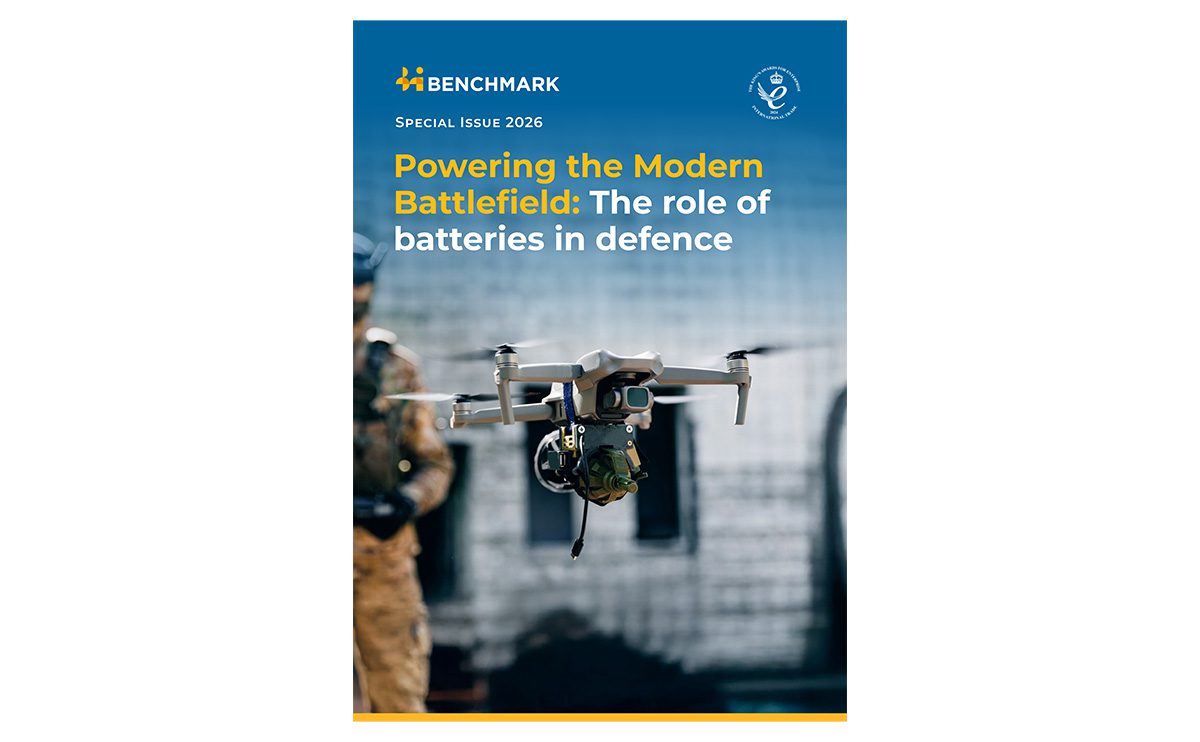
Key Takeaways:
- Global battery demand for defense applications reached 4.3 GWh in 2025, with drones accounting for 40% and soldier power 29%.
- The Ukraine war accelerated drones’ transition from support systems to primary battlefield assets.
- China dominates the global drone industry, creating significant reliance on Chinese critical minerals, batteries, and magnets for modern military capabilities.
- This reliance presents a ‘structural vulnerability’ for Western militaries, prompting a drive to domesticate supply chains.
- Experts now view batteries as a critical dual-use technology, central to both energy transition and national security.
Batteries, traditionally viewed through the lens of civilian electric vehicles and renewable energy storage, are rapidly emerging as a cornerstone of modern military capabilities. A recent benchmark report from Benchmark Mineral Intelligence, a leading authority on the mine-to-grid supply chain, sheds critical light on the increasingly significant and geopolitically charged role of batteries in global military applications. This shift underscores a broader trend where advancements in energy storage are directly influencing national security strategies and the very nature of modern warfare.

The Strategic Surge in Military Battery Demand
Research and development in emerging technologies have long been propelled by potential military applications, and battery technology is no exception. The United States military, among others, has been an early and consistent adopter of advanced battery solutions across a diverse range of operational requirements, including mobile EV charging infrastructure and enhanced soldier systems. This proactive integration highlights an ongoing strategic imperative to leverage cutting-edge power solutions for tactical advantage and operational resilience.
According to the comprehensive Special Issue released by Benchmark Mineral Intelligence, global battery demand specifically for defense applications stood at an estimated 4.3 gigawatt-hours (GWh) in 2025. While this figure represents a relatively modest fraction of the broader global battery market, its strategic importance is disproportionately high. The report emphasizes that this segment is not only growing but is also ‘geopolitically charged and increasingly important,’ reflecting its critical linkage to international power dynamics and national defense strategies.
Key Segments Driving Military Battery Consumption
The Benchmark report meticulously breaks down the primary drivers of this defense-specific battery demand. Drones, both unmanned aerial vehicles (UAVs) and other autonomous systems, constituted the largest share, accounting for a significant 40% of the total military battery consumption in 2025. This dominance underscores the transformative impact of drone technology on contemporary conflict zones.

The second-largest segment, representing 29% of the demand, was soldier power. This category encompasses a wide array of portable electronic devices essential for modern combat, including advanced radios, Global Positioning System (GPS) units, sophisticated night vision systems, and precision laser designators. These applications require lightweight, high-energy-density batteries that can reliably perform in challenging environments, directly impacting soldier effectiveness and endurance on the battlefield.
Drones: Reshaping the Battlefield and Battery Requirements
The conflict in Ukraine, which began in 2022, has served as a stark and undeniable demonstration of the evolving role of drones in military engagements. Benchmark Mineral Intelligence noted a profound shift, reporting that ‘Since the outbreak of the war in Ukraine in 2022, drones have evolved from support systems into primary battlefield assets.’ This transformation has dramatically increased the demand for advanced battery technologies capable of powering these critical machines for extended durations and under diverse operational conditions.
In 2025, the predominant battery chemistries employed in military drones were Nickel-Cobalt-Manganese (NCM) and Lithium Cobalt Oxide (LCO). Looking ahead, Benchmark forecasts a significant shift, predicting that high-nickel NCM cell chemistries will become the dominant standard for defense applications over the next decade. This projection is driven by the continuous pursuit of higher energy density, improved safety, and enhanced performance required for the next generation of military drones and other advanced systems.
Geopolitical Crossroads: China’s Dominance and Western Vulnerabilities
The report highlights a critical geopolitical dimension to the burgeoning role of batteries in global military applications. China currently possesses the world’s largest and most vertically integrated drone industry. This industrial supremacy extends beyond manufacturing to encompass crucial upstream supply chains, including critical mineral extraction, battery production, and magnet manufacturing.
Consequently, ‘modern drone warfare is deeply reliant on Chinese-origin inputs across upstream critical mineral, battery and magnet production,’ Benchmark states. This extensive reliance on a single nation for foundational components creates a significant strategic vulnerability for other global powers, particularly the United States and Europe. The report warns that ‘These chokepoints create a structural vulnerability, meaning that any supply disruption would have immediate battlefield consequences.’
This inherent risk presents a formidable challenge for Western nations. The US and Europe are now faced with the imperative to ‘reduce reliance on Chinese supply chains without undermining their ability to scale production’ of essential defense technologies. This effort to domesticate supply chains is not merely an economic consideration but a critical national security priority aimed at ensuring resilience and strategic independence in an increasingly volatile global landscape.
Batteries as a Dual-Use Technology: Expert Perspectives
The evolving geopolitical context has fundamentally altered the perception of battery technology. Bryan Bille, Benchmark’s Lead Policy and Geopolitical Analyst, succinctly captured this paradigm shift. He stated, “Batteries were once seen as an energy transition story. Today, they are just as much a defense and security story.” This re-evaluation positions batteries as a critical dual-use technology, indispensable for both environmental sustainability and military prowess.
Bille further elaborated on the pervasive influence of batteries in modern defense, noting, “From drones to soldier power systems, batteries now sit at the heart of modern military capability—making them a critical dual-use technology and placing battery supply chains squarely in the geopolitical crossfire between the US and China.” This perspective underscores the intricate link between technological leadership, supply chain control, and geopolitical influence.
Will Roberts, Benchmark’s Automotive Research Lead, emphasized the foundational role of drones in driving this demand. He commented, “Drones have clearly risen to be the most influential aspect of modern military battery demand. Major militaries are still just getting started in their strategic investments relating to them, which is about to set off a flurry of activity to domesticate supply chains.” This impending flurry of activity signals a concerted global effort to secure independent and robust battery supply chains, acknowledging their indispensable role in future defense capabilities.
The Path Forward: Securing Strategic Supply Chains
The findings from Benchmark Mineral Intelligence underscore a profound shift in the strategic importance of energy storage. The role of batteries in global military applications is no longer confined to technical specifications but extends deeply into economic policy, international relations, and national security doctrine. As militaries around the world continue to integrate advanced battery-powered systems, the race to secure diverse, resilient, and domestically controlled supply chains will intensify. This will inevitably drive further innovation and investment, not only in battery chemistry and manufacturing but also in the ethical and sustainable sourcing of critical minerals. The future of global defense, it appears, will be heavily influenced by the availability and control of advanced battery technology.
FAQ Section
What is the primary finding of Benchmark Mineral Intelligence’s report?
The report highlights that global battery demand for defense applications reached 4.3 GWh in 2025, with drones and soldier power being the largest segments, underscoring batteries’ growing strategic importance in military operations.
How significant are drones in military battery demand?
Drones accounted for 40% of military battery demand in 2025. Their role has evolved from support systems to primary battlefield assets, largely influenced by the Ukraine conflict, driving the need for advanced battery technologies.
What role does China play in the military battery supply chain?
China possesses the world’s largest and most vertically integrated drone industry, leading to significant reliance on Chinese critical minerals, battery production, and magnet manufacturing for global military drone capabilities.
What is the ‘structural vulnerability’ discussed in the report?
The structural vulnerability refers to the high reliance of modern drone warfare on Chinese-origin inputs, which means any supply disruption could have immediate and severe consequences on the battlefield for other nations.
What are the dominant battery chemistries used in military drones?
In 2025, NCM (Nickel-Cobalt-Manganese) and LCO (Lithium Cobalt Oxide) chemistries were common. Benchmark forecasts that high-nickel NCM cell chemistries will become dominant over the next decade due to their superior performance.
Why are batteries considered a ‘dual-use technology’ today?
Batteries are now seen as a critical dual-use technology because they are fundamental to both the global energy transition (e.g., electric vehicles, renewable energy storage) and modern military capabilities (e.g., drones, soldier power systems), making their supply chains strategically vital.
What challenge do the US and Europe face regarding military battery supply chains?
The US and Europe face the significant challenge of reducing their reliance on Chinese supply chains for critical battery components without compromising their ability to scale up domestic production of essential defense technologies and systems.