
Key Takeaways:
- Electric vehicle (EV) home charging, while convenient, incurs ‘charging losses’ – energy drawn from the grid but not stored in the battery.
- These losses translate to higher electricity bills for EV owners, making efficient charging practices crucial for cost savings.
- A comprehensive study by Germany’s ADAC revealed significant variations in EV charging efficiency across models and charger types.
- Utilizing higher-powered AC home chargers (11 kW or 22 kW) substantially reduces EV charging losses compared to lower-powered mobile chargers (2.3 kW).
- The Tesla Model Y demonstrated superior efficiency, while the Mercedes-Benz CLA exhibited higher losses with low-power charging due to internal limitations.
- Understanding the technical reasons behind these losses, such as AC-to-DC conversion and power consumption by auxiliary components, empowers owners to make informed charging decisions.
The Unseen Drain: Understanding EV Charging Losses
Electric vehicles are widely lauded for their superior energy efficiency compared to traditional internal combustion engine cars. However, a less-discussed aspect of EV ownership, particularly concerning home charging, is the phenomenon of ‘charging losses.’ These losses refer to the amount of electricity drawn from the grid that does not ultimately make it into the vehicle’s high-voltage battery. Instead, this energy is dissipated, primarily as heat, during the conversion and transfer processes.
For many EV owners, home charging represents the most convenient and cost-effective method to replenish their vehicle’s battery. Yet, the presence of these hidden charging losses means that drivers invariably pay for more electricity than their car’s battery actually receives. If a meter records 30 kilowatt-hours (kWh) of energy consumed during a charging session, but the vehicle’s battery only stores 27 kWh, the owner still bears the cost of the full 30 kWh. Minimizing these inefficiencies is crucial for optimizing running costs and truly harnessing the economic benefits of electric mobility.
To shed light on this critical issue and provide concrete data, Germany’s leading automobile club, ADAC (Allgemeiner Deutscher Automobil-Club), undertook a rigorous examination of various EV models. Their findings not only identified which vehicles perform best in terms of minimizing charging losses but also underscored a straightforward solution applicable to all electric cars for substantial cost reduction.
ADAC’s Comprehensive Testing Protocol for Home Charging Efficiency
The ADAC study aimed to provide a real-world perspective on EV charging losses under typical home charging scenarios. The renowned organization meticulously tested five distinct electric vehicle models from prominent manufacturers: the Mercedes-Benz CLA, Renault 5 E-Tech, Tesla Model Y, Volvo EX30, and Volkswagen ID.7. This selection offered a diverse representation of the current EV market.
To accurately assess charging efficiency, ADAC employed three primary alternating current (AC) charging methods, simulating various at-home setups. These included a standard 2.3-kilowatt (kW) mobile charger, which typically plugs into a household outlet and represents the lowest power option. A 4.1 kW setup was also utilized to mimic conditions often associated with solar charging systems, where power output can fluctuate.
Crucially, the tests also incorporated higher-powered home chargers, specifically 11 kW and 22 kW units. These chargers, often referred to as Level 2 chargers, are commonly installed in residential garages and provide significantly faster charging speeds. By evaluating performance across this range of power outputs, ADAC sought to identify optimal charging strategies for consumers.
To ensure fairness and accuracy in the comparative analysis, all charging sessions were conducted when the state of charge (SoC) of the vehicles’ batteries was between 10% and 90%. This range avoids the potential distortions that can occur from cell balancing processes, which are more common at very high states of charge. Furthermore, the battery temperature at the commencement of each charging session was carefully maintained between 68°F (20°C) and 86°F (30°C), mitigating the impact of thermal variations on efficiency data.
Unveiling Vehicle Performance: A Deep Dive into Charging Losses
The ADAC’s detailed testing provided invaluable insights into how different EV models manage charging losses across various power levels. The results clearly illustrated that while all EVs experience some degree of energy dissipation, there are considerable disparities in efficiency performance among manufacturers and even within specific charging setups.
Tesla Model Y: Setting an Efficiency Benchmark
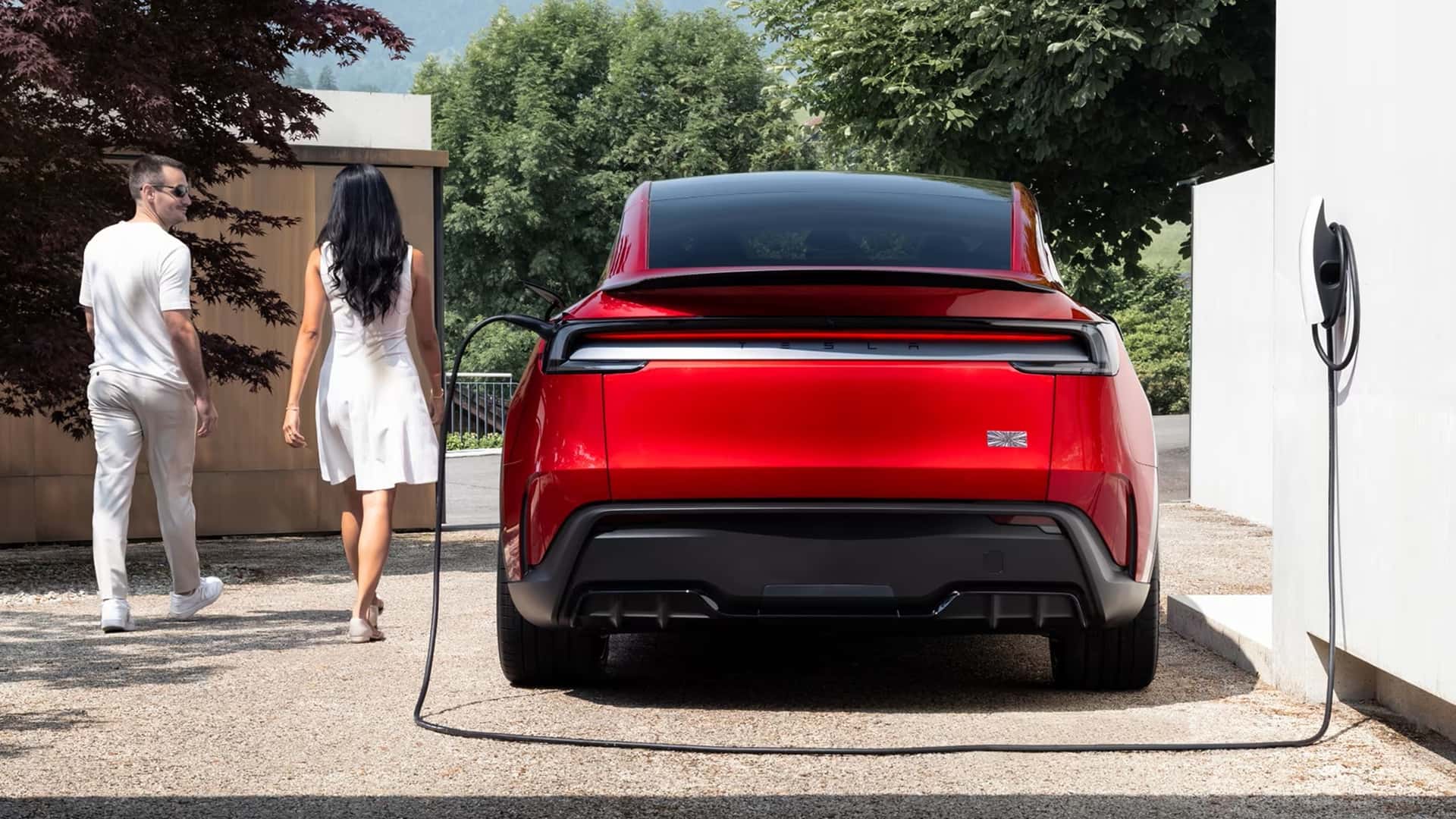
The Tesla Model Y emerged as a standout performer in the ADAC evaluations, consistently exhibiting some of the lowest charging losses among the tested vehicles. When utilizing a basic 2.3 kW mobile charger, the Model Y recorded losses of 12.7%. However, this figure significantly improved when connected to a more robust 11 kW home charger, dropping to an impressive 6.1%. This demonstrates the Model Y’s optimized on-board charging systems and its ability to maintain high efficiency even at lower power inputs, further enhanced by higher power. This performance underscores Tesla’s commitment to overall electric vehicle efficiency.
Mercedes-Benz CLA: Navigating On-Board Charger Limitations
In contrast to the Model Y, the new Mercedes-Benz CLA presented a notable challenge at lower charging power levels. When charged with a 2.3 kW mobile charger, the CLA recorded the highest losses among the group, reaching a substantial 24.2%. ADAC attributed this inefficiency to a specific design decision by Mercedes-Benz, which imposes an 8-ampere limit on the vehicle’s on-board charger during mobile charging. This restriction likely leads to prolonged charging times and increased energy waste through internal components. Encouragingly, when the Mercedes-Benz CLA was hooked up to an 11 kW wall charger, its charging losses dramatically reduced to a competitive 6.9%, showcasing the critical role of charger power output.
Renault 5 E-Tech and Volkswagen ID.7: Consistent Performers
The Renault 5 E-Tech demonstrated commendable efficiency, particularly with higher-powered chargers. When connected to an 11 kW dispenser, it achieved the lowest charging losses of the entire group, at just 5.1%. Its losses with a 2.3 kW mobile charger were 13.7%, and with a 4.1 kW solar charger simulation, they were 8%. This indicates a well-optimized on-board charging system for standard Level 2 AC charging.
The Volkswagen ID.7 also showcased consistent, albeit slightly higher, charging losses. It registered 15.3% losses with a 2.3 kW charger and a more efficient 6.9% with an 11 kW charger. For the 4.1 kW solar charging simulation, losses stood at 10.6%. Both the Renault 5 and Volkswagen ID.7 provided solid performance within the competitive landscape.
Volvo EX30: Exploring Higher Power Benefits
The Volvo EX30, which had a brief presence in the U.S. market, stood out as the sole electric vehicle in ADAC’s test group to support 22 kW AC charging. At this highest power level, the EX30 recorded charging losses of 6.7%. When charged at 11 kW, its losses were marginally higher at 7%. With a 2.3 kW mobile charger, the losses were 14.2%, and 9.1% with the 4.1 kW solar charger simulation. These figures suggest that while 22 kW charging offers a slight improvement over 11 kW, the gains in efficiency might be marginal beyond the 11 kW threshold for this specific model, highlighting diminishing returns in some cases.
Strategic Charging: Minimizing Losses and Lowering Your Bill
The ADAC study’s most significant takeaway for electric vehicle owners is the direct correlation between charger power output and energy efficiency. The data unequivocally supports the recommendation to utilize higher-powered home charging solutions whenever possible to mitigate EV charging losses and, consequently, reduce electricity expenses. This strategy is vital for maximizing the cost-effectiveness of owning an EV.
Specifically, the club’s findings indicate that investing in a dedicated 11 kW or 22 kW home charger can effectively pay for itself over time through substantial savings on electricity bills. These robust charging units consistently delivered lower energy losses across all tested EVs. For instance, the transition from a 2.3 kW mobile charger to an 11 kW unit often halved the percentage of lost energy in many models.
Conversely, while mobile chargers that plug directly into standard household outlets (typically 2.3 kW) offer flexibility and are suitable for emergency use, they are demonstrably less efficient for regular charging. The convenience of these low-powered options comes at the cost of higher energy bills due to increased charging losses. This makes them a less economical choice for routine, overnight charging, emphasizing the importance of dedicated charging infrastructure for sustained efficiency.
The Engineering Behind the Energy Drain: Why Charging Losses Occur
Understanding the fundamental reasons behind EV charging losses can help owners make more informed decisions about their charging practices. The primary cause of energy dissipation during AC home charging lies in the vehicle’s sophisticated electronic components, particularly the on-board charger (OBC). Home outlets supply alternating current (AC), but electric vehicle batteries require direct current (DC) for storage.
The OBC’s critical role is to convert this incoming AC power into DC power suitable for the high-voltage battery. This conversion process is inherently imperfect; no electronic conversion is 100% efficient, and some energy is always lost as heat. The efficiency of this conversion can vary significantly based on the OBC’s design, quality of components, and the power level at which it operates.
Beyond the OBC, other auxiliary components within the electric vehicle can also contribute to power draw during charging. These include systems responsible for thermal management, such as heaters or coolers, which ensure the battery remains within its optimal operating temperature range. Additionally, components like the battery management system (BMS) and various control units consume a small amount of power. These ancillary power sips, while individually minor, accumulate over extended charging periods, particularly with lower-powered chargers that prolong the charging cycle.
Automakers are continually striving to enhance charging efficiency through technological advancements. One notable trend is the shift from conventional silicon semiconductors, which are more affordable but less efficient in power conversion, to advanced silicon carbide (SiC) components. SiC technology offers significantly greater energy efficiency and can help reduce charging losses by minimizing heat generation during power conversion. While SiC components are currently more expensive to integrate, their adoption signifies a move towards more energy-efficient and potentially faster charging systems in future electric vehicles, directly benefiting consumers by reducing their overall electricity consumption.
Frequently Asked Questions About EV Charging Losses
What are EV charging losses?
EV charging losses refer to the electricity consumed from the grid during charging that does not get stored in the vehicle’s battery. This energy is primarily lost as heat during the AC-to-DC power conversion process within the car’s on-board charger and through power consumption by auxiliary vehicle systems.
Why do I pay for energy my EV doesn’t store?
You pay for the total electricity recorded by your energy meter at the charging point. Since some energy is converted to heat or used by the vehicle’s internal electronics during charging, the amount of electricity effectively stored in the battery is less than what was drawn from the grid, but your bill reflects the total draw.
How can I reduce EV charging losses at home?
The most effective way to reduce EV charging losses is to use higher-powered AC home chargers, such as 11 kW or 22 kW units, instead of lower-powered mobile chargers (e.g., 2.3 kW). Higher power leads to faster, more efficient energy transfer and less time for auxiliary systems to draw power.
Which EV models showed the lowest charging losses in the ADAC study?
The Tesla Model Y consistently demonstrated low charging losses, especially with an 11 kW charger (6.1%). The Renault 5 E-Tech also performed exceptionally well with an 11 kW charger, recording the lowest losses in that category at 5.1%.
Are mobile (2.3 kW) chargers always inefficient?
While convenient for emergencies or occasional use, 2.3 kW mobile chargers are generally less efficient for routine home charging due to their lower power output. This results in longer charging times and proportionally higher energy losses compared to dedicated higher-powered home charging stations.
What role do on-board chargers (OBCs) play in energy loss?
The on-board charger (OBC) is crucial for converting the alternating current (AC) from your home into the direct current (DC) required by the EV battery. Inefficiencies within the OBC during this conversion, alongside power drawn by other vehicle components like cooling systems, are the primary sources of charging losses.