
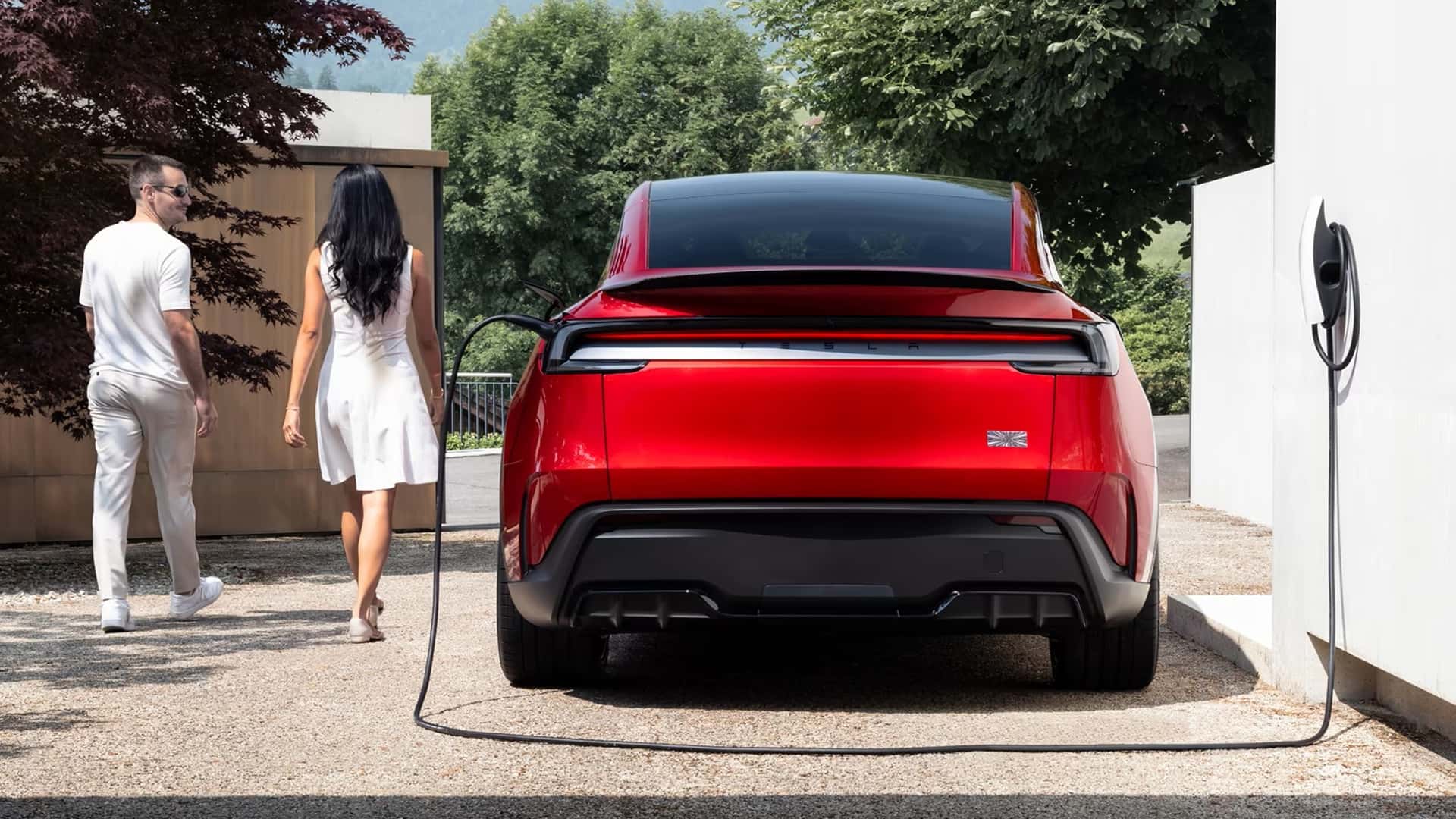
As electric vehicles gain widespread popularity for their efficiency and environmental benefits, a crucial, often overlooked aspect of ownership is coming to light: the phenomenon of EV charging losses. While home charging remains the most convenient and generally cost-effective method to replenish an EV’s battery, a significant portion of the electricity drawn from the grid may not ultimately reach the vehicle’s high-voltage battery. This discrepancy translates into a hidden cost, directly impacting the owner’s electricity bill.
Understanding these energy inefficiencies is paramount for EV owners seeking to optimize their charging practices and minimize expenses. Recent comprehensive testing conducted by Germany’s ADAC, one of Europe’s largest and most respected automobile clubs, sheds critical light on the extent of these losses across various electric vehicle models and charging setups, offering valuable insights into how to reduce them.
Key Takeaways: Optimising Your EV Home Charging
- EV charging losses refer to the energy paid for that does not enter the vehicle’s battery, primarily due to AC-to-DC conversion inefficiencies.
- The magnitude of these losses varies significantly between different EV models and, crucially, depends on the power output of the charger used.
- Germany’s ADAC tests revealed losses ranging from as low as 5.1% to as high as 24.2% across five popular EV models under different AC charging conditions.
- Using higher-powered home chargers (e.g., 11 kW) dramatically reduces EV charging losses compared to lower-powered mobile chargers (e.g., 2.3 kW), leading to substantial long-term savings on electricity bills.
- Technological advancements, such as silicon carbide components in on-board chargers, are key to improving energy efficiency and reducing these losses in modern EVs.
The Unseen Drain: Understanding EV Charging Losses
For many electric vehicle owners, the process of plugging in at home seems straightforward. The electricity meter records a certain amount of energy consumed, typically measured in kilowatt-hours (kWh). However, what few realise is that the energy displayed on their car’s dashboard as ‘received’ by the battery is often less than what the meter recorded. This difference is precisely what constitutes EV charging losses.
To illustrate, if an energy meter registers 30 kWh consumed during a charging session, the vehicle’s battery might only store 27 kWh. The owner, however, is billed for the full 30 kWh. These losses are not merely theoretical; they represent tangible financial implications, adding to the total cost of EV ownership over time. Minimising these losses directly translates to lower energy bills and a more efficient use of electricity.
ADAC’s Rigorous Testing: Uncovering Inefficiencies
Germany’s ADAC embarked on an extensive testing programme to quantify these charging losses across a spectrum of popular electric vehicles. The aim was to identify which models were more efficient and, more importantly, to determine practical strategies for owners to mitigate these losses. The esteemed automobile club is known for its meticulous and independent evaluations, lending significant credibility to its findings.
Methodology and Test Parameters
To ensure robust and comparable results, ADAC conducted three distinct AC charging tests, simulating various real-world home charging scenarios:
- **2.3-kilowatt (kW) Mobile Charger:** Representing basic household outlet charging, often used for convenience or emergencies.
- **4.1 kW Solar Charger Simulation:** Mimicking a lower-power Level 2 charging scenario, potentially aligning with solar surplus charging.
- **High-Powered Home Charger:** Utilising either an 11 kW or 22 kW output, typical of dedicated wall-mounted home charging units.
The selection of test vehicles included five prominent models from leading manufacturers: the Mercedes-Benz CLA, Renault 5, Tesla Model Y, Volvo EX30, and Volkswagen ID.7. To maintain fairness and accuracy, all charging sessions were conducted when the vehicles’ state of charge (SoC) was between 10% and 90%. This range avoids potential distortions caused by cell balancing activities that typically occur at very high states of charge. Furthermore, battery temperatures were consistently maintained between 68°F (20°C) and 86°F (30°C) at the commencement of each session to eliminate temperature as a variable affecting charging efficiency.
Key Findings: Varying Charging Efficiencies Across Models
The ADAC tests revealed a stark contrast in EV charging losses across different models and charging power levels, underscoring the importance of both vehicle design and charging infrastructure choices.
Tesla Model Y: Leading the Pack in Efficiency
The Tesla Model Y emerged as one of the most efficient vehicles in the study, consistently demonstrating lower EV charging losses across all power levels. Even with a modest 2.3 kW mobile charger, the Model Y’s losses stood at 12.7%. Significantly, upgrading to an 11 kW home charger nearly halved these losses, bringing them down to a commendable 6.1%. This performance highlights Tesla’s engineering focus on energy management.
Mercedes-Benz CLA: A Case of High Losses at Low Power
At the other end of the spectrum, the new Mercedes-Benz CLA recorded the highest losses when connected to a mobile charger, reaching a substantial 24.2%. ADAC attributed this elevated inefficiency to Mercedes-Benz’s decision to impose an 8-ampere limit on the on-board charger when using a low-power mobile charger. However, the situation improved dramatically with a higher-powered setup; an 11 kW wall charger reduced the losses significantly to 6.9%, illustrating the critical role of charger power.
Renault 5 E-Tech: Impressive Performance with 11 kW Charging
The French Renault 5 E-Tech showcased exceptional efficiency, particularly with an 11 kW charger, achieving the lowest charging losses in the entire group at just 5.1%. While its losses were higher with the 2.3 kW mobile charger (13.7%) and 4.1 kW solar simulation (8%), its peak efficiency at a common home charging speed is noteworthy for prospective owners.
Volvo EX30: Supporting Higher Power with Minimal Gains
The Volvo EX30 was unique among the tested EVs for its support of 22 kW charging. While an 11 kW charger resulted in 7% losses, bumping up to a 22 kW charger only marginally improved efficiency, reducing losses to 6.7%. This suggests that for most AC home charging, the efficiency gains beyond 11 kW may be minimal in some vehicles. The EX30 also showed 14.2% losses with a 2.3 kW mobile charger and 9.1% with the 4.1 kW solar simulation.
Volkswagen ID.7: Consistent Performance
The Volkswagen ID.7 demonstrated consistent, mid-range performance in the ADAC tests. Its EV charging losses were recorded at 15.3% with a 2.3 kW mobile charger, 10.6% during the 4.1 kW solar simulation, and a competitive 6.9% when using an 11 kW charger. Like most others, it did not support 22 kW charging.
The Power Connection: Why Charger Output Matters
The ADAC findings unequivocally highlight a critical takeaway: higher-powered home chargers lead to significantly lower EV charging losses. This principle holds true across all tested models, indicating that investing in a dedicated, high-output Level 2 home charger can pay for itself over time through reduced energy waste.
Conversely, relying on mobile chargers that plug into standard household outlets (typically 2.3 kW) results in substantially higher losses. While convenient for emergencies or occasional top-ups, these low-power charging methods translate to higher energy bills over the long run. The car’s internal components, such as the on-board charger, operate less efficiently at lower power inputs, leading to more wasted energy during the conversion process.
The Technicalities of Loss: AC to DC Conversion
EV charging losses fundamentally stem from the necessity of converting alternating current (AC) from the home grid into direct current (DC) required by the vehicle’s high-voltage battery. This intricate conversion process occurs within the car’s on-board charger (OBC), an essential electronic component.
Every energy conversion involves some degree of inefficiency, primarily dissipated as heat. Furthermore, other vehicle components, such as the battery management system, cooling systems, or heating elements, may draw power during charging, further contributing to the overall energy loss recorded by the meter but not stored in the battery. Advances in semiconductor technology, particularly the shift from conventional silicon to more energy-efficient silicon carbide (SiC) components, are helping some automakers improve OBC efficiency, though SiC components generally come at a higher manufacturing cost.
Practical Advice for EV Owners to Reduce Losses
Based on ADAC’s findings and the underlying technical principles, EV owners can adopt several strategies to minimise their EV charging losses and thus reduce their electricity bills:
- **Invest in a High-Powered Home Charger:** If possible, install a dedicated Level 2 wall charger (e.g., 11 kW) at home. While an initial investment, the long-term savings from reduced energy losses can be substantial.
- **Minimise Use of Mobile Chargers:** Reserve low-power mobile chargers for situations where higher-power options are unavailable. Regular use for daily charging will lead to higher energy consumption and costs.
- **Charge Optimally:** While the ADAC tests were conducted between 10% and 90% SoC, maintaining a regular charging schedule within the battery’s optimal range (e.g., 20-80% for daily use) can sometimes contribute to overall battery health and charging efficiency, though the ADAC study focused on conversion losses.
- **Consider Vehicle Efficiency:** When purchasing an EV, research its charging efficiency, if data is available, as some models are inherently better at minimising losses than others.
The Road Ahead: Towards More Efficient Charging
The ADAC study serves as a crucial reminder that while electric vehicles are inherently more efficient than their combustion counterparts, there are still areas for optimisation. As the global shift towards electric mobility accelerates, addressing EV charging losses will become increasingly important for both consumers and manufacturers.
For consumers, understanding these inefficiencies empowers them to make informed choices about charging infrastructure and practices, leading to real savings. For manufacturers, it underscores the continuous need to innovate on-board charger technology and overall energy management systems, striving for even greater efficiency in the journey from grid to battery. Ultimately, a more transparent and efficient charging ecosystem will foster greater confidence and adoption of electric vehicles worldwide.
Frequently Asked Questions (FAQ)
What are EV charging losses?
EV charging losses represent the difference between the total electricity drawn from the grid (what you pay for) and the actual energy stored in your electric vehicle’s battery. These losses occur during the AC-to-DC conversion process within the car’s on-board charger and from auxiliary systems that consume power during charging.
Why do EV charging losses occur?
Losses primarily occur because your home supplies alternating current (AC), but EV batteries require direct current (DC). The car’s on-board charger converts AC to DC, and this process is never 100% efficient, generating heat. Additionally, the battery management system, cooling, or heating components also draw power, contributing to the overall energy waste.
How significant are EV charging losses for homeowners?
As demonstrated by ADAC tests, losses can range from approximately 5% to over 24% depending on the vehicle model and charger type. Over a year of regular charging, these percentages translate into tangible extra costs on your electricity bill, making efficient charging a financially beneficial practice for EV owners.
Can I reduce EV charging losses at home?
Yes, you can significantly reduce EV charging losses. The most effective method is to use a higher-powered home charger (e.g., an 11 kW wall charger). Tests show these chargers are much more efficient than lower-powered mobile chargers (2.3 kW), leading to less wasted energy and lower electricity bills.
Are some EV models better at minimising charging losses than others?
Absolutely. The ADAC study revealed notable differences in charging efficiency among various EV models. For instance, the Tesla Model Y and Renault 5 E-Tech demonstrated particularly low losses with higher-powered chargers, while the Mercedes-Benz CLA showed higher losses when using a low-power mobile charger due to its design limitations.
What role does the on-board charger play in charging efficiency?
The on-board charger (OBC) is a critical component for charging efficiency. Its design and technology directly influence how effectively AC power is converted to DC for the battery. Automakers are increasingly adopting advanced materials like silicon carbide (SiC) in OBCs to improve efficiency and reduce heat generation, thereby lowering charging losses.
Should I avoid using a mobile charger for my EV?
While mobile chargers are convenient and can be used in emergencies, they generally result in higher EV charging losses due to their lower power output. For daily home charging, it is advisable to use a dedicated wall charger with higher power (e.g., 11 kW) to maximise efficiency and minimise your overall energy expenditure.