
Key Takeaways (TL;DR)
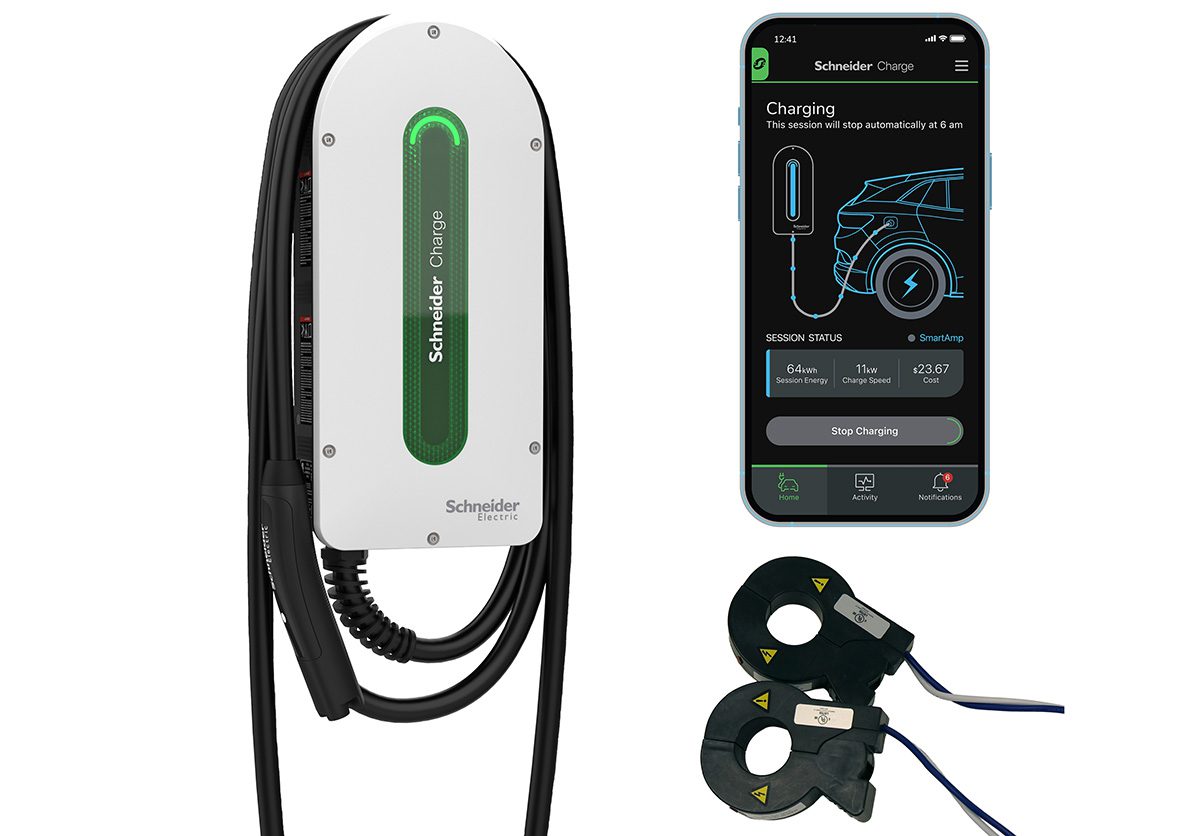
- Schneider Electric has launched the new Schneider Charge, a Level 2 residential EV charger designed for the US and Canadian markets.
- The charger features SmartAmp, a dynamic load-management technology that monitors household electrical use in real time.
- SmartAmp automatically adjusts charging speed, enabling high-power EV charging without expensive home electrical service or panel upgrades.
- It delivers 11.5 kW/48 A, is compliant with OCPP 1.6, and supports NACS (J3400) or J1772 connectors.
- This innovation aims to simplify home EV charger installation, reduce costs, and maximize charging efficiency within existing home electrical capacities.
Revolutionizing Home EV Charging: The Schneider Charge Arrives
Schneider Electric, a global leader in energy management and automation, has officially launched its advanced smart Level 2 residential EV charger, the Schneider Charge, now available across the United States and Canada. This innovative device is engineered to address a critical challenge faced by many electric vehicle (EV) owners: integrating high-power charging into existing home electrical systems without necessitating costly and often complex infrastructure upgrades.

The introduction of the Schneider Charge EV charger marks a significant step forward in making residential EV charging more accessible and efficient. Its design focuses on seamless integration, allowing homeowners to confidently add Level 2 charging capabilities, which are essential for faster replenishment of EV batteries, directly within their current electrical setup.
Addressing the Home Electrical Capacity Conundrum
The burgeoning adoption of electric vehicles has brought into sharp focus the limitations of conventional residential electrical systems. Many homes, particularly older constructions, were not originally designed to support the substantial electrical load required by modern high-power appliances, including Level 2 EV chargers.
Historically, installing a Level 2 EV charger in such homes often meant a substantial investment in service and/or electrical panel upgrades. These modifications can be both expensive and disruptive, involving significant electrical work and potentially prolonged installation timelines. This hurdle has frequently deterred prospective EV owners or complicated the transition for those already driving electric cars.

SmartAmp Technology: The Core of Efficient Charging
At the heart of the Schneider Charge EV charger’s innovation is SmartAmp, Schneider Electric’s proprietary dynamic load-management technology. This sophisticated system represents a leap in home energy intelligence, meticulously monitoring the household’s electrical consumption in real time.
The SmartAmp technology intelligently assesses the energy demands of other appliances operating within the home. When peak usage occurs from devices like air conditioners, electric ovens, or water heaters, SmartAmp automatically and seamlessly adjusts the EV charging speed. This dynamic regulation ensures that the overall household electrical capacity is never overtaxed, preventing circuit overloads and maintaining optimal power distribution.
A key benefit of integrating SmartAmp directly into the Schneider Charge EV charger is the elimination of the need for separate monitoring devices or additional system components. This integrated approach simplifies installation and operation, offering homeowners a streamlined solution that maximizes their EV charging output without introducing unnecessary complexity or additional hardware.
Performance, Compliance, and Versatility
The Schneider Charge EV charger is engineered for robust performance, delivering a powerful 11.5 kW/48 A of charging output. This capacity ensures that electric vehicles can be charged significantly faster than with standard Level 1 chargers, making it practical for daily use and accommodating longer commutes.
In terms of interoperability and safety, the Schneider Charge adheres to critical industry standards. It is fully compliant with OCPP 1.6 (Open Charge Point Protocol), an international standard that enables seamless communication between EV chargers and central management systems. Furthermore, the device supports managed-load installations in accordance with UL 3141, a crucial safety standard that provides guidelines for the safe operation of EV charging equipment, particularly in conjunction with intelligent load management systems.
Understanding the evolving landscape of EV connectors, the Schneider Charge EV charger offers versatility with two primary options: NACS (J3400) or J1772 connectors. This ensures compatibility with a broad spectrum of electric vehicles currently on the market, as well as future models adopting the North American Charging Standard (NACS).
Installation Simplified: Hardwired Design and Support
The initial release of the Schneider Charge EV charger features a hardwired design, intended for permanent installation. This configuration ensures a robust and secure power connection, vital for the high-power demands of Level 2 charging. For added convenience and future flexibility, Schneider Electric has announced plans to introduce a plug-in version of the Schneider Charge in early 2027, catering to different installation preferences and requirements.
Each unit comes equipped with a generous 25-foot charging cable, providing ample reach for various parking configurations within a garage or driveway. To further streamline the installation process and ensure professional setup, homeowners can access dedicated installation support through Qmerit, a reputable network specializing in electrification services.
Expert Insights on Home Electrification Challenges
Shawn Bonacorsi, Head of Electrification Solutions for Schneider Electric North America, highlighted the pressing need for such solutions in the current market. “As homeowners buy EVs and add high-power electric technologies, many are realizing their existing electrical systems were not built for that level of demand,” Bonacorsi stated.
He further elaborated on how the Schneider Charge directly addresses these challenges: “Schneider Charge helps remove that installation hurdle by enabling Level 2 charging within a home’s existing electrical capacity. By building load management into the charger, we’re making home EV charging easier to install with less complexity and disruption for homeowners.” This perspective underscores the product’s alignment with consumer needs for simplicity and cost-effectiveness in the journey towards home electrification.
The Broader Impact of Smart Charging Solutions
The availability of the Schneider Charge EV charger signifies more than just a new product launch; it represents a significant enabler for wider EV adoption. By mitigating the common deterrents of high installation costs and complex electrical modifications, Schneider Electric is helping to democratize access to efficient home charging.
This intelligent solution not only benefits individual homeowners by offering convenience and peace of mind but also contributes to the overall stability of the electrical grid. By dynamically managing loads, it helps prevent strain on local utility infrastructure during peak EV charging times, fostering a more sustainable and resilient energy ecosystem.
Ultimately, the Schneider Charge is poised to play a crucial role in accelerating the transition to electric vehicles by making home charging a more feasible, affordable, and less complicated endeavor for a broader segment of the population. (Source: Schneider Electric)
Frequently Asked Questions (FAQ)
What is the Schneider Charge EV charger?
The Schneider Charge is a new smart Level 2 residential EV charger launched by Schneider Electric for the US and Canadian markets. It features integrated dynamic load management to enable efficient EV charging within a home’s existing electrical capacity.
How does dynamic load management work in the Schneider Charge?
The charger utilizes Schneider Electric’s SmartAmp technology. It monitors real-time household electrical usage and automatically adjusts the EV charging speed to ensure other appliances receive sufficient power, preventing overloads without external devices.
What electrical output does the Schneider Charge provide?
The Schneider Charge EV charger delivers a robust 11.5 kW/48 A of charging output. This allows for significantly faster charging of electric vehicles compared to standard Level 1 chargers, making it ideal for daily home use.
What types of EV connectors are supported by the Schneider Charge?
Homeowners can choose between NACS (J3400) or J1772 connectors for the Schneider Charge. This ensures broad compatibility with most electric vehicles available in the market today and accommodates the evolving industry standards.
Will a plug-in version of the Schneider Charge be available?
Initially, the Schneider Charge is offered as a hardwired unit for permanent installation. However, Schneider Electric has confirmed plans to introduce a convenient plug-in version of the Level 2 residential EV charger in early 2027.
Does the Schneider Charge comply with industry standards?
Yes, the Schneider Charge EV charger is compliant with OCPP 1.6, an open standard for charger-network communication. It also supports managed-load installations in accordance with UL 3141, a key safety standard for EV charging equipment.
What support is available for installing the Schneider Charge?
To ensure a smooth and professional setup, installation support for the Schneider Charge EV charger is available through Qmerit. Qmerit is a specialized network that assists homeowners with their home electrification and EV charging installation needs.
Why is integrated load management important for home EV charging?
Integrated load management is crucial because many homes lack the sufficient electrical capacity for high-power Level 2 EV charging without expensive panel upgrades. The Schneider Charge solves this by dynamically managing power, making installation easier and more affordable for homeowners.