
Key Takeaways
- Honda’s global electric vehicle (EV) sales experienced a significant decline in the quarter ending December, falling by half to approximately 15,000 units globally.
- The Japanese automaker anticipates EV-related losses to reach approximately $4.48 billion by the end of the current fiscal year.
- General Motors stands to gain from this downturn, as Honda is contractually obligated to compensate the American giant for reduced output from their joint manufacturing efforts, despite the challenging performance of co-developed models like the Honda Prologue and the now-discontinued Acura ZDX.
- In response to these setbacks, Honda is undertaking a “fundamental review” of its automotive strategy, pivoting towards an in-house developed ‘0 Series’ EV architecture.
TOKYO, INDIA – In a significant development within the rapidly evolving global electric vehicle market, Japanese automotive giant Honda has reported a sharp decline in its electric car business. The downturn, observed in the financial quarter concluding in December, has seen the company’s global EV sales plummet by half. This challenging period underscores the complexities of the global transition to electric mobility and places a spotlight on Honda’s strategic alliances, particularly its manufacturing partnership with General Motors (GM).
While Honda grapples with substantial operating losses and a need for a fundamental strategic recalibration, General Motors finds itself in a peculiar position to benefit. The intricate contractual agreements underpinning their joint electric vehicle development and production mean that GM could be an unexpected beneficiary as Honda navigates these turbulent waters.
Honda’s Plummeting EV Sales and Financial Repercussions
The latest financial reporting reveals a stark reality for Honda’s electric vehicle segment. In the October-December quarter, global sales of Honda’s electric vehicles totaled a mere 15,000 units, representing a substantial 50% decrease. This sharp drop has contributed significantly to a challenging financial outlook for the Japanese manufacturer.
The company has now recorded its fourth consecutive quarter of operating losses, with its consolidated profits diminishing by a substantial 61% in the third fiscal quarter alone. Projections for the full fiscal year ending March 2026 indicate that write-offs and expenses related to its EV business are expected to escalate dramatically.
Escalating Losses in the EV Division
In the initial nine months of the previous financial year, Honda’s EV-related expenses had already reached $1.71 billion. The company now forecasts these losses to balloon to an estimated $4.48 billion by the close of the current fiscal year. This figure highlights the immense financial pressure Honda is facing as it endeavors to establish a competitive foothold in the electric vehicle landscape.
Adding to these domestic challenges, the impact of U.S. import duties is projected to introduce an additional $1.98 billion in losses by the end of March. Cumulatively, these factors are expected to reduce the automaker’s operating profit by an alarming 55%.
The GM-Honda Partnership Under Scrutiny
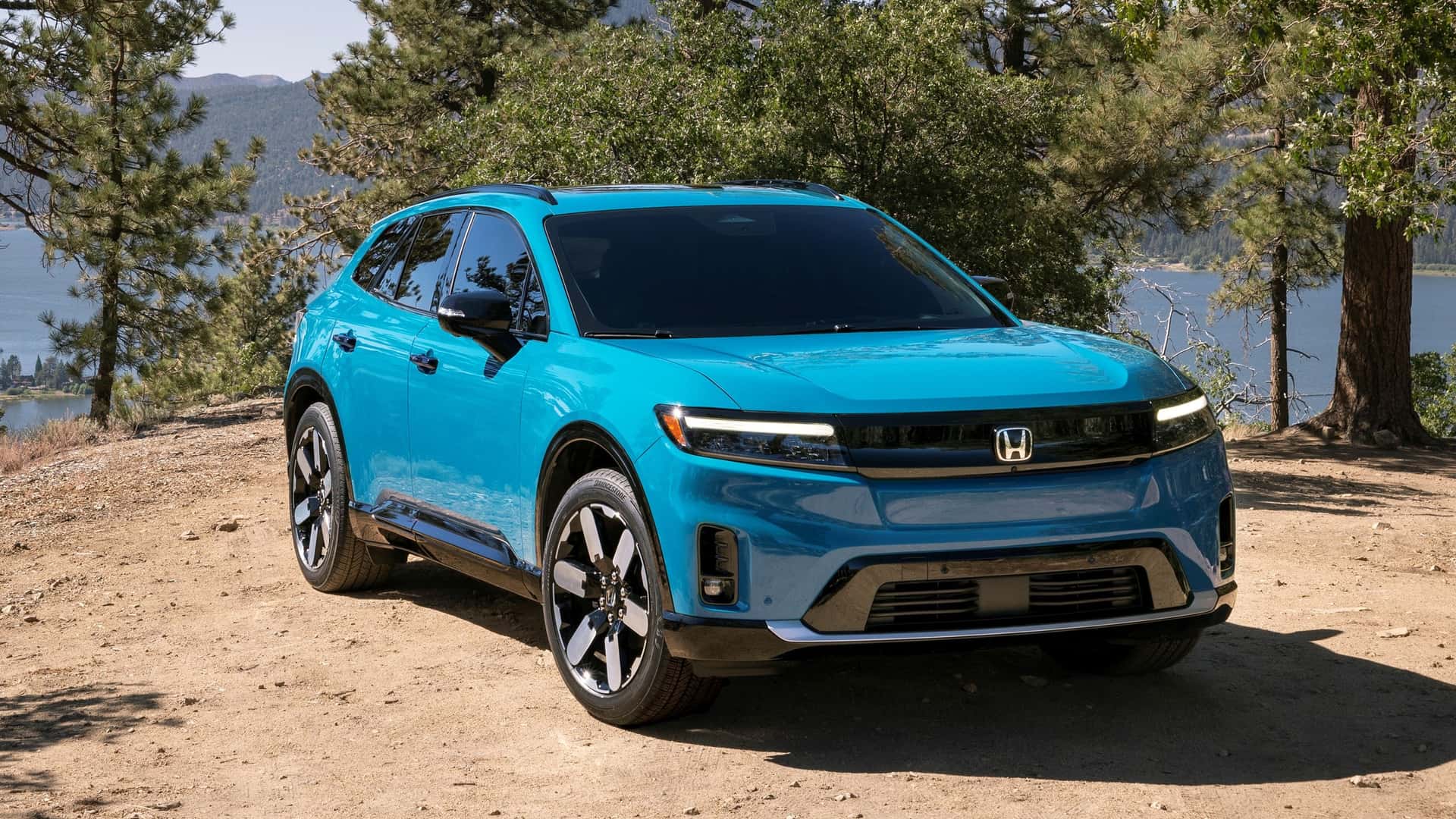
Central to Honda’s recent EV strategy has been its collaborative agreement with General Motors. This partnership aimed to leverage GM’s Ultium electric platform and manufacturing capabilities to accelerate Honda’s entry into the EV market, particularly with models tailored for the North American market. The Honda Prologue and the ill-fated Acura ZDX electric crossovers were direct products of this joint development.
Both models were designed to share the underlying electric platform with GM vehicles, such as the Chevrolet Blazer EV, and were produced at GM’s manufacturing facilities. However, the performance of these co-developed vehicles has been a major contributing factor to Honda’s current predicament in the realm of Honda EV sales decline.
Acura ZDX’s Brief Market Stint
The Acura ZDX, assembled at GM’s Spring Hill plant in Tennessee, had an exceptionally short life cycle. Despite being a new entrant, Acura made the decision to cease production of the ZDX EV after just one model year due to sluggish sales figures. This cancellation occurred critically just before a federal tax credit of $7,500 for electric vehicles was rescinded, further complicating its market viability.
In total, the Acura ZDX managed to achieve only 19,411 sales before its discontinuation, signaling a significant misjudgment of market demand and competitive positioning.
The Honda Prologue’s Mixed Performance
Meanwhile, the Honda Prologue, which is manufactured at GM’s Ramos Arizpe plant in Mexico, has demonstrated a more volatile sales trajectory. Last year, Honda successfully sold 39,194 Prologue EVs in the U.S., marking an 18.7% increase compared to the previous year, which initially suggested a promising start for the model.
However, the most recent quarter has painted a far bleaker picture. Sales of the Prologue tumbled dramatically by 86% in the October-December period, registering only 2,641 units sold. This sharp decline underscores the persistent challenges in maintaining sales momentum for new electric vehicle offerings, even with a strong brand presence.
General Motors as the Unexpected Beneficiary
The substantial drop in sales for both the Prologue and ZDX compelled Honda to significantly reduce its order volumes from General Motors. According to reports from Automotive News, Honda is now contractually obligated to compensate the American automaker for this reduced output. This arrangement positions GM as a surprising financial winner, mitigating some of its own operational risks associated with underutilized manufacturing capacity.
This situation highlights the intricate financial mechanics and risk-sharing models prevalent in large-scale automotive manufacturing partnerships, where commitments extend beyond mere production numbers.
Honda’s Strategic Recalibration and Future Outlook
In light of the significant Honda EV sales decline and the associated financial pressures, the company has initiated a “fundamental review” of its overarching car strategy. This strategic reassessment signals a shift away from heavily relying on external platforms and towards a more integrated, in-house development approach for its next generation of electric vehicles.
To mitigate immediate losses and stimulate demand for existing models, Honda has attempted to boost fleet sales of the Prologue crossover. However, these efforts have necessitated additional spending on manufacturer incentives, further impacting profit margins. For instance, last month, Honda injected over $17,000 into every Prologue sold in the U.S., yet these incentives proved insufficient to significantly boost sales, with only 664 units finding new owners.
The Dawn of the ‘0 Series’
Moving forward, Honda is placing its future EV aspirations on a new, bespoke lineup of electric vehicles. These will be based on an in-house-developed architecture termed the ‘0 Series’. This strategic pivot underscores Honda’s commitment to regaining control over its electric vehicle technology and development cycle.
The first vehicle anticipated from this new platform is the Acura RSX crossover, slated for market release by the end of this year. Following the RSX, two Honda-branded models, the ‘0 Series SUV’ and the ‘0 Series Saloon’, are also planned to debut, marking a significant step in the company’s renewed EV offensive.
Revisiting Global EV Ambitions
The challenges faced by Honda in the electric vehicle segment have led to a substantial revision of its long-term targets. In 2024, the company boldly projected global EV sales of as many as two million units by 2030. However, the realities of market competition, supply chain complexities, and evolving regulatory landscapes have necessitated a more conservative outlook.
Last year, Honda significantly revised this ambitious estimate, bringing its projected global EV sales for 2030 down to a range of 700,000 to 750,000 units. This adjustment reflects a more pragmatic assessment of the pace of EV adoption and Honda’s projected market share, especially in the wake of the Honda EV sales decline experienced recently.
The current situation for Honda serves as a cautionary tale within the automotive industry, highlighting the significant capital investment, strategic agility, and market understanding required to succeed in the electric vehicle transition. While its partnership with General Motors initially offered a pathway to market, the recent performance indicates that internal capabilities and a distinct product identity remain crucial for long-term success in the competitive global EV landscape.
Frequently Asked Questions (FAQ)
What was the extent of Honda’s EV sales decline?
Honda’s global electric vehicle sales plummeted by 50% in the quarter ending December, reaching approximately 15,000 units worldwide. This significant downturn has raised concerns about the company’s immediate EV market strategy and financial performance.
How much is Honda expected to lose from its EV business this fiscal year?
Honda projects its EV-related losses to escalate to about $4.48 billion by the end of the current fiscal year. This figure includes substantial write-offs and expenses associated with its electric vehicle development and market entry efforts.
Why is General Motors potentially a winner in this scenario?
General Motors is expected to benefit because Honda is contractually obliged to compensate GM for reducing its manufacturing orders for jointly developed models like the Prologue and the ZDX. This arrangement ensures GM receives payments despite lower output from its factories.
What happened to the Acura ZDX?
The Acura ZDX, co-developed with GM, was canceled after just one model year due to poor sales, achieving only 19,411 units. Its discontinuation occurred shortly before a key federal tax credit was rescinded, further dampening its market prospects.
What is Honda’s new strategy for electric vehicles?
Honda is shifting towards a “fundamental review” of its strategy, focusing on an in-house-developed ‘0 Series’ EV architecture. The first models from this new platform will be the Acura RSX crossover, followed by the Honda ‘0 Series SUV’ and ‘0 Series Saloon’.
How have Honda’s long-term EV sales targets changed?
Honda significantly revised its 2030 global EV sales target from an ambitious two million units down to a more conservative range of 700,000 to 750,000 units. This adjustment reflects the current market realities and the challenges experienced in scaling EV production and sales.
What factors contributed to the Honda Prologue’s sales decline?
Despite an initial promising start, Honda Prologue sales tumbled by 86% in the last quarter, with only 2,641 units sold. Factors contributing to this decline include intense market competition, challenges with consumer adoption, and possibly the need for more aggressive incentives.
Are US import duties impacting Honda’s finances?
Yes, the impact of U.S. import duties is expected to add approximately $1.98 billion in additional losses for Honda by the end of March. This further exacerbates the financial pressures on the automaker’s global operations.