
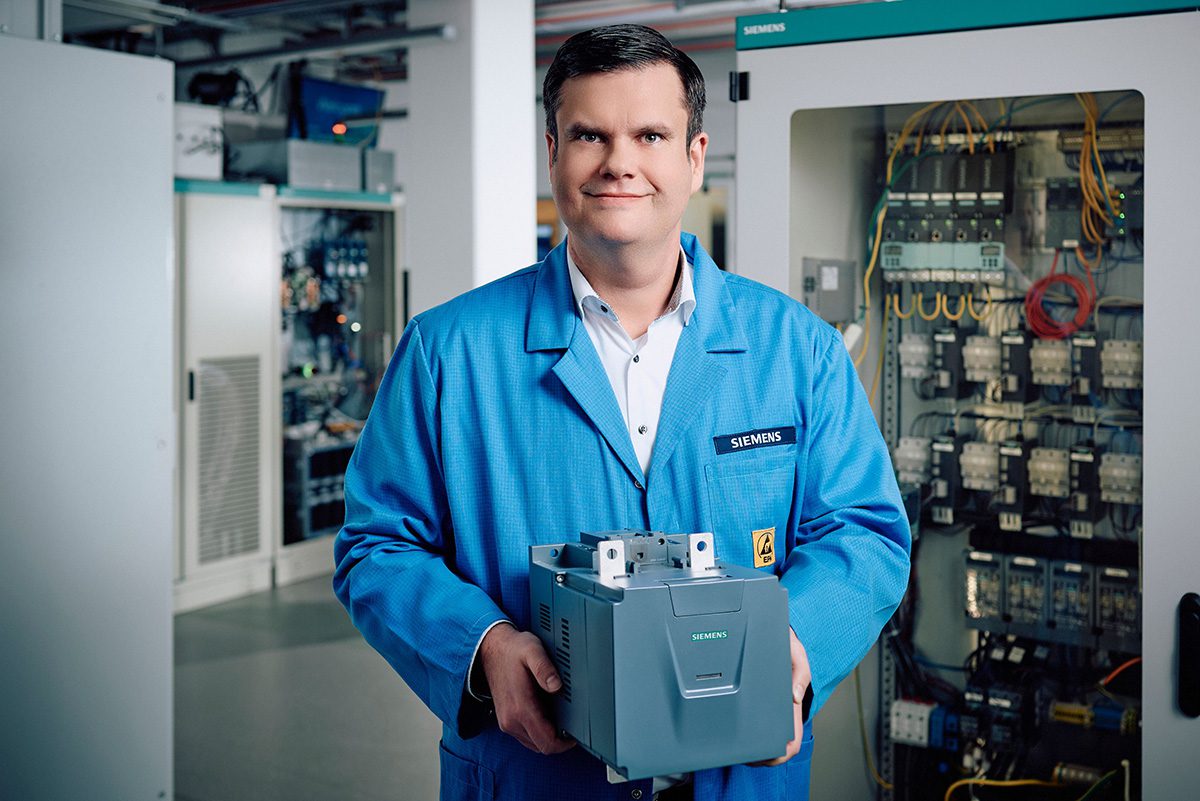
Key Takeaways:
- Siemens has introduced the SIRIUS 3QC1, a groundbreaking hybrid heavy-duty DC contactor, on November 20, 2026.
- This innovative device combines semiconductor switching for wear-free operation with mechanical contacts for current conduction and galvanic isolation.
- Rated for DC currents up to 600 A and voltages up to 1,500 V, it offers a robust solution for high-power applications.
- The SIRIUS 3QC1 is bidirectional, making it ideal for charging and discharging cycles in battery energy storage systems (BESS) and megawatt charging stations (MCS).
- Designed for e-mobility applications, including electric trucks, buses, and fleet charging, it supports megawatt fast-charging up to 1,000 kW.
- Its wear-free switching mechanism ensures maintenance-free operation and reduced plant maintenance costs, boasting a lifespan of at least 150,000 switching cycles.
Siemens Revolutionises DC Power Management with Hybrid Contactor
In a significant advancement for high-power DC applications, technology giant Siemens has officially launched the SIRIUS 3QC1, touted as the world’s first semiconductor-based heavy-duty DC contactor. This innovative hybrid device, introduced on November 20, 2026, is engineered to manage DC currents up to 600 Amperes and voltages as high as 1,500 Volts, addressing the growing demand for efficient and reliable power switching in critical infrastructure.

The SIRIUS 3QC1 integrates two distinct yet complementary switching technologies: semiconductor components and traditional mechanical contacts. This unique combination is designed to deliver unparalleled performance, safety, and longevity in demanding environments, particularly within the rapidly expanding sectors of e-mobility and renewable energy storage.
Understanding the Hybrid Technology: Semiconductors Meet Mechanical Contacts
At the core of the SIRIUS 3QC1’s innovation lies its hybrid architecture. The semiconductor elements are responsible for the actual switching operations, enabling wear-free transitions. This design effectively prevents the formation of electric arcs, which are a common cause of wear and tear in conventional mechanical contactors, thereby significantly extending the device’s lifespan.
Following the semiconductor-driven switching, the mechanical contacts engage. Their primary role is to conduct the current during operation and, crucially, to provide galvanic isolation. This isolation ensures a complete and safe interruption of the conducting path, a vital safety feature in high-voltage DC systems. This dual-action approach allows the heavy-duty DC contactor to achieve a remarkable operational life of at least 150,000 switching cycles.

Versatile Applications: From E-Mobility to Energy Storage
The bidirectional capability of the SIRIUS 3QC1 is a key feature, allowing it to switch power irrespective of the current’s direction. This makes it exceptionally well-suited for applications that involve both charging and discharging, a common requirement in modern energy systems. Its robust design positions it as a critical component across several high-power sectors.
Powering Megawatt Charging Systems for Heavy-Duty Fleets
One of the primary target applications for this advanced heavy-duty DC contactor is the burgeoning field of e-mobility, specifically megawatt fast-charging stations. With the global push towards electrifying heavy-duty transport, such as electric trucks and electric buses, there is an escalating need for charging infrastructure capable of delivering substantial power quickly.
The SIRIUS 3QC1 is specifically designed for megawatt charging systems (MCS) up to 1,000 kW, providing the robust and reliable power management essential for rapidly recharging large vehicle fleets. Its capacity to handle high currents and voltages ensures efficient and safe power transfer, minimizing downtime for commercial electric vehicles.
Enhancing Battery Energy Storage Systems (BESS)
Beyond transportation, the SIRIUS 3QC1 is poised to significantly impact Battery Energy Storage Systems (BESS). These systems are crucial for grid stability, renewable energy integration, and providing backup power. The heavy-duty DC contactor can be integrated into standard 100 kW power racks and even high-power racks reaching up to 375 kW within BESS configurations.
Its bidirectional switching capability is particularly beneficial in BESS, enabling seamless transitions between charging the batteries from the grid or renewable sources and discharging stored energy back into the grid or local loads. This flexibility is vital for optimizing energy flow and maximizing the efficiency of storage solutions.
Facilitating Industrial DC Microgrids and Marine Electrification
The applications extend further to industrial DC microgrids, which increasingly couple photovoltaic (PV) systems with battery storage for localized, sustainable power generation and consumption. The heavy-duty DC contactor serves as a foundational component in managing power flow within these complex, interconnected systems, ensuring stability and efficiency.
Additionally, the device is applicable in marine environments, including ships, where robust and reliable DC power management is essential for propulsion, auxiliary systems, and emerging hybrid-electric maritime technologies. Its ability to operate across a broad temperature range and high humidity levels underscores its suitability for such demanding operational contexts.
Operational Efficiency and Maintenance Advantages
Siemens has integrated several features into the SIRIUS 3QC1 to enhance operational ease and reduce maintenance requirements. The heavy-duty DC contactor includes an integrated display complemented by status and condition LEDs, providing immediate visual feedback on its operational state. This allows operators to quickly ascertain the device’s status without needing complex diagnostic tools.
Furthermore, the contactor supports remote switching capabilities, eliminating the need for manual intervention on-site. This feature is particularly advantageous in distributed energy systems or large industrial plants where physical access to every component might be challenging or time-consuming. The wear-free switching mechanism, as a direct consequence of its hybrid design, significantly reduces the need for routine maintenance, translating into lower operational costs for plant owners over the device’s extensive lifespan.
For added convenience and safety, Siemens offers the heavy-duty DC contactor in a design that combines it with a fuse, providing an integrated protection solution that streamlines installation and enhances overall system security.
Technical Specifications and Industry Impact
The SIRIUS 3QC1 will be available in multiple current ratings to suit various application needs, including 300 A, 400 A, 500 A, and 600 A versions. It operates on a standard 24 V DC control voltage, ensuring compatibility with common control systems. Designed for resilience, the device can function effectively in temperatures ranging from -25° C to +60° C and withstand humidity levels up to 95%, underscoring its suitability for diverse industrial and outdoor environments.
Markus Grabmeier, President of Electrical Products at Siemens, underscored the strategic importance of this development, stating, “The shift to direct current is a gamechanger for energy efficiency and the integration of renewables. Our new DC contactor is a crucial building block in this transformation, making sustainable power practical and scalable.” This statement highlights Siemens’ commitment to supporting the global transition towards more efficient and sustainable energy infrastructures, with the heavy-duty DC contactor playing a pivotal role.
The introduction of the SIRIUS 3QC1 marks a significant step forward in power electronics, offering a robust, reliable, and efficient solution for managing high-power DC circuits. Its innovative hybrid design addresses long-standing challenges in wear and maintenance, promising to enhance the scalability and practicality of advanced energy systems worldwide.
Frequently Asked Questions (FAQ)
What makes the Siemens SIRIUS 3QC1 a ‘hybrid’ DC contactor?
The SIRIUS 3QC1 combines semiconductor switches with traditional mechanical contacts. Semiconductors handle the initial switching to prevent arcing and wear, while mechanical contacts close to conduct the current and provide galvanic isolation, ensuring a safe and complete circuit break. This blend optimises both longevity and safety.
What are the primary applications of this heavy-duty DC contactor?
This heavy-duty DC contactor is designed for high-power DC applications. Key uses include megawatt fast-charging stations (MCS) for electric trucks, buses, and fleets, as well as battery energy storage systems (BESS) in both standard and high-power configurations. It also finds utility in industrial DC microgrids and marine applications.
How does the SIRIUS 3QC1 contribute to reduced maintenance?
By utilising semiconductor switching, the contactor significantly reduces wear caused by electrical arcs, which are typical in purely mechanical devices. This wear-free operation extends the device’s lifespan to at least 150,000 switching cycles, drastically cutting down on maintenance requirements and associated operational costs for the plants where it is installed.
What are the voltage and current ratings of the new contactor?
The Siemens SIRIUS 3QC1 is engineered to handle DC voltages up to an impressive 1,500 Volts and DC currents up to 600 Amperes. It will be available in specific current ratings including 300 A, 400 A, 500 A, and 600 A, offering flexibility for various high-power demands.
Why is bidirectional switching important for this heavy-duty DC contactor?
Bidirectional switching allows the contactor to manage power flow effectively regardless of current direction. This capability is crucial for systems like battery energy storage, where energy is frequently charged into and discharged from batteries, and for e-mobility charging, supporting vehicle-to-grid (V2G) functions in the future. It ensures versatile energy management.
What is the significance of the integrated display and remote switching feature?
The integrated display with status and condition LEDs provides immediate visual feedback on the contactor’s operational state, simplifying monitoring. Remote switching capabilities allow operators to control the device from a distance, eliminating the need for manual intervention on-site. These features enhance operational efficiency and reduce the need for physical access.