
Key Takeaways:
- ChargePoint has deployed an advanced DC fast EV charging facility at Portland International Airport (PDX).
- The facility is specifically designed for rental car companies operating within PDX’s Quick Turnaround (QTA) Facility.
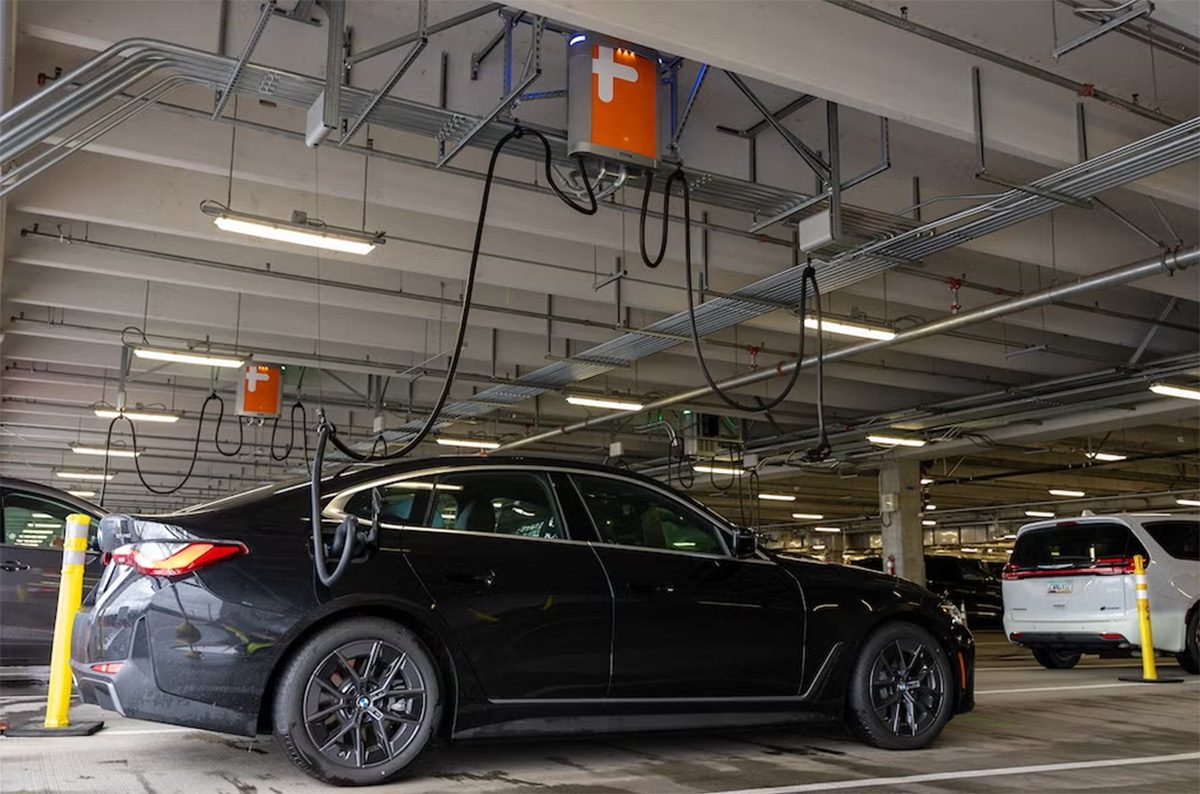
- A key innovation is the overhead charging system with retractable cable management, maximizing ground-level space.
- Ten dual-port fast charging dispensers enable simultaneous charging for up to 20 electric vehicles.
- ChargePoint’s fleet software provides real-time control, monitoring, and intelligent charging management for optimized operations.
- This deployment addresses critical challenges in scaling high-power EV charging infrastructure at busy airport locations.
Revolutionizing Airport EV Charging Infrastructure at Portland International Airport
Portland International Airport (PDX) is set to significantly enhance its ground transportation sustainability efforts with the introduction of a cutting-edge DC fast EV charging facility. Developed by ChargePoint, a leading provider of electric vehicle (EV) charging solutions, this innovative installation is strategically located within the airport’s Quick Turnaround (QTA) Facility and is specifically designed to support the growing electric fleets of car rental companies.

This deployment marks a crucial step in modernizing airport EV charging infrastructure, addressing the unique operational demands of rental car services. The focus remains on providing rapid, efficient, and scalable charging capabilities to ensure a seamless transition for passengers utilizing electric rental vehicles.
An Innovative Approach: Overhead Charging with Retractable Cables
At the heart of this new facility is an pioneering overhead charging system, a design choice engineered to overcome traditional limitations associated with large-scale EV charging deployments. This system features retractable cable management, a critical component that enhances both safety and operational efficiency within a high-traffic environment.
The installation comprises 10 dual-port fast charging dispensers, cleverly mounted overhead. This configuration allows for up to 20 electric vehicles to be connected and charged simultaneously, optimizing the QTA facility’s throughput. By elevating the charging infrastructure above the ground, the design fundamentally reclaims valuable space, simplifies the installation process, and crucially, mitigates the risk of vehicular damage to the sensitive charging equipment.

Jeremiah Hartley, the airport’s Rental Car Manager, underscored the pragmatic benefits of this design, stating, “The innovative overhead charging system enabled us to save on installation costs by limiting the conduit and wiring needed, and helps protect against potential damage caused by vehicles in the QTA.” This statement highlights both the economic advantages and the enhanced durability offered by the new system, key considerations for any large-scale infrastructure project.
Optimizing Rental Fleet Operations with Smart Software
Beyond the physical EV charging infrastructure, the deployment integrates ChargePoint’s advanced fleet software. This sophisticated platform provides rental car operators with real-time visibility and granular control across their electric vehicle fleets. Features include remote monitoring and troubleshooting capabilities, which are essential for maintaining operational continuity and minimizing downtime.
Furthermore, the software incorporates intelligent charging management functionalities, allowing the system to adapt dynamically to operational demands. This ensures that vehicles are charged efficiently, aligning with rental schedules and energy cost considerations, thereby maximizing the utility and economic viability of electric rental fleets. Such smart management is vital for high-volume operations where vehicle availability and rapid turnaround are paramount.
Strategic Vision: Airports Reshaping Electric Mobility
The strategic importance of this project extends beyond Portland. Rick Wilmer, CEO of ChargePoint, emphasized the transformative role of airports in the broader electric mobility landscape. “Airports aren’t just adopting electric mobility—they’re reshaping it,” Wilmer remarked. He further highlighted the increasing adoption of EVs by rental fleet operators and the resultant challenge airports face in delivering high-power EV charging infrastructure at scale.
The Port of Portland’s investment serves as a significant demonstration of how advanced fast charging solutions can be seamlessly integrated into existing parking facilities without necessitating major structural sacrifices. This model offers valuable insights for other airports and large-scale vehicle hubs looking to expand their EV charging infrastructure efficiently and sustainably.
The Broader Impact on Sustainable Transportation
This development at Portland International Airport aligns with global efforts to accelerate the transition to sustainable transportation. Airports, serving as critical multimodal transportation hubs, play a pivotal role in promoting environmental responsibility. By investing in robust EV charging infrastructure for ground fleets, PDX is contributing to a reduction in carbon emissions and local air pollution.
The partnership between ChargePoint and the Port of Portland underscores a forward-thinking approach to urban and travel infrastructure. It not only supports the immediate needs of rental car companies but also sets a precedent for how public and private entities can collaborate to build efficient, resilient, and eco-friendly transportation ecosystems. As electric vehicle adoption continues its upward trajectory, the demand for such sophisticated EV charging infrastructure will only intensify, making solutions like this vital for future urban planning and environmental goals.
Future Outlook for Airport Electrification
The successful implementation of this overhead charging system at Portland International Airport is expected to influence future designs and investments in EV charging infrastructure across airports worldwide. This innovative solution addresses common pain points such as space constraints, installation complexities, and equipment protection, offering a scalable and replicable model.
As more rental companies commit to electrifying their fleets and travel patterns evolve towards more sustainable choices, the demand for reliable and efficient EV charging infrastructure at major travel gateways will continue to grow. Projects like the one at PDX demonstrate proactive leadership in creating the necessary support systems for a fully electrified transportation future.
FAQ Section
What is the primary innovation of the new charging system at PDX?
The primary innovation is an overhead charging system featuring retractable cable management. This design optimizes ground-level space, simplifies installation processes, and significantly reduces the risk of equipment damage from vehicles in the high-traffic QTA facility.
Who benefits from this new EV charging infrastructure at Portland International Airport?
Car rental companies operating at Portland International Airport are the direct beneficiaries. The system enables them to rapidly charge their electric vehicle fleets between rentals, improving operational efficiency and supporting their transition to sustainable transportation.
How many vehicles can be charged simultaneously with this system?
The installation includes 10 dual-port fast charging dispensers. This configuration allows for up to 20 electric vehicles to be connected and charged simultaneously, ensuring high throughput and rapid turnaround times for rental fleets.
What role does ChargePoint’s software play in this deployment?
ChargePoint’s fleet software provides operators with crucial real-time visibility and control. It offers capabilities such as remote monitoring, troubleshooting, and intelligent charging management that adapts to operational demands, optimizing the charging process for efficiency.
Why is an overhead system advantageous for an airport environment?
An overhead system is particularly advantageous for airports because it reclaims valuable ground-level space, a premium commodity in busy facilities. It also simplifies installation by reducing conduit and wiring needs and protects the charging equipment from potential damage by moving it above vehicle level.
How does this project contribute to sustainable transportation goals?
By providing robust EV charging infrastructure, this project supports the electrification of rental car fleets, leading to reduced carbon emissions and improved air quality around the airport. It also sets a precedent for integrating green technology into major transportation hubs, promoting broader sustainability.