
Key Takeaways
- Logistic S-curve modelling reveals a faster-than-anticipated transition in Australia’s energy storage landscape, driven by electric vehicle (EV) uptake.
- Bi-directional EV charging (Vehicle-to-Grid, V2G) emerges as a highly efficient and cost-effective solution for future grid stability, potentially reducing reliance on large-scale projects like Snowy 2.0 and standalone home batteries.
- Despite earlier setbacks in EV incentives, the underlying momentum for electrification remains strong, with S-curves predicting significant deployment of EV battery storage.
- Analysis suggests that incentivising bi-directional charging offers vastly superior value for public funds compared to other major storage initiatives, promising up to 30 times more storage per dollar than Snowy 2.0’s revised cost estimates.
- Distributed storage from EVs enhances grid resilience and allows local renewable generation to be stored and reused efficiently, challenging assumptions about the universal need for long-duration, centralised storage.
Australia’s energy grid stands at the cusp of a profound transformation, grappling with the imperative to integrate burgeoning renewable energy sources while maintaining stability and reliability. A critical facet of this transition is securing adequate energy storage. Recent logistic S-curve modelling, a powerful tool for forecasting the adoption of disruptive technologies, offers compelling insights into Australia’s grid storage needs and where future capacity is likely to originate.
This analytical approach builds upon earlier projections concerning the displacement of coal by renewables and now applies the same rigorous methodology to address the evolving question of grid storage. The findings suggest that the role of electric vehicles (EVs), particularly those equipped with bi-directional charging capabilities, is being significantly underestimated in national energy planning.

The Accelerating Shift: Revisiting EV and Storage Projections
Five years ago, concerns were raised about a myopic view on electric vehicles and renewable power, particularly the failure to fully anticipate the forthcoming transition to electric mobility and the inevitability of bi-directional (vehicle-to-grid, or V2G) charging. This forward-thinking perspective highlighted what these developments would mean for Australia’s National Electricity Market (NEM).
Today, with a substantial increase in EV uptake data, it is opportune for an updated assessment. The original projections have largely held true, but the additional five years of adoption data provide an even clearer sense of the trajectory and the exponential pace of change.
Understanding S-Curves: A Framework for Disruptive Change
The use of logistic S-curve modelling is pivotal to understanding the uptake of disruptive technologies. Unlike linear projections, which often misrepresent real-world adoption patterns, S-curves accurately reflect how new innovations penetrate established markets, gradually displacing incumbents thought to be permanent fixtures.

This modelling approach quantifies the concept of ‘tipping points’ in technological adoption. Initially, a small cohort of wealthy innovators embraces the new technology, often due to its high cost and exclusivity. This is followed by early adopters, driven partly by the fear of missing out (FOMO), which begins to solidify a nascent market.
During this critical phase, government incentives and the credibility they confer can significantly impact the transition’s success. As public awareness and experience with the technology grow, adoption enters an exponential growth phase, fostering economies of scale that drive down costs. The market then ‘tips,’ with growth becoming linear around the halfway mark of eventual market penetration, before flattening into a logarithmic tail as the last holdouts convert.
Modelling Australia’s Storage Transition
Applying S-curve modelling to bi-directionally charged EVs yields crucial implications for electricity system planning, especially concerning the storage required to mitigate the intermittency inherent in renewable energy sources. The initial exponential growth phase of EV uptake tracked closely with predictions for several years.
However, adjustments to federal and state EV incentives subsequently shifted uptake onto a new, slightly delayed S-curve. This adjustment was not a sign of a stalled transition but rather an indication that the initial incentives had successfully established momentum and were no longer as critically needed to sustain growth.
Extrapolating these S-curve models forward, approximate projections emerge for both home battery storage and the collective storage capacity offered by bi-directionally charged EVs. These projections are particularly relevant as major infrastructure projects like Snowy 2.0 are anticipated to come online by 2028.
For context, the AEMO’s 2026 Integrated System Plan forecasts the National Electricity Market (NEM) will require approximately 640 GWh of dispatchable storage by 2050. While all forecasting inherently carries uncertainty, these projections present striking implications for how Australia could meet its future energy storage requirements.
Bi-Directional EVs: A Potent Solution for Energy Storage
The widespread adoption of bi-directionally charged EVs appears to be one of the most promising solutions for meeting Australia’s grid storage needs and effectively managing the intermittency challenges associated with large-scale renewable energy integration. The implications of this trend can be interpreted in two key ways.
Firstly, the success of initiatives like the Cheaper Home Batteries Program, coupled with the anticipated contribution of Snowy 2.0, is acknowledged for potentially delivering nearly all of the forecast storage needs by 2050. However, this may still fall short once the broader electrification of industry, transport, and data centres is fully considered.
The second, more provocative interpretation, suggests that the case for bi-directional charging is so compelling it is likely to become the dominant home storage technology regardless. This is largely because the transition to electric vehicles is already underway; the substantial car battery will inherently be present in millions of households.
An average EV battery, typically around 75.8 kWh, possesses the capacity to absorb surplus renewable energy during periods of high generation and low or even negative prices. It can then discharge this stored energy back to the grid during times of scarcity, such as overnight or when renewable output is diminished. If this widespread adoption of V2G technology is indeed inevitable, then both Snowy 2.0 and standalone home batteries could see their primary roles diminish considerably by as early as 2035.
While hindsight offers clarity, and existing home battery programs have delivered tangible benefits, a more pertinent question is how to leverage existing achievements. Incentivising bi-directional charging would offer a significant secondary benefit: further accelerating EV uptake and providing homeowners with a compelling reason to size their rooftop solar installations to power both their homes and their vehicles.
Typical daily mileage for an EV necessitates an additional 3-5 kW of solar capacity, beyond the approximately 6 kW required for an average Australian household. Given that the average new residential solar installation currently ranges between 9-11 kW, this additional requirement is not an onerous ask for most homeowners.
The Value-for-Money Case: Optimising Public Investment
Leveraging S-curve forecasts allows for a robust estimation of the storage capacity each initiative is projected to unlock per dollar of public investment. This comparative analysis provides a critical perspective, particularly when juxtaposed against large-scale infrastructure projects like Snowy 2.0.
Originally budgeted at $12 billion, the costs for Snowy 2.0 have faced significant blowouts, with independent estimates now putting total project costs closer to $42 billion. Based on its initial budget, the cost per GWh was approximately $34 billion/GWh. However, with the revised estimates, this figure could skyrocket to an alarming $120 billion/GWh.
In stark contrast, targeted incentive programs for distributed storage present exceptional value:
- The home battery incentive: approximately $22 billion/GWh
- The EV incentive: approximately $4.5 billion/GWh
- Extending the home battery incentive to bi-directional charging: approximately $3.5 billion/GWh
These figures demonstrate a compelling economic case. Extending the existing home battery incentive to specifically include bi-directional charging could yield up to 30 times more storage per public dollar than the updated cost estimates for Snowy 2.0. It also offers six times greater efficiency than the home battery incentive alone, crucially building upon existing commitments to accelerate EV uptake. This strategic policy shift warrants serious consideration from policymakers.
Addressing the ‘Short-Term Storage’ Objection
A common argument against relying heavily on EV-based storage is the perception that it offers only short-duration capacity. While it is true that bi-directional EV charging primarily provides short-term storage, this objection merits a more nuanced understanding. The average car battery is approximately three times larger than the typical home battery. This substantial capacity means it can comfortably cover several days of typical household energy use, significantly enhancing household resilience during periods of low renewable generation.
Furthermore, Australia’s National Electricity Market (NEM) encompasses eight distinct climate zones for electricity generation. When generation, storage, and consumption are geographically diversified across such an extensive network, the absolute necessity for vast quantities of long-duration, centralised storage diminishes considerably.
Like standalone home batteries, bi-directionally charged EVs represent distributed storage. This model allows local generation, particularly from rooftop solar, to be stored and reused locally, either behind the meter or sold back to the grid when there is a local surplus. The cumulative effect of this distributed approach is a more resilient, robust grid infrastructure with reduced requirements—and thus lower costs—for centralised grid firming. Should additional capacity still be needed during extreme events, established large-scale assets like Snowy 2.0 would serve as a valuable fallback, complementing a predominantly distributed storage framework.
Frequently Asked Questions
What is S-curve modelling and why is it used for energy predictions?
S-curve modelling, specifically logistic S-curve analysis, is a mathematical tool used to predict the adoption rate of disruptive technologies. It’s favored because it accurately reflects the non-linear growth patterns of new innovations, moving from slow initial uptake to rapid acceleration, and finally a plateau, better representing market dynamics than linear projections.
How do bi-directional EVs contribute to Australia’s grid storage needs?
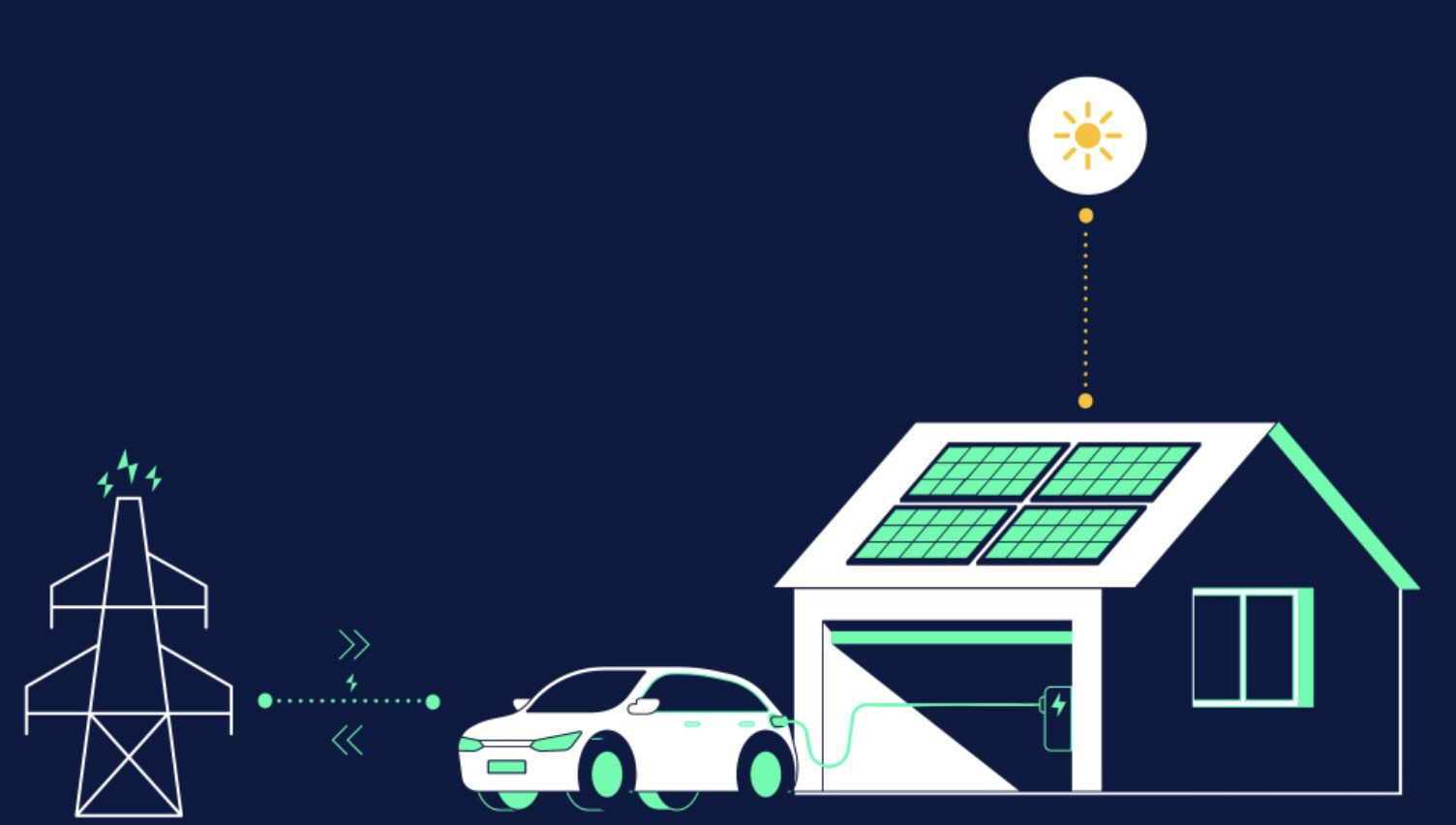
Bi-directional electric vehicles (V2G) can both draw power from and supply power back to the grid. Their large batteries act as mobile storage units, absorbing excess renewable energy during peak generation and discharging it during high demand or low renewable output, effectively smoothing grid supply and demand fluctuations.
What are the key advantages of incentivising bi-directional charging?
Incentivising bi-directional charging offers multiple benefits: it accelerates EV adoption, provides substantial distributed energy storage at a highly competitive cost, enhances grid resilience, and allows homeowners to optimise their solar installations by using their car batteries for home and grid support.
How does the cost-efficiency of bi-directional EV storage compare to Snowy 2.0?
Analysis indicates that extending home battery incentives to bi-directional charging could deliver storage at approximately $3.5 billion/GWh. This is significantly more cost-effective than Snowy 2.0, whose updated cost estimates suggest a much higher cost, potentially around $120 billion/GWh, per unit of storage capacity.
Does distributed EV storage negate the need for large-scale projects like Snowy 2.0?
While bi-directional EV storage provides substantial, cost-effective distributed capacity, it complements rather than entirely negates the role of large-scale projects. Distributed storage enhances day-to-day grid stability and resilience, while major assets like Snowy 2.0 can still serve as critical backup for extreme or prolonged low-renewable periods across the diverse NEM.
How much additional solar capacity is typically needed for an EV?
To adequately power an average EV for typical daily mileage, an additional 3-5 kW of solar capacity is generally recommended on top of the approximate 6 kW needed for an average Australian home. Given new residential solar installations often exceed 9 kW, this additional requirement is usually manageable.