
Key Takeaways
- The VIO system offers a flexible and scalable measurement solution crucial for accelerating eMobility development, enabling efficient analog measurement from desk-side analysis to extensive lab testing.
- Its compact hardware, modular measurement cards, and vMeasure software integration streamline setup, expand channel count, and enhance efficiency for modern EV validation tasks.
- A free webinar on September 17, 2026, will provide a detailed demonstration of the VIO system’s capabilities for electric vehicle engineering.
- The Virtual Conference on EV Engineering, running from September 14 to 17, 2026, will cover the entire EV engineering supply chain, featuring diverse sessions on topics from battery safety and thermal management to advanced power electronics and manufacturing.
- The conference aims to foster innovation and knowledge sharing across critical areas of electric vehicle design, development, and production.
The rapid evolution of the eMobility sector presents unprecedented challenges and opportunities for engineers worldwide. As electric vehicles (EVs) become increasingly sophisticated, the demand for precise, adaptable, and efficient measurement systems has never been greater. Addressing this critical need, a new scalable measurement solution is set to enhance EV engineering workflows, complemented by a comprehensive virtual conference designed to explore the full spectrum of electric vehicle innovation.
Industry experts emphasize the necessity for flexible and scalable measurement systems that can swiftly adapt to evolving test requirements across the entire product development lifecycle. From initial concept validation at the desk to rigorous testing in advanced laboratories, the ability to centralize and expand measurement capabilities efficiently is paramount for accelerating eMobility development.

The VIO System: Redefining Scalable Measurement for EV Engineering
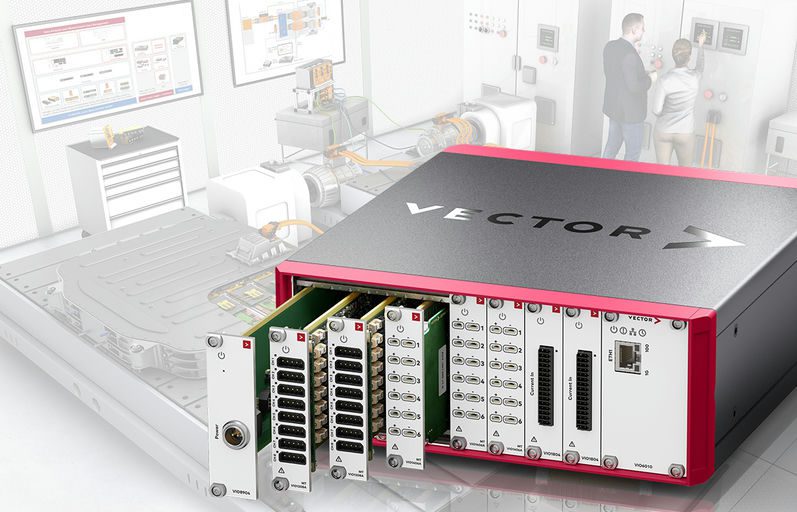
At the forefront of this innovation is the VIO system, a sophisticated solution meticulously engineered to meet the dynamic demands of modern EV engineering. This system integrates compact hardware with modular measurement cards and robust vMeasure software, creating a powerful platform for efficient analog measurement.
The VIO system is designed to streamline various aspects of electric vehicle validation. Its compact footprint makes it ideal for desk-side analysis, allowing engineers to conduct preliminary measurements and rapid prototyping without requiring extensive lab space. This accessibility significantly speeds up early-stage development and iteration cycles.
Beyond the desk, the VIO system seamlessly scales to accommodate complex lab environments and diverse electrification test workflows. The modularity of its measurement cards ensures that engineers can configure the system precisely to their specific needs, whether that involves high-channel-count measurements for battery management systems or intricate power electronics testing.

Enhancing Efficiency in EV Validation Tasks
A key advantage of the VIO system lies in its ability to simplify setup procedures. In complex EV engineering projects, reducing setup time directly translates to increased productivity and faster time-to-market. The intuitive design and software integration facilitate quick deployment, allowing engineers to focus more on analysis and less on configuration.
Furthermore, the system significantly expands channel count capabilities, which is crucial for comprehensive testing of multi-component EV systems like battery packs and complex powertrains. This expanded capacity ensures that all relevant data points can be captured simultaneously, providing a holistic view of system performance and behavior.
Ultimately, the VIO system aims to improve overall measurement efficiency for modern EV validation tasks. By providing accurate, reliable data quickly and flexibly, it empowers engineers to make informed decisions, identify potential issues early, and optimize designs more effectively, thereby propelling eMobility development forward.
A dedicated webinar scheduled for September 17, 2026, at 11:00 am EDT, will offer an in-depth look at how the VIO system simplifies setup, expands channel count, and improves measurement efficiency for critical EV validation tasks. Registration for this informative session is free and open to all interested professionals.
Virtual Conference on EV Engineering: A Deep Dive into the Electric Vehicle Ecosystem
Complementing the advancements in measurement technology, the Virtual Conference on EV Engineering is poised to be a pivotal event for professionals across the industry. Broadcast live from September 14 to 17, 2026, this comprehensive conference will explore the entire EV engineering supply chain and ecosystem.
The conference content is meticulously curated to cover a vast array of topics critical to the design, development, and manufacturing of electric vehicles. This broad scope ensures that attendees gain insights into every facet of the industry, fostering cross-disciplinary understanding and collaboration.
Key Thematic Areas and Sessions
Attendees can expect sessions delving into fundamental areas such as motor and power electronics design and manufacturing. These discussions will address the latest innovations in electric motor efficiency, power inverter technologies, and manufacturing processes crucial for high-performance EVs.
Battery technology, a cornerstone of eMobility, will feature prominently with sessions on cell development and advanced battery systems. This includes critical topics like advancing battery safety through early thermal runaway detection with Infineon sensors and scalable, cost-efficient testing of state-of-the-art Battery Management Systems (BMS).
The conference will also address broader testing methodologies, encompassing powertrains, thermal management strategies, and circuit protection solutions. Specific presentations will cover microsecond-level high-fidelity FPGA motor models for real-time Hardware-in-the-Loop (HIL) validation, an essential tool for accelerating the verification of complex control systems.
Further sessions will explore the practical aspects of EV manufacturing, including topics like driving efficiency in EV manufacturing through ultrasonic solutions for critical connections and optimizing HV/LV power conversion for next-generation xEV architectures. Discussions around wire and cable technologies, as well as crucial electromagnetic interference (EMI) and electromagnetic compatibility (EMC) considerations, will also be featured.
Other vital areas include simplifying commercial EV power distribution with integrated off-the-shelf solutions, insights into reliable insulation systems for e-mobility innovation from lab to vehicle, and how to test for anti-islanding in EV chargers, On-Board Chargers (OBCs), and Vehicle-to-Grid (V2G) systems. Advanced topics like multiphysics modeling of transport phenomena in cells with gas diffusion electrodes and beyond sealing: extrusion and co-extrusion for thermal, electrical, and sensing applications, further highlight the depth of content.
Fostering Innovation and Collaboration
The Virtual Conference on EV Engineering serves as a vital platform for knowledge exchange, bringing together experts, researchers, and engineers from across the globe. By covering such a comprehensive range of subjects, the event aims to accelerate innovation, facilitate problem-solving, and foster collaborative efforts essential for the sustained growth and technological advancement of the electric vehicle industry.
Participation in the conference sessions is free upon registration, allowing a wide audience to access cutting-edge research, industry best practices, and technological breakthroughs. The ability to watch sessions live or on demand provides flexibility for attendees worldwide, reinforcing its commitment to widespread knowledge dissemination in the field of EV engineering.
Conclusion
As the automotive industry continues its transformative shift towards electrification, the tools and knowledge available to EV engineers play a crucial role in shaping the future of transportation. The introduction of scalable measurement solutions like the VIO system, coupled with the expansive insights offered by the Virtual Conference on EV Engineering, provides a dual approach to accelerating progress.
These initiatives underscore the industry’s commitment to equipping professionals with the capabilities needed to innovate, validate, and produce the next generation of electric vehicles efficiently and reliably. The upcoming webinar and conference are essential events for anyone involved in eMobility development seeking to stay at the forefront of technological advancement and industry best practices.
Frequently Asked Questions (FAQ)
What is the VIO system and its primary purpose in EV engineering?
The VIO system is a flexible, scalable measurement solution for eMobility development. Its primary purpose is to support efficient analog measurement at the desk, in the lab, and across electrification test workflows, simplifying setup, expanding channel count, and improving overall measurement efficiency for modern EV validation tasks.
When is the VIO system webinar taking place?
The webinar demonstrating the VIO system’s capabilities is scheduled for September 17, 2026, at 11:00 am EDT. It offers a detailed look at how the system enhances EV validation tasks.
What are the key benefits of using the VIO system for EV validation?
Key benefits include compact hardware for desk-side use, modular measurement cards for adaptable configurations, and vMeasure software integration to simplify setup. It also expands channel count and significantly improves measurement efficiency across various EV testing scenarios.
What is the Virtual Conference on EV Engineering and when is it happening?
The Virtual Conference on EV Engineering is a comprehensive industry event covering the entire EV engineering supply chain and ecosystem. It will be broadcast live from September 14 to 17, 2026, offering numerous sessions on diverse topics.
What topics will be covered at the Virtual Conference on EV Engineering?
The conference will cover a wide range of topics, including motor and power electronics design, cell development, battery systems, various testing methodologies (BMS, HIL), powertrains, thermal management, circuit protection, wire and cable, and EMI/EMC considerations, among others.
Is there a cost to attend the VIO system webinar or the Virtual Conference?
No, both the VIO system webinar and the sessions at the Virtual Conference on EV Engineering are free to attend upon registration. This provides broad accessibility to valuable industry insights and technological demonstrations.
Who would benefit most from attending these events?
Engineers, researchers, product developers, and professionals involved in electric vehicle design, testing, validation, manufacturing, and general eMobility development would greatly benefit from the technical insights and industry trends presented at these events.