
Key Takeaways:
- hofer powertrain has developed an innovative battery module that dynamically adjusts the mechanical preload on individual cells during operation.
- This pioneering approach transforms cell pressure from a fixed mechanical design parameter into an actively controlled variable, optimizing battery performance and lifespan.
- The technology stems from over five years of extensive research into how mechanical forces influence cell aging, swelling, and deformation.
- By implementing a freely programmable force map, the module can adapt pressure based on operational conditions, aiming to significantly extend battery cycle life and energy density.
- Expected to impact a wide range of applications, including electric vehicles, commercial transport, stationary energy storage, marine, and future aviation, particularly benefiting solid-state cells and Vehicle-to-Grid (V2G) systems.
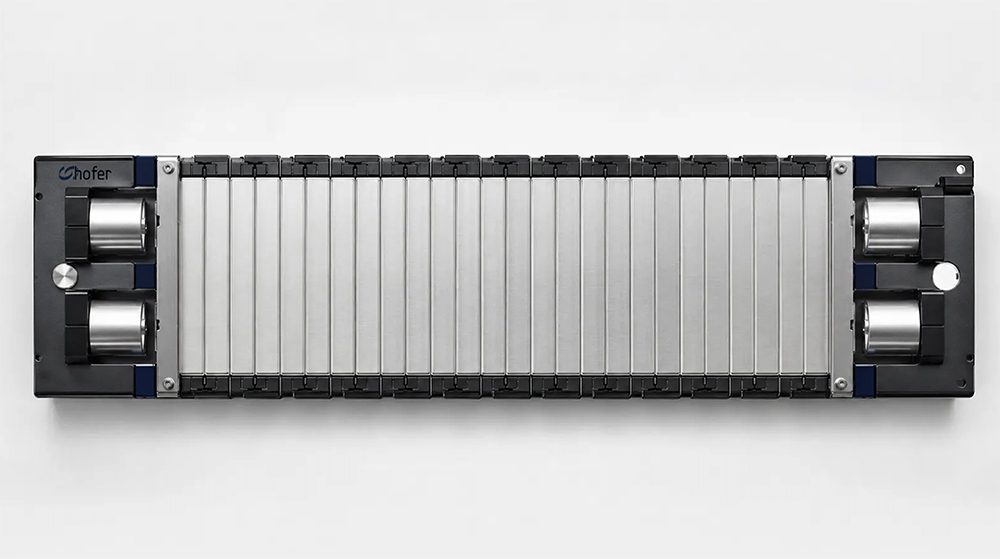
In a significant leap forward for electric vehicle (EV) battery technology, hofer powertrain has unveiled a groundbreaking battery module capable of dynamically altering the mechanical preload exerted on each individual cell during its operational lifetime. This innovative development challenges conventional battery design, where cell pressure is typically a fixed parameter determined by the module’s physical construction. The company asserts that intelligently managing this pressure can dramatically extend a cell’s lifespan and sustain its performance over time, addressing one of the critical challenges in long-term EV adoption and energy storage.

Traditional battery modules rely on a static mechanical design that applies a constant pressure, or preload, to the cells. However, hofer powertrain’s new module introduces a freely programmable force map. This sophisticated system allows the pressure on the cells to change dynamically in response to varying operating conditions, effectively converting a previously static mechanical design parameter into an actively controlled variable within the battery system. This adaptability is central to the module’s promise of enhanced durability and efficiency.
The Genesis of Dynamic Cell Pressure Management
The development of this advanced module is the culmination of more than five years of rigorous research conducted by hofer powertrain, complemented by insights garnered from a diverse array of customer projects. This extensive investigation focused on understanding the intricate relationship between cell preload, mechanical breathing, internal swelling, and deformation, and their collective impact on the cycle life and overall performance of various cell chemistries. The research delved deep into how these mechanical stresses contribute to the degradation of battery cells, laying the foundation for a more intelligent management system.
To meticulously measure and analyze these effects, hofer powertrain designed and built specialized programmable test equipment. This state-of-the-art apparatus is capable of recording critical parameters such as a cell’s deformation, temperature fluctuations, voltage, capacity retention, and impedance under precisely defined charge and load profiles. Such detailed readings are crucial for identifying early indicators of mechanical stress and determining the optimal mechanical constraints for a given cell technology. The company has already successfully applied this analytical method to a broad spectrum of cell technologies, including Nickel Manganese Cobalt (NMC), Lithium Iron Phosphate (LFP), and even next-generation solid-state cells, showcasing the versatility and robustness of their approach.

Understanding Optimal Cell Pressure: A Complex Equation
A key finding from hofer powertrain’s extensive research is that there is no universal “ideal” pressure setting that suits every type of battery cell. The company emphasizes that both insufficient and excessive mechanical pressure can paradoxically accelerate degradation processes. This complexity necessitates a holistic approach, where critical factors such as the cell’s specific chemistry, its physical format, its state of charge (SoC), operational temperature, and the overall operating profile must be considered as an integrated system. This intricate interplay underscores the need for a dynamic and intelligent system like the one hofer powertrain has developed.
Reinforcing these findings, independent research conducted by the University of Cambridge has also demonstrated that meticulously controlled mechanical loading can significantly mitigate the aging processes in lithium-ion cells. Under specific test conditions, this research showed a substantial extension of the service life of the cells examined. These academic validations lend considerable weight to hofer powertrain’s claims and the scientific basis of their innovation.
Unlocking Future Potential: Enhanced Performance and Durability
Based on their comprehensive studies, hofer powertrain projects that its novel approach holds the potential to significantly enhance battery performance. Specifically, the company estimates that it could achieve up to double the cycle life while simultaneously delivering double the energy density, an assessment derived from their current work with NMC and emerging solid-state cells. However, the exact magnitude of these gains is contingent upon several factors, including the specific cell technology employed, the typical operating profile, and the initial system design. This flexibility allows for tailored optimization across different applications.
The implications of such a significant improvement in battery longevity and energy density are vast, promising to reshape various sectors that rely on advanced battery technology. Greater cycle life directly translates to lower total cost of ownership for electric vehicles, making them more attractive to consumers and fleet operators. Increased energy density, meanwhile, can lead to lighter, more compact battery packs, offering longer range for EVs or more capacity for stationary storage solutions.
Broadening Horizons: Diverse Applications Beyond Conventional EVs
While immediately impactful for conventional electric vehicles, the applications of hofer powertrain’s programmable cell pressure control extend far beyond. The technology is poised to benefit commercial vehicles, where durability and cycle life are paramount due to intensive usage patterns. In stationary storage systems, which are crucial for grid stability and renewable energy integration, the ability to extend battery life means fewer replacements and reduced operational costs.
Furthermore, the innovation holds significant promise for marine and future aviation and aerospace systems, where extreme demands on battery performance, safety, and lifespan necessitate cutting-edge solutions. hofer powertrain specifically highlights the mechanics of programmable preload as particularly relevant for solid-state cells used in stationary storage, a rapidly evolving segment of the energy industry. Additionally, the technology is highly advantageous for vehicle batteries that support Vehicle-to-Home (V2H) and Vehicle-to-Grid (V2G) operations. These bidirectional charging capabilities often demand a very high number of charge and discharge cycles, making enhanced cell longevity not just beneficial, but critical for their widespread adoption and economic viability.
The Road Ahead for Battery Technology
hofer powertrain’s introduction of a battery module with dynamic programmable cell pressure control marks a pivotal moment in battery engineering. By moving beyond static mechanical designs to embrace an active, intelligent management of internal cell forces, the company is addressing fundamental issues of battery degradation and performance. This innovation not only promises to extend the life and efficiency of current battery chemistries but also offers a robust framework for optimizing future technologies like solid-state batteries. As the world transitions towards a more electrified future, such advancements are instrumental in building more reliable, durable, and sustainable energy storage solutions across all sectors.
Frequently Asked Questions (FAQ)
What is programmable cell pressure control?
Programmable cell pressure control is an innovative technology developed by hofer powertrain that allows the mechanical force (preload) on individual battery cells to be dynamically adjusted during operation. Unlike traditional battery designs where this pressure is fixed, the new module uses a software-defined force map to optimize pressure based on real-time operating conditions like temperature, state of charge, and load.
Why is controlling cell pressure important for battery life?
Mechanical pressure on battery cells significantly influences their aging process. Both too little and too much pressure can accelerate degradation, leading to reduced performance and lifespan. By actively controlling this pressure, the system can maintain optimal conditions, mitigate internal stresses, and prevent issues like swelling and deformation, thereby extending the battery’s overall cycle life.
What types of batteries can benefit from this technology?
The programmable cell pressure control method has been successfully applied to various battery chemistries, including NMC (Nickel Manganese Cobalt) and LFP (Lithium Iron Phosphate) cells. It is also particularly relevant and beneficial for next-generation solid-state batteries, which often have unique mechanical characteristics that can be optimized through precise pressure management.
What are the potential benefits of this innovation?
hofer powertrain suggests that this technology could potentially double the cycle life and energy density of batteries, depending on the specific cell chemistry and application. This translates to longer-lasting batteries, reduced replacement costs, and improved performance for electric vehicles, stationary storage, and other demanding applications.
Where can this battery module be applied?
The applications for this technology are broad and diverse. Beyond conventional electric vehicles, it is highly suitable for commercial vehicles, large-scale stationary energy storage systems, marine vessels, and future aviation and aerospace platforms. It is particularly impactful for batteries used in Vehicle-to-Home (V2H) and Vehicle-to-Grid (V2G) systems, which require extensive charge and discharge cycles.