
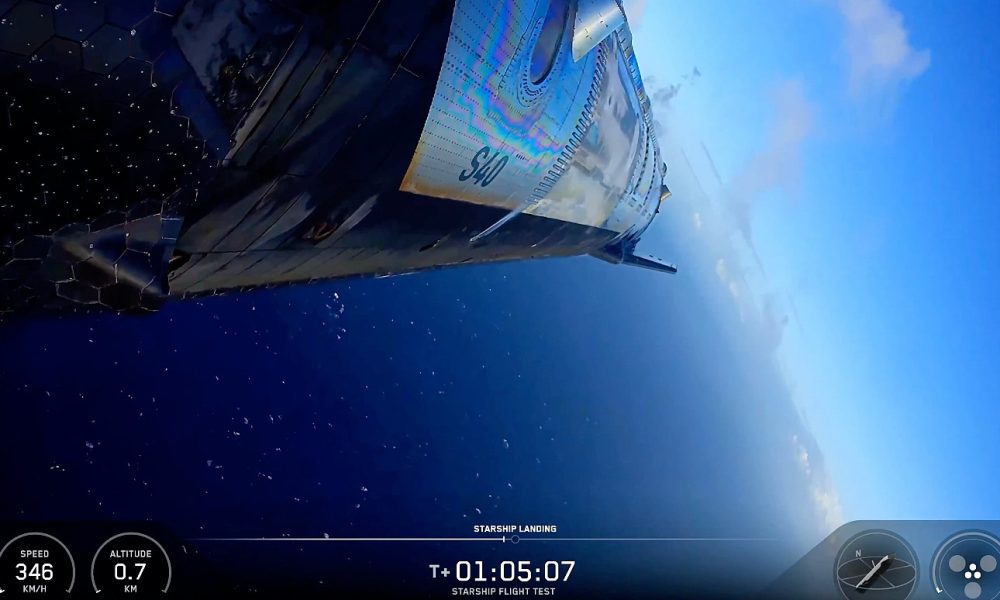
Key Takeaways: SpaceX Starship Flight 14
- SpaceX has formally submitted an FCC filing indicating its intent for the Starship Flight 14 mission to achieve a genuine orbital trajectory.
- This marks a significant departure from all previous Starship test flights, which have exclusively followed suborbital arcs.
- The mission payload is expected to include approximately 20 Starlink V3 satellites, designed for deployment into an operational orbit.
- While CEO Elon Musk initially hinted at a Starbase tower catch, Flight 14 will target a splashdown in the Indian Ocean, similar to prior missions.
- Recent hardware milestones include a successful 33-engine static fire for Booster 21 and a six-engine test for Ship 41, signaling readiness.
- The FCC filing, dated September 1, 2026, underscores SpaceX’s regulatory commitment but does not guarantee an immediate launch date, pending FAA clearance and vehicle stacking.
SpaceX Charts Orbital Course for Starship Flight 14
In a pivotal development for its ambitious Starship program, SpaceX has officially informed the Federal Communications Commission (FCC) of its intention to undertake a full orbital launch with the upcoming SpaceX Starship Flight 14. This filing, submitted on September 1, 2026, signals a significant strategic shift, marking the first time the aerospace company has outlined a mission profile aimed at achieving true orbital insertion for its next-generation heavy-lift rocket.
The move represents a crucial step beyond the series of impressive suborbital test flights that have characterized the Starship program to date. These earlier missions, while demonstrating critical capabilities like atmospheric reentry and controlled descent, have consistently concluded with the vehicle returning to Earth within the hour of launch.

The Quest for Orbit: A Defining Milestone
Shifting from Suborbital Trajectories
Historically, every Starship flight, including the successful Flight 13 which executed a controlled splashdown in the Indian Ocean on July 24, 2026, has followed a suborbital trajectory. These tests were vital for gathering data on ascent, atmospheric reentry dynamics, and precision landing techniques, but they did not involve the sustained velocity required to enter Earth’s orbit.
The FCC paperwork for SpaceX Starship Flight 14, however, meticulously describes a mission profile built around an actual orbital insertion. This critical distinction means the vehicle will aim to achieve and maintain orbital velocity, allowing it to circle the Earth before a planned deorbit and recovery.
The Significance of Orbital Insertion
Achieving orbit is not merely a technical benchmark; it is the fundamental requirement for Starship to fulfill its long-term goals of deploying vast satellite constellations, transporting cargo and crew to the Moon and Mars, and enabling rapid point-to-point travel on Earth. Each suborbital test has incrementally paved the way for this more complex and demanding orbital endeavor.

The successful execution of an orbital mission for SpaceX Starship Flight 14 would validate the integrated performance of the Super Heavy booster and Starship upper stage, demonstrating their combined capability to overcome Earth’s gravity and achieve sustained spaceflight. This achievement is paramount for the program’s future trajectory and its role in human space exploration.
Starlink V3 Satellites: The Critical Payload
Unlocking Starlink’s Full Potential
Central to the mission profile for SpaceX Starship Flight 14 is its payload: an estimated 20 production Starlink V3 satellites. Unlike previous suborbital tests where payloads were recovered or deorbited, these satellites are intended for deployment into an operational orbit, potentially joining SpaceX’s rapidly expanding global internet constellation.
SpaceX has rated each of these V3 satellites for approximately 1 terabit per second (Tbps) of downlink capacity. Successfully deploying them would significantly enhance Starlink’s network capabilities, providing faster and more reliable internet access to users worldwide and further solidifying Starlink’s position as a leading satellite internet provider.
Lessons from Previous Flight Tests
The previous Flight 13 mission also carried 20 production Starlink V3 satellites. However, due to its suborbital flight path, these satellites reentered the atmosphere along with the Starship vehicle. Footage released by SpaceX after Flight 13 captured one of these satellites drifting away in space before its eventual reentry, providing valuable data on deployment mechanisms even without orbital insertion.
SpaceX Starship Flight 14 is specifically designed to close this operational gap. If the orbital insertion is successful, these V3 satellites would separate into their designated operational orbits, subsequently undergoing testing and eventually entering service. This marks a tangible step towards leveraging Starship as a dedicated deployer for advanced Starlink generations.
Evolving Recovery Plans and Hardware Readiness
The Dynamic Nature of Starship Development
The evolving plans for SpaceX Starship Flight 14 reflect the dynamic and iterative development approach characteristic of SpaceX. During the company’s first earnings call as a public entity on August 4, 2026, following its June IPO under the ticker SPCX, CEO Elon Musk initially flagged the orbital attempt.
Musk also, at that time, floated the ambitious idea of attempting to catch the returning Starship with the Starbase launch tower’s ‘chopsticks’ system on the same flight. However, on August 20, 2026, he revised this statement, indicating that such a catch attempt would more likely occur “in a few months.”
Key Hardware Milestones Achieved
Consequently, for SpaceX Starship Flight 14, the recovery method will target a splashdown for the ship in the Indian Ocean, a strategy successfully employed since Flight 12. This approach prioritizes mission success and data collection over the more complex and risky tower catch, which requires additional validation.
Hardware development has been progressing rapidly to meet these ambitions. Booster 21, the Super Heavy first stage, completed a critical full 33-engine static fire test on August 28, 2026, at Starbase in Boca Chica, Texas. This test is crucial for validating the immense thrust capabilities and integrated systems of the booster. Additionally, Ship 41, the Starship upper stage, successfully concluded its own six-engine test approximately a week prior, indicating its readiness for flight.
Regulatory Hurdles and the Path Ahead
Navigating Federal Approvals
While an airspace briefing circulated to pilots on August 20, 2026, listed September 15 as a potential target date for SpaceX Starship Flight 14, SpaceX has not publicly confirmed this. Starship launch schedules are frequently adjusted as hardware readiness, weather conditions, and crucial regulatory paperwork with agencies like the Federal Aviation Administration (FAA) align.
The FAA plays a vital role in ensuring public safety and environmental compliance for all commercial space launches in the United States. Obtaining a launch license from the FAA is a multi-faceted process that involves thorough reviews of safety protocols, flight trajectories, and potential environmental impacts.
What the FCC Filing Signifies
The FCC filing itself, dated September 1, 2026, primarily covers communications authority for the mission, rather than confirming flight readiness. It grants SpaceX permission to operate essential communication systems during the flight, including telemetry, command, and control links. This regulatory step is a prerequisite for any complex space mission, particularly one involving a global communications network like Starlink.
Crucially, the filing serves as a definitive marker of intent. It provides a specific regulatory process and official documentation supporting what had previously been primarily Elon Musk’s verbal pronouncements during the earnings call. Before SpaceX Starship Flight 14 can lift off, Ship 41 must be fully stacked atop Booster 21, and the entire integrated system must receive final clearance from the FAA, ensuring all safety and operational parameters are met.
Broader Implications for Space Exploration
The successful orbital flight of Starship would fundamentally alter the landscape of space exploration and commercial spaceflight. By proving its orbital capability, Starship moves closer to becoming the fully reusable, rapid-turnaround launch system envisioned by SpaceX, capable of dramatically lowering the cost of access to space.
This achievement would not only accelerate the deployment of the Starlink constellation but also pave the way for more ambitious missions, including the construction of a permanent human presence on the Moon and the long-term goal of establishing a self-sustaining city on Mars. Each step, like the orbital attempt of SpaceX Starship Flight 14, brings humanity closer to realizing these unprecedented cosmic aspirations.
Frequently Asked Questions (FAQ)
What is the primary objective of SpaceX Starship Flight 14?
The main goal of SpaceX Starship Flight 14 is to achieve true orbital insertion for the first time. All previous Starship test flights have been suborbital, re-entering the atmosphere shortly after launch. This mission aims to reach and sustain orbital velocity around Earth.
What payload will SpaceX Starship Flight 14 carry?
SpaceX Starship Flight 14 is expected to carry approximately 20 production Starlink V3 satellites. Unlike previous suborbital flights where satellites were recovered, these are intended for deployment into operational orbit to join the Starlink constellation, enhancing global internet services.
How does an orbital flight differ from previous suborbital tests?
An orbital flight achieves sufficient velocity to continuously orbit Earth, while a suborbital flight reaches space but returns to Earth without completing an orbit. Orbital insertion is a more complex maneuver, requiring precise control and higher speeds to avoid atmospheric reentry immediately.
What is the role of the FCC filing for this mission?
The FCC filing, submitted on September 1, 2026, grants SpaceX communications authority for SpaceX Starship Flight 14. This includes permission to operate telemetry, command, and control systems during the flight. It signifies SpaceX’s formal intent to pursue an orbital mission but does not equate to FAA launch approval.
What hardware milestones have been achieved for Starship Flight 14?
Key hardware milestones include Booster 21 successfully completing a full 33-engine static fire test on August 28, 2026. Additionally, Ship 41 underwent its own six-engine test a week prior, indicating both stages are progressing towards flight readiness for SpaceX Starship Flight 14.
When is SpaceX Starship Flight 14 expected to launch?
An airspace briefing on August 20, 2026, indicated a target date of September 15, 2026. However, SpaceX has not publicly confirmed this date. Launch schedules for Starship routinely shift due to ongoing hardware validation, regulatory clearances from the FAA, and operational readiness requirements.