
Key Takeaways
- Many long-term automotive employees, even at industry giants like Toyota, possess limited knowledge about electrification and its benefits.
- Toyota’s ‘Electrification 101’ program aims to educate its diverse workforce on various electrified powertrains, from hybrids to fuel cell vehicles and pure EVs.
- The training emphasizes Toyota’s ‘multi-pathway’ electrification strategy, advocating for a diverse portfolio to meet different customer needs and optimize battery resource utilization.
- Through both classroom instruction and hands-on demonstrations, the program dispels common myths about electric vehicles and highlights the efficiency and simplicity of electric motors.
- The initiative is crucial for fostering internal advocacy, enabling employees to make informed decisions, and driving the company’s long-term transition towards an electrified future.
In the rapidly evolving landscape of automotive technology, the shift towards electrification represents one of the most significant paradigm changes in over a century. For those intimately involved in tracking this industry, the nuances of electric vehicle (EV) development, corporate strategies, and technological advancements are daily discourse. However, a recent experience at Toyota Motor North America’s ‘Electrification 101’ program revealed a surprising reality: even within the walls of a leading automaker, fundamental knowledge about electrification is not universally understood among employees.

This insight, initially unexpected, offers a crucial perspective on the internal efforts required for a large-scale transition to electric powertrains. It underscores that for many working professionals within the automotive sector, especially those outside engineering or product development roles, the intricacies of electric vehicle technology remain largely unfamiliar. This observation is not a critique but rather a testament to the proactive steps companies like Toyota are taking to educate their workforce, laying the groundwork for a comprehensive
Toyota electrification strategy
and a future-ready enterprise.
Full Disclosure: Toyota flew me to Dallas and covered one night of lodging for me to attend Electrification 101. I also interviewed a Toyota executive on this trip about the company’s electrification strategy, but you’ll have to stay tuned for that.
Understanding Toyota’s Electrification Initiative
The assumption that every employee at a major car manufacturer is an automotive enthusiast deeply conversant in every product detail is often misplaced. A significant portion of the workforce comprises professionals in various corporate functions—from accounting and human resources to software development and marketing—whose primary motivations might be career stability, company culture, or the prestige associated with working for a global leader like Toyota.
Bridging the Knowledge Gap Within Toyota
For these employees, who may not track the latest developments in battery chemistry or understand the distinctions between various electrified powertrains, the transition to electric vehicles can seem abstract or peripheral to their daily responsibilities. Recognising this internal knowledge gap, Toyota initiated its ‘Electrification 101’ program. This is not the company’s first foray into foundational employee education; an earlier program introduced staff to general automotive principles, highlighting a broader commitment to ensuring a well-informed workforce.
The training specifically addresses the lack of deep understanding regarding why electrification is not just a trend but a fundamental shift. It acknowledges that even car enthusiasts, particularly those with a strong affinity for traditional internal combustion engines, might not be familiar with the technical complexities of modern electric and hybrid systems, such as the differences between Nickel Cobalt Manganese (NCM) and Lithium Iron Phosphate (LFP) battery chemistries.
The Multi-Pathway Approach Explained
Crucially, the program is termed ‘Electrification 101’ rather than ‘EV 101.’ This nomenclature reflects Toyota’s distinct ‘multi-pathway’ approach to future mobility, a core component of its
Toyota electrification strategy
. This strategy prioritises a diversified portfolio, emphasizing hybrid vehicles (HEVs) in the immediate term while simultaneously developing battery electric vehicles (BEVs), plug-in hybrid electric vehicles (PHEVs), and hydrogen fuel cell electric vehicles (FCEVs) for the future.
Statistical data from last quarter underscores this strategy, with 56.8% of Toyota’s total sales being electrified vehicles. Within this figure, however, pure battery electric vehicles constituted only 1.7%. This demonstrates a clear current reliance on hybrid technologies, alongside a foundational exploration of other sustainable options, including hydrogen technology.
The Toyota Mirai, a prominent fuel cell electric vehicle (FCEV), exemplifies this multi-pathway commitment. It operates on compressed hydrogen, a fuel currently accessible in limited regions, primarily parts of California within the United States. While innovative, the current cost of hydrogen significantly exceeds that of gasoline, presenting infrastructure and economic challenges.
Deconstructing the “Electrification 101” Curriculum
The ‘Electrification 101’ program is meticulously designed to cover the foundational aspects of all these powertrain types. It differentiates between various hybrid systems, explaining the operational principles of each and their respective benefits. A significant portion of the curriculum is dedicated to demystifying electric vehicles and confronting prevalent misconceptions.
Classroom Deep Dive into Powertrain Technologies
The classroom sessions commenced with a historical overview, drawing parallels between the early 20th-century transition from horse-drawn carriages to gasoline-powered cars and the current shift towards electrification. This context highlighted initial challenges such as nascent infrastructure, limited public understanding, and evolving regulations—issues that mirror some of today’s EV adoption hurdles.
The curriculum then pivoted to the intrinsic advantages of electrification, emphasizing enhanced efficiency and environmental benefits. It elaborated on Toyota’s argument that its multi-pathway strategy is the most effective way to leverage finite battery resources, though this remains a point of contention within the industry, with much research suggesting that BEVs often present the cleanest option over their lifecycle. The program touched upon resources like:
Evidence That EVs Are The Cleanest Option
EV Myth Busted: No, They’re Not ‘Dirtier’ Than Gas Cars, Even If You Use Fossil Fuel Power
Yes, EVs Really Are Cleaner Than Gas Cars. Here’s By How Much
While the program’s overview of powertrain advantages was largely comprehensive, a slight bias towards hydrogen was noted. For instance, a slide proclaimed that hydrogen “can reduce ‘range anxiety’ as number of stations grow,” highlighting the Mirai’s 402-mile range. While impressive in the early days of EVs, this range is now surpassed by at least eight current EV models in the U.S. market, with more long-range EVs continually entering production.
Beyond these specific points, the classroom content was informative and balanced. It provided a thorough grounding in battery chemistries, various charging standards, and fundamental electrical concepts such as kilowatts and kilowatt-hours. The program also covered current efforts in battery recycling, underlining a commitment to sustainability within the
Toyota electrification strategy
.
Addressing Common EV Misconceptions
The training extensively worked to dismantle common myths surrounding electric vehicles. By providing factual information on battery longevity, charging infrastructure development, and the environmental impact of EV manufacturing versus traditional vehicle production, Toyota aimed to equip its employees with accurate talking points. This is vital for those who interact with customers or contribute to product messaging.
A critical focus was placed on the simplicity and efficiency of electric propulsion systems compared to complex internal combustion engines. This foundational understanding is key to dispelling fears about maintenance and reliability associated with new technologies.
Hands-On Learning: The Power of Electric Motors
The most engaging segment of the program involved interactive demonstrations. Participants were guided through building a rudimentary electric motor using basic components: a screw, a magnet, a AA battery, and a piece of wire. This simple exercise visually and tangibly illustrated the core principles of electromagnetic propulsion.
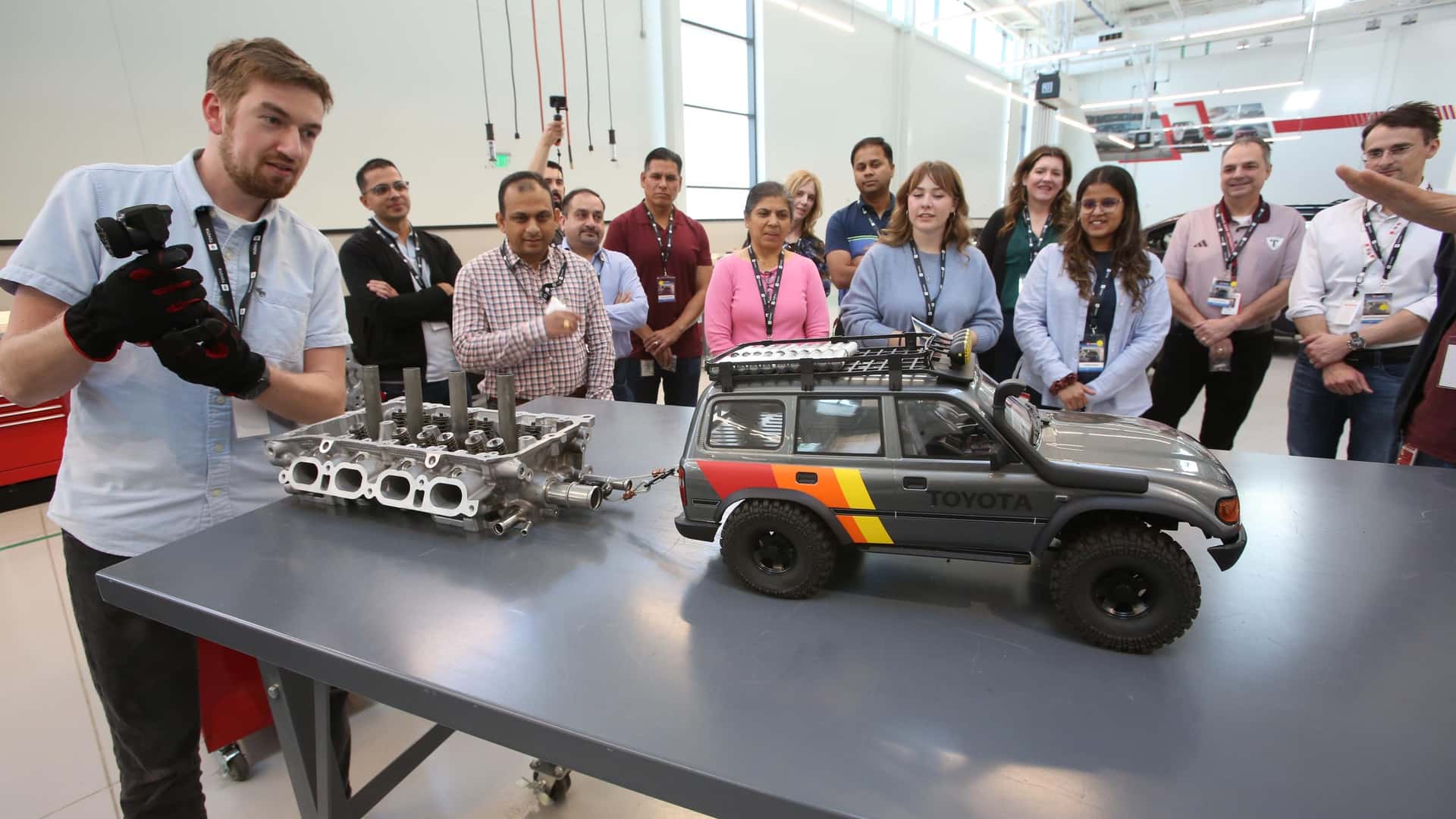
Further hands-on activities included constructing a basic potato-based battery and observing different charging outputs. A particularly striking demonstration showcased the instant torque of an EV motor, where a miniature remote-controlled Land Cruiser effortlessly towed a 30-pound cylinder head. These practical experiences powerfully conveyed the efficiency and inherent advantages of electric propulsion technology.
The Transformative Impact of Internal Education
The overarching lesson from these demonstrations was undeniable: electric motors represent a remarkable technological advancement. A stark comparison was made between a stripped-down Toyota V-6 engine, with its numerous intricate parts and accessories, and a compact electric motor capable of generating superior power in a much smaller, simpler package. The integration of electric motors into hybrid systems also demonstrated how they could simplify powertrain designs by eliminating the need for complex transmissions.
This simplification highlights a key benefit: the further a vehicle progresses towards full electrification, the less mechanical complexity it retains, ultimately leading to fewer components that can malfunction. While Toyota acknowledges the need for continued improvements in battery chemistry and charging infrastructure before widespread EV adoption, the training clearly aimed to cultivate enthusiasm among employees for a fully electric future.
Fostering Advocacy and Future-Forward Decision Making
Educating employees is critical for driving long-term strategic decisions. Without a foundational understanding of electrification’s long-term benefits, employees in roles like corporate procurement might perceive new component designs or supplier onboarding as mere cost additions and operational headaches. This often leads to resistance to change, a natural human tendency.
However, when employees are genuinely excited and informed, they become willing to navigate short-term complexities for achieving long-term goals. They transform into advocates, not only internally but also externally. Brigette Armato, a Toyota employee who attended the class, exemplified this transformation. Initially admitting she knew “nothing” about EVs and hybrids, she emerged as an informed proponent.
Employee Perspectives on the Electrified Future
Armato, who works with Toyota’s lease experience team, explained the immediate impact of the training: “I work with our lease experience team, so I’m actually working with the customers and the vehicles. This was extremely helpful because now I can have an educated conversation with them and maybe convince them to go for an electric vehicle, whereas before I don’t think I had that skill.”
Her newfound knowledge extends beyond customer interactions; she is now considering an electric vehicle for herself, despite her current attachment to her Toyota 4Runner. “I wish we would gravitate more towards electric vehicles across the lineup,” she stated, expressing a sentiment shared by many proponents of electric mobility.
The growing demand for these classes, evidenced by a long waitlist, indicates a burgeoning community of EV believers within Toyota’s North American headquarters. This internal momentum is vital; it’s less about overcoming active resistance and more about enlightening a workforce that, much like many consumers, simply lacked comprehensive information about the benefits and potential of electrification.
The Broader Implications for the Automotive Industry
Toyota’s commitment to educating its workforce through programs like ‘Electrification 101’ highlights a critical, often overlooked, aspect of the global automotive transition: the human element. For a company to successfully navigate the complexities of shifting from traditional powertrains to a diverse range of electrified options, its entire ecosystem—from engineers and designers to sales staff and corporate strategists—must be aligned and well-informed.
This strategic investment in internal knowledge serves multiple purposes. It empowers employees to become confident ambassadors of the company’s
Toyota electrification strategy
, whether through direct customer interaction or by influencing internal processes. It also ensures that decisions across all departments are made with a forward-looking understanding of the industry’s direction, fostering innovation and adaptability. Ultimately, such initiatives are foundational to maintaining market leadership and achieving long-term sustainability goals in an increasingly electrified world.
Frequently Asked Questions About Toyota’s Electrification Strategy
What is Toyota’s ‘Electrification 101’ program?
Toyota’s ‘Electrification 101’ is an internal training program designed to educate employees on the fundamentals of various electrified powertrains, including hybrids, plug-in hybrids, battery electric vehicles, and fuel cell electric vehicles. It aims to bridge the knowledge gap within its diverse workforce regarding electrification technologies and benefits.
Why did Toyota create this employee training program?
Toyota recognised that many of its employees, particularly those in non-automotive specific roles, lacked detailed knowledge about electrification. The program was created to inform and excite its staff about the company’s multi-pathway strategy, empowering them to make informed decisions and become advocates for electrified vehicles.
What is Toyota’s ‘multi-pathway’ electrification strategy?
Toyota’s ‘multi-pathway’ strategy is an approach to future mobility that advocates for a diverse range of electrified vehicles. This includes a current focus on hybrids, alongside the development and offering of battery electric vehicles, plug-in hybrids, and hydrogen fuel cell electric vehicles to meet varied customer needs and optimize the use of limited battery resources.
What types of vehicles are covered in the ‘Electrification 101’ program?
The program covers all types of electrified vehicles central to Toyota’s strategy: Hybrids (HEVs), Plug-in Hybrid Electric Vehicles (PHEVs), Battery Electric Vehicles (BEVs), and Hydrogen Fuel Cell Electric Vehicles (FCEVs). It explains the basics of how each powertrain works and their respective advantages and limitations.
How does the training address common myths about EVs?
The program dispels common myths about electric vehicles through factual presentations on topics like battery chemistry, charging infrastructure, and the environmental lifecycle of EVs. It uses clear comparisons and interactive demonstrations to highlight the efficiency and simplicity of electric motors, fostering a more informed perspective.
What impact has the ‘Electrification 101’ program had on employees?
The program has successfully converted many employees into advocates for electrification. Participants have reported gaining the confidence and knowledge to discuss electrified vehicles with customers and are now more likely to consider purchasing an EV themselves. This internal advocacy is crucial for driving Toyota’s long-term electrification goals.