
Key Takeaways:
- Taiwanese company ProLogium has announced the mass production of its Generation 3.5 all-solid-state battery cells, a significant advancement for the electric vehicle (EV) industry.
- Backed by automotive giant Mercedes-Benz, these Lithium Ceramic Battery (LCB) cells are being produced at a gigawatt-capable facility in Taoyuan, Taiwan.
- The new cells boast a high gravimetric energy density of 381 watt-hours/kilogram (Wh/kg) and a volumetric energy density of 903 watt-hours/liter.
- ProLogium claims impressive charging capabilities, with its previous Gen 3 cell achieving an 80% charge from 5% state of charge in just eight and a half minutes, and its latest LCB promising similar rapid charging in under 10 minutes.
- Independent verification by TÜV and UL Solutions confirms the battery’s performance metrics and its qualification as an ‘all-solid-state’ battery.
- The company has outlined ambitious global expansion plans, including a substantial facility in France, to scale production significantly.
Taipei, Taiwan – In a potential turning point for electric vehicle (EV) technology, ProLogium, a Taiwanese firm backed by Mercedes-Benz, has announced the commencement of mass production for its advanced all-solid-state battery cells. This development marks a significant milestone, promising to deliver longer driving ranges, faster charging times, and enhanced safety for the next generation of electric vehicles.

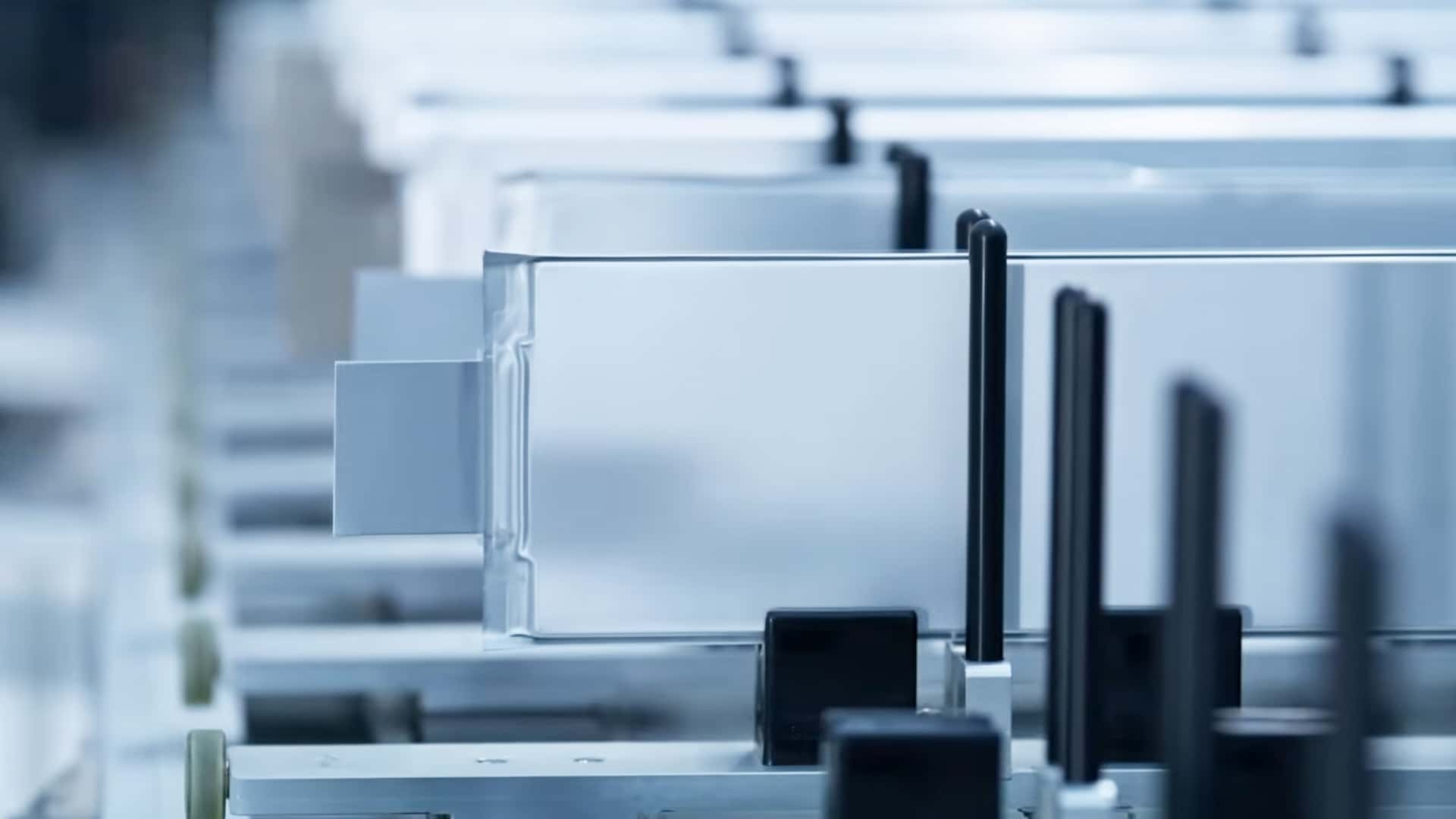
The first large-format pouch cells are now rolling off the assembly line at ProLogium’s state-of-the-art facility in Taoyuan, Taiwan. This facility, operating with a gigawatt-hour (GWh) capable capacity, is poised to introduce a new era of energy storage solutions to the global automotive industry.
Advancing Battery Technology: The Lithium Ceramic Cell
ProLogium’s breakthrough centers on its Generation 3.5 large-format 185.4 ampere-hour Lithium Ceramic Battery (LCB) cell. This innovative battery design incorporates a composite solid electrolyte and a ceramic separator, enhanced by a proprietary edge-frame structure that ensures optimal sealing and insulation while mitigating potential internal burrs.
The performance metrics of these new cells are particularly noteworthy. German certification body TÜV conducted independent testing, verifying a gravimetric energy density of 381 watt-hours/kilogram (Wh/kg) and a volumetric energy density of 903 watt-hours/liter.

Comparing Energy Density: A Significant Leap
To put these figures into perspective, ProLogium’s solid-state battery cells offer a substantial improvement over current market standards. The reported gravimetric energy density is approximately 30% higher than the mainstream nickel-manganese-cobalt (NMC) cells commonly found in many electric cars today, which typically achieve around 300 Wh/kg at the cell level.
Moreover, these advanced cells significantly outperform the more cost-effective lithium-iron-phosphate (LFP) cells, whose gravimetric energy density generally ranges between 150 and 200 Wh/kg. This enhanced energy density translates directly into increased driving range for EVs and potentially lighter battery packs, optimizing vehicle performance.
Unprecedented Charging Speed and Safety Features
Beyond energy density, ProLogium’s solid-state battery technology also promises rapid charging capabilities. The company indicates that its previous Gen 3 cell can achieve an impressive fast-charge from 5% to 80% state of charge in just eight and a half minutes.
The latest LCB Generation 3.5 cells are expected to deliver similar performance, enabling a 5% to 80% charge in under 10 minutes. Such rapid charging times are crucial for reducing range anxiety and making electric vehicles more convenient for consumers, aligning charging experiences closer to conventional refuelling.
Safety is another paramount advantage of solid-state battery technology. ProLogium’s Gen 3 cell has demonstrated remarkable resilience in extreme conditions. It has been shown not to catch fire even when shot with a bullet, exposed to temperatures as high as 338°F (170°F), or subjected to overcharging at twice its rated voltage. This inherent safety characteristic, stemming from the use of solid electrolytes instead of flammable liquid ones, positions solid-state batteries as a more secure option for electric powertrains.
Third-Party Validation and Industry Standards
The claims made by ProLogium are not without independent corroboration. UL Solutions, a global leader in safety science and certification, conducted rigorous testing on ProLogium’s large-format cell. The assessment followed China’s new GB/T 43568-2026 methodology, a standard introduced in July 2023 specifically to differentiate true all-solid-state cells from those that still incorporate some form of liquid electrolyte.
During the UL Solutions test, the cell was maintained in a vacuum for six hours at a constant temperature of 248°F (120°C). The recorded weight loss was less than 0.05%, significantly below the 0.5% maximum threshold permitted by the GB/T standard for products to be officially labelled as all-solid-state batteries. This stringent verification reinforces ProLogium’s claims of producing truly solid-state cells.
Scaling Production and Future Innovations
The initial production capacity at ProLogium’s Taoyuan facility, dedicated to the Gen 3.5 large-format pouch cells, stands at 0.5 gigawatt-hours (GWh). While this capacity can power approximately 6,000 EV battery packs, each with an 80 kWh capacity, it represents a foundational step rather than a full-scale mass market deployment when compared to traditional lithium-ion battery plants.
However, ProLogium has articulated ambitious expansion plans to meet anticipated global demand for solid-state battery technology. The Taiwan facility is projected to double its production capacity by 2030. Furthermore, a second, much larger production facility is slated for Dunkirk, France. This European plant is designed for an initial annual output of 4 GWh, with the potential to scale up significantly to a maximum capacity of 44 GWh.
The French factory is expected to commence operations in 2028, with a progressive ramp-up in production through 2030. This strategic expansion underscores ProLogium’s commitment to becoming a major player in the global battery market and accelerating the adoption of solid-state solutions.
Looking ahead, ProLogium is already developing its Gen 4 battery cell, which is anticipated to be released in the near future. This next-generation battery will feature a fully inorganic superfluidized electrolyte system, promising even faster charging times and superior performance in low-temperature environments. Crucially, existing factories built for Gen 3.5 cells will require only a minimal 10% upgrade to their line equipment to produce Gen 4 cells, ensuring cost efficiency and a smooth transition to the newer technology.
FAQs About Solid-State Batteries and ProLogium
What is an all-solid-state battery?
An all-solid-state battery uses a solid electrolyte instead of the liquid or gel electrolytes found in traditional lithium-ion batteries. This fundamental change offers advantages such as higher energy density, faster charging capabilities, and significantly improved safety due to the elimination of flammable liquid components. It’s considered a next-generation battery technology.
Who is ProLogium and what is its significance?
ProLogium is a Taiwanese battery technology company that claims to have begun mass production of all-solid-state battery cells. Its significance lies in being one of the first to transition solid-state battery development from laboratories to large-scale manufacturing, especially with key investments from major automotive players like Mercedes-Benz.
What are the key advantages of ProLogium’s solid-state batteries?
ProLogium’s Generation 3.5 Lithium Ceramic Battery (LCB) cells offer superior gravimetric energy density (381 Wh/kg), enabling longer EV ranges. They also promise ultra-fast charging (5-80% in under 10 minutes) and enhanced safety, demonstrating resilience against physical damage and extreme temperatures without catching fire.
How has ProLogium’s technology been verified?
ProLogium’s claims have been independently verified by reputable third-party organizations. TÜV, a German certification body, confirmed the battery’s energy density. UL Solutions, a global safety science company, tested the cell under China’s new GB/T 43568-2026 methodology, confirming its ‘all-solid-state’ classification with minimal weight loss.
What are ProLogium’s current and future production capacities?
The initial production capacity at ProLogium’s Taoyuan, Taiwan facility is 0.5 GWh, capable of supplying approximately 6,000 EV battery packs annually. The company plans to double this capacity by 2030. A larger facility in Dunkirk, France, is projected for 4 GWh initial annual output, expanding up to 44 GWh by 2030.
When can we expect next-generation (Gen 4) solid-state batteries?
ProLogium anticipates the release of its Gen 4 battery cell in the near future. This next iteration will feature a fully inorganic superfluidized electrolyte system, designed to offer even faster charging and improved low-temperature performance. Factories can upgrade from Gen 3.5 to Gen 4 production with only about a 10% equipment modification.