
Key Takeaways:
- Tesla is shifting its battery design philosophy, moving from the highly integrated structural battery pack in some Model Ys and the Cybertruck to a more modular approach for the upcoming Cybercab.
- The Model Y’s structural battery, while innovative for its weight savings and energy density, received a “D” grade from Tesla’s own mechanical design director for its manufacturing difficulty and near-zero repairability.
- The Cybercab will feature a “semi-structural” battery design, incorporating four separate modules of 4680 cells, significantly enhancing serviceability and reducing total cost of ownership (TCO).
- This strategic pivot addresses critical concerns regarding maintenance and long-term operational costs, particularly vital for fleet vehicles like robotaxis that are expected to accumulate hundreds of thousands of miles.
- The decision underscores a balance between maximizing cell volume and ensuring practical, cost-effective repairs in high-usage scenarios.
Tesla, a pioneering force in the electric vehicle (EV) industry, has long championed innovations in battery technology, including a significant move towards integrated structural battery packs. This design integrates battery cells directly into the vehicle’s chassis, aiming to reduce weight, optimize space, and enhance energy density. However, the company is now signaling a notable shift in this strategy, particularly with its forthcoming Cybercab vehicle.
While the Model Y and Cybertruck have adopted a tightly integrated structural battery approach, the Cybercab is poised to incorporate a design focused explicitly on improved repairability and serviceability. This evolution indicates a practical reconsideration of design trade-offs in pursuit of long-term operational efficiency and reduced maintenance burdens.
The Model Y’s Structural Battery: Innovation Meets Repair Challenges
The structural battery pack in some Tesla Model Y variants, along with the Cybertruck, represents a cutting-edge engineering endeavor. It involves embedding hundreds of in-house-developed 4680 battery cells directly into a single, cohesive assembly. This integration eliminates traditional battery modules, allowing for a more compact and potentially lighter vehicle architecture.
The primary advantage of such a structural battery pack lies in its ability to maximize the number of cells within a given footprint, theoretically leading to increased energy capacity and improved vehicle range. Furthermore, by making the battery itself a structural component of the vehicle, it can contribute to overall chassis rigidity and potentially simplify the manufacturing process by reducing the number of separate parts.

Acknowledging Design Limitations
Despite its innovative spirit, Tesla executives have been notably candid about the challenges associated with the Model Y’s structural battery implementation. Robert Sumpf, director of mechanical design engineering for Tesla’s battery modules and packs, publicly acknowledged these difficulties in a video featured on the Munro & Associates YouTube channel.
Sumpf did not mince words, stating, “It’s good to be self-critical.” He went on to assign a “D” grade to the Model Y’s structural battery, highlighting its complexities from a production standpoint. He clarified, however, that from a consumer perspective, it remained “an awesome product,” emphasizing that the issues primarily stemmed from manufacturing processes and subsequent serviceability.
A critical limitation of this design is its inherent lack of repairability. The cells within the structural battery pack are meticulously bound together using a hard potting material. This bonding method, while effective for structural integrity, renders individual cell replacement or even modular repair virtually impossible once the pack is fully assembled.
Independent analysis corroborated this assessment. Following a comprehensive teardown of a Model Y equipped with a structural battery pack, the engineering firm Munro & Associates concluded that its battery offered “zero repairability.” This finding underscored a significant operational challenge for vehicle owners and service centers alike, often necessitating full pack replacement even for minor internal faults.
The Cybercab’s Strategic Shift: Towards Enhanced Serviceability
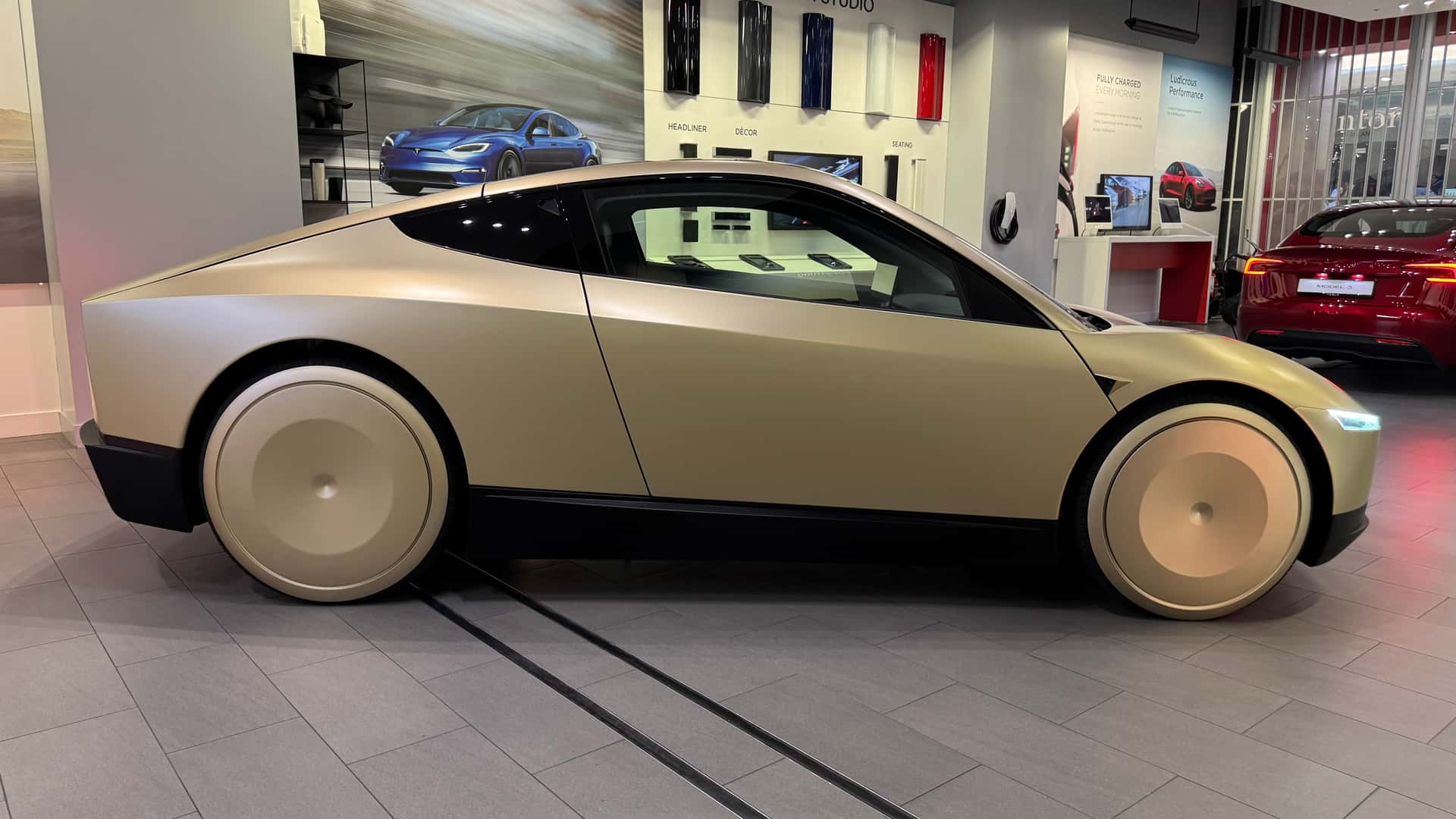
In a direct response to these repair and manufacturing challenges, Tesla has engineered a different approach for the Cybercab, its highly anticipated robotaxi platform. The Cybercab’s battery design marks a conscious move away from the completely module-free structural battery pack found in some of its predecessors.
Instead of a single, monolithic unit, the Cybercab’s battery system will incorporate four separate modules, each housing the same 4680 battery cells. This modular configuration is designed to simplify maintenance significantly. Should a single battery cell or a small group of cells within a module malfunction, only that specific module needs to be replaced, rather than the entire, costly battery pack.
Tesla executives have characterized the Cybercab’s battery architecture as “semi-structural.” This term indicates that while the battery still integrates into the vehicle’s body structure to some degree, it does so in a manner that prioritizes ease of assembly and, crucially, long-term serviceability. The compromise on cell volume gained by a fully structural pack, estimated at around 10%, was deemed acceptable when weighed against the substantial service cost implications.
Balancing Innovation with Practicality: The Total Cost of Ownership Imperative
The decision to adopt a more repairable, semi-structural battery design for the Cybercab is deeply rooted in the economic realities of operating a commercial fleet. While EV batteries are generally robust and exhibit predictable degradation over a consumer vehicle’s lifespan, the operational demands of a robotaxi are far more stringent.
Robotaxis are expected to endure relentless, round-the-clock usage, accumulating hundreds of thousands of miles at an accelerated pace. In such high-duty cycle applications, the total cost of ownership (TCO) becomes the paramount consideration for fleet operators. Even a low probability of battery failure, when multiplied by a large fleet and extensive mileage, can translate into significant operational expenses if repairs are prohibitively expensive.
Eric Earley, the Cybercab’s chief engineer, elaborated on this critical aspect during an interview on the Munro Live YouTube channel. He stated, “When you think of TCO as we’ve talked about, replacing an entire pack before half a million miles is a killer on cost.” This perspective underscores the necessity of considering the full lifecycle cost of components, not just their initial manufacturing advantages.
For a fleet-based business model, the ability to remanufacture or service battery packs efficiently is paramount. A modular approach facilitates easier diagnostics and targeted repairs, thereby reducing downtime and the financial burden of wholesale replacements. This strategic shift reflects Tesla’s evolving understanding of the practicalities and economic drivers of future mobility solutions, where operational resilience and cost-effectiveness are as vital as cutting-edge performance.
Broader Implications for EV Battery Design
The evolution in Tesla’s battery design philosophy, from the pioneering structural battery pack to a more serviceable modular approach, provides valuable insights for the broader electric vehicle industry. Automakers worldwide, including BMW, Porsche, and Ford, are increasingly exploring similar concepts of integrating cells directly into packs or vehicle structures to enhance efficiency and reduce complexity.
However, Tesla’s experience with the Model Y and the subsequent pivot for the Cybercab highlight the critical trade-offs involved. While maximizing cell volume and reducing material costs through a fully integrated design offers clear advantages in terms of range and manufacturing efficiency, these benefits must be carefully weighed against the long-term implications for repairability, service costs, and the overall lifecycle management of the battery system.
The Cybercab’s semi-structural battery design may represent a more balanced approach, demonstrating that optimal EV architecture is not solely about pushing the boundaries of energy density, but also about creating sustainable, cost-effective solutions for widespread adoption and diverse operational requirements.
FAQ Section
What is a structural battery pack?
A structural battery pack integrates battery cells directly into the vehicle’s chassis, making the battery an integral part of the car’s structure. This design aims to save weight, reduce material usage, and optimize space, potentially increasing energy density and vehicle range by eliminating traditional separate modules.
Why did Tesla give the Model Y’s structural battery a “D” grade?
Tesla’s director of mechanical design engineering, Robert Sumpf, cited the manufacturing difficulty of the Model Y’s structural battery as the primary reason. The tight integration and use of hard potting material made it challenging to build efficiently and rendered it nearly impossible to repair if individual cells failed, leading to high service costs.
How does the Cybercab’s battery design differ from the Model Y’s?
Unlike the Model Y’s fully integrated structural battery, the Cybercab features a “semi-structural” design with four separate modules of 4680 battery cells. This modular approach significantly improves repairability, allowing individual faulty modules to be swapped out instead of requiring the replacement of the entire battery pack.
What are the benefits of the Cybercab’s new battery design?
The main benefits include enhanced serviceability, easier repair, and a reduced total cost of ownership (TCO). For commercial applications like robotaxis, which endure extensive mileage, the ability to repair modules instead of replacing entire packs dramatically lowers maintenance costs and vehicle downtime, crucial for economic viability.
Is the structural battery concept being abandoned by Tesla?
No, the concept isn’t entirely abandoned. The Cybercab’s design is described as “semi-structural,” indicating a partial integration while prioritizing repairability. This suggests Tesla is refining its approach, balancing the benefits of structural integration with the practical needs for maintenance and long-term cost-effectiveness, especially for commercial fleets.
Why is total cost of ownership (TCO) so important for the Cybercab?
The Cybercab is designed as a robotaxi, meaning it will operate continuously and accumulate hundreds of thousands of miles quickly. For such a high-usage commercial fleet, TCO is critical. Replacing an entire battery pack due to minor faults would be prohibitively expensive, making a repairable design essential to meet cost targets and ensure profitability over the vehicle’s extensive operational life.