
Key Takeaways:
- Mercedes-Benz’s dedicated EV charging network in North America celebrates its third anniversary, now encompassing 100 high-power charging locations.
- The network boasts nearly 1,000 individual charging ports across 28 U.S. states and British Columbia, Canada.
- Over one million charging sessions have been recorded since 2023, serving more than 245,000 unique customers.
- A primary focus on reliability has led to a first-time charging success rate climbing to over 90%, complemented by near-perfect uptime across all stations.
- Equipped with advanced 400-kilowatt chargers, the network offers broad compatibility with both CCS and NACS connectors, preparing for future electric vehicle charging standards.
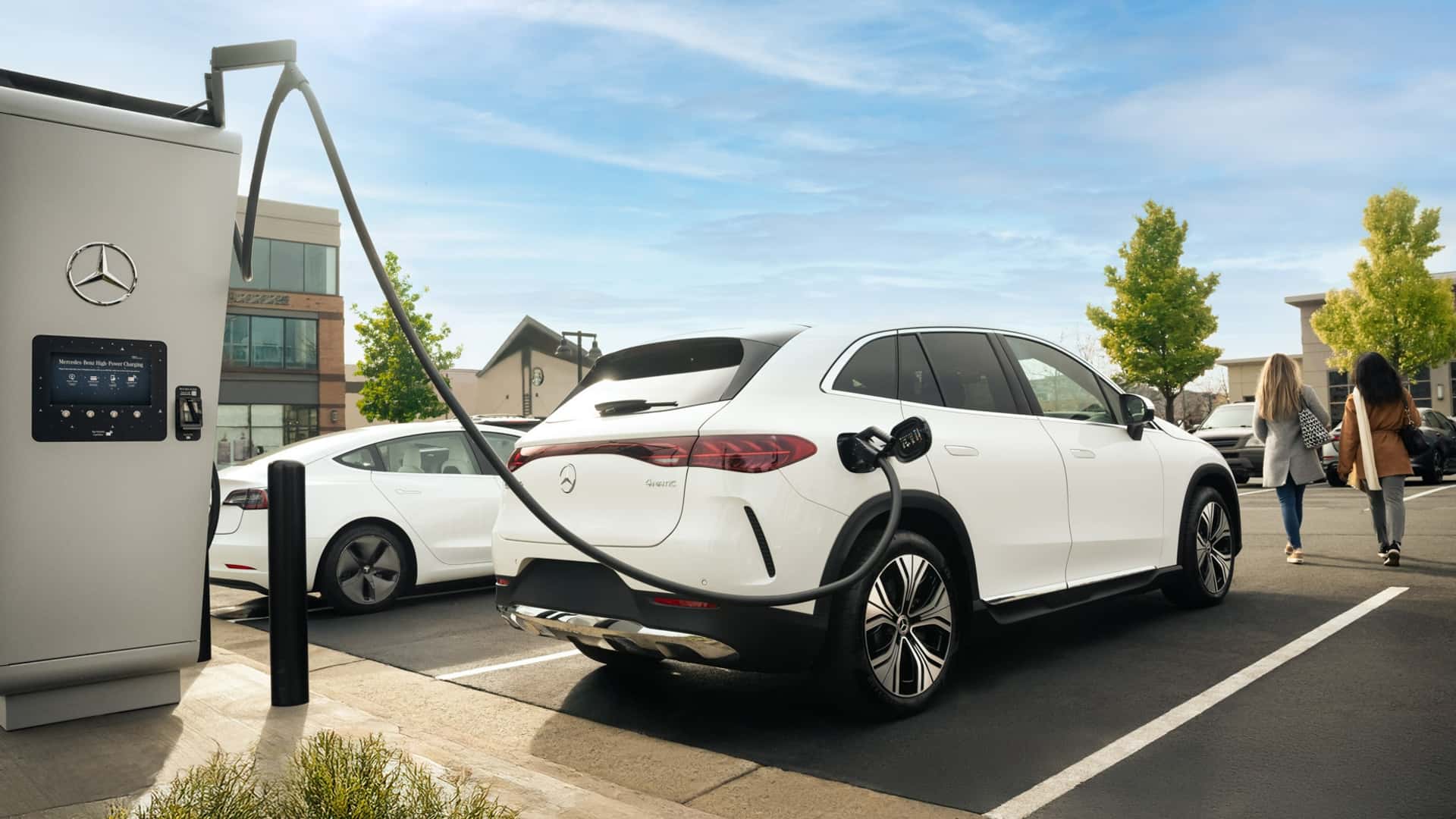
Mercedes-Benz is marking a significant milestone in its commitment to electric vehicle (EV) infrastructure, celebrating the third anniversary of its dedicated charging network in North America. The Mercedes-Benz High-Powered Charging (MB HPC) network has steadily expanded its footprint, now boasting 100 locations and nearly 1,000 individual charging ports across 28 U.S. states and Canada’s British Columbia.
This substantial growth underpins the luxury automaker’s strategy to provide a robust and reliable charging experience for its burgeoning EV customer base. The network’s advanced 400-kilowatt (kW) chargers have already facilitated over one million charging sessions since the beginning of 2023, catering to more than 245,000 unique customers over its three-year operational period.
A Three-Year Trajectory of Expansion and Innovation
Since its inception, the Mercedes-Benz EV charging network has demonstrated a clear trajectory of calculated expansion. From a modest beginning with a handful of locations, the network has systematically grown to cover a wide geographical area, crucial for supporting long-distance EV travel and daily commuting needs.
The strategic deployment of 100 high-power charging sites reflects a concerted effort to alleviate range anxiety and enhance the overall electric vehicle ownership experience. Each site is designed to offer efficient and accessible charging solutions, aligning with Mercedes-Benz’s premium brand ethos.
The accumulation of almost 1,000 charging ports indicates a significant investment in the physical infrastructure required to support the rapidly accelerating adoption of electric vehicles. This density helps ensure that Mercedes-Benz drivers, and other EV users, can reliably find available charging options when needed.
Prioritizing Reliability: Uptime and First-Time Success
In the evolving landscape of electric vehicle adoption, the reliability of charging infrastructure remains a paramount concern for consumers. Mercedes-Benz has consistently highlighted its commitment to delivering an exceptionally dependable charging experience through its network.
The company reports a near-perfect uptime rate across its stations, a critical metric indicating the consistent availability of operational chargers. This focus on uptime minimises inconvenience for EV drivers and builds trust in the burgeoning electric mobility ecosystem.
Beyond mere availability, Mercedes-Benz has elevated the “first-time success rate” to a core performance indicator, considering it the network’s “guiding star.” This metric meticulously measures charging sessions that initiate successfully on the very first attempt, directly reflecting the seamlessness and user-friendliness of the charging process.
Initially recorded at approximately 84%, this crucial first-time success rate has seen a notable improvement, now exceeding 90%. This upward trend signifies Mercedes-Benz’s ongoing efforts to refine its hardware, software, and operational protocols, ensuring a smoother and more predictable experience for every electric vehicle charging session.
Technological Backbone and Connector Versatility
The Mercedes-Benz EV charging network distinguishes itself through its deployment of cutting-edge technology. All fast chargers within the network are capable of delivering up to 400 kilowatts of power. This high-power output significantly reduces charging times, allowing EV drivers to replenish their vehicle’s battery swiftly and efficiently.
The primary supplier for these robust 400-kW dispensers is Alpitronic, a recognized leader in advanced DC fast charging solutions. This choice underscores Mercedes-Benz’s commitment to utilizing high-quality, high-performance equipment to support its premium charging network.
Addressing the rapidly evolving connector standards in the automotive industry, the vast majority of Mercedes-Benz charging stalls are equipped with both CCS (Combined Charging System) and NACS (North American Charging Standard) connectors. This dual-connector approach ensures broad compatibility, catering to a diverse range of electric vehicles on the market.
Only 7% of the network’s locations feature solely CCS connectors. The integration of NACS connectors reflects a proactive response to the industry-wide shift initiated by automakers like Ford, which began adopting Tesla’s Supercharger network for their vehicles. This strategic move ensures that Mercedes-Benz’s network remains future-proof and accessible to an expanding fleet of NACS-equipped electric vehicles, while also accommodating existing CCS users.
Strategic Placement and Enhanced User Experience
Mercedes-Benz’s approach to the deployment of its charging hubs extends beyond mere technical specifications; it incorporates a thoughtful consideration of user convenience and accessibility. The stations are strategically located at or around premium shopping destinations.
This placement strategy aims to integrate charging into daily routines, allowing drivers to power up their vehicles while engaging in retail activities, dining, or other leisure pursuits. This enhances the overall appeal of electric vehicle ownership by minimizing downtime and maximizing convenience.
The physical scale of the charging hubs varies to suit different demands. The largest Mercedes-Benz High-Power Charging site, situated in Orlando, Florida, features an impressive 20 stalls, designed to accommodate a high volume of simultaneous users. In contrast, smaller operations, such as those in Conyers, Georgia, and Red Bluff, California, each offer four stalls, catering to more localised needs.
Understanding Charging Costs and Processes
To ensure a transparent and flexible payment experience, the Mercedes-Benz EV charging network offers multiple options. All locations are equipped with standard credit card readers, providing immediate access for all drivers. Additionally, electric vehicle owners can utilise various compatible charging applications or an RFID card issued directly by Mercedes-Benz dealers.
The network also supports Plug & Charge functionality, which streamlines the payment process by allowing compatible vehicles to simply plug in and begin charging, with authentication and billing handled automatically. This feature exemplifies a focus on seamless user interaction.
Regarding pricing, the cost for charging varies across locations, ranging between $0.35 per kilowatt-hour (kWh) and $0.60 per kWh. This flexibility allows for regional adjustments based on energy costs and operational expenses.
A temporary pre-authorization fee of $25 is applied at the start of a charging session to verify available funds. Upon completion of the charging process, drivers are accurately charged based on the actual energy consumed, and the remaining portion of the pre-authorized amount is promptly released. This standard practice ensures financial security while maintaining billing accuracy.
Leadership and Sustained Momentum
In a move signalling a continued focus on the strategic development and operational excellence of its North American EV charging infrastructure, Mercedes-Benz High-Power Charging North America recently announced the appointment of Madeline Ebert as its new Chief Executive Officer. Her leadership is expected to steer the network through its next phase of growth and technological advancement.
Ebert’s appointment underscores the company’s commitment to strengthening its charging ecosystem, ensuring it remains competitive and responsive to the evolving needs of the electric vehicle market. Her expertise will be crucial in expanding the network’s reach and enhancing the user experience further.
Mercedes-Benz’s Global EV Charging Strategy
While the Mercedes-Benz EV charging network in North America celebrates significant expansion and operational achievements, it operates within the context of a broader, and sometimes differentiated, global strategy. Notably, the automaker made a distinct decision regarding its European EV charging assets.
Mercedes-Benz opted to sell its EV charging network operations in Europe. This contrasting approach highlights the company’s adaptable regional strategies, tailored to specific market conditions, regulatory environments, and partner ecosystems. The sustained investment and growth in North America underscore the strategic importance placed on this market for the brand’s electric future.
The developments in North America solidify Mercedes-Benz’s position as a key player in the electric mobility sector, demonstrating a robust commitment to building a comprehensive and reliable charging ecosystem that supports the transition to an all-electric future.
FAQ
How many locations does the Mercedes-Benz EV charging network currently have in North America?
The Mercedes-Benz High-Powered Charging (MB HPC) network currently features 100 operational locations across North America. These sites are distributed across 28 U.S. states and Canada’s British Columbia, providing widespread access for electric vehicle owners.
What is the power output of Mercedes-Benz’s fast chargers?
All fast chargers within the Mercedes-Benz EV charging network are designed to deliver up to 400 kilowatts (kW) of power. This high-capacity charging capability allows for significantly reduced charging times, enhancing convenience for drivers.
What types of connectors are available at Mercedes-Benz charging stations?
The vast majority of Mercedes-Benz charging stalls are equipped with both CCS (Combined Charging System) and NACS (North American Charging Standard) connectors. Only 7% of locations are CCS-only, ensuring broad compatibility with most electric vehicles.
What is the ‘first-time success rate’ and how has it improved?
The ‘first-time success rate’ measures how often a charging session starts successfully on the initial attempt. Mercedes-Benz considers this a key metric for user experience. It has improved from approximately 84% to over 90% through continuous network optimization.
Where are Mercedes-Benz charging stations typically located?
Mercedes-Benz strategically places its EV charging stations at or near premium shopping locations. This approach aims to provide convenient charging opportunities for drivers, allowing them to charge their vehicles while engaging in other activities like shopping or dining.
What payment options are available for charging?
Drivers can pay for charging sessions using standard credit card readers, various compatible charging applications, or an RFID card issued by Mercedes-Benz dealers. The network also supports Plug & Charge functionality for seamless, automatic billing.
Who is the new CEO of Mercedes-Benz High-Power Charging North America?
Madeline Ebert was recently appointed as the new Chief Executive Officer of Mercedes-Benz High-Power Charging North America. Her leadership is set to guide the network through its continued expansion and technological advancements in the region.