
Key Takeaways:
- Factorial Energy is building a coalition of specialised battery manufacturers to overcome the complex technical challenges of bringing all-solid-state batteries to market.
- Unlike traditional lithium-ion batteries, solid-state technology promises enhanced safety, superior energy density (up to 450 Wh/kg), and faster charging speeds by replacing liquid electrolytes with solid ones.
- CEO Siyu Huang asserts that no single company can achieve this breakthrough independently, necessitating a collaborative ‘supply chain coalition’ involving experts in anodes, cathodes, electrolytes, and advanced manufacturing.
- Key partnerships include Mitsui Kinzoku for solid electrolytes, Posco Future M for electrode materials, SK On and Volkswagen Group’s PowerCo for scaling, Hyundai Motor Group for joint development, and Phil Energy for manufacturing tools.
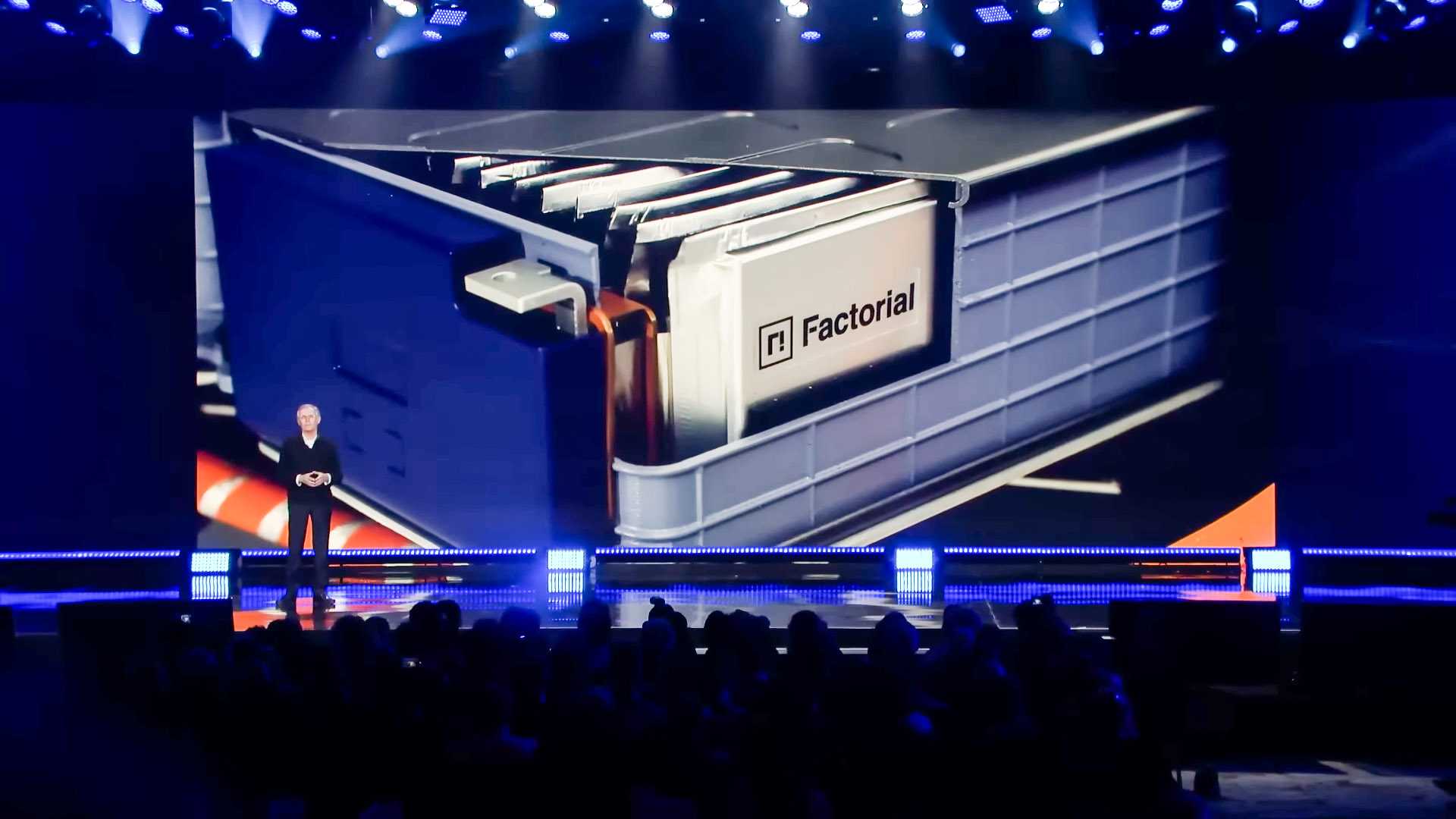
- Factorial offers two main products: the FEST semi-solid-state battery, already in prototype Mercedes-Benz EQS and Dodge Charger Daytona EVs, and the higher-performance Solstice all-solid-state cell.
- Commercialisation is progressing, with Karma Automotive expected to launch the first production EV with Factorial’s semi-solid battery by 2028, alongside initial aerospace purchase orders.
The Race for Next-Generation EV Batteries Intensifies
The global automotive industry is in a fierce race to develop advanced battery technologies that can power the next generation of electric vehicles (EVs). At the forefront of this innovation is the pursuit of solid-state batteries, a technology promising significant leaps in performance, safety, and efficiency over current lithium-ion counterparts.
Massachusetts-based battery startup Factorial Energy has now declared its strategic intent to fast-track the commercialisation of these elusive all-solid-state batteries. The company announced on Thursday that it is assembling a comprehensive coalition of specialised battery makers, a move that challenges the traditional, vertically integrated development model often seen in the sector.
Unlocking the Potential of Solid-State Technology
Traditional lithium-ion batteries, which currently dominate the EV market, rely on a liquid chemical electrolyte to facilitate the movement of charge-carrying ions. While these batteries have seen continuous improvements in range, charging speed, and cost, they still present inherent limitations, notably fire risk due to their highly flammable liquid components.
All-solid-state batteries, by contrast, fundamentally re-engineer this core component by substituting the liquid electrolyte with a solid material. This innovative design is heralded by battery scientists as a potential game-changer, capable of virtually eliminating fire hazards, substantially boosting energy density, and delivering blisteringly fast charging speeds.

However, despite their immense promise, solid-state battery technology has been plagued by complex technical hurdles for many years. These challenges span various aspects, from material science and manufacturing processes to overcoming issues like dendrite formation and maintaining stable interfaces between solid components.
Factorial’s Collaborative Approach to Innovation
Factorial Energy is directly confronting these long-standing technical challenges through a unique collaborative strategy. Siyu Huang, CEO of Factorial, articulated in an interview with InsideEVs that the company is actively pooling the expertise of various specialised battery makers, rather than attempting to solve every aspect of development in-house.
Huang firmly believes that no single entity possesses the comprehensive capabilities to independently crack the code of all-solid-state batteries. She underscored the critical necessity of assembling firms that specialise in distinct areas, including anodes, cathodes, electrolytes, and advanced manufacturing techniques, to successfully transition this cutting-edge technology into mass production.
“We’re driving a very strong coalition among all of the supply chain,” Huang stated. She further elaborated on the path ahead, noting, “There are still significant technical challenges to unlock. It’s very important for us to go beyond the existing mindset and framework for lithium ion and focus on a technology that goes beyond." This statement highlights a departure from conventional development paradigms, emphasising a broader, more integrated approach.
Strategic Partnerships Across the Supply Chain
Factorial’s coalition model is built upon a foundation of strategic joint development agreements and memoranda of understanding with key players across the battery supply chain. This network of alliances is designed to leverage diverse expertise and accelerate progress.
A recent and significant development in this network is the joint development agreement with Mitsui Kinzoku, a prominent Japanese firm. This partnership is crucial, as it grants Factorial access to Mitsui’s specialised solid electrolytes, a foundational component for the company’s Solstice all-solid-state battery technology. Huang emphasised the importance of this material, stating, “Having access to this material is very important to enhance the performance of this battery.” She added, “That’s why we’re able to get really strong performance and high temperature thermal stability, something we couldn’t get without them." Factorial highlights Mitsui Kinzoku’s possession of “foundational IP” for all-solid electrolytes, reinforcing the strategic value of this collaboration.
Beyond Mitsui, Factorial’s collaborative roster includes significant industry names. The company is actively working with Korean anode and cathode specialist Posco Future M, exploring advanced materials vital for battery performance. It is also pursuing avenues to scale its technology effectively with SK On, a major Korean battery manufacturer.
Further strengthening its market position, Factorial has secured joint development agreements with Volkswagen Group’s PowerCo battery division and the Hyundai Motor Group, indicating a strong foothold in both North American and European automotive markets. “We’re very well settled for both North American and European volumes,” Huang affirmed. Additionally, a memorandum of understanding with Korea’s Phil Energy focuses on developing advanced manufacturing tools, essential for the high-volume production of these complex batteries.
From Benchtop to Production Line: Factorial’s Battery Offerings
Factorial Energy currently champions two primary battery products: the FEST semi-solid-state battery and the more advanced Solstice all-solid-state cell. Both innovations are built upon NMC (Nickel-Manganese-Cobalt) chemistries, utilising anode-free lithium-metal cells paired with either semi-solid (gel-like) or fully solid electrolytes.
The FEST semi-solid-state battery is engineered to deliver an energy density of up to 375 watt-hours per kilogram (Wh/kg). This iteration of the technology has already seen integration into prototype vehicles, including a Mercedes-Benz EQS and a Dodge Charger Daytona EV, demonstrating its tangible progress towards automotive application. Factorial reports that this semi-solid-state technology is now ready for commercialisation, with initial customer orders already secured.
Looking ahead, the Solstice all-solid-state version pushes the boundaries further, targeting an impressive energy density of up to 450 Wh/kg. This figure represents roughly double the energy density achievable with many of today’s conventional lithium-ion cells, promising significantly extended range and lighter battery packs for future EVs. While still in advanced development, this represents the ultimate goal of Factorial’s solid-state endeavours.
The company has marked its first commercial aerospace purchase order for a drone battery this summer, signaling diversification beyond automotive applications. For the larger automotive sector, Huang anticipates that “large automotive OEMs” will integrate Factorial’s batteries into their production vehicles in the future, with specific timelines dependent on their unique requirements and validation processes.
The Broader Landscape of Solid-State Battery Development
Factorial Energy is not alone in the pursuit of the next major EV battery breakthrough. The landscape of solid-state battery development is highly competitive, with numerous startups and established giants vying for leadership.
A substantial number of startups, particularly from the United States, are actively spearheading these efforts. Prominent names include California-based QuantumScape, Colorado-based Solid Power, and Illinois-based Pure Lithium, each exploring different material compositions and manufacturing approaches. Beyond these innovators, automotive behemoth Toyota, Taiwanese firm ProLogium, and several established Chinese battery manufacturers like CATL and BYD are also dedicating substantial resources to cracking the complexities of solid-state batteries.
The ultimate question of whether a collaborative coalition model, akin to Factorial’s, or a more vertically integrated, single-company approach will emerge as the dominant strategy for successful commercialisation remains an open debate within the industry. As Huang aptly summarises, “Battery innovation can’t be done by a single company." She stresses that it “is driven by the entire supply chain and, increasingly, by an entire industry coalition." This philosophy underpins Factorial’s strategy, positioning it as a key proponent of collective innovation in the high-stakes race for advanced battery technology.
FAQ
What are solid-state batteries and why are they important for EVs?
Solid-state batteries replace the flammable liquid electrolyte in traditional lithium-ion batteries with a solid material. This change promises significant improvements in safety by eliminating fire risks, drastically increasing energy density for longer EV ranges, and enabling faster charging speeds, making them crucial for the future of electric vehicles.
What are the main technical challenges in developing solid-state batteries?
Key challenges include ensuring stable interfaces between solid components, preventing dendrite formation (lithium metal whiskers) during charging, achieving high ion conductivity at various temperatures, and developing cost-effective, scalable manufacturing processes. These issues have historically slowed down the commercialisation of this promising technology.
How is Factorial Energy approaching solid-state battery development differently?
Factorial Energy distinguishes itself by forming a broad coalition of specialised companies rather than pursuing a vertically integrated approach. They believe no single company can master all aspects of solid-state battery development, hence partnering with experts in anodes, cathodes, electrolytes, and advanced manufacturing to accelerate progress and overcome technical hurdles collectively.
Which companies are partnering with Factorial Energy?
Factorial has established strategic partnerships with several key industry players. These include Japanese firm Mitsui Kinzoku for solid electrolytes, Korean anode and cathode specialist Posco Future M, SK On and Volkswagen Group’s PowerCo battery division for scaling and joint development, Hyundai Motor Group, and Korea’s Phil Energy for advanced manufacturing tools.
What are Factorial’s primary solid-state battery products?
Factorial Energy offers two main products: the FEST semi-solid-state battery, which uses a gel-like electrolyte and is rated up to 375 Wh/kg, and the Solstice all-solid-state cell, targeting up to 450 Wh/kg. Both are based on NMC chemistry with anode-free lithium-metal cells, offering enhanced energy density and safety.
When can we expect Factorial’s batteries in production vehicles?
Factorial’s semi-solid-state technology is already prepared for commercialisation, with customer orders secured. Karma Automotive is slated to be the first to integrate Factorial’s semi-solid battery into a production EV by 2028. The company also anticipates significant adoption by “large automotive OEMs” in the future, depending on their specific requirements.