
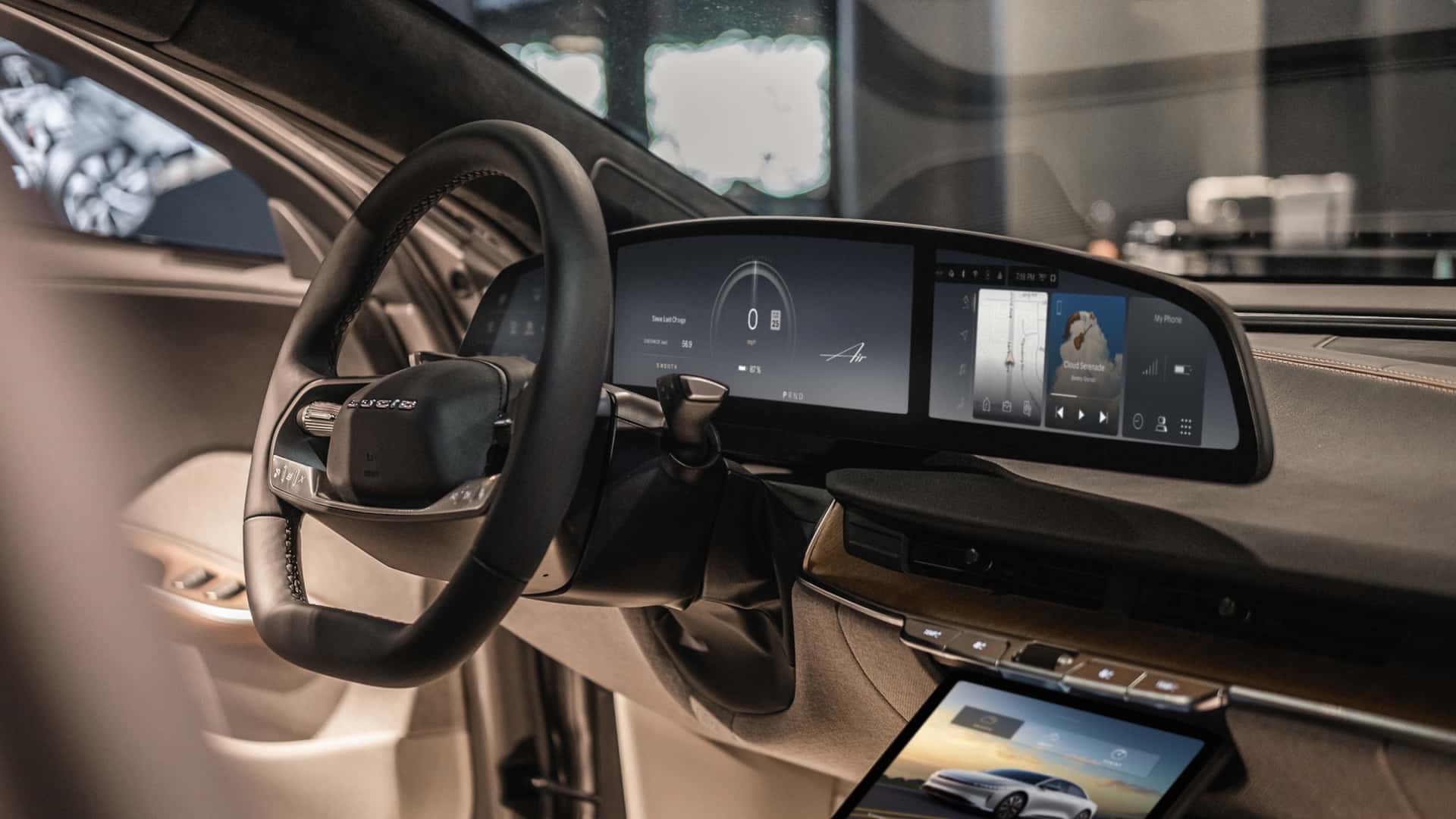
Lucid Motors, a prominent player in the luxury electric vehicle (EV) segment, has rolled out a significant update to the infotainment system of its flagship Air sedan. This comprehensive software revamp, dubbed UX 3.0, promises a faster, more intuitive, and feature-rich digital experience for drivers. However, the advanced capabilities of the new system come with a notable caveat for owners of older Air models, who may need a $950 hardware upgrade to access the full suite of enhancements.
The introduction of the **Lucid Air UX 3.0 software update** signals Lucid’s commitment to refining the in-car technology experience, bringing the Air’s digital interface closer to the sophisticated system first seen in the Lucid Gravity SUV. This strategic move aims to elevate user interaction, a critical factor in today’s competitive EV market where software and digital integration are as crucial as performance and range.
Key Takeaways
- Lucid has introduced UX 3.0, a redesigned infotainment interface for its Air sedan, aiming for enhanced speed and intuition.
- The update includes new route planning features, improved Apple CarPlay and Android Auto integrations, and better multitasking capabilities.
- For 2025-and-newer Lucid Air models, UX 3.0 is available as a complimentary over-the-air (OTA) software update (version 2.11.0).
- Owners of 2022, 2023, and some 2024 Lucid Air vehicles will require a hardware processor upgrade, priced at $950 in the U.S. (including installation), to implement UX 3.0.
- The hardware retrofit is necessary due to a mid-2024 model year switch to a second-generation infotainment processor.
- The new system offers a re-envisioned home screen, swipeable cards for frequently used features, quick controls, and independent functionality for the Cockpit and Pilot Panel displays.
A New Era for Lucid Air’s Digital Cockpit
The **Lucid Air UX 3.0 software update** represents a significant leap forward in the luxury EV’s user interface. Designed to enhance the overall driving experience, the update addresses key areas of functionality and responsiveness. Drivers can expect a more fluid interaction with the vehicle’s various systems, from navigation to media playback.
Among the most anticipated improvements is a redesigned home screen, featuring intuitive swipeable cards that provide quick access to frequently used features. This modular approach allows for greater personalisation and efficiency, enabling drivers to customise their digital environment according to their preferences. A downward swipe from the top of the lower, vertically-oriented “Pilot Panel” now brings up new quick controls, further streamlining access to popular settings.
Enhanced Navigation and Multimedia Integration
The UX 3.0 update significantly refines the route planning feature, incorporating advanced preferences for charging networks, desired arrival range, and charging adapter compatibility. This enhancement is particularly beneficial for long-distance EV travel, empowering drivers with more control over their charging strategy and reducing range anxiety.
Furthermore, the integration of Apple CarPlay and Android Auto has received a substantial upgrade. Lucid states that these vital smartphone mirroring functionalities will now be more reliable and appear larger on the Air’s distinctive crescent-shaped screen. This addresses a common user request, ensuring seamless connectivity and access to preferred mobile applications within the vehicle’s ecosystem.
Revolutionising Multitasking on Dual Displays
One of the most impactful changes brought by UX 3.0 is the newfound ability for drivers to independently operate different applications across the Air’s upper and lower screens. Previously, these displays were often linked, limiting the flexibility of the user experience. Now, the new software enables users to “move more smoothly among navigation, media, vehicle controls, and apps across the Cockpit and Pilot Panel displays,” as stated by Lucid.
This decoupling of displays unlocks a new level of multitasking. For instance, a driver can now project navigation instructions onto the upper, primary display while simultaneously managing music or vehicle settings on the lower Pilot Panel. This flexibility was a noticeable absence in previous iterations and its introduction is poised to significantly improve convenience and driver focus.
The Hardware Mandate: Why Older Models Need an Upgrade
While the UX 3.0 update is a seamless over-the-air (OTA) deployment for 2025-and-newer Air models, owners of earlier vehicles will face an additional requirement. Specifically, 2022, 2023, and certain 2024 Lucid Air sedans will necessitate a $950 processor upgrade to run the advanced software. This cost includes both the hardware component and its installation, with details for other international markets expected soon.
A Lucid spokesperson clarified that the hardware retrofit is not universally required for all 2024 models. The transition to a second-generation infotainment processor occurred midway through the 2024 model year, meaning some later-production 2024 vehicles already possess the necessary hardware. This distinction highlights the rapid evolution of in-car computing power and the challenges automakers face in providing consistent software experiences across different hardware generations.
Understanding the Processor Upgrade
The requirement for a physical processor upgrade underscores the increasing demands placed on automotive computing systems by modern infotainment. As software becomes more complex, incorporating richer graphics, faster response times, and more intensive computational tasks (like advanced route planning or AI-driven features), the underlying hardware must keep pace. Older processors may simply lack the necessary power or memory bandwidth to efficiently run the new, more sophisticated UX 3.0.
This situation is not unique to Lucid, reflecting a broader trend in the automotive industry where vehicles are increasingly becoming ‘software-defined machines.’ Maintaining a cutting-edge user experience often means updating not just the software, but occasionally the hardware that supports it, much like upgrading a computer or smartphone to run the latest operating system.
The Broader Implications for EV Ownership
The move by Lucid to offer a significant software upgrade, coupled with a hardware requirement for older models, carries several implications for EV ownership and the future of automotive technology.
Firstly, it highlights the dual nature of innovation in electric vehicles: continuous software enhancements and periodic hardware advancements. While OTA updates are celebrated for keeping vehicles fresh, instances like this demonstrate that physical limitations of older components can still necessitate a visit to a service centre and an additional financial outlay.
Secondly, it prompts a discussion around the ‘future-proofing’ of premium EVs. Consumers investing in high-end vehicles often expect a prolonged period of technological relevance. The $950 upgrade fee, while not exorbitant in the context of a luxury EV, represents an unexpected cost for early adopters seeking the latest features.
Industry Trends and Consumer Expectations
The automotive industry is in a transformative phase, with infotainment systems becoming central to the brand experience. Consumers increasingly expect car interfaces to rival the fluidity and responsiveness of their personal electronic devices. Brands like Lucid are under pressure to deliver seamless, intuitive, and constantly evolving digital ecosystems.
The **Lucid Air UX 3.0 software update** aligns with this industry trend, aiming to set a benchmark for in-car user experience. While the hardware requirement for some models presents a hurdle, the ultimate goal is to ensure all Lucid Air drivers can benefit from the most advanced and user-friendly interface available, reinforcing the brand’s position in the luxury EV market.
Conclusion
Lucid’s UX 3.0 update for the Air sedan is a clear indication of the company’s commitment to enhancing its digital offerings and user experience. With its array of new features designed for speed, intuition, and improved functionality, the update promises to make the Lucid Air’s cockpit a more engaging and efficient environment.
While the $950 processor upgrade for certain older models introduces an additional consideration for existing owners, it is a reflection of the rapid pace of technological advancement in the EV sector. As Lucid continues to innovate, ensuring its vehicles remain at the forefront of both performance and digital integration will be key to its long-term success in the evolving automotive landscape.
Frequently Asked Questions (FAQ)
What is the Lucid Air UX 3.0 software update?
The UX 3.0 is a comprehensive redesign of the Lucid Air’s infotainment system. It aims to make the digital experience faster and more intuitive, incorporating new features like enhanced route planning, improved Apple CarPlay and Android Auto integration, and advanced multitasking capabilities across the vehicle’s dual displays.
Which Lucid Air models will receive the UX 3.0 update for free?
All 2025-and-newer Lucid Air models will receive the UX 3.0 update as a complimentary over-the-air (OTA) software update, specifically through Lucid’s 2.11.0 software release. These vehicles are equipped with the latest hardware capable of supporting the advanced new interface.
Why do older Lucid Air models require a $950 hardware upgrade for UX 3.0?
Older 2022, 2023, and some 2024 Lucid Air models require a $950 processor upgrade because the UX 3.0 software demands more powerful computing capabilities. Lucid made a switch to a second-generation infotainment processor midway through the 2024 model year, making the new software incompatible with earlier hardware.
What new features does UX 3.0 introduce for route planning?
The updated route planning feature in UX 3.0 allows drivers to set preferences for charging networks, specify their desired arrival range at a destination, and select charging adapter capabilities. This provides greater control and customisation for long-distance journeys, enhancing the overall EV travel experience.
How does UX 3.0 improve Apple CarPlay and Android Auto?
Lucid states that with the UX 3.0 update, Apple CarPlay and Android Auto integrations will be more reliable and appear significantly larger on the Lucid Air’s crescent-shaped display. This enhancement aims to provide a more seamless and immersive experience when using smartphone applications within the vehicle’s infotainment system.
Can I use navigation on one screen and music on another with UX 3.0?
Yes, one of the key improvements in UX 3.0 is the ability to independently manage applications across the Cockpit and Pilot Panel displays. Drivers can now smoothly move between navigation, media, vehicle controls, and other apps, allowing for simultaneous use of features like navigation on the upper screen and music control on the lower screen.